Jist or Gist: Which Spelling Is Correct?
Gist is the correct spelling when you mean the main idea, central point, or general meaning of something. Jist is not a standard spelling of this word. It is usually a misspelling caused by the similar pronunciation of the two letters.
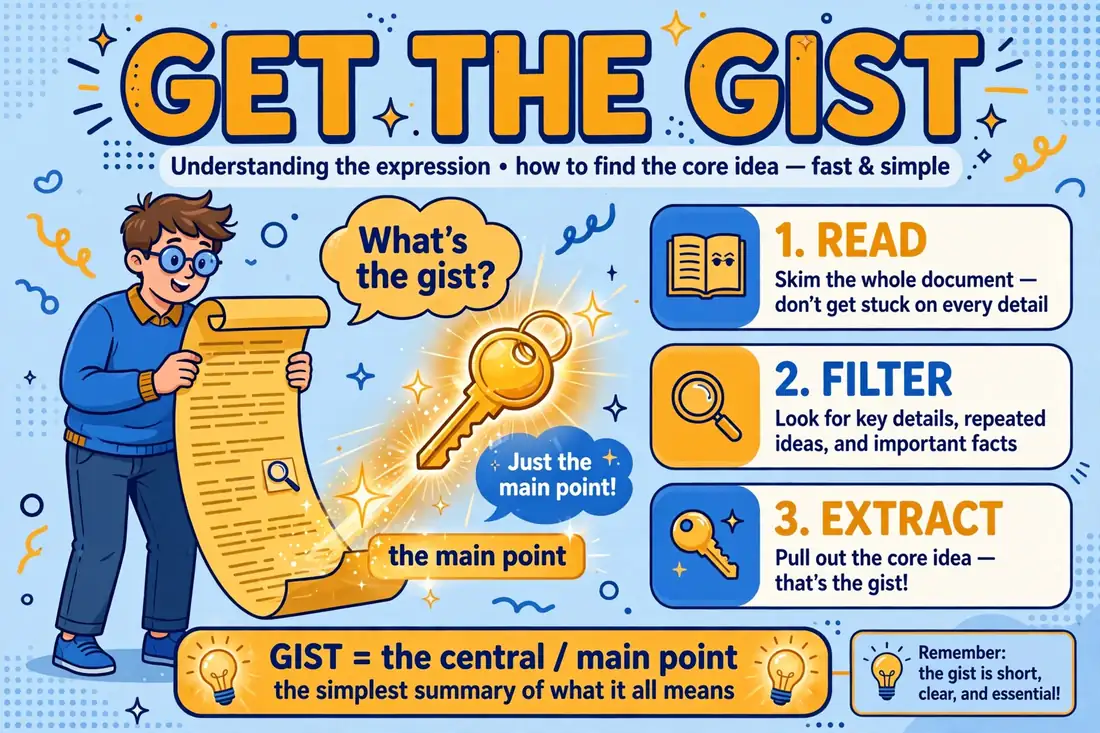
Use gist in expressions such as “the gist of the conversation” or “get the gist.” The word helps summarize the central
meaning without repeating every detail.
Quick Answer: Jist or Gist?
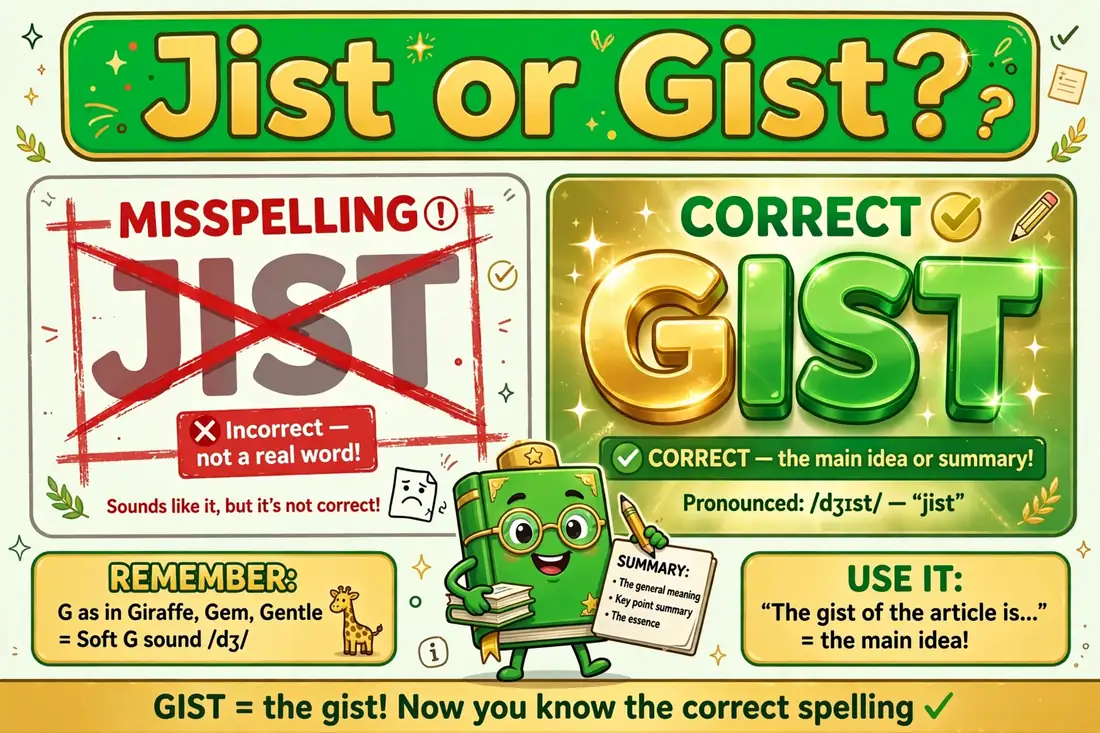
- Gist is the correct spelling for the main point or general meaning of something.
- Jist is a common spelling mistake when someone intends to write gist.
- Gist is pronounced like “jist,” which explains why people often confuse the spelling.
Example: I did not read the entire report, but I understand the gist.
Quick Facts About Gist and Jist
| Feature | Gist | Jist |
| Standard spelling | Yes | No, not for the intended meaning |
| Meaning | Main idea or essential point | Usually a misspelling of gist |
| Part of speech | Noun | Not a standard noun with this meaning |
| Pronunciation | /dʒɪst/ | Often intended to sound the same |
| Common expression | Get the gist | Incorrect: get the jist |
| Example | I understand the gist of your message. | I understand the jist of your message. |
What Does Gist Mean?
Gist is a noun that means the main idea, central point, or essential meaning of something.
It refers to what matters most in a message, conversation, article, speech, or situation. You can understand the gist without knowing every detail.
Examples of Gist in Sentences
- I understand the gist of your explanation.
- The gist of the article is that regular exercise supports good health.
- She missed a few details but understood the gist of the meeting.
- Can you explain the gist of the story in two sentences?
- He gave me the gist of the phone call.
- The gist of her argument was clear.
- I did not understand every word, but I got the gist.
- The teacher asked us to write the gist of the passage.
What Does Jist Mean?
Jist is not the standard spelling when you mean the main idea or essential point. In this context, it is a misspelling of gist.
People often write jist because the letter g in gist has the same sound as the letter j.
Incorrect Examples
- Incorrect: I understand the jist of the story.
- Correct: I understand the gist of the story.
- Incorrect: That is the jist of what he said.
- Correct: That is the gist of what he said.
- Incorrect: Let me explain the jist of the problem.
- Correct: Let me explain the gist of the problem.
If you are writing about the main point of something, use gist.
Why Do People Confuse Gist and Jist?
The confusion comes from pronunciation. In gist, the letter g makes a soft sound, like the j in jump.
The words gist and the commonly misspelled jist may sound identical when spoken. However, standard English uses gist for this meaning.
This is a spelling issue, not a difference in pronunciation or meaning.
The Soft G Sound
English letter g can represent different sounds.
For example:
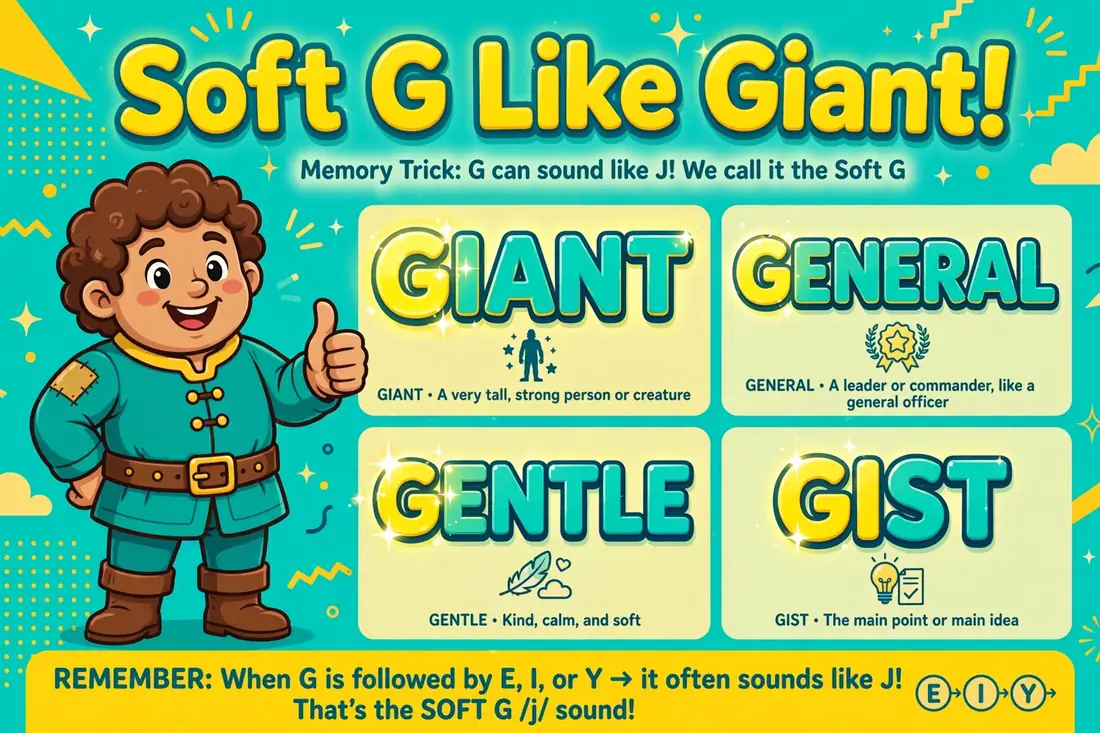
- Soft g: giant, general, gist
- Hard g: garden, gift, green
In gist, the g has a soft sound. That is why the word sounds like “jist.”
Key Differences Between Gist and Jist
The main difference is that gist is the accepted spelling, while jist is generally an error when used with the same meaning.
| Comparison | Gist | Jist |
| Correct for “main idea” | Yes | No |
| Used in standard English | Yes | Not for this meaning |
| Meaning | Central point or essence | No standard meaning intended in this comparison |
| Example | What is the gist of the email? | What is the jist of the email? |
| Recommended in formal writing | Yes | No |
When to Use Gist
Use gist when you want to refer to the main meaning or most important point.
It works naturally in conversations, academic writing, reports, summaries, and everyday communication.
1. Use Gist When Summarizing a Conversation
Use the word when you explain the central message of a discussion.
Examples:
- I missed the beginning, but I got the gist of the conversation.
- Please tell me the gist of your discussion with the manager.
- The gist of their conversation was that the deadline had changed.
2. Use Gist When Discussing Articles or Reports
Use gist to describe the central message of written material.
Examples:
- The gist of the report is that sales increased this quarter.
- I read the introduction and understood the gist of the article.
- The gist of the research paper appears in its conclusion.
3. Use Gist When Explaining a Situation
The word can describe the essential point of an event or situation.
Examples:
- I know the gist of what happened yesterday.
- The gist of the problem is a lack of communication.
- She explained the gist of the complaint to her supervisor.
4. Use Gist in Academic Tasks
Students may use gist when identifying the central idea of a passage.
Examples:
- Write the gist of the paragraph in your own words.
- The exercise asks students to identify the gist of the passage.
- Read the text once and explain its gist.
In school assignments, gist usually means a short statement of the main idea. It does not require a detailed summary.
Common Expressions With Gist
Some phrases use gist regularly. Learning them can help you remember the correct spelling.
Get the Gist
Get the gist means to understand the main point.
Examples:
- I did not understand every sentence, but I got the gist.
- Can you explain it again so I can get the gist?
- She listened carefully and got the gist of the instructions.
The Gist of Something
This phrase identifies the main idea of a particular subject.
Examples:
- The gist of the speech was easy to understand.
- What is the gist of this email?
- He explained the gist of the proposal.
In a Nutshell
This expression means roughly the same thing as explaining the gist. It introduces a brief statement of the main point.
Examples:
- In a nutshell, the project needs more funding.
- The gist of his message, in a nutshell, was that we should wait.
The Bottom Line
The bottom line refers to the most important point or final result.
Examples:
- The bottom line is that we need more time.
- The gist of the meeting was clear, but the bottom line was still uncertain.
These expressions are related, but they are not always interchangeable. Gist focuses on the essential meaning, while bottom line often emphasizes the key result or conclusion.
Gist vs. Summary: What Is the Difference?
Gist and summary are related, but they do not mean exactly the same thing.
A gist is the central idea or essential meaning. A summary is a shortened account of the main points.
| Feature | Gist | Summary |
| Meaning | Main idea or essential point | Shortened account of content |
| Typical length | Often one sentence or a brief statement | Can be several sentences or paragraphs |
| Main purpose | Identify the central meaning | Present important points in a shorter form |
| Example | The gist is that the plan failed. | The summary explains the plan, its problems, and the final result. |
Example
Imagine a three-page article about the effects of air pollution.
Gist: Air pollution can harm human health and the environment.
Summary: The article explains major sources of air pollution, its effects on health, and ways to reduce emissions.
The gist gives the central message. The summary includes more supporting information.
Gist vs. Main Idea
Gist and main idea are very close in meaning. Both refer to the most important point in a piece of communication.
However, gist often emphasizes the general meaning you understand from something. Main idea is common in reading and writing tasks that ask for the central point.
Examples:
- I got the gist of the conversation.
- The main idea of the paragraph is that teamwork improves results.
Both phrases can describe the central message, but their use depends on the context.
Common Mistakes With Gist and Jist
Mistake 1: Writing Jist in Place of Gist
Incorrect: I understand the jist of your point.
Correct: I understand the gist of your point.
Use gist when referring to the main idea.
Mistake 2: Using Jist in Formal Writing
Incorrect: The jist of the report is that costs increased.
Correct: The gist of the report is that costs increased.
In essays, reports, emails, and professional documents, use the standard spelling.
Mistake 3: Confusing Gist With a Full Summary
A gist does not need to include every important detail.
Less precise: The gist includes all the events, examples, and explanations from the article.
Better: The gist gives the article’s central message in a brief form.
A detailed account is more accurately called a summary.
Mistake 4: Using “Get the Jist”
Incorrect: I get the jist of what you mean.
Correct: I get the gist of what you mean.
The correct expression is get the gist.
How to Remember the Correct Spelling
The easiest way to remember gist is to connect its first letter with the soft g sound.
Think of these words:
- Giant
- General
- Gentle
- Gist
They all begin with a soft g sound.
You can also remember this rule:
The main idea is the gist, spelled with G.
When writing the expression “get the gist,” use the letter g, even though the word sounds like it begins with j.
Frequently Asked Questions
Is jist or gist correct?
Gist is correct when you mean the main idea or essential point. Jist is generally a misspelling of this word.
Why is gist spelled with a G?
The word uses a soft g sound, similar to the sound in giant and general. English spelling does not always match pronunciation, so the correct spelling must be learned.
How do you use gist in a sentence?
Use gist to describe the central meaning of something. For example: “I understood the gist of the presentation, even though I missed a few details.”
What does “get the gist” mean?
“Get the gist” means to understand the main point or general meaning of something. You do not need to understand every detail.
Is gist the same as summary?
Not exactly. Gist refers to the central idea. A summary gives a shortened account of the main points and may include more detail.
Is gist a formal word?
Yes. Gist is accepted in both everyday and formal English. You can use it in conversations, school assignments, reports, and professional writing.
Conclusion
Gist is the correct spelling when referring to the main idea, central point, or general meaning of something. Jist is usually a spelling mistake in this context.
Although gist sounds like it begins with a “j,” it starts with the letter g. Remember the phrase “get the gist” to use the correct spelling in your writing.