Truely or Truly: Which Spelling Is Correct?
Truly is the correct standard spelling. Truely is a common misspelling. Use truly when you mean genuinely, sincerely, or really.
The confusion comes from the word true. Although true ends in “e,” the adverb is formed by removing that final “e” and adding “ly.” The result is truly, not truely.
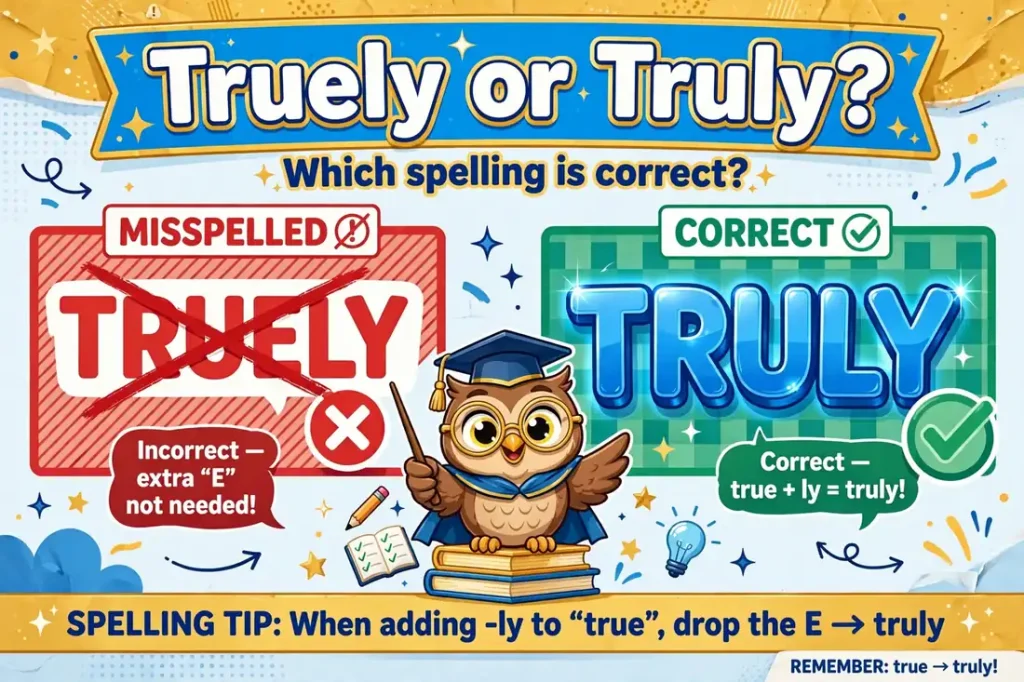
Quick Answer: Truely or Truly?
Quick Facts About Truly and Truely
|
Feature |
Truly |
Truely |
|
Standard spelling |
Yes |
No |
|
Part of speech |
Adverb |
Not a standard spelling |
|
Meaning |
Genuinely, sincerely, or really |
Usually intended to mean “truly” |
|
Word formation |
True + ly, with the final “e” removed |
Incorrectly keeps the “e” |
|
Example |
She is truly talented. |
She is truely talented. |
|
Recommended use |
Formal and informal writing |
Avoid |
What Does Truly Mean?
Truly is an adverb that means genuinely, honestly, sincerely, or in a real way. It adds emphasis to a statement and shows that something is genuine or accurate.
It can describe feelings, beliefs, qualities, experiences, and statements.
Examples of Truly in Sentences
In each example, truly strengthens the meaning of the sentence.
Why Is Truely Incorrect?
Truely is not the standard spelling of the adverb formed from true. The correct spelling is truly.
The mistake happens because writers often add “ly” to the complete word true. However, English spelling removes the final “e” in this case.
The final “e” is dropped before adding the suffix “ly.”
Truly vs. Truely: Key Differences
The main difference is spelling. Truly is accepted in standard English, while truely is a misspelling when intended to mean genuinely or sincerely.
|
Comparison |
Truly |
Truely |
|
Correct spelling |
Yes |
No |
|
Meaning |
Genuinely or sincerely |
No separate standard meaning |
|
Grammar |
Adverb |
Incorrect form |
|
Suitable for formal writing |
Yes |
No |
|
Suitable for everyday writing |
Yes |
No |
|
Example |
I truly enjoyed the event. |
I truely enjoyed the event. |
Why Is Truly Spelled Without an E?
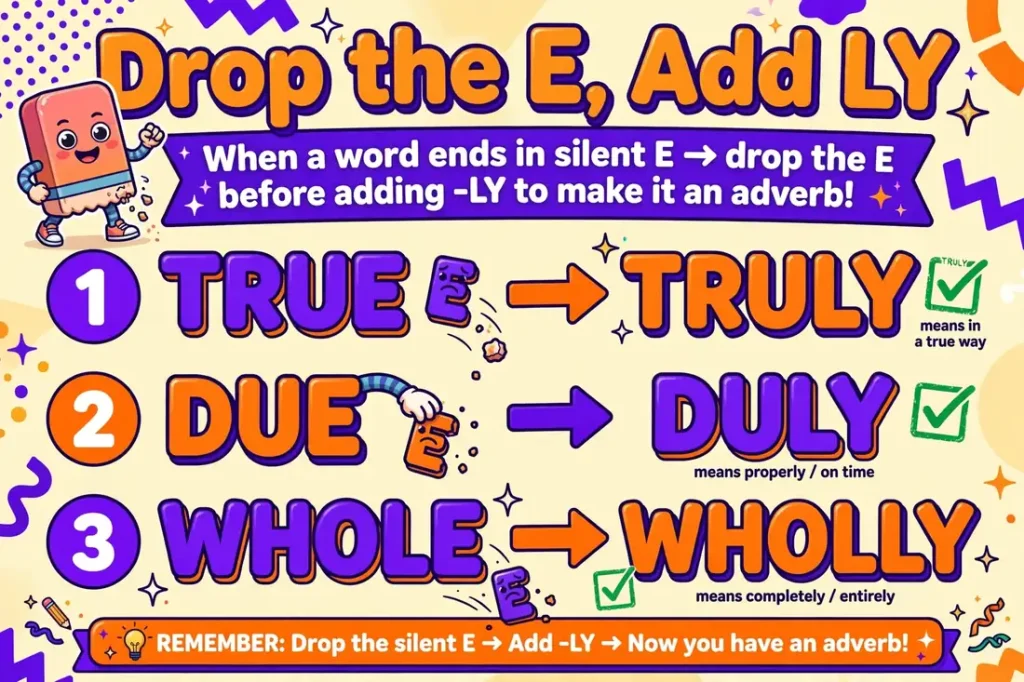
The spelling follows an English word-formation pattern. When true becomes the adverb truly, its final “e” is removed before adding “ly.”
The same pattern appears in other words.
|
Base Word |
Correct Adverb |
Incorrect Form |
|
True |
Truly |
Truely |
|
Due |
Duly |
Duely |
|
Whole |
Wholly |
Wholely |
These examples show why adding “ly” does not always mean keeping every letter of the original word.
However, not every word ending in “e” follows the same pattern. For example, safely keeps the “e” from safe. Learn the standard spelling of each word rather than applying one rule to every
adjective.
When to Use Truly
Use truly whenever you want to express that something is genuine, sincere, real, or accurate.
It is common in personal messages, professional writing, academic work, and everyday conversation.
1. Truly to Show Sincerity
Use truly to emphasize that your feelings or words are sincere.
Examples:
2. Truly to Emphasize a Quality
Use truly to strengthen an adjective or description.
Examples:
3. Truly to Express Genuine Belief
Use truly when emphasizing that someone honestly believes something.
Examples:
4. Truly in Formal and Professional Writing
Truly is acceptable in professional communication. It can express sincere appreciation, regret, or belief.
Examples:
Use it naturally. Repeating truly too often can make writing sound exaggerated.
Truly in Common Expressions
Some phrases use truly regularly. Understanding these expressions can help you use the word correctly.
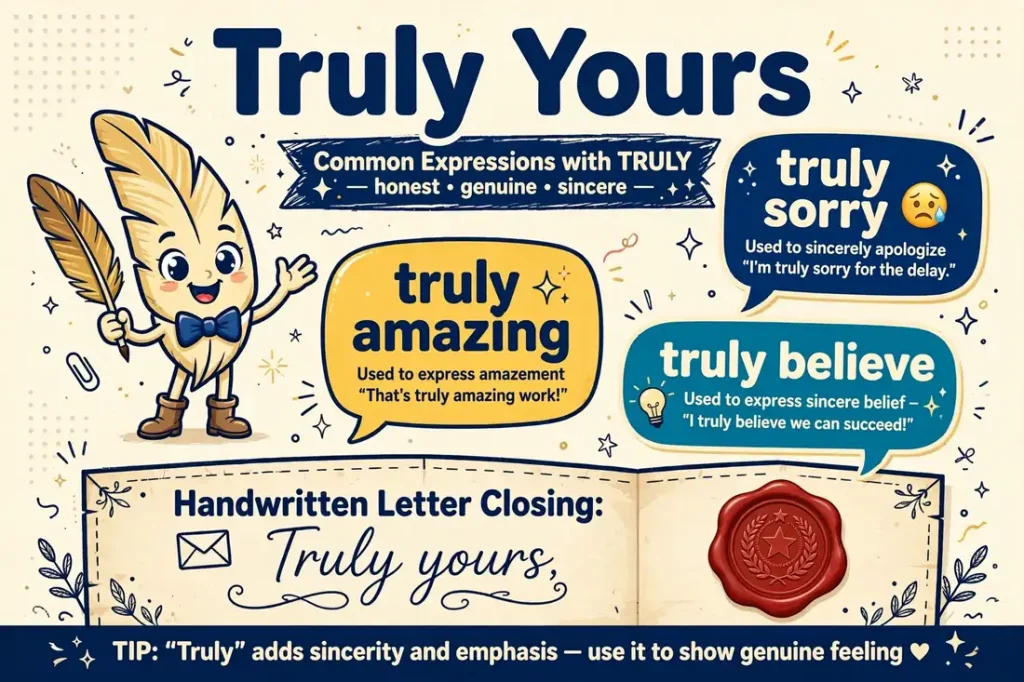
Truly Yours
Truly yours is a formal closing used in some letters and messages. It expresses sincerity or respect.
Example:
Truly yours, Alex Morgan
The phrase is less common in modern everyday emails than simpler closings such as Regards or Sincerely.
Truly Sorry
Truly sorry means genuinely sorry.
Examples:
Truly Believe
Truly believe emphasizes a sincere or firm belief.
Examples:
Truly Amazing
Truly amazing describes something that is genuinely impressive or surprising.
Examples:
Truly vs. True: What Is the Difference?
True and truly are related, but they have different grammatical roles.
True is usually an adjective. It describes something that is correct, genuine, or accurate.
Truly is an adverb. It describes how something happens or emphasizes a statement.
|
Word |
Part of Speech |
Meaning |
Example |
|
True |
Adjective |
Correct, genuine, or accurate |
Her story is true. |
|
Truly |
Adverb |
Genuinely or sincerely |
She truly believes the story. |
Examples Showing the Difference
Use true to describe a noun or subject. Use truly to modify a verb, adjective, or another adverb.
Truly vs. Really: Are They Interchangeable?
Truly and really can have similar meanings. Both can emphasize that something is genuine or accurate.
However, their tone can differ.
Truly often sounds more sincere or formal. Really is more common in everyday conversation and can also express surprise.
|
Word |
Common Use |
Example |
|
Truly |
Sincerity or genuine quality |
I truly appreciate your help. |
|
Really |
Emphasis or surprise |
I really appreciate your help. |
Both sentences are correct. The choice depends on the tone you want.
More examples:
In many contexts, the two words can replace each other without changing the basic meaning.
Common Mistakes With Truly and Truely
Mistake 1: Keeping the Final E
Incorrect: I truely appreciate your support.
Correct: I truly appreciate your support.
Remove the final “e” from true before adding “ly.”
Mistake 2: Using Truely in Professional Writing
Incorrect: We are truely grateful for your cooperation.
Correct: We are truly grateful for your cooperation.
Use the standard spelling in business emails, reports, applications, and formal documents.
Mistake 3: Confusing True With Truly
Incorrect: I true believe in your ability.
Correct: I truly believe in your ability.
The sentence needs an adverb to describe the verb believe. Therefore, use truly.
Mistake 4: Using Truly When True Is Needed
Incorrect: This statement is truly.
Correct: This statement is true.
The sentence needs an adjective after is. Use true, not truly.
Mistake 5: Adding Truly Too Often
Less effective: I truly think this is truly a truly useful idea.
Better: I think this is a useful idea.
Although truly is correct, unnecessary repetition weakens the sentence.
How to Remember the Correct Spelling
Use this simple spelling reminder:
True becomes truly by dropping the final E and adding LY.
Remember the word pair:
You can also connect truly with the phrase “truly honest.” Both words are common in sentences about sincerity and genuine feelings.
When checking your writing, look for truely. If you mean genuinely or sincerely, replace it with truly.
Frequently Asked Questions
Is truely or truly correct?
Truly is the correct standard spelling. Truely is a common misspelling. Use truly when you mean genuinely, sincerely, or really.
Why is truly not spelled truely?
The final “e” in true is removed before adding “ly.” This creates the correct spelling truly.
What does truly mean?
Truly is an adverb meaning genuinely, sincerely, honestly, or in a real way. For example, “I truly appreciate your help.”
Is truly a real word?
Yes. Truly is a standard English adverb. It appears in everyday speech, formal writing, and professional communication.
Is truly the same as really?
They can have similar meanings. Both can add emphasis. Truly often sounds more sincere or formal, while really is common in everyday conversation.
What is the difference between true and truly?
True is usually an adjective meaning correct or genuine. Truly is an adverb meaning genuinely or sincerely. For example, “The story is true” and “I truly believe the story.”
Conclusion
Truly is the correct spelling. Truely is a misspelling when used to mean genuinely or sincerely.
The spelling becomes easier to remember when you know the word formation rule. Remove the final “e” from true and add “ly” to form truly.