Greatful or Grateful: Which Spelling Is Correct?
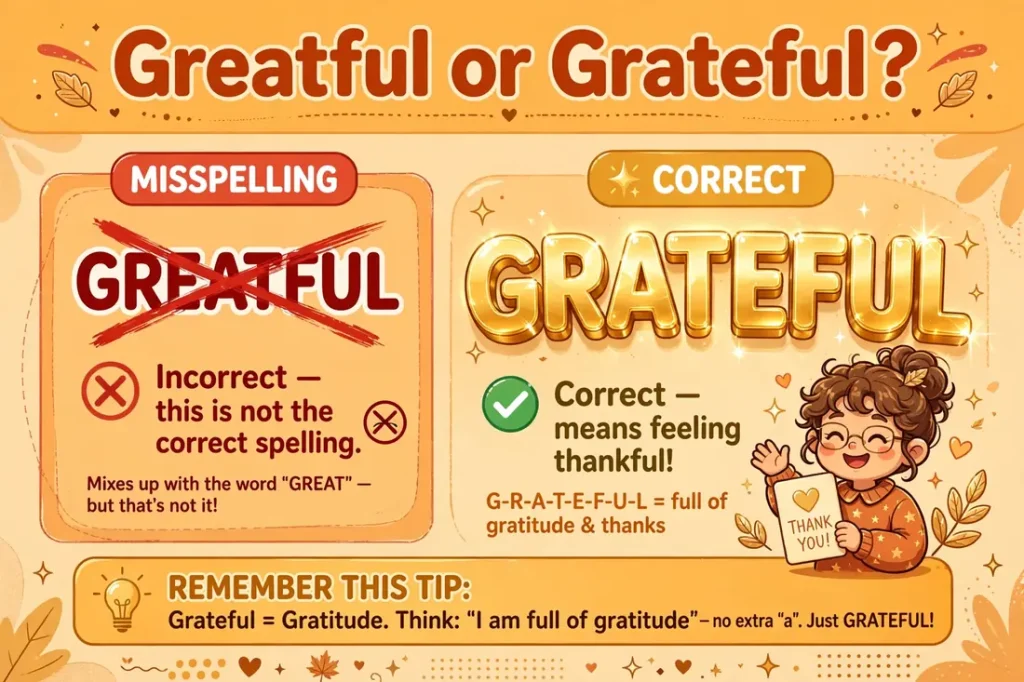
Grateful is the correct spelling. Greatful is a common misspelling and is not accepted as the standard form in English. Use grateful when you want to express appreciation, thankfulness, or recognition of someone’s kindness.
For example, write, “I am grateful for your help,” not “I am greatful for your help.”
Quick Answer
Quick Facts: Grateful vs. Greatful
|
Word |
Correct? |
Meaning |
Example |
|
Grateful |
Yes |
Feeling or showing appreciation |
I am grateful for your kindness. |
|
Greatful |
No |
Common misspelling of grateful |
Write “grateful,” not “greatful.” |
What Does Grateful Mean?
Grateful is an adjective that describes feeling or showing appreciation for something someone has done, received, or experienced.
A grateful person recognizes help, kindness, support, or a positive experience. The word often appears in personal messages, professional communication, and everyday conversations.
Examples of Grateful in Sentences
What Does Greatful Mean?
Greatful is not the standard spelling of the word that means thankful. It usually appears when someone mistakenly combines great with ful.
The correct word is grateful, without the extra “e.”
For example:
Although greatful may look logical at first, English spelling does not form this word from great.
Why Is Grateful Spelled Without an “E”?
The confusion often comes from the word great. Since great means excellent or very good, some writers assume that greatful means being full of appreciation.
However, grateful comes from grate, which is connected to gratitude and thankfulness. It is related to words such as gratitude and gratify.
The correct spelling does not include the “e” found in great.
The words great and grateful have different meanings and spelling patterns.
Grateful vs. Greatful: Key Differences
The main difference is that grateful is a standard English word, while greatful is a misspelling.
|
Feature |
Greatful | |
|
Standard spelling |
Yes |
No |
|
Part of speech |
Adjective |
Not standard |
|
Meaning |
Thankful or appreciative |
No accepted standard meaning |
|
Formal writing |
Correct |
Incorrect |
|
Common use |
Expressing appreciation |
Usually a spelling mistake |
|
Example |
I am grateful for your help. |
I am greatful for your help. |
There is no regional spelling difference between these forms. American, British, Canadian, and Australian English all use grateful.
When to Use Grateful
Use grateful whenever you want to express that you appreciate something.
It can describe appreciation for a person, an action, an opportunity, or a situation.
1. Showing Appreciation to Someone
Use grateful when someone helps you or treats you kindly.
Examples:
2. Appreciating an Opportunity
The word also works when someone receives a useful chance or experience.
Examples:
3. Expressing Thanks in Professional Writing
Grateful is suitable for workplace messages, formal letters, and professional emails.
Examples:
The final example uses grateful in a polite request. It does not mean the person has already received help.
4. Describing a General Feeling of Thankfulness
You can also use the word to describe a person’s attitude.
Examples:
How to Use Grateful in a Sentence
Grateful is an adjective. It commonly appears after linking verbs such as am, is, are, was, and were.
It can also appear before a noun, though this structure is less common.
Grateful With “For”
Use grateful for when identifying the thing or action you appreciate.
Examples:
Grateful With “To”
Use grateful to when identifying the person or group you appreciate.
Examples:
You can use both forms in one sentence:
“I am grateful to my colleagues for their support.”
Here, to my colleagues identifies the people, while for their support explains the reason.
Grateful in a Polite Request
The phrase I would be grateful if is common in polite requests.
Examples:
This construction is grammatically correct and often sounds more formal than “Please send the report.”
Grateful or Thankful: What Is the Difference?
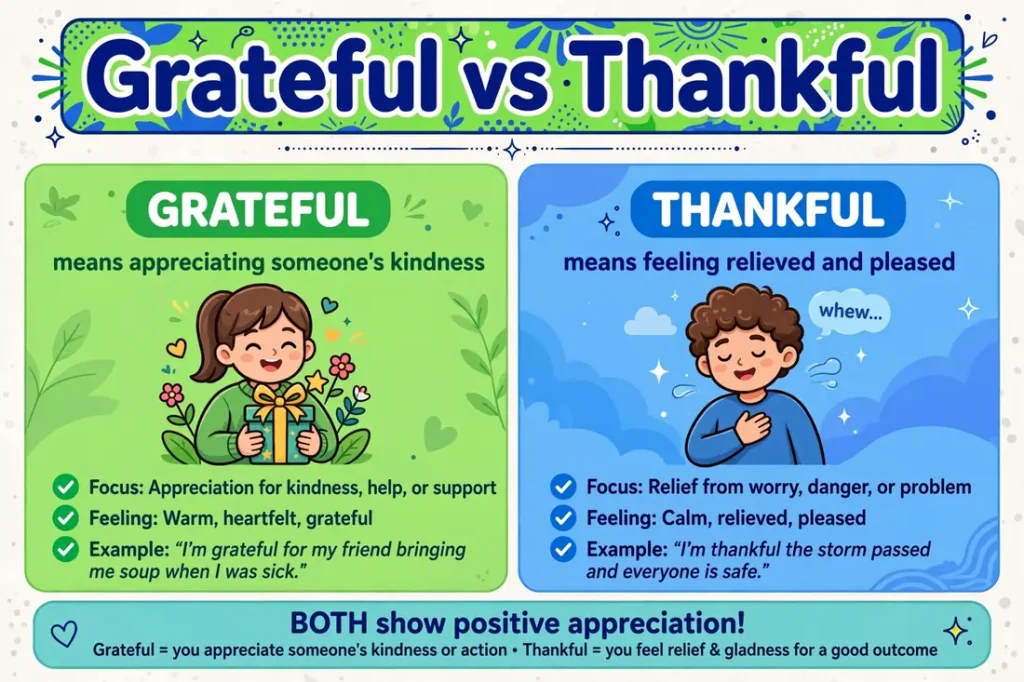
Grateful and thankful have similar meanings. Both describe appreciation, but they can carry slightly different emphasis.
Grateful often highlights appreciation for a person, action, or benefit. Thankful can also express relief that something unpleasant did not happen.
|
Word |
Main Meaning |
Example |
|
Grateful |
Appreciative of help, kindness, or a benefit |
I am grateful for your support. |
|
Thankful |
Feeling pleased or relieved about something |
I am thankful that everyone is safe. |
The words often overlap. For example, “I am grateful for your help” and “I am thankful for your help” are both correct.
Common Mistakes With Grateful
1. Adding an Extra “E”
Incorrect: I am greatful for your kindness.
Correct: I am grateful for your kindness.
Remember that grateful does not contain the “e” from great.
2. Using Greatful in Formal Writing
Incorrect: We are greatful for your cooperation.
Correct: We are grateful for your cooperation.
Always use the standard spelling in emails, applications, reports, and other formal documents.
3. Confusing Grateful With Great
Great means excellent, impressive, or very good. Grateful means thankful.
Examples:
The words are not interchangeable.
4. Using “Grateful For” and “Grateful To” Incorrectly
Both phrases are correct, but they serve different purposes.
You can combine them when needed:
“I am grateful to my manager for the opportunity.”
How to Remember the Correct Spelling
A simple way to remember grateful is to connect it with gratitude.
Both words begin with “grat,” and neither contains the “e” from great.
Try this memory trick:
The connection between grateful and gratitude can help you avoid the common spelling error.
You can also remember this sentence:
“I am grateful, not greatful, because I feel gratitude.”

Frequently Asked Questions
Is Greatful Ever Correct?
No. Greatful is not the standard spelling when expressing thankfulness. The correct word is grateful.
Why Do People Spell Grateful as Greatful?
People often add an “e” because they associate the word with great. However, grateful is related to gratitude, not great.
Is Grateful the Correct Spelling in American English?
Yes. Grateful is the standard spelling in American English. It is also correct in British, Canadian, and Australian English.
What Is the Difference Between Grateful and Gratitude?
Grateful is an adjective that describes someone who feels thankful. Gratitude is a noun that names the feeling itself.
Example: “I am grateful for your help, and I feel deep gratitude.”
Can I Say “I Am Grateful to You”?
Yes. “I am grateful to you” is grammatically correct. It expresses appreciation toward someone.
You can also explain the reason by saying, “I am grateful to you for your support.”
What Is Another Word for Grateful?
Common synonyms include thankful, appreciative, obliged, and indebted. The best choice depends on the context.
For example, appreciative works well when recognizing someone’s effort. Thankful is a close alternative in everyday conversation.
Conclusion
Grateful is the correct spelling when expressing thankfulness or appreciation. Greatful is a common spelling mistake, not an accepted regional variation.
Remember the connection between grateful and gratitude. Both use “grat” without the extra “e.” When writing about appreciation, always choose grateful.