Cancelled or Canceled: Which Spelling Is Correct?
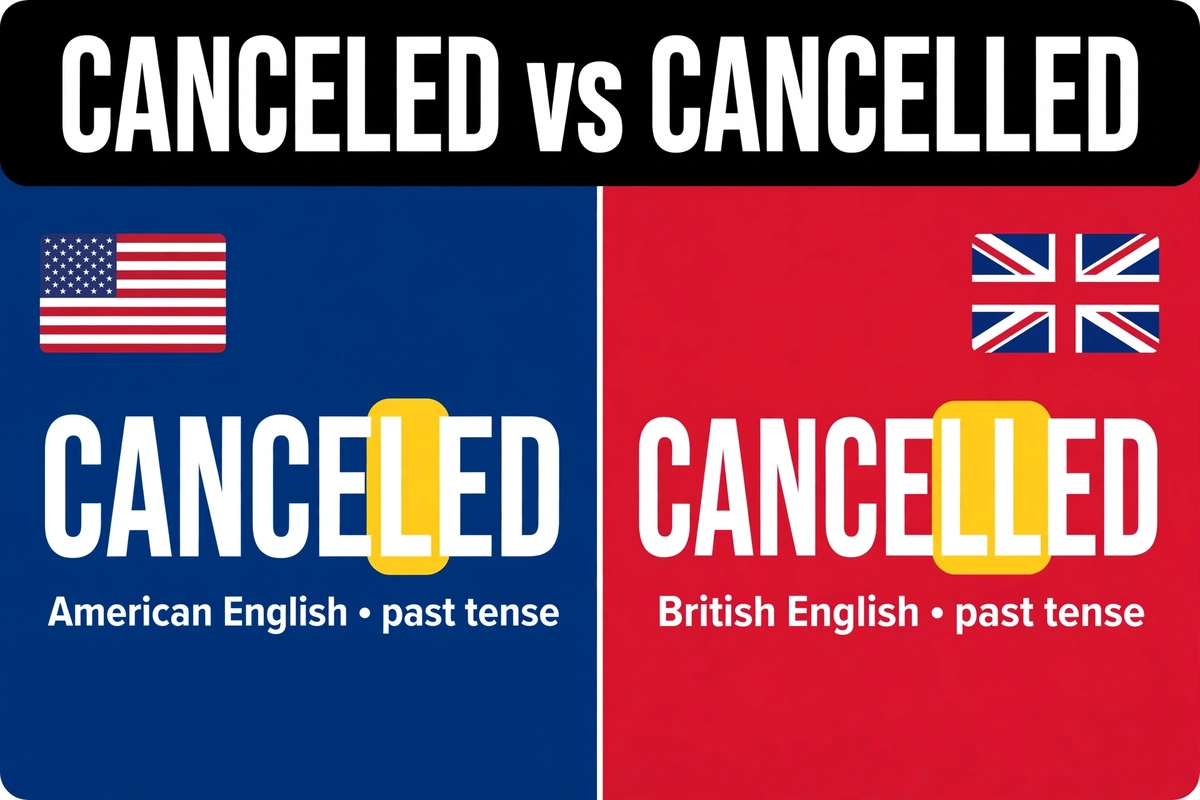
Both cancelled and canceled are correct spellings of the same word. The difference comes from regional English conventions. American English generally uses canceled with one L, while British English uses cancelled with two Ls. Both forms mean to call off, stop, or decide not to continue something.
The spelling difference also applies to related words, such as cancelling and canceling. Understanding this regional distinction helps you write correctly for different audiences.
Quick Answer: Cancelled or Canceled?
Choose the spelling that matches your audience. For US readers, use canceled. For UK readers, use cancelled.
Quick Facts About Cancelled and Canceled
|
Detail |
Canceled |
Cancelled |
|
Correct spelling |
Yes |
Yes |
|
English variety |
American English |
British English |
|
Number of Ls |
One |
Two |
|
Part of speech |
Verb (past tense) |
Verb (past tense) |
|
Present tense |
Cancel |
Cancel |
|
Present participle |
Canceling |
Cancelling |
|
Past participle |
Canceled |
Cancelled |
|
Meaning |
To call something off |
To call something off |
|
Common usage |
United States |
United Kingdom |
What Does Canceled Mean?
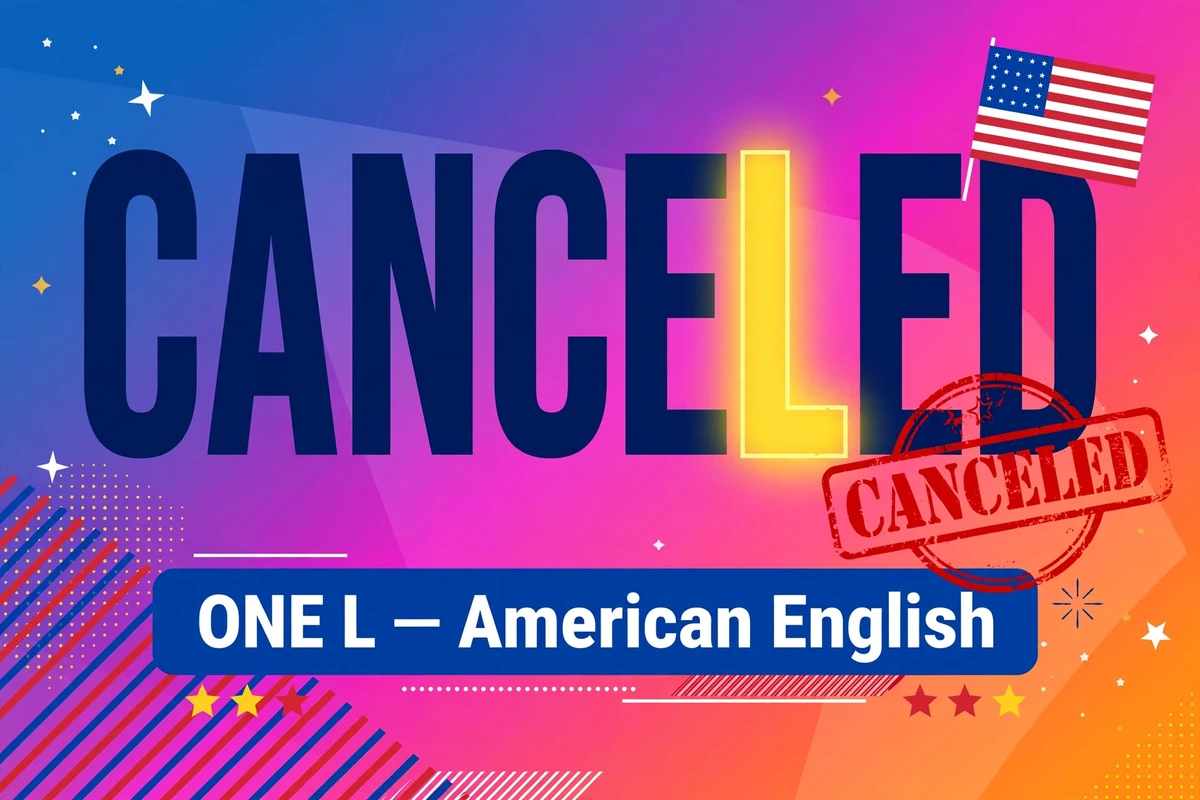
Canceled is the American English spelling of the past tense and past participle of the verb cancel.
It describes something that someone stopped, called off, or decided not to continue.
American English usually drops the final L when adding certain suffixes to words ending in L.
Examples of Canceled in Sentences
In each sentence, canceled describes an action that has already happened.
When Should You Use Canceled?
Use canceled when writing for an American audience.
It is common in:
Example:
"The restaurant canceled our reservation because of an unexpected emergency."
This spelling follows standard American English.
What Does Cancelled Mean?
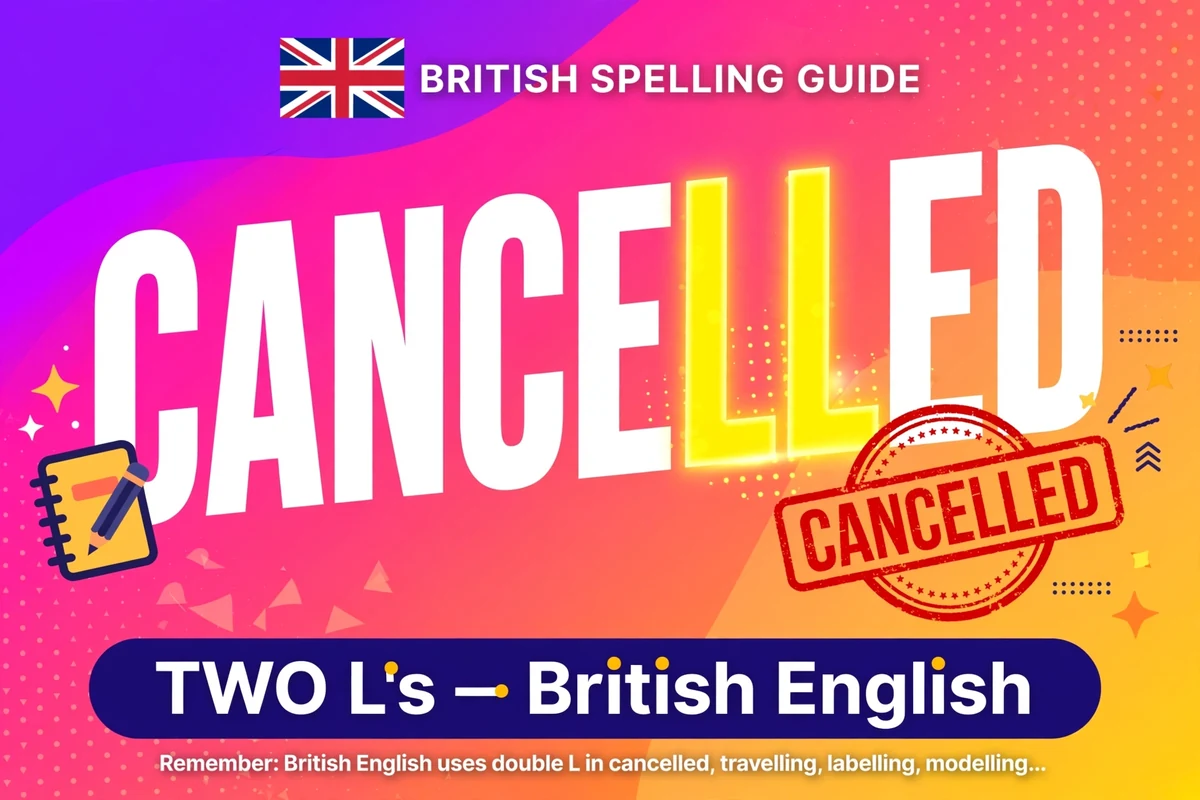
Cancelled is the British English spelling of the past tense and past participle of cancel.
It has exactly the same meaning as canceled. The only difference is its spelling.
British English generally keeps the final L when adding certain suffixes to words ending in L.
Examples of Cancelled in Sentences
These sentences use the British spelling correctly.
When Should You Use Cancelled?
Use cancelled when writing for a British audience.
It is commonly used in:
Example:
"The airline cancelled several flights due to severe weather conditions."
This spelling follows standard British English.
Key Differences Between Cancelled and Canceled
The main difference involves regional spelling rules, not meaning or grammar.
American English typically uses one L in canceled. British English usually uses two Ls in cancelled.
Both spellings refer to the same action.
|
Comparison |
Canceled |
Cancelled |
|
Language variety |
American |
British |
|
Meaning |
Called off |
Called off |
|
Pronunciation |
Same |
Same |
|
Grammar |
Past tense/past participle |
Past tense/past participle |
|
Standard audience |
US readers |
UK readers |
|
Example |
The event was canceled. |
The event was cancelled. |
Neither spelling is universally more correct. Your choice depends on the English variety you follow.
Why Does Cancelled Have Two Ls?
The difference comes from spelling conventions in American and British English.
British English generally doubles the final L when adding certain suffixes to words ending in L. American English often does not follow this pattern.
For example:
|
British English |
American English |
|
Cancelled |
Canceled |
|
Cancelling |
Canceling |
|
Travelled |
Traveled |
|
Travelling |
Traveling |
|
Labelled |
Labeled |
|
Labelling |
Labeling |
However, this rule does not apply to every English word.
For example, both American and British English commonly use controlled and controlling.
The spelling of each word depends on established language conventions.
Cancel, Cancelling, and Canceling: Understanding the Forms
The spelling difference extends beyond the past tense.
Understanding the different forms of cancel helps prevent common mistakes.
1. Cancel
Cancel is the base form of the verb. Both American and British English use the same spelling.
Examples:
2. Canceled
Canceled is the American spelling of the past tense and past participle.
Examples:
3. Cancelled
Cancelled is the British spelling of the past tense and past participle.
Examples:
4. Canceling
Canceling is the American spelling of the present participle.
Examples:
5. Cancelling
Cancelling is the British spelling of the present participle.
Examples:
Cancelled vs Canceled in American and British English
English spelling varies across different regions. This difference is especially noticeable between American and British English.
Although the US and UK follow different conventions, both recognize these spellings.
American English
American English generally prefers:
Notice that cancellation contains two Ls, even in American English.
This is an important exception. You should not write cancelation when following standard American English.
Example:
"The cancellation of the event surprised everyone."
British English
British English generally prefers:
British English also uses two Ls in cancellation.
Example:
"The cancellation of the concert disappointed many fans."
What About Canadian English?
Canadian English shares spelling conventions with both British and American English.
However, Canadian dictionaries generally recognize cancelled and cancelling as standard spellings.
For Canadian audiences, cancelled is a common choice.
Consistency remains important when writing for Canadian readers.
Cancelled or Canceled in Different Situations
Both spellings work in everyday communication. However, certain contexts make regional consistency especially important.
1. Emails and Business Communication
Use the spelling preferred by your organization’s language guidelines.
American companies generally use canceled. British companies commonly use cancelled.
American example:
"Your appointment has been canceled successfully."
British example:
"Your appointment has been cancelled successfully."
2. Social Media Posts
Either spelling works on social media.
Your choice should reflect your target audience.
For example, a US-based business should generally use canceled in its announcements.
A UK-based business should generally use cancelled.
3. Academic Writing
Academic writing should follow the spelling conventions required by the institution, publisher, or style guide.
If the publication uses American English, write canceled.
If it follows British English, write cancelled.
Avoid switching between both forms in the same document.
4. News and Journalism
News organizations usually follow a specific editorial style.
American publications commonly use canceled, while British publications commonly use cancelled.
Writers should follow their publication’s house style.
5. Website and SEO Content
For website content, consistency helps maintain a clear regional language style.
If your website targets American readers, use canceled throughout your content.
If your audience is primarily British, use cancelled.
Both spellings can match relevant search queries. Your content should focus on the reader’s preferred spelling and search intent.
Common Mistakes When Using Cancelled or Canceled
Although both spellings are correct, writers often make mistakes when applying their spelling rules.
Here are some common errors to avoid.
Mistake 1: Treating Canceled as Incorrect
Incorrect understanding: "Canceled" is always a misspelling.
Correct understanding: Canceled is the standard American English spelling.
Example:
The flight was canceled because of a storm.
This sentence is correct in American English.
Mistake 2: Treating Cancelled as Incorrect
Incorrect understanding: "Cancelled" is always wrong because it has an extra L.
Correct understanding: Cancelled is the standard British English spelling.
Example:
The flight was cancelled because of a storm.
This sentence is correct in British English.
Mistake 3: Writing Cancelation in Standard American English
Although American English uses one L in canceled, the noun cancellation keeps two Ls.
Incorrect: The cancellation of the event was unexpected.
Correct: The cancellation of the event was unexpected.
The two versions above are identical because the first is also correct. The spelling to avoid is cancelation when following standard American English.
Mistake 4: Mixing American and British Spellings
Using different regional spellings in one article can make your writing inconsistent.
For example:
"The company canceled the meeting but later announced its cancelled subscription policy."
A consistent American English version would be:
"The company canceled the meeting but later announced its canceled subscription policy."
A consistent British English version would be:
"The company cancelled the meeting but later announced its cancelled subscription policy."
Mistake 5: Doubling the L Incorrectly
Not every word ending in L requires the same spelling treatment.
Always check the established spelling of the specific word.
For example, cancellation contains two Ls in both American and British English.
How to Remember the Difference
A simple way to remember these spellings is to associate them with their regional English varieties.
American English = One L
British English = Two Ls
Think of the word American as your reminder to use one L in canceled.
For British English, remember that the doubled L is retained.
However, always check individual words when uncertain.
Is Cancelled or Canceled More Common?
The preferred spelling depends on the English-speaking region.
Cаnceled is the standard form in American English. Cancelled is the standard form in British English.
Neither spelling is incorrect simply because it appears less frequently in another country.
For example, an American newspaper may use canceled, while a British newspaper uses cancelled.
Both publications follow their respective spelling conventions.
Frequency alone does not determine whether a spelling is grammatically correct.
Frequently Asked Questions
Is Cancelled or Canceled Correct?
Both spellings are correct. Canceled is standard American English, while cancelled is standard British English. They have the same meaning and grammatical function.
Is Canceled American or British English?
Canceled is the standard American English spelling. It uses one L in the past tense of cancel. American English also generally uses canceling for the present participle.
Is Cancelled British English?
Yes. Cancelled is the standard British English spelling. It uses two Ls and follows the British convention for this verb.
Is It Canceling or Cancelling?
Both are correct. American English generally uses canceling, while British English uses cancelling. Both forms describe the act of stopping or calling something off.
Is Cancellation Spelled With One L or Two?
Cancellation is spelled with two Ls in both American and British English. Although Americans write canceled with one L, they still use cancellation with two Ls.
Can I Use Cancelled in American English?
Yes, readers will understand it. However, canceled is the standard American spelling. Use cancelled only when following a style guide or regional convention that prefers the British form.
Which Spelling Should I Use for a US Audience?
Use canceled when writing for American readers. Also use canceling to maintain consistency. Remember that cancellation still takes two Ls.
Do Cancelled and Canceled Sound Different?
No. Both spellings have the same pronunciation. The difference exists only in written English, not in meaning or pronunciation.
Conclusion
Both cancelled and canceled are correct spellings of the same word. The difference comes from regional English conventions.
Use canceled and canceling for American English. Choose cancelled and cancelling for British English.
Remember that cancellation uses two Ls in both varieties. Following one consistent spelling style makes your writing clearer and more professional.