Saviour or Savior: US vs UK Spelling Explained
Is it saviour or savior? Both are correct — savior is the American spelling, saviour is the British spelling of the same word meaning one who saves.
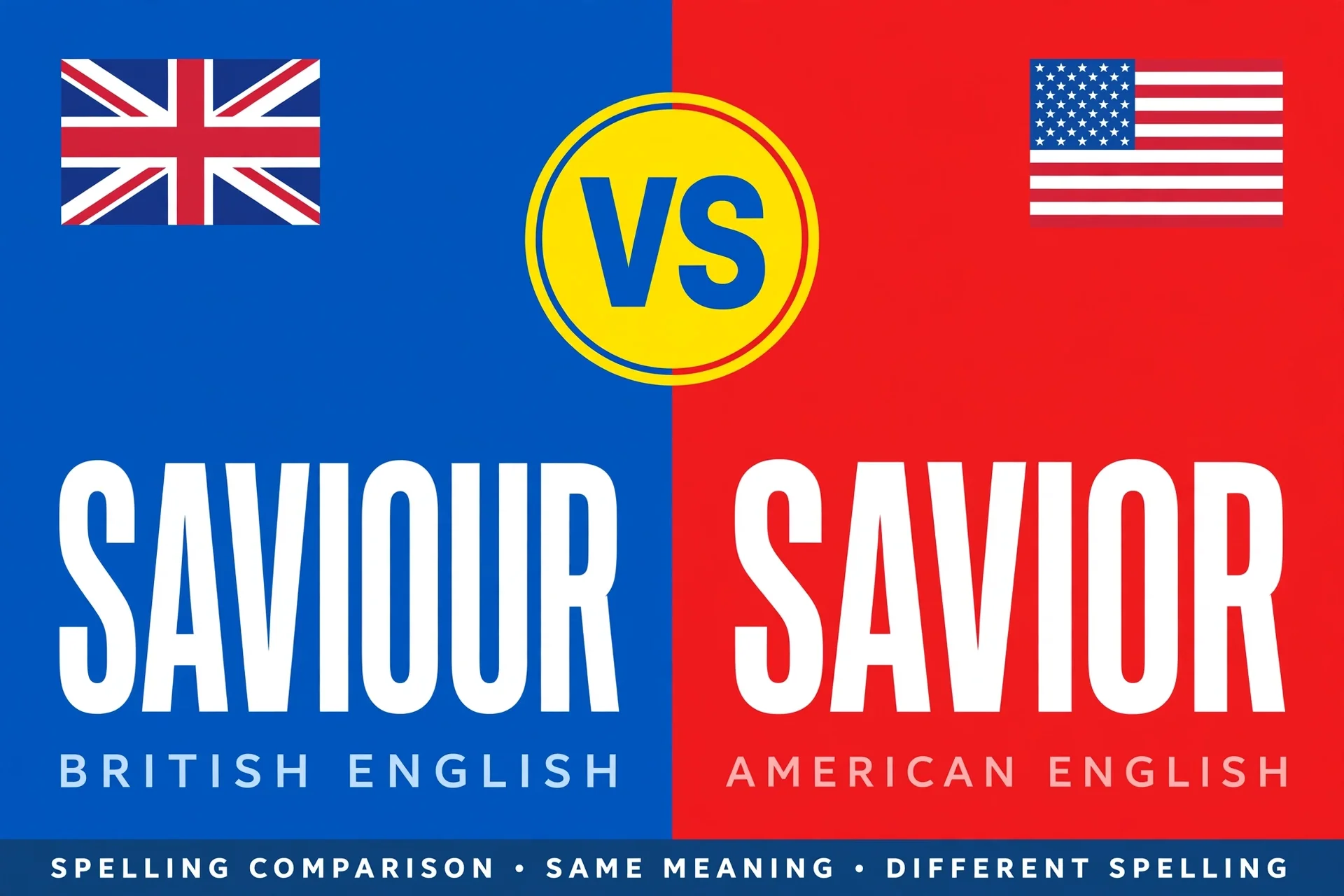
Table of Contents
Quick Answer
| Word | Region | Main Meaning | Example |
|---|---|---|---|
| Savior | American English | One who saves or rescues | “The lifeguard was hailed as a savior.” |
| Saviour | British English | One who saves or rescues | “The lifeguard was hailed as a saviour.” |
Simple rule: British keeps the “u” (saviour); American drops it (savior).
What Does Savior Mean?
Savior is the American English spelling of the noun meaning a person who saves someone from danger, harm, or a bad situation. Merriam-Webster’s definition of “savior” gives two senses: “one that saves from danger or destruction” and “one who brings salvation.”
- The new coach was seen as the team’s savior after a losing season.
- She called the plumber her savior when the pipes burst at midnight.
- The charity became a savior for families hit by the storm.
- Investors hoped the merger would be the company’s savior.
- Every classroom needs a savior like Ms. Reed, he joked.
What Does Saviour Mean?
Saviour is the British English spelling of the exact same noun — a person who rescues or delivers someone from trouble. It appears in UK, Canadian, and Australian publications wherever an American text would print savior.
- The new manager was hailed as the club’s saviour after promotion.
- She described the night nurse as her saviour during a difficult labour.
- The rain was a saviour for farmers after the dry spring.
- He played the saviour with a last-minute goal.
- The local food bank has been a saviour to struggling families.
Why Two Spellings?
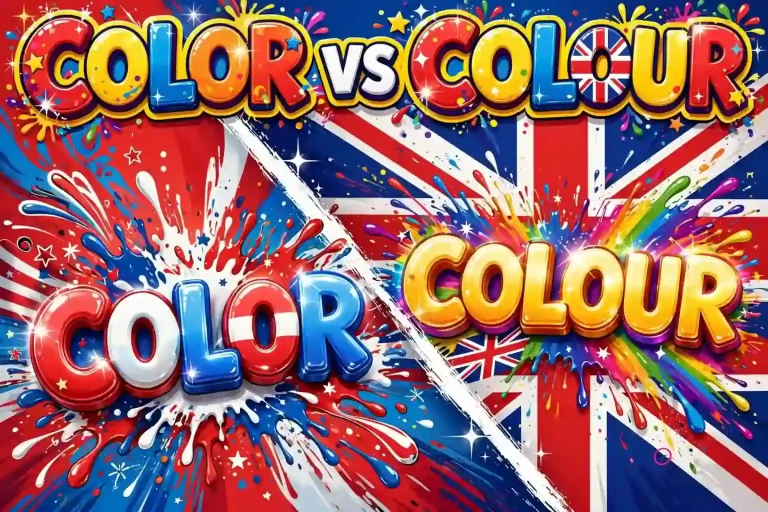
The split traces back to Noah Webster, the American lexicographer whose 1828 dictionary deliberately simplified many British spellings. Words ending in -our — saviour, colour, honour, favour — lost their “u” in American English to become -or: savior, color, honor, favor. Webster wanted American spelling to be simpler and more phonetic, and the change stuck. British English kept the older French-influenced -our forms, and so did most Commonwealth countries.
Canada and Australia follow the British pattern here, printing saviour in their newspapers and books. One wrinkle: proper names keep their original spelling regardless of region, so an American organization called “Saviour Ministries” would keep its “u” even in US text, and vice versa. Always check the official name before “correcting” a proper noun.
Related US vs UK word pairs
| American (US) | British (UK) |
|---|---|
| savior | saviour |
| color | colour |
| honor | honour |
| favor | favour |
| labor | labour |
| behavior | behaviour |
| neighbor | neighbour |
Saviour vs. Savior: Key Differences
| Feature | Savior | Saviour |
|---|---|---|
| Region | United States | UK, Canada, Australia |
| Spelling | Drops the “u” (-or) | Keeps the “u” (-our) |
| Meaning | One who saves or rescues | Identical |
| Pronunciation | “SAYV-yur” | Identical |
| Capitalized form | the Savior (US) | the Saviour (UK) |
Region is the whole story here — swap the spelling when you cross the ocean, and the meaning stays exactly the same.
Saviour or Savior in Real Sentences
In American Writing
Savior: “The startup’s new funding round was its savior.” Saviour: not used — an American reader would see the “u” as a Britishism, and an American editor would remove it.
In British Writing
Saviour: “The late equaliser made him an instant saviour.” Savior: not used — a British reader would read the missing “u” as an Americanism, and a UK editor would add it back.
In Religious Use
Savior: American Bibles and hymnals write “the Savior” for Jesus Christ. Saviour: British Bibles and hymnals write “the Saviour.” The capital letter marks the religious title; the region still decides the spelling.
Common Mistakes
As with other transatlantic pairs like cancelled or canceled and labelled or labeled, the errors with saviour/savior come from using the wrong region’s spelling for your audience.
Mistake 1: Using “saviour” in American copy
❌ An American marketing email calling a product “your financial saviour.”
✅ “…your financial savior.”
Why: American readers expect the -or spelling; the “u” looks like a typo to them.
Mistake 2: Using “savior” in British copy
❌ A UK newspaper describing a footballer as the club’s “savior.”
✅ “…the club’s saviour.”
Why: British style keeps the “u” — dropping it reads as an Americanism.
Mistake 3: Thinking they’re different words
❌ “Is a saviour more religious than a savior?”
✅ They’re the same word — region, not meaning, separates them.
Why: the spelling difference carries zero difference in definition.
Mistake 4: Mixing spellings in one document
❌ “Our savior product line… your trusted saviour brand.”
✅ Pick one regional spelling and use it consistently throughout.
Why: mixing the two looks sloppy even though both are correct somewhere.
Pronunciation
Both spellings are pronounced the same: “SAYV-yur,” rhyming with flavor and behavior. The silent “u” in saviour changes nothing about the sound — which is exactly why Webster felt safe dropping it.
How to Remember the Difference
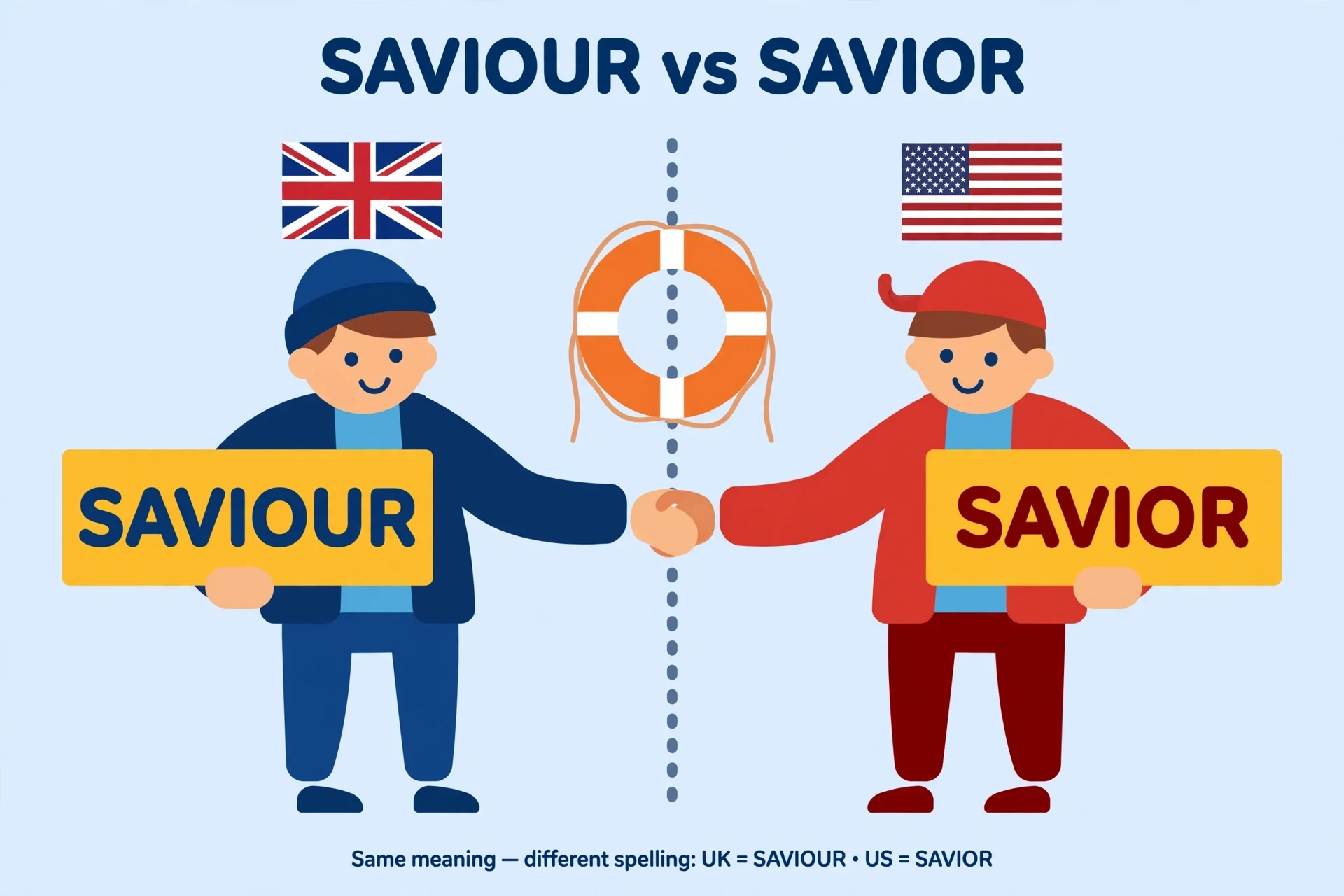
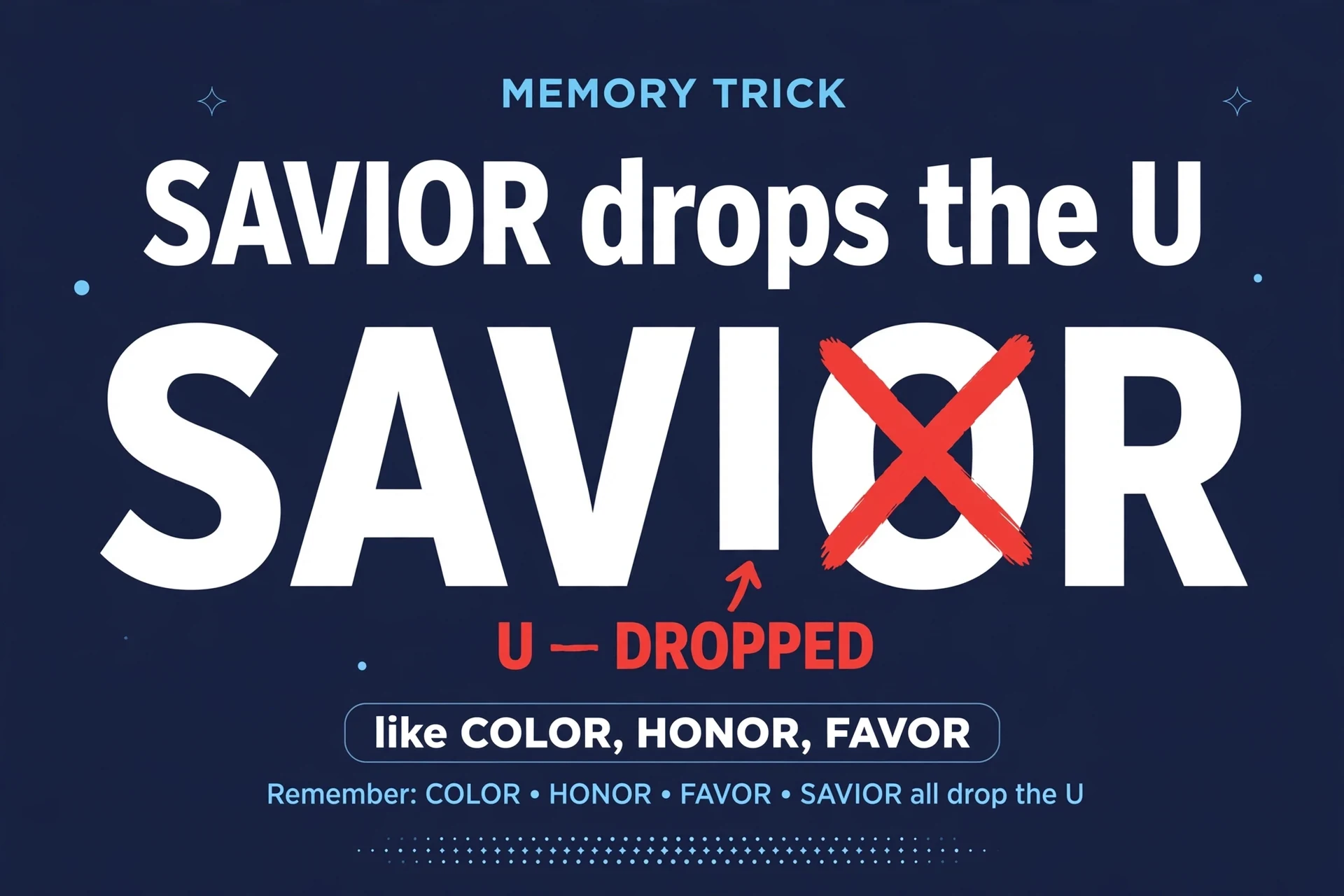
Americans dropped the U — just like they did in color, honor, and favor. If the text is American, the “u” goes missing; if it’s British, the “u” stays home.
- Savior = U.S. spelling — and the U.S. version has no “u.”
- Saviour = British — think “the UK keeps the u.”
- Match your audience: writing for Americans, write savior; for Britons, saviour.
Frequently Asked Questions
Is it saviour or savior?
Both are correct — savior is the American spelling and saviour is the British spelling. Choose based on your audience’s region, and stay consistent within a single document.
Which countries use “saviour”?
The UK, Canada, Australia, New Zealand, and most Commonwealth countries use saviour. The US uses savior. International publications usually pick one house style and apply it throughout.
Why did Americans drop the “u”?
Noah Webster’s 1828 dictionary simplified -our to -or to make American spelling more phonetic and distinct from British spelling. The reform covered a whole family of words — color, honor, favor, labor — and Americans adopted it permanently.
Is “Saviour” capitalized?
When it refers to Jesus Christ in Christian writing — “the Saviour” / “the Savior” — yes, it’s capitalized as a title. For an ordinary rescuer, like a lifeguard or a helpful neighbor, it stays lowercase.
Are savior and saviour pronounced differently?
No. Both are pronounced “SAYV-yur,” rhyming with flavor. The “u” in saviour is completely silent, so the regional difference is invisible in speech.
Is “saviour” wrong in America?
Not wrong as a word, but wrong for the audience — American style guides prescribe savior, so saviour in US copy looks like an error to American readers. The reverse is true in British copy.
Conclusion
Savior and saviour are one word wearing two regional spellings: America drops the “u,” Britain keeps it. Match the spelling to your readers, stay consistent, and you’ll never go wrong.