Sence or Sense: What’s the Difference? (With Examples)
Sence is not a word — it is one of the most common misspellings of sense. If you mean the ability to perceive, good judgment, or meaning, the correct spelling is always sense.
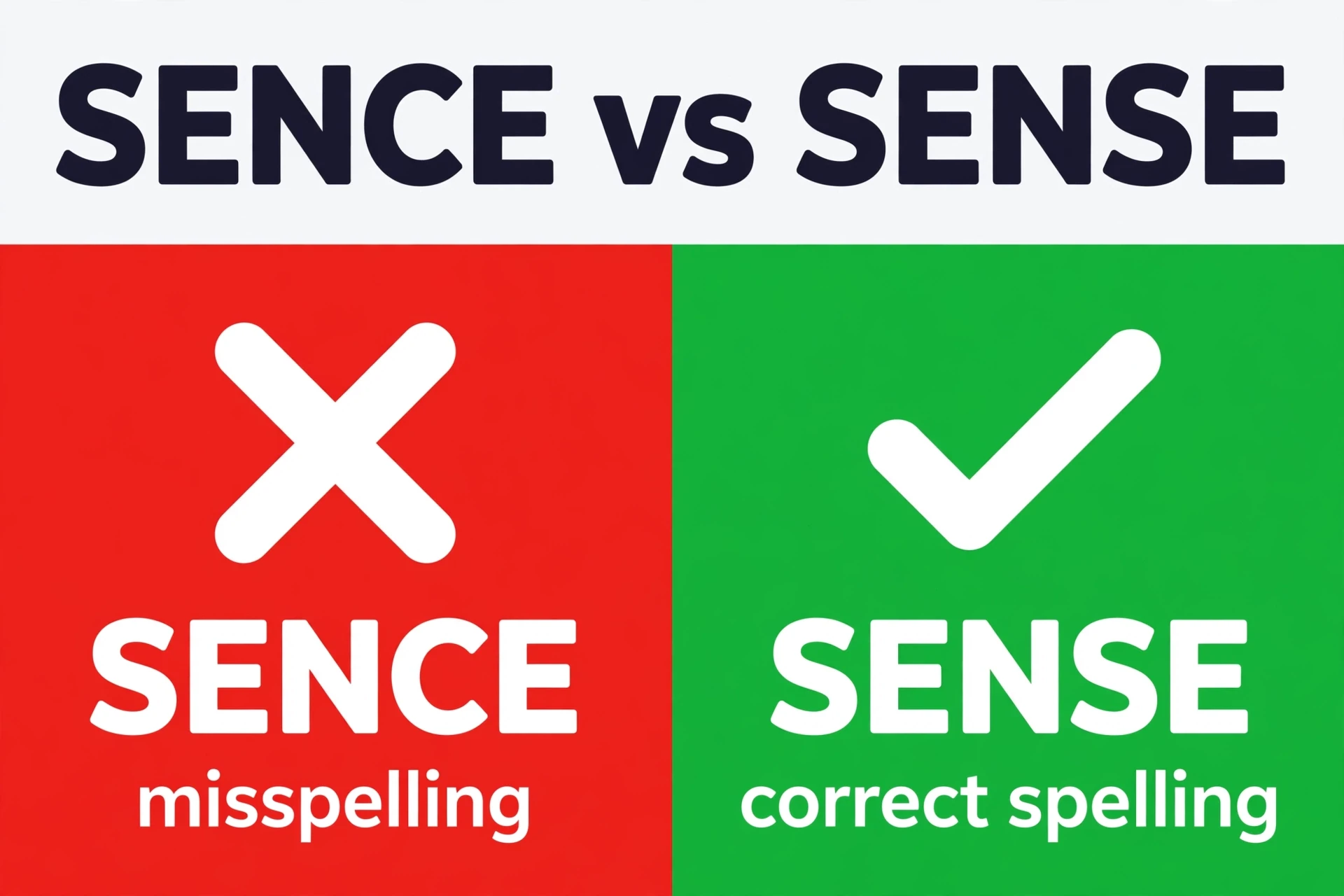
Table of Contents
Quick Answer
| Word | Part of Speech | Main Meaning | Example |
|---|---|---|---|
| Sence | Not a standard word | Common misspelling of “sense” | ❌ “That makes no sence” → ✅ “That makes no sense” |
| Sense | Noun / verb | Ability to perceive; good judgment; meaning / to detect or feel | She has a sharp sense of smell. |
Simple rule: If it sounds like “sens” and carries any real meaning, spell it S-E-N-S-E. There is no English word spelled sence.
What Is “Sence”?
Sence appears in no standard English dictionary. It is purely a misspelling — most likely caused by the c/s sound overlap (as in scent), confusion with since, or a simple typing slip. Because it looks plausible, spellcheckers and readers often glide right past it.
Examples of the mistake (all incorrect):
- ❌ “Use your common sence.” → ✅ “Use your common sense.”
- ❌ “In a sence, you are right.” → ✅ “In a sense, you are right.”
- ❌ “I senced something was wrong.” → ✅ “I sensed something was wrong.”
- ❌ “He has no sence of direction.” → ✅ “He has no sense of direction.”
Every one of these should use sense. Misspellings like this are everywhere in English — similar traps include thier vs their and recieve vs receive.
What Does Sense Mean?
Sense is a real, hardworking word with several related meanings, both as a noun and a verb. The Cambridge Dictionary entry for sense lists its full range, from physical perception to good judgment.
Sense as a noun
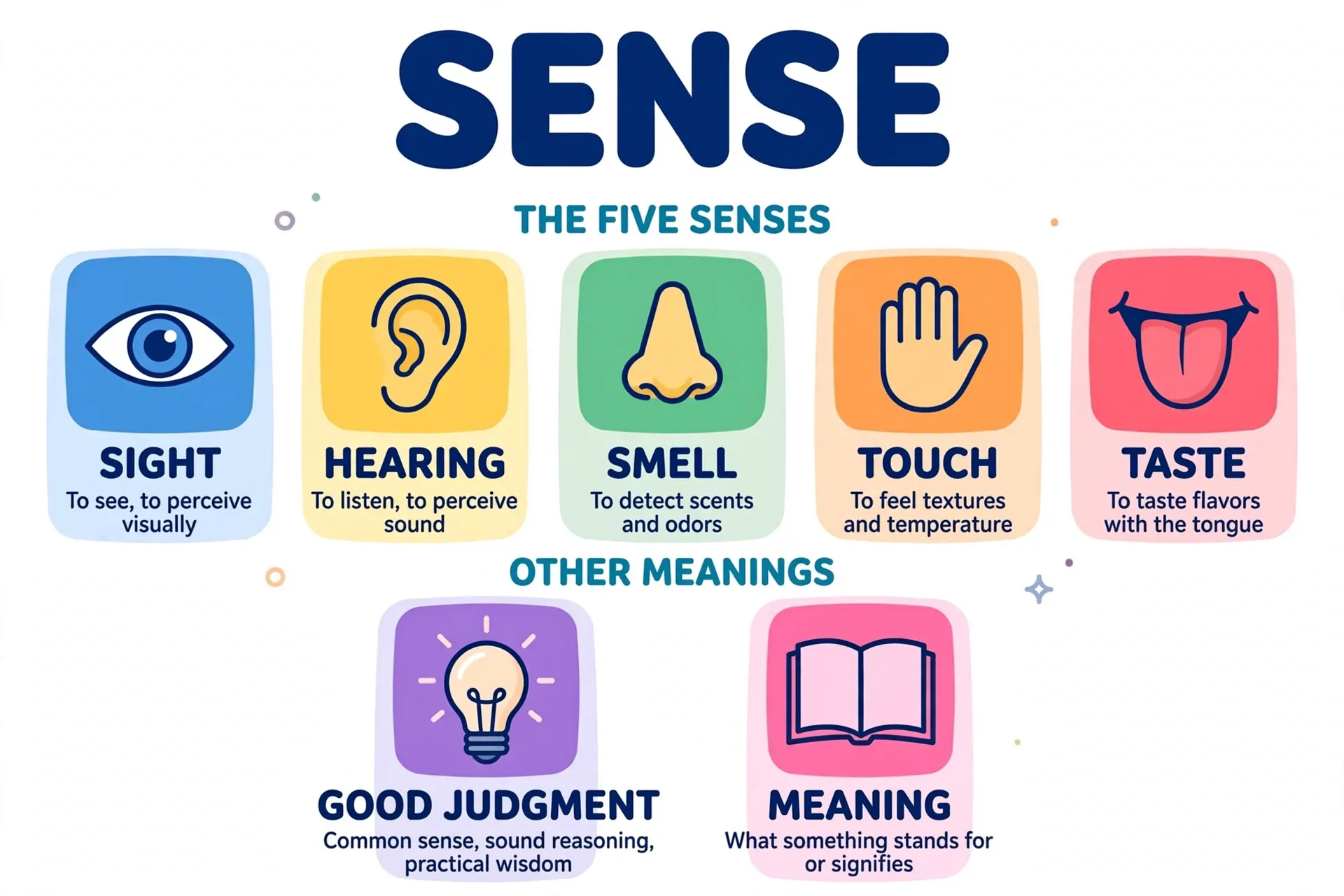
As a noun, sense can mean one of the five physical abilities (sight, hearing, smell, taste, touch), good judgment, or the meaning of something.
Examples:
- Dogs have an incredible sense of smell.
- She showed a lot of sense in handling the complaint calmly.
- What is the sense of this sentence? I don’t follow it.
- He has a wonderful sense of humor.
- In a sense, moving abroad was the best decision I ever made.
Sense as a verb
As a verb, sense means to detect or become aware of something without being told directly.
Examples:
- I could sense her disappointment the moment she walked in.
- He sensed that the meeting was about to turn tense.
- The dog sensed the storm long before we heard thunder.
- She sensed an opportunity and acted on it immediately.
Sence vs. Sense: Key Differences
| Feature | Sence | Sense |
|---|---|---|
| Status | Misspelling — not a word | Standard English word |
| Dictionary entry | None | Yes, in every dictionary |
| Meaning | None | Perception, judgment, meaning; to detect |
| Pronunciation | Would sound identical to “sense” | /sɛns/ |
| What to do | Always correct it to “sense” | Use freely |
The identical pronunciation is the trap: since sence would sound exactly like sense, your ear never catches the error — only your eyes can, which is why learning the spelling matters.
Usage in Real Sentences
At Home
❌ “Mom, this doesn’t make sence to me.” → ✅ “Mom, this doesn’t make sense to me.”
The phrase “make sense” is one of the most common places the sence typo appears, because people type it quickly in messages.
At Work
❌ “Please use common sence when replying to clients.” → ✅ “Please use common sense when replying to clients.”
In professional writing the misspelling stands out immediately to readers, so it is worth fixing before you hit send.
In Conversation
❌ “I sence you’re upset about something.” → ✅ “I sense you’re upset about something.”
As a verb, sense (to detect a feeling) keeps the same S-E-N-S-E spelling — the meaning changes, the spelling does not.
Common Mistakes With Sence and Sense
Spelling mix-ups like sence usually come from a small set of habits. Fix the habit and the spelling follows — the same goes for lookalike traps such as thier vs their.
Mistake 1: Writing “make sence”
❌ That explanation makes no sence.
✅ That explanation makes no sense.
Why: “Make sense” is a fixed phrase and always uses sense. If you can substitute “is logical”, you need sense.
Mistake 2: Writing “common sence”
❌ Use your common sence before sharing that post.
✅ Use your common sense before sharing that post.
Why: “Common sense” means practical good judgment — one of the core noun meanings of sense.
Mistake 3: Confusing “sence” with “since”
❌ I haven’t seen her sence Monday.
✅ I haven’t seen her since Monday.
Why: Some writers land on sence when they actually mean since (time/reason). Sense, since, and sence are three different things — only the first two are words.
Mistake 4: Misspelling the verb form “sensed”
❌ She senced danger and stepped back.
✅ She sensed danger and stepped back.
Why: The past tense of the verb sense is sensed. The c never appears in any form of this word.
Pronunciation
Sense is pronounced /sɛns/ — one syllable, rhyming with dense, fence, and tents. If sence were a word, it would be pronounced exactly the same way, which is precisely why the typo slips through: it sounds right even though it looks wrong.
How to Remember the Difference
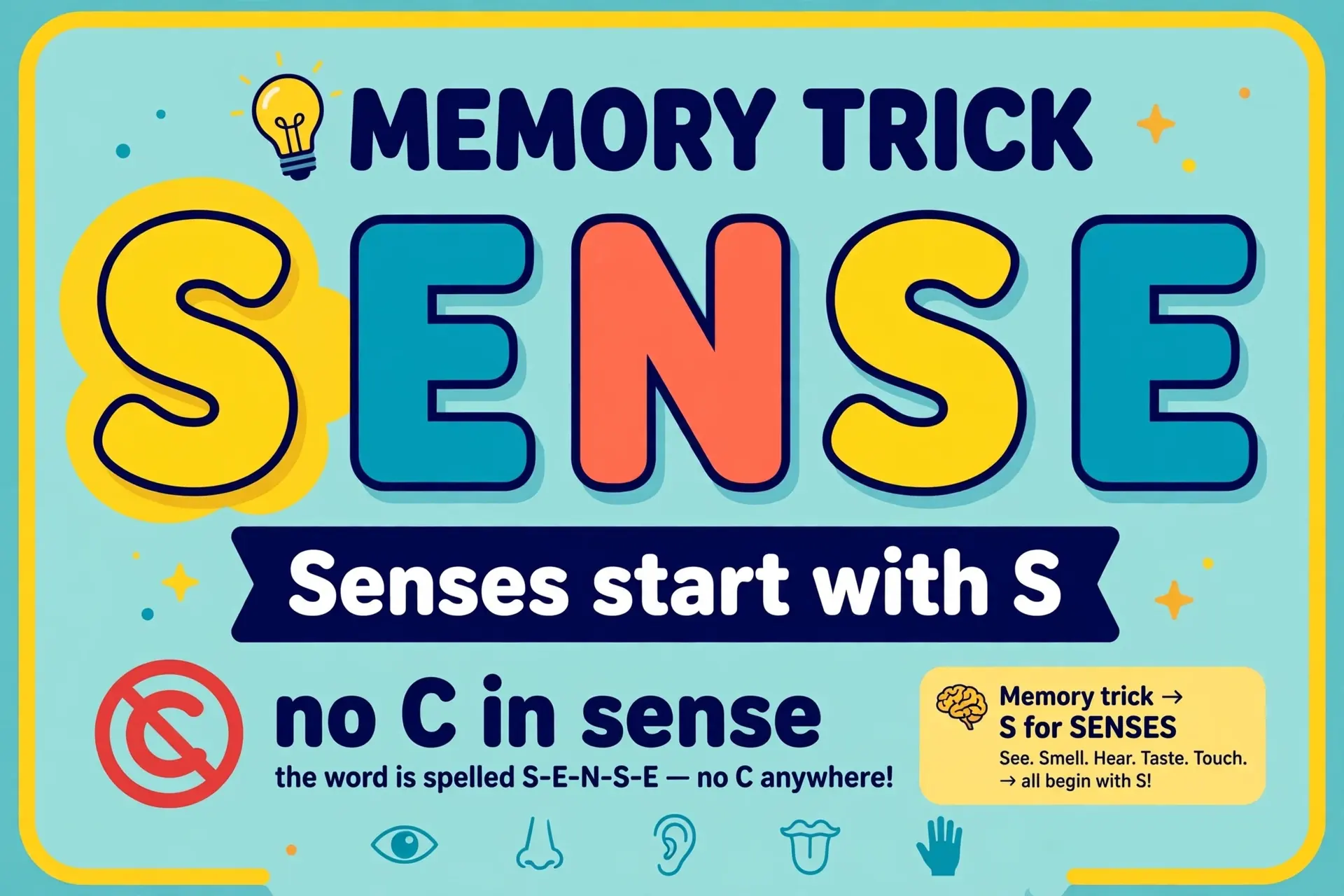
Memory trick: Sense starts with S — just like your five senses (sight, smell, sound, taste, touch). The letter C never belongs in this word, so cross it out: sen~~c~~se → sense.
- Sence = ❌ not a word, ever.
- Sense = ✅ perception, judgment, meaning, or “to detect”.
- When in doubt, remember: senses start with s.
Frequently Asked Questions
Is it “sence” or “sense”?
It is sense. Sence is a misspelling and is never correct in standard English.
Why do so many people write “sence”?
The c and s sounds overlap in English (think scent), and sence looks plausible at a glance. Fast typing and confusion with since produce most instances of the error.
Is “sence” a word in any dictionary?
No. No standard English dictionary lists sence as a word. You may occasionally see it as a rare surname, but as a common noun, verb, or adjective it is always wrong.
What is the difference between “sense” and “since”?
Sense relates to perception, judgment, or meaning (“a sense of humor”). Since relates to time or reason (“since Monday”, “since you’re here”). They are different words with different spellings and meanings.
How do you spell the past tense — “sensed” or “senced”?
Sensed. The verb sense simply adds -d: “She sensed something was wrong.” There is no c in any form of the word.
Conclusion
Sence is always a misspelling — the word you want is sense, whether you mean perception, good judgment, meaning, or the verb “to detect”. Remember that your five senses all start with S, and you will never write sence again.