Totaling or Totalling: US vs UK Spelling Explained
For example, “The expenses are totaling $2,000” is natural in the US, while “The expenses are totalling £2,000” is natural in the UK. The meaning is identical; only the doubled L differs.
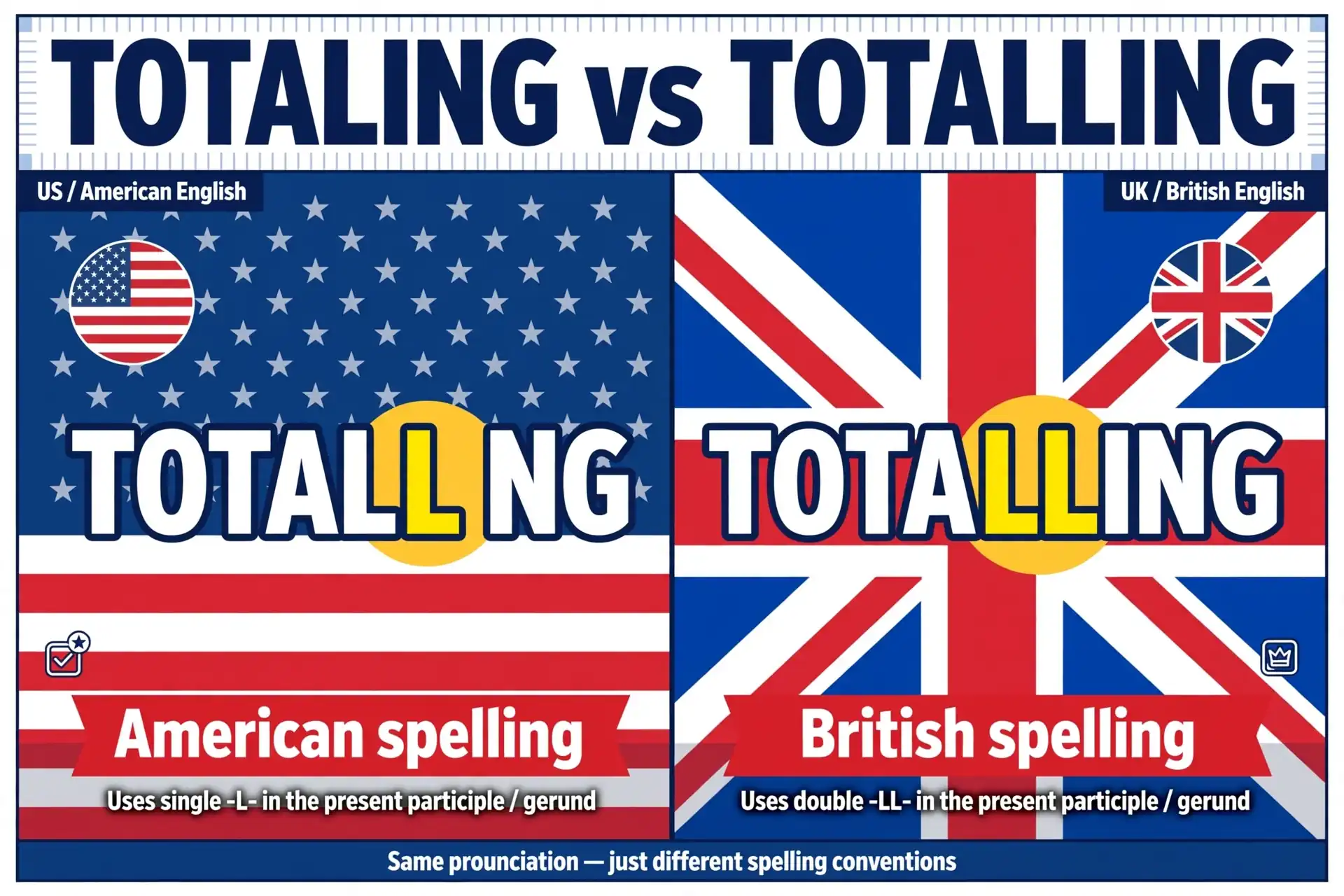
Table of Contents
Quick Answer
| Word | Part of Speech | Main Meaning | Example |
|---|---|---|---|
| Totaling | Verb (present participle) | Adding up to a sum (American spelling) | The donations are totaling $50,000. |
| Totalling | Verb (present participle) | Adding up to a sum (British spelling) | The donations are totalling £50,000. |
Simple rule: Writing for Americans? Use totaling with one L. Writing for British readers? Double it: totalling.
What Does Totaling Mean?
Totaling is the standard American spelling of the -ing form of the verb total, meaning to add up or amount to. Merriam-Webster lists totaling as the American form, used for sums, scores, and amounts.
Examples:
- She is totaling the receipts from the fundraiser.
- The damages are totaling in the thousands.
- Our scores are totaling more than last season’s.
- He spent the afternoon totaling columns of figures.
In American English, the single L also appears in the past tense: totaled. (Note: in the US, totaled additionally means a wrecked car — “He totaled his car” — a sense rarely used in the UK.)
What Does Totalling Mean?
Totalling is the standard British spelling of the same word. It means exactly the same thing as totaling — British English simply doubles the final L before adding the suffix.
Examples:
- She is totalling the receipts from the fundraiser.
- The damages are totalling in the thousands.
- Our scores are totalling more than last season’s.
- He spent the afternoon totalling columns of figures.
British publications, schools, and style guides use totalling (and totalled for the past tense) without exception.
Totaling vs. Totalling: Key Differences
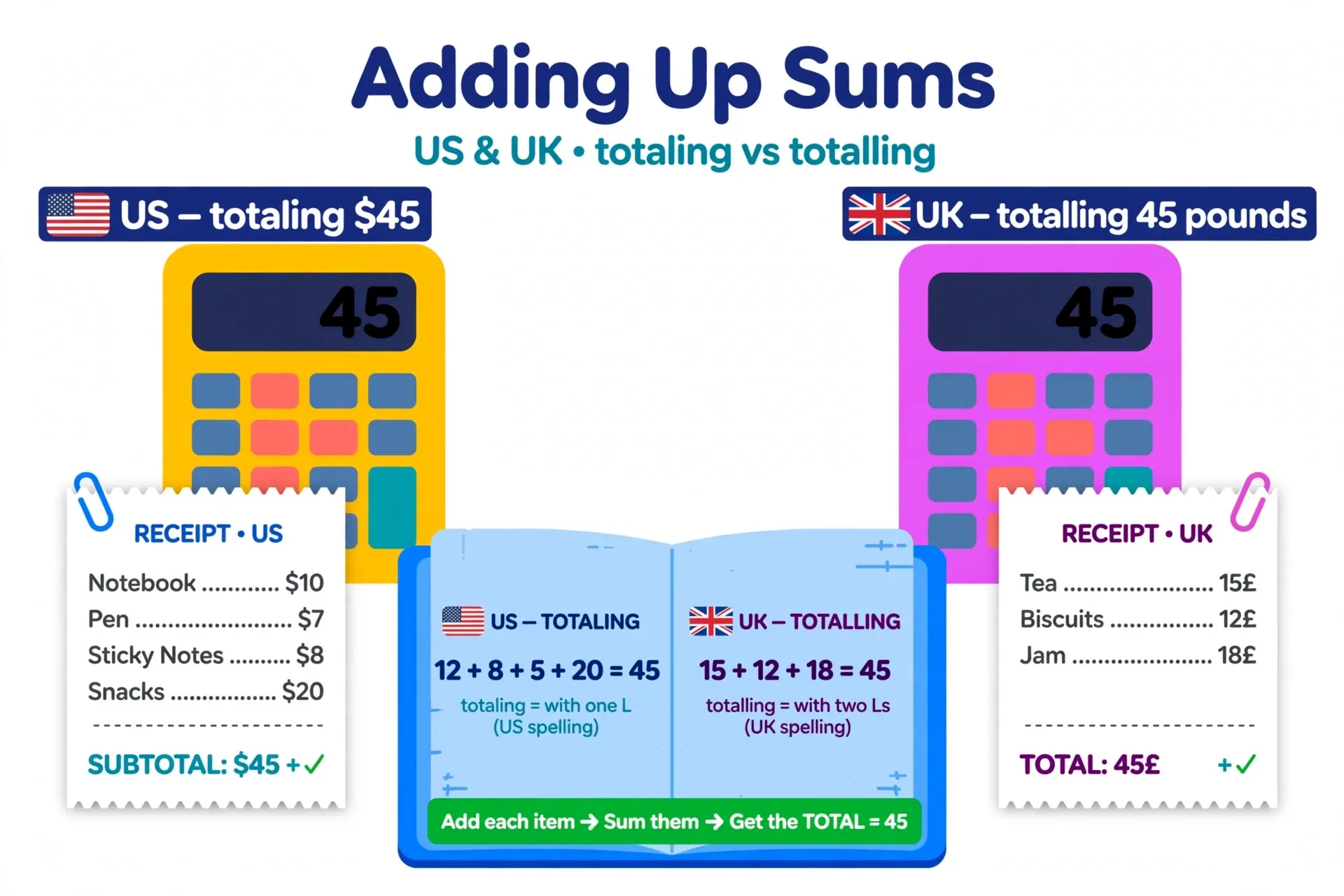
| Feature | Totaling | Totalling |
|---|---|---|
| Region | American English | British English |
| Meaning | Adding up to a sum | Identical |
| Final L | Single: total-ing | Doubled: total-ling |
| Past tense | Totaled | Totalled |
| Pronunciation | /ˈtoʊtəlɪŋ/ | Identical |
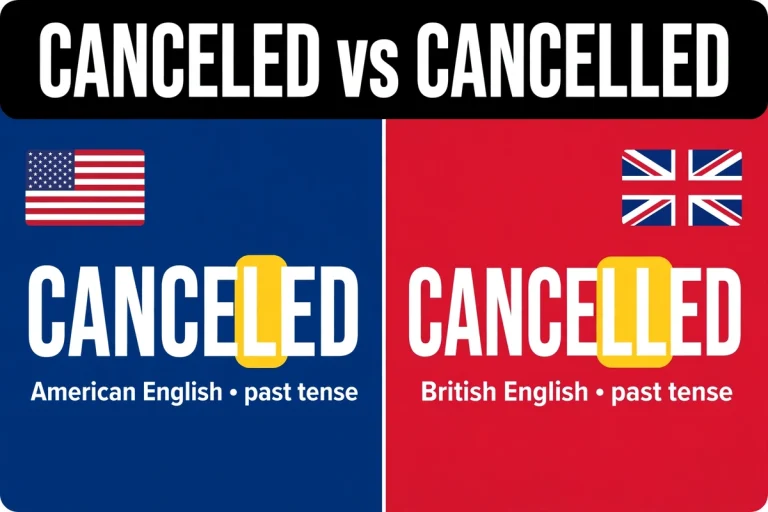
The single-L vs. double-L pattern runs through many verb pairs: canceling/cancelling, labeled/labelled, traveled/travelled, modeled/modelled, and signaled/signalled. Learning one pair helps with them all — see our guide to cancelling vs canceling for the most common one.
Related Single-L / Double-L Word Pairs
| American | British |
|---|---|
| Totaling | Totalling |
| Canceling | Cancelling |
| Labeling | Labelling |
| Traveling | Travelling |
| Modeling | Modelling |
| Signaling | Signalling |
American English generally keeps a single L when the stress falls on the first syllable; British English doubles it. Neither choice is more “correct”, just as with cancelled vs canceled.
Usage in Real Sentences
At Home
🇺🇸 “I’m totaling up the grocery bill.” / 🇬🇧 “I’m totalling up the grocery bill.”
The only difference is the doubled L — an American reader expects one, a British reader expects two.
At Work
🇺🇸 “The quarterly losses are totaling $2 million.” / 🇬🇧 “The quarterly losses are totalling £2 million.”
In business writing, matching your reader’s regional spelling signals professionalism and attention to detail.
In Conversation
🇺🇸 “We’re totaling the votes tonight.” / 🇬🇧 “We’re totalling the votes tonight.”
Spoken aloud the two are identical, so the distinction only matters in writing.
Common Mistakes With Totaling and Totalling
Most errors come from mixing the two regional standards in one document. Pick one and stay consistent — the same advice applies to related pairs like cancelled vs canceled.
Mistake 1: Doubling the L in American Writing
❌ The bill is totalling $50. (in a US document)
✅ The bill is totaling $50. (US)
Why: American style keeps a single L: totaling, totaled.
Mistake 2: Using a Single L in British Writing
❌ The bill is totaling £50. (in a UK document)
✅ The bill is totalling £50. (UK)
Why: British style doubles the L before the suffix: totalling, totalled.
Mistake 3: Mixing Spellings in One Document
❌ She is totaling the receipts, and he is totalling the invoices.
✅ She is totaling the receipts, and he is totalling the invoices. (pick one standard)
Why: Consistency matters more than which standard you choose. Mixing totaling and totalling in one text looks careless.
Mistake 4: Wrong Past Tense for the Region
❌ The costs totalled $10,000 last year. (US report)
✅ The costs totaled $10,000 last year. (US)
✅ The costs totalled £10,000 last year. (UK)
Why: The past tense follows the same rule — single L in American English, double L in British English.
Pronunciation
Both spellings are pronounced /ˈtoʊtəlɪŋ/ (TOH-tuh-ling), rhyming with bottling and mottling. The doubled L in totalling changes nothing about how the word sounds — it is purely a spelling convention.
How to Remember the Difference
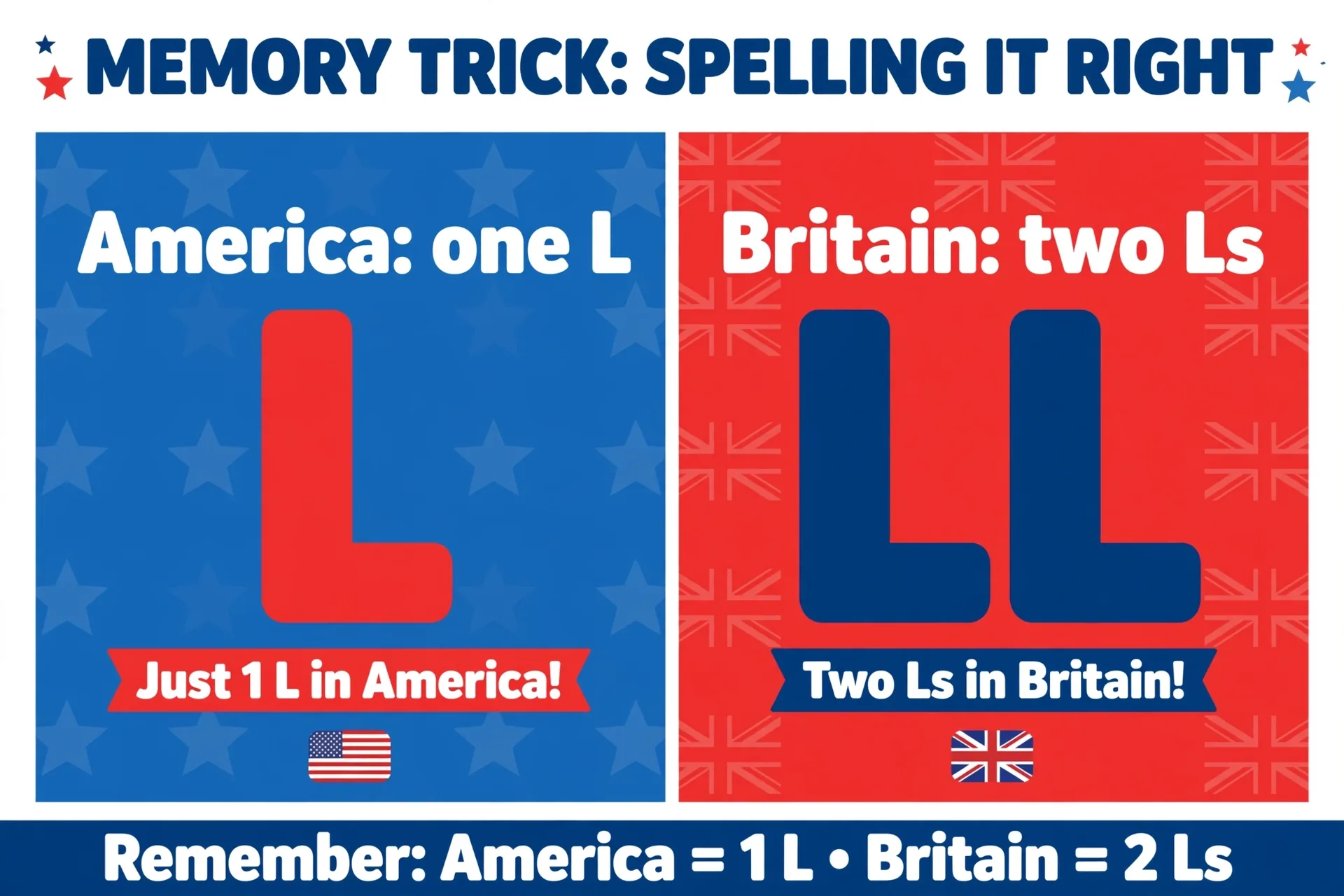
Memory trick: America keeps it lean — one L in totaling. Britain doubles up — two Ls in totalling. Think of the extra L as the extra letter British English loves to keep, just like the u in colour.
- 🇺🇸 Totaling = one L, American.
- 🇬🇧 Totalling = two Ls, British.
- Past tense follows suit: totaled (US) vs totalled (UK).
Frequently Asked Questions
Is it “totaling” or “totalling”?
Both are correct. Totaling is the American spelling; totalling is the British spelling. Choose the one your audience expects.
Which spelling is correct in American English?
Totaling (one L). American style guides, schools, and publishers all use the single-L form.
Which spelling is correct in British English?
Totalling (two Ls). British English doubles the final L before adding -ing or -ed.
Why does British English double the L?
It is a long-standing British convention: verbs ending in a vowel + L double the L before a suffix (travel → travelled, cancel → cancelled). American English simplified many of these to a single L.
Is it “totaled” or “totalled”?
American: totaled. British: totalled. The past tense follows the same single-L/double-L rule as the -ing form.
Can I use “totaling” in the UK?
You will be understood, but in formal British writing totalling is expected and totaling may be marked as an Americanism. Match your audience.
Conclusion
Totaling is American and totalling is British — both mean adding up to a sum, and both are correct within their regions. Remember: America keeps it lean with one L, Britain doubles up with two, and keep your whole document consistent with whichever standard you choose.