Dreamt or Dreamed: Which Spelling Is Correct?
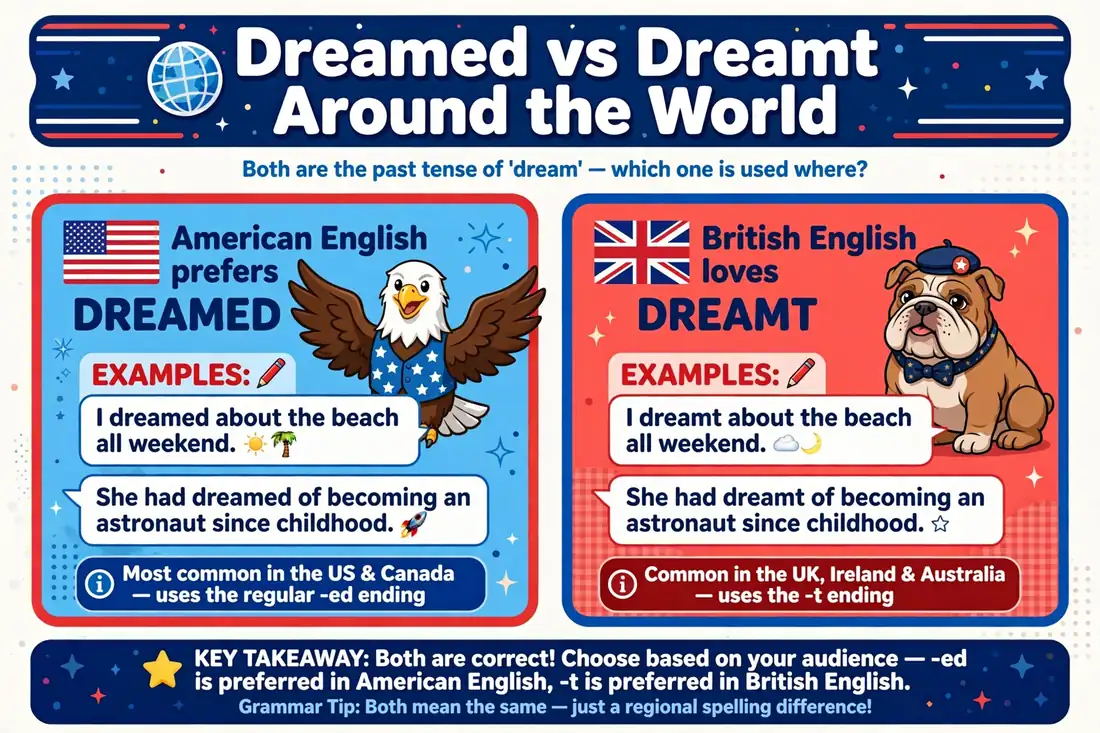
Dreamt and dreamed are both correct. They are the past tense and past participle forms of the verb dream. The main difference is regional preference: dreamed is more common in American English, while dreamt is especially familiar in British English. Both forms can describe something you experienced during sleep or something you imagined and hoped for.

Quick Answer
Use dreamed or dreamt when describing a past dream or a past hope. Neither spelling is universally wrong.
Examples:
Dreamt vs. Dreamed at a Glance
| Feature | Dreamt | Dreamed |
| Correct spelling | Yes | Yes |
| Base verb | Dream | Dream |
| Simple past tense | Dreamt | Dreamed |
| Past participle | Dreamt | Dreamed |
| Main meaning | Had a dream or imagined something | Had a dream or imagined something |
| British English | Common | Also accepted |
| American English | Accepted, but less common | More common |
| Example | I dreamt about the sea. | I dreamed about the sea. |
The choice usually depends on your preferred English variety and writing style. It does not change the basic meaning of the sentence.
What Does Dreamed Mean?
Dreamed is the regular past tense and past participle of dream. It means that someone experienced images or events while sleeping. It can also describe a hope, ambition, or imagined possibility.
The form follows the common English pattern of adding -ed to a verb.
Examples of Dreamed in Sentences
In the last example, dreamed up means imagined or invented something.
When Should You Use Dreamed?
Use dreamed when you want a familiar spelling that works across different English varieties. It is especially common in American English.
It fits naturally in:
For example:
I dreamed about the interview before it happened.
This sentence is correct and natural. You could also write I dreamt about the interview without changing its meaning.
What Does Dreamt Mean?
Dreamt is the shorter irregular past tense and past participle of dream. It has the same basic meaning as dreamed.
It can describe a sleeping experience, an ambition, or something someone imagined.
Examples of Dreamt in Sentences
Dreamt is not a misspelling. It is an established form of the verb.
When Should You Use Dreamt?
Use dreamt if it suits your preferred style or audience. It is especially familiar in British English and may give a sentence a more traditional or literary feel.
For example:
She dreamt of living beside the sea.
This sentence is grammatically correct. The version with dreamed is also correct.
Is Dreamt or Dreamed More Common in American English?
Dreamed is the more common choice in American English. However, dreamt is also an accepted form.
If you are writing for a US audience, dreamed is usually the safer choice. It follows the regular -ed pattern and is widely familiar.
Examples:
You do not need to avoid dreamt in American writing. Just remember that it may be less familiar to some readers.
Is Dreamt or Dreamed More Common in British English?
Both forms are correct in British English. Dreamt is particularly familiar, but British writers also use dreamed.
Examples:
British English does not require you to use dreamt every time. The regular form dreamed remains acceptable.
Do Dreamt and Dreamed Have Different Meanings?
No. In ordinary use, dreamt and dreamed have the same basic meanings.
Both can describe:
Compare these examples:
| Meaning | Dreamt | Dreamed |
| Sleeping experience | I dreamt about a beach. | I dreamed about a beach. |
| Hope or ambition | She dreamt of becoming a pilot. | She dreamed of becoming a pilot. |
| Imagined idea | He dreamt up a new plan. | He dreamed up a new plan. |
The spelling changes, but the meaning does not.
Dreamt and Dreamed as Past Tense and Past Participle
Both forms can serve as the simple past tense and the past participle.
The simple past describes an action or experience that happened before now.
I dreamed about my exam last night.
I dreamt about my exam last night.
The past participle appears with helping verbs such as have, has, and had.
I have dreamed about this day for years.
I have dreamt about this day for years.
Both sentences are correct.
Using Dreamed or Dreamt With Had
You can also use either form after had.
The past perfect construction shows that the dream or ambition existed before another past event.
For example:
She had dreamed of becoming a doctor before she chose a different career.
You can replace dreamed with dreamt without changing the grammar.
Dreamed or Dreamt in Different Sentence Patterns
Both forms work with common verb patterns. The preposition or structure often depends on what you want to express.
Dreamed or Dreamt About Something
Use about when referring to the subject of a dream or thought.
Dreamed or Dreamt of Something
Use of when describing a hope, ambition, or imagined possibility. It can also refer to a sleeping dream.
Dreamed or Dreamt That Something Happened
Use that to introduce what someone experienced or imagined.
Dreamed or Dreamt Up an Idea
The phrase dream up means to invent or imagine something.
Both spellings are acceptable in this expression.

Common Mistakes to Avoid
1. Thinking Dreamt Is Always Incorrect
Dreamt is a correct form of dream. It is not simply a typing error or an informal spelling.
Correct:
I dreamt about my family last night.
2. Thinking Dreamed Is Wrong in British English
British English accepts both forms. You can use dreamed even when following British spelling conventions.
Correct:
She dreamed of becoming a writer.
3. Using Dreamed After Did
After did, use the base form dream, not dreamed or dreamt. The helping verb already marks the past tense.
Correct:
Did you dream about me?
Incorrect:
Did you dreamed about me?
Incorrect:
Did you dreamt about me?
The same rule applies to other verbs:
4. Using Dreamed or Dreamt After Have Incorrectly
Both forms can follow have, has, or had.
Correct:
I have dreamt about that place before.
Correct:
I have dreamed about that place before.
Do not use the base form after have in this construction.
Incorrect:
I have dream about that place before.
5. Switching Between Forms Without a Style Reason
Using both forms in one article is not automatically wrong. However, consistent spelling makes writing easier to follow.
Less consistent:
She dreamed of success, but she had dreamt of failure before.
More consistent:
She dreamed of success, but she had dreamed of failure before.
Or:
She dreamt of success, but she had dreamt of failure before.
Choose the form that fits your audience, then use it consistently.
How to Remember Dreamt or Dreamed
Use this simple reminder:
If you are unsure, choose dreamed. It is widely accepted and works well for a broad audience.
Frequently Asked Questions
Is Dreamt or Dreamed Correct?
Both are correct. They are accepted past tense and past participle forms of dream. The choice mainly reflects regional preference or personal style.
Is Dreamt a Real Word?
Yes. Dreamt is a standard English word. It is the shorter irregular form of the verb dream and has the same basic meaning as dreamed.
Is Dreamed American or British English?
Dreamed is especially common in American English, but it is also used in British English. It is correct in both varieties.
Is Dreamt British or American English?
Dreamt is particularly familiar in British English. It is also accepted in American English, although dreamed is more common there.
Should I Write “I Dreamt” or “I Dreamed”?
Either is correct. Write “I dreamed” if you prefer the common American form. Write “I dreamt” if it better matches your style or regional preference.
Is “I Have Dreamt” Grammatically Correct?
Yes. Dreamt is a past participle, so it can follow have. “I have dreamt about this before” is grammatically correct. “I have dreamed about this before” is also correct.
Conclusion
Dreamt and dreamed are both correct forms of the verb dream. They can describe a sleeping experience, a hope, or an imagined idea. The main difference is regional usage, not meaning. Dreamed is more common in American English, while dreamt is especially familiar in British English. Choose either form and use it consistently.