Cold or Allergies: How to Tell the Difference
A runny nose, sneezing, and congestion can happen with both a common cold and allergies. The key differences are itching, fever, symptom duration, and the way symptoms begin. A cold is caused by a virus, while allergies happen when the immune system reacts to an allergen.
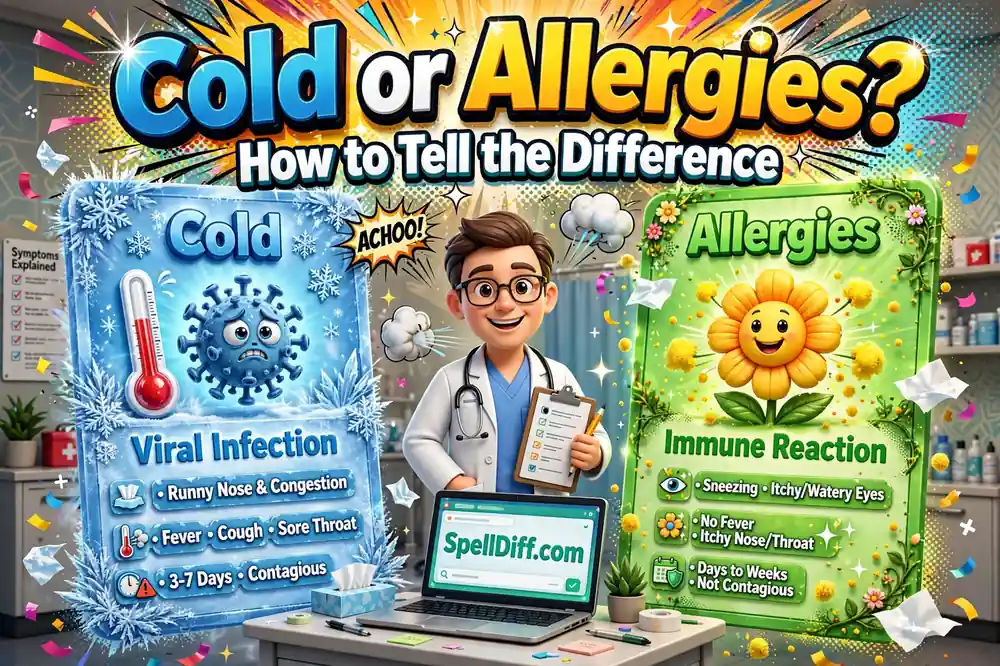
Quick Answer
A cold is a viral infection. Allergies are immune reactions to substances such as pollen, dust mites, or pet dander.
Both can cause sneezing, a runny nose, and congestion. Itchy or watery eyes point more toward allergies. A sore throat, body aches, or fever point more toward an infection.
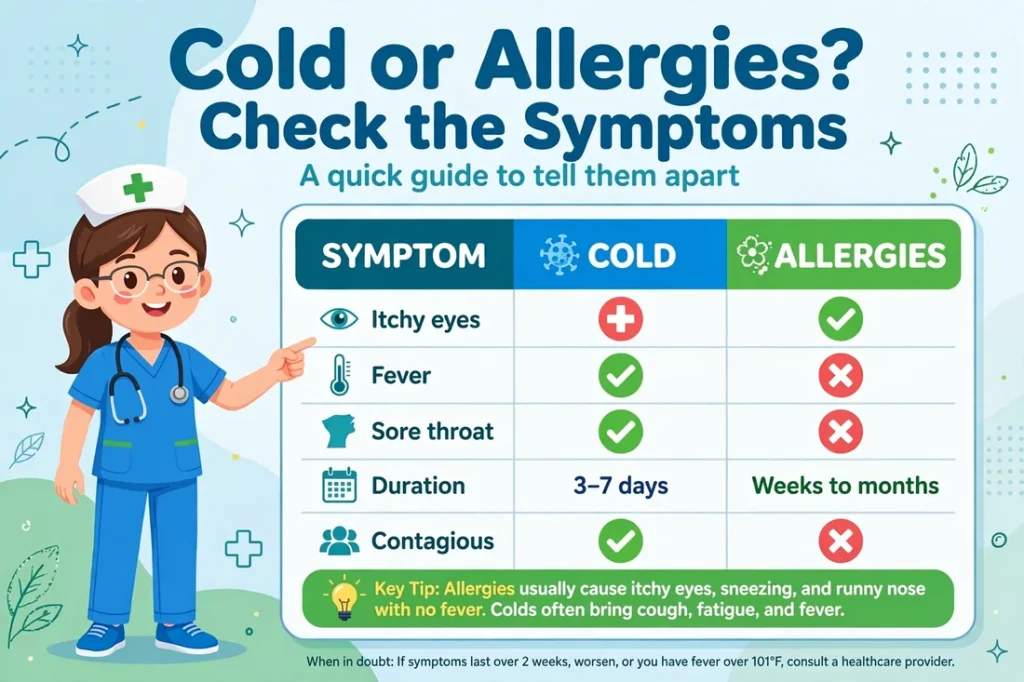
| Symptom | Common cold | Allergies |
| Sneezing | Common | Common |
| Runny or stuffy nose | Common | Common |
| Itchy, watery eyes | Less common | Common |
| Sore throat | Common | Less common |
| Fever | Sometimes | Not caused by allergies |
| Body aches | Sometimes | Not typical |
| Cough | Common | Sometimes |
| Usual duration | Often improves within 1–2 weeks | Can continue while exposed to the trigger |
| Contagious | Yes, depending on the virus | No |
These patterns can help you compare symptoms, but they cannot confirm a diagnosis.
What Is the Difference Between a Cold and Allergies?
The main difference is the cause.
A cold develops after a virus infects the upper respiratory tract. Allergies happen when the immune system reacts to a substance that is usually harmless to most people.
That difference affects how symptoms begin, how long they last, and how they respond to treatment.
What Is a Common Cold?
A common cold is a viral infection that mainly affects the nose and throat. Many different viruses can cause it.
Symptoms often develop gradually over two or three days. They may include:
- Runny or blocked nose
- Sneezing
- Sore throat
- Cough
- Mild body aches
- Headache
- Feeling tired
- Sometimes a low-grade fever
Cold symptoms often peak during the first few days. Most people begin feeling better within one or two weeks, although a cough may last longer.
What Are Allergies?
Allergies occur when the immune system reacts to an allergen. Common triggers include pollen, dust mites, mold, and animal dander.
Allergy symptoms may start soon after exposure. They can include:
- Repeated sneezing
- Itchy nose
- Itchy or watery eyes
- Clear, runny nasal discharge
- Nasal congestion
- Postnasal drip
- Coughing in some people
Allergies are not contagious. Symptoms may continue for as long as the person remains exposed to the trigger. Seasonal allergies can last for weeks.
Mayo Clinic
Cold or Allergies: The Symptoms That Matter Most
Some symptoms overlap, so look at the full pattern rather than one sign.
1. Itchy or Watery Eyes
Itchy, watery eyes are commonly associated with allergies. They are less typical of a common cold.
For example, if your eyes become itchy whenever you clean a dusty room, an allergy may be involved.
However, eye symptoms alone cannot establish the cause.
2. Fever
Allergies do not cause a fever. A cold may cause a mild fever, although many adults with colds do not develop one.
If you have a fever alongside a runny nose and cough, consider an infection rather than assuming it is an allergy. Other infections, including flu and COVID-19, can also cause similar symptoms.
3. Sore Throat
A sore throat is common with a cold. It may result from the infection or irritation caused by coughing and postnasal drip.
Allergies can also irritate the throat. This may happen when mucus drains down the back of the throat.
A sore throat is therefore a clue, not a definite test.
4. Body Aches and Fatigue
Mild body aches can occur with a cold. They are not typical allergy symptoms.
Fatigue can happen with either condition. Poor sleep from congestion may also leave you tired.
5. How Quickly Symptoms Start
Cold symptoms usually develop over a few days after infection.
Allergy symptoms can begin soon after contact with a trigger. For example, sneezing may start after visiting a home with a cat.
A repeated pattern in the same place or season may also suggest allergies.
How Long Do Cold and Allergy Symptoms Last?
Duration can offer a useful clue.
A cold usually improves within one to two weeks. Some symptoms, especially coughing, may continue after the main infection improves.
Allergy symptoms can last much longer. They may continue throughout pollen season or while a person remains exposed to an indoor allergen.
Consider these examples:
- Cold pattern: You develop a sore throat, then congestion and coughing. Symptoms gradually improve over several days.
- Allergy pattern: You sneeze and experience itchy eyes every time you visit a dusty room.
- Recurring pattern: You experience similar symptoms during the same season each year. Seasonal allergies may be one explanation.
A long-lasting illness is not automatically an allergy. Persistent or worsening symptoms deserve medical attention.
Cold vs. Allergies: A Closer Comparison
| Feature | Cold | Allergies |
| Cause | Respiratory virus | Immune reaction to an allergen |
| Onset | Often gradual | May begin soon after exposure |
| Itching | Less typical | Common, especially around the eyes and nose |
| Nasal discharge | Can change during the illness | Often clear and watery |
| Fever | Possible | Not caused by allergies |
| Contagious | Yes | No |
| Pattern | Usually a temporary illness | May recur with exposure |
| Treatment approach | Symptom care and infection precautions | Allergen avoidance and allergy treatment |
Mucus color alone cannot reliably tell you whether symptoms come from a cold or allergies. A change in color can occur during a normal cold.
When to Use Cold or Allergy Treatments
The right approach depends on the cause. A medicine that helps allergy symptoms may not treat a viral infection.
Managing a Common Cold
Most colds improve without specific treatment. Rest, fluids, and suitable symptom relief may help you feel more comfortable.
Some people use saline nasal sprays or other over-the-counter products for congestion. Check medicine labels and ask a pharmacist if you have a medical condition, take other medicines, or are unsure what is suitable.
Antibiotics do not treat viruses that cause common colds.
Managing Allergies
Allergy management often focuses on reducing exposure to the trigger.
Depending on the person and symptoms, options may include:
- Avoiding known allergens where practical
- Keeping windows closed during high-pollen periods
- Washing after outdoor exposure
- Using saline nasal rinses
- Taking an appropriate antihistamine
- Using a nasal steroid spray when recommended
Ask a healthcare professional or pharmacist which treatment is suitable for you, especially if symptoms are persistent.
Can You Have a Cold and Allergies at the Same Time?
Yes. Having allergies does not prevent you from catching a virus.
For example, someone with seasonal allergies may already have sneezing and congestion. If they then develop a sore throat, cough, or fever, an infection may also be present.
This overlap can make symptoms difficult to interpret. Pay attention to new symptoms, changes in severity, and possible exposure to someone who is ill.
Could It Be COVID-19 or the Flu Instead?
Cold-like symptoms are not limited to colds and allergies. COVID-19 and influenza can also cause congestion, coughing, sore throat, and fatigue.
Symptoms alone may not reliably distinguish these infections. Testing can help when COVID-19 or flu is possible, particularly for people at higher risk of severe illness. Early medical advice matters because treatment options for some infections work best when started promptly.
CDC
Do not assume that itchy eyes or a runny nose rule out an infection. Several conditions can occur together.
When Should You Contact a Healthcare Professional?
Seek medical advice if symptoms are severe, persistent, or getting worse.
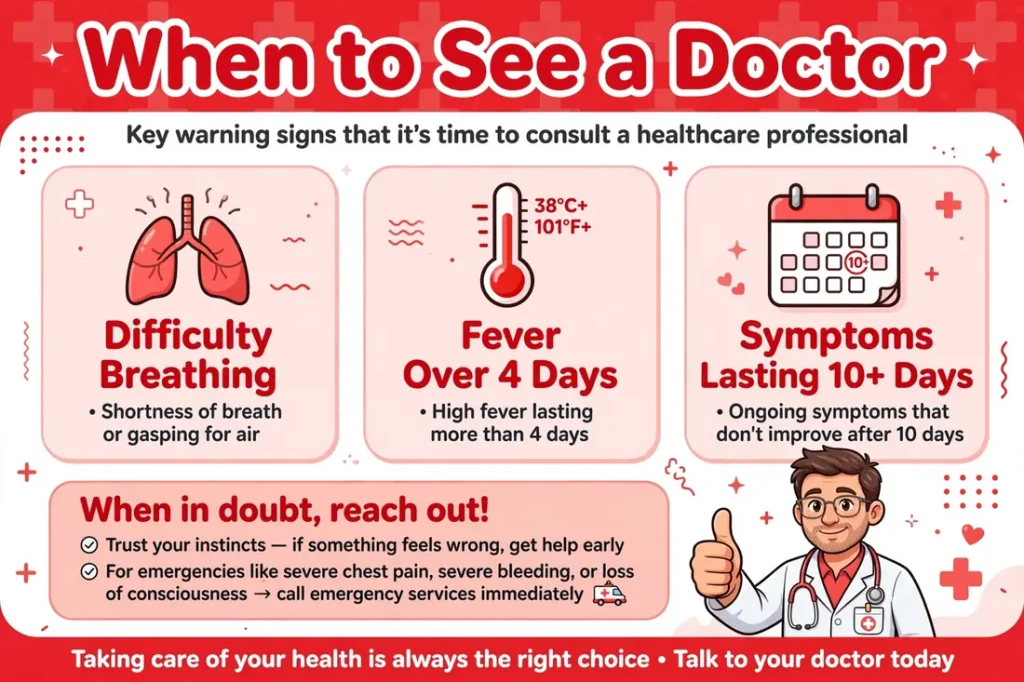
The CDC advises medical attention for signs such as difficulty breathing, dehydration, a fever lasting more than four days, or symptoms that last over ten days without improvement. You should also seek advice if symptoms improve and then return or worsen.
CDC
Get urgent help for serious breathing difficulty or other severe symptoms.
If you have a weakened immune system, a significant long-term health condition, or a young child with concerning symptoms, contact a healthcare professional earlier.
Common Mistakes When Comparing a Cold and Allergies
Assuming Every Runny Nose Means a Cold
Allergies commonly cause a runny nose. Look for other clues, such as itching and repeated symptoms after exposure to a trigger.
Treating Fever as an Allergy Symptom
Allergies do not cause fever. A fever suggests another cause may be present.
Assuming Allergies Always Happen in Spring
Allergies can occur throughout the year. Indoor allergens, including dust mites and animal dander, may cause symptoms beyond pollen season.
Using Symptom Duration as the Only Test
A cold can sometimes last longer than expected. Allergies may also come and go. Duration is helpful, but it cannot confirm the cause by itself.
Taking Antibiotics for a Common Cold
Antibiotics do not work against cold-causing viruses. Taking them unnecessarily can cause side effects and contribute to antibiotic resistance.
CDC
Real-World Examples: Cold or Allergies?
Situation 1: Sneezing after cleaning
You start sneezing and your eyes itch while cleaning a dusty bedroom. The symptoms settle after leaving the room.
What it may suggest: An indoor allergen could be triggering your symptoms.
Situation 2: Symptoms that develop over several days
Your throat feels sore first. The next day, you develop a blocked nose and cough.
What it may suggest: This pattern is consistent with a respiratory infection, such as a common cold.
Situation 3: Similar symptoms every pollen season
Your nose becomes runny and your eyes itch around the same time each year.
What it may suggest: Seasonal allergies may explain the recurring pattern.
Situation 4: Congestion with fever and body aches
You have a stuffy nose, fever, and body aches.
What it may suggest: An infection is more likely than allergies alone. A healthcare professional or test may be needed to identify the cause.
These examples describe patterns, not diagnoses.
FAQs About Cold or Allergies
How can I tell if I have a cold or allergies?
Itchy, watery eyes and symptoms linked to a particular trigger suggest allergies. A sore throat, body aches, or fever may point toward an infection. Neither pattern confirms the cause on its own.
Can allergies cause a sore throat?
Yes. Postnasal drip can irritate the throat. However, a sore throat is also common with viral infections.
Do allergies cause a fever?
No. Allergies do not cause a fever. If you have a fever, consider an infection or another cause.
How long does a cold last compared with allergies?
A cold usually improves within one or two weeks. Allergies may continue for as long as exposure to the trigger continues.
Is a cold contagious but allergies are not?
Yes. A cold is caused by a virus that can spread between people. Allergies are immune reactions and do not spread from person to person.
Can clear mucus mean allergies?
Clear mucus can occur with allergies, but it can also occur during a cold. Mucus color alone cannot identify the cause.
Can I have allergies without sneezing?
Yes. Allergies can cause congestion, itching, watery eyes, or postnasal drip without frequent sneezing.
Should I take an allergy medicine for a cold?
Allergy medicines do not treat the virus causing a cold. Some may help certain symptoms, but the right choice depends on your symptoms and health. Ask a pharmacist or healthcare professional if you are unsure.
Conclusion
A cold and allergies can feel similar, but their causes and symptom patterns differ. Itchy eyes and trigger-related symptoms often point toward allergies, while fever, body aches, and a sore throat may suggest an infection.
Use the full symptom pattern, duration, and exposure history rather than relying on one clue. If symptoms are severe, persistent, or worsening, seek medical advice.