Drier or Dryer: Meaning, Difference, and How to Use Each Word
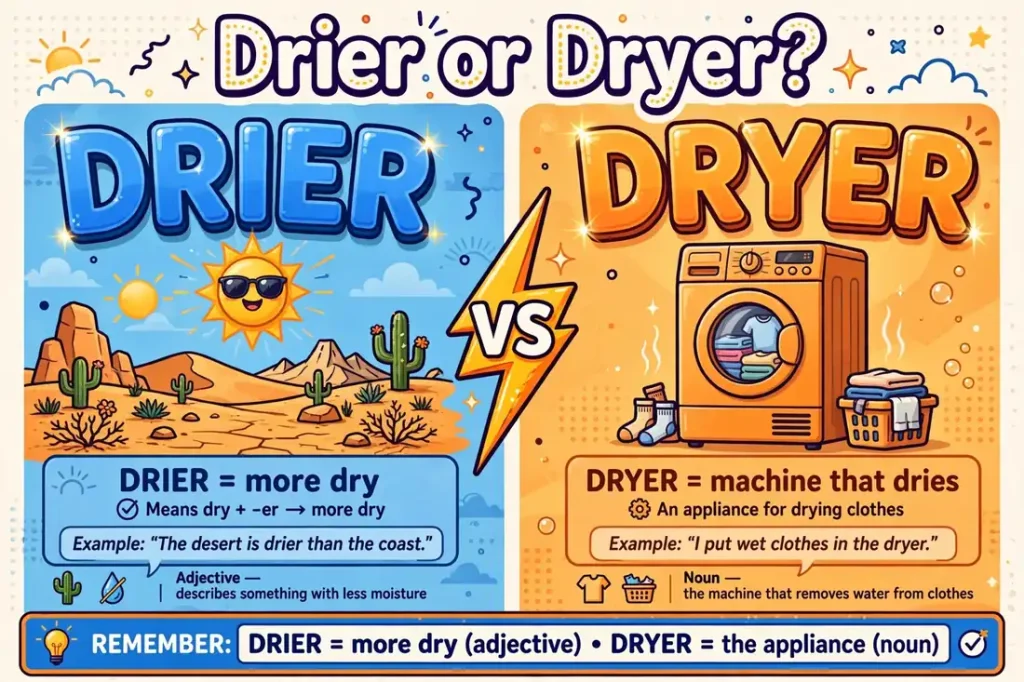
Drier and dryer are both correct English words, but they have different uses. Drier is usually the comparative form of dry, meaning less wet or less humid. Dryer is commonly a noun for a machine that removes moisture, such as a clothes dryer or hair dryer. It can also be the comparative form of dry.
The correct choice depends on the sentence. Use drier when describing something that has less moisture. Use dryer when referring to a drying machine.
Quick Answer
Both spellings can function as comparative adjectives. However, dryer is commonly used as a noun for an appliance.
Quick Facts: Drier vs. Dryer
|
Feature |
Drier |
Dryer |
|
Common use |
Comparative adjective |
Noun for a drying machine |
|
Main meaning |
Less wet or less humid |
A device that removes moisture |
|
Part of speech |
Usually adjective |
Noun or adjective |
|
Example |
The air feels drier today. |
The dryer is running. |
|
Comparative use |
Correct |
Also correct |
|
Spelling preference |
Often preferred for the adjective |
Common for the appliance |
What Does Drier Mean?
Drier is the comparative form of the adjective dry. It means something contains less moisture than another thing or has become less wet.
It can describe clothing, weather, soil, skin, food, and other things.
Examples of Drier in a Sentence
In each example, drier compares the amount of moisture in two things or conditions.
Drier as a Comparative Adjective
Use drier when comparing two things that differ in moisture.
Examples:
The word does not refer to a machine in these sentences.
What Does Dryer Mean?
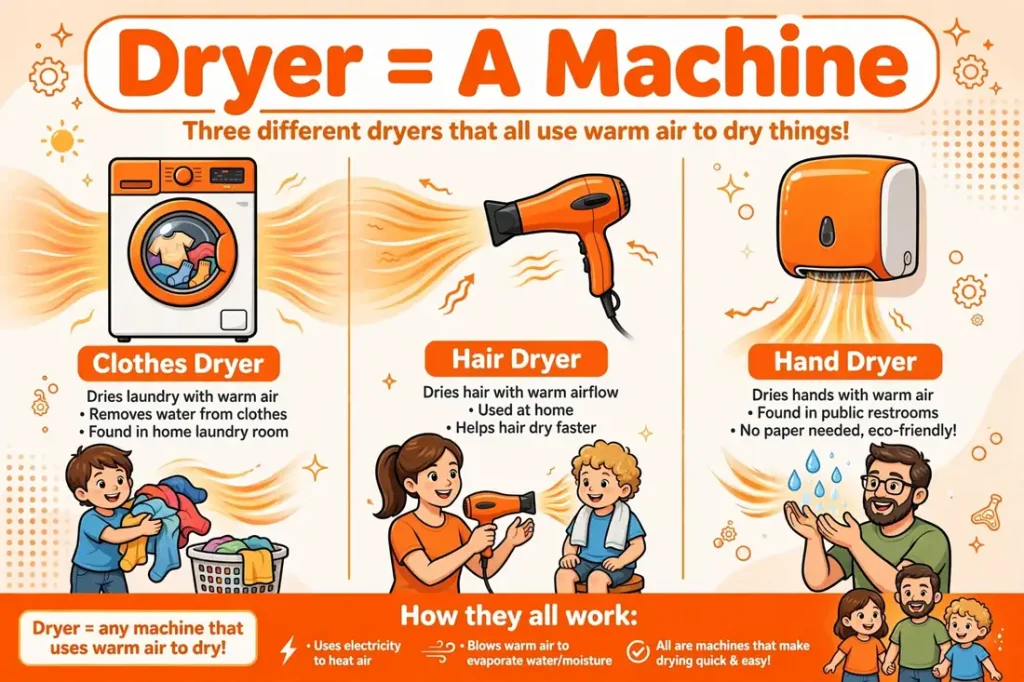
Dryer is commonly a noun. It refers to a machine or device that removes moisture from something.
Common examples include clothes dryers, hair dryers, and hand dryers.
Examples of Dryer in a Sentence
In these examples, dryer names a device.
Dryer as a Comparative Adjective
Dryer can also be used as the comparative form of dry. This is grammatically correct.
Examples:
However, many writers prefer drier for the comparative adjective. This helps readers distinguish the adjective from the appliance.
Key Differences Between Drier and Dryer
The most useful distinction is their common role in a sentence.
|
Comparison |
Drier |
Dryer |
|
Usual meaning |
Less wet or humid |
A machine that removes moisture |
|
Common grammatical role |
Comparative adjective |
Noun |
|
Example |
The grass is drier today. |
The dryer needs repair. |
|
Can describe weather? |
Yes |
Yes, as a comparative adjective |
|
Can name an appliance? |
Not usually |
Yes |
|
Is it correct English? |
Yes |
Yes |
Why Are Both Forms Used for Comparison?
English allows both drier and dryer as comparative forms of dry. The spelling with i is commonly used to make the adjective easier to distinguish from the noun dryer.
For clarity, use drier when comparing moisture levels. Use dryer when naming an appliance.
When to Use Drier
Use drier when you mean less wet, less moist, or less humid.
1. Describing Weather
Use drier when comparing weather conditions.
2. Describing Clothing or Fabric
Use drier when comparing how much moisture remains in clothes or fabric.
3. Describing Soil and Plants
Use drier when comparing soil moisture.
4. Describing Skin
Use drier when discussing reduced moisture in skin.
5. Describing Food
Use drier when comparing the moisture or texture of food.
When to Use Dryer
Use dryer when referring to a device that removes moisture.
1. Clothes Dryer
A clothes dryer uses heat or airflow to dry laundry.
Examples:
2. Hair Dryer
A hair dryer blows warm or cool air to dry hair.
Examples:
3. Hand Dryer
A hand dryer is commonly found in public restrooms. It dries hands using moving air.
Examples:
4. Other Drying Devices
The word can also describe equipment used to remove moisture from materials.
Examples:
Drier or Dryer in Different Sentences
The context determines which word makes sense. Compare these examples.
|
Sentence |
Correct Word |
Why |
|
The air is ___ today. |
Drier |
It describes lower humidity. |
|
Put the towels in the ___. |
Dryer |
It names a machine. |
|
My hair feels ___ after using this product. |
Drier |
It compares moisture levels. |
|
The ___ is making a strange noise. |
Dryer |
It refers to an appliance. |
|
This towel is ___ than that one. |
Drier |
It describes a comparative condition. |
|
We need a new clothes ___. |
Dryer |
It names a device. |
|
The soil is getting ___. |
Drier |
It describes decreasing moisture. |
|
The ___ has a large capacity. |
Dryer |
It refers to a machine. |
Common Mistakes with Drier and Dryer
Mistake 1: Using Dryer for Every Comparative Sentence
Incorrect: The weather is dryer this week.
Preferred: The weather is drier this week.
Dryer is also accepted as a comparative form, but drier is often clearer when describing moisture.
Mistake 2: Using Drier for an Appliance
Incorrect: Put the clothes in the drier.
Correct: Put the clothes in the dryer.
Use dryer when referring to the machine.
Mistake 3: Confusing the Adjective with the Noun
Incorrect: This towel needs a drier.
This sentence may mean the towel needs a machine, but it can sound unclear.
Clearer: This towel needs to go in the dryer.
If you mean that the towel is less wet, write:
The towel is drier now.
Mistake 4: Assuming Drier Is Incorrect
Incorrect assumption: Drier is not a real word.
Correct explanation: Drier is a standard comparative form of dry. It means less wet or less humid.
Mistake 5: Assuming Dryer Only Refers to Clothes
Incorrect assumption: A dryer can only mean a clothes dryer.
Correct explanation: Dryer can refer to different devices that remove moisture, including hair dryers and hand dryers.
Is Drier or Dryer Correct in American and British English?
Both drier and dryer are used in American and British English. The main distinction is based on meaning and context, not a strict regional spelling rule.
For the comparative adjective, drier is a common choice in both varieties. Dryer is widely used as a noun for appliances.
Examples:
Regional vocabulary can vary for specific appliances, but the spelling distinction remains useful.
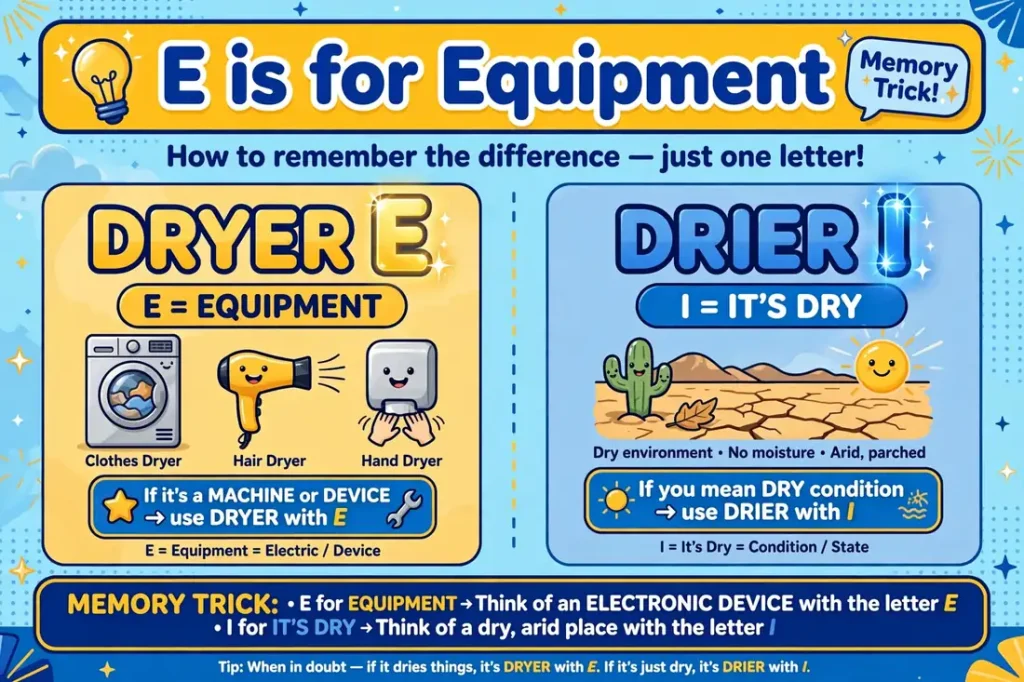
How to Remember the Difference
Use this simple memory tip:
Drier Has an “I” for “Increased Lack of Moisture”
Think of drier as describing a condition. It means something has less moisture than before or compared with something else.
Examples:
Dryer Has an “E” for “Equipment”
Think of the e in equipment. A dryer is often a machine used to remove moisture.
Examples:
This memory trick is not a grammar rule, but it can help you choose the correct spelling.
Frequently Asked Questions
Is Drier a Correct Word?
Yes. Drier is the standard comparative form of dry in many contexts. It means less wet or less humid.
Example: The ground is drier after several sunny days.
Is Dryer a Correct Word?
Yes. Dryer is a correct word. It commonly refers to a machine that removes moisture, such as a clothes dryer or hair dryer. It can also be used as a comparative adjective.
Should I Write Drier or Dryer Weather?
Drier weather is a common and clear choice. It means weather with less moisture or humidity. Dryer weather is also grammatically possible.
Is It Clothes Drier or Clothes Dryer?
The usual spelling is clothes dryer. It refers to the appliance used to dry laundry.
Is It Hair Drier or Hair Dryer?
The standard spelling is hair dryer. It refers to the device that blows air to dry hair.
What Is the Comparative Form of Dry?
The comparative form of dry is commonly written as drier. Dryer is also accepted, but it is often used as a noun for a drying machine.
Conclusion
Drier and dryer are both correct, but they serve different common purposes. Use drier to describe something with less moisture. Use dryer when referring to a machine that removes moisture. Although dryer can also work as a comparative adjective, drier often makes the intended meaning clearer.