Nosy or Nosey: Which Spelling Is Correct?
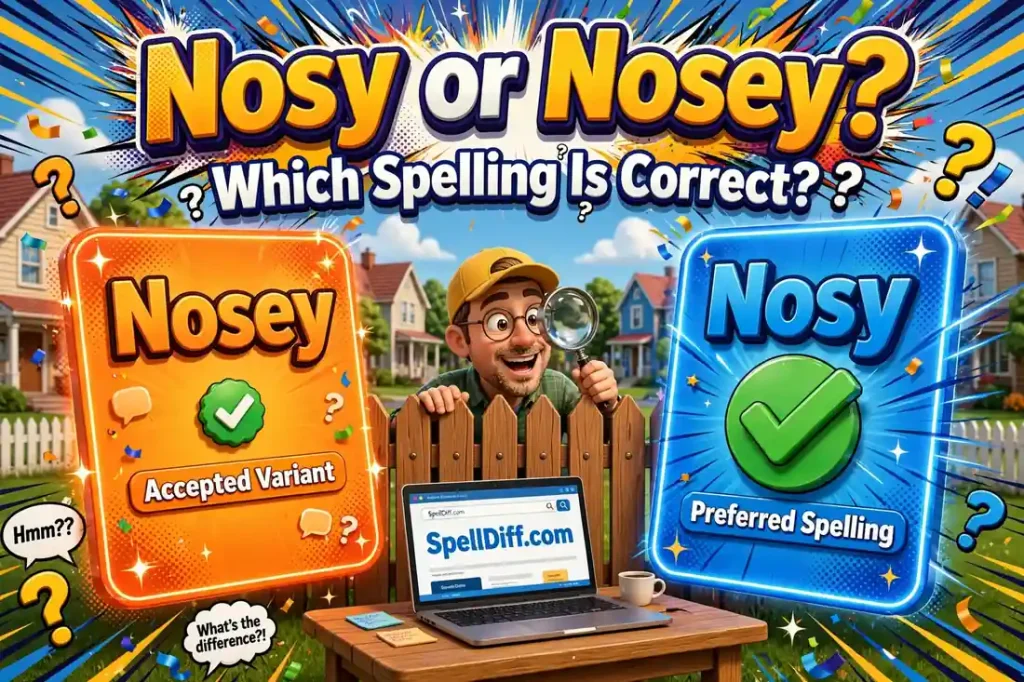
Nosy and nosey are both correct spellings. They describe someone who is too interested in other people’s private affairs. However, nosy is the more common and preferred spelling, especially in standard American English. Nosey is an accepted variant, not a simple spelling mistake.
For most writing, choose nosy. Use nosey when following a source’s spelling or a particular style preference. The meaning and pronunciation remain the same.
Quick Answer
Examples:
All three sentences use an accepted spelling.
Nosy vs. Nosey: Quick Facts
|
Feature |
Nosy |
Nosey |
|
Correct spelling |
Yes |
Yes |
|
Meaning |
Overly curious about others |
Same meaning |
|
Part of speech |
Adjective |
Adjective |
|
Pronunciation |
/ˈnoʊzi/ |
/ˈnoʊzi/ |
|
Commonness |
More common |
Less common |
|
American English |
Preferred form |
Accepted variant |
|
British English |
Used |
Accepted variant |
|
Comparative |
Nosier |
Nosier |
|
Superlative |
Nosiest |
Nosiest |
The main difference is spelling preference. Neither form has a separate meaning.
What Does Nosy Mean?
Nosy describes someone who takes too much interest in other people’s private lives or personal matters. A nosy person may ask intrusive questions, listen to private conversations, or interfere in situations that do not concern them.
The word is an adjective. It can describe a person, question, comment, behavior, or habit.
Examples of Nosy in Sentences
In each example, nosy suggests that someone’s curiosity has crossed a personal boundary.
Is Nosy Always Negative?
Usually, nosy carries a negative meaning. It suggests that someone is too curious about matters that are not their business.
However, the tone depends on the situation.
A friend might say:
You are so nosy!
This could be playful teasing.
A person might also say:
Please stop asking nosy questions.
Here, the word expresses irritation or disapproval.
The word does not always describe serious interference. Sometimes it refers to harmless curiosity that feels slightly intrusive.
What Does Nosey Mean?
Nosey is an accepted alternative spelling of nosy. It has the same meaning and grammatical role.
It describes someone who is excessively interested in other people’s affairs.
Examples of Nosey in Sentences
These sentences mean the same as their versions with nosy.
Nosey is not a different adjective. It is simply a less common spelling of the same word.
What Is the Difference Between Nosy and Nosey?
There is no meaningful difference in definition, pronunciation, or grammar. The distinction is mainly about spelling preference and frequency.
|
Question |
Nosy |
Nosey |
|
Does it mean overly curious? |
Yes |
Yes |
|
Does it describe intrusive questions? |
Yes |
Yes |
|
Is it an adjective? |
Yes |
Yes |
|
Does it sound different? |
No |
No |
|
Is it accepted in dictionaries? |
Yes |
Yes |
|
Is it the more common spelling? |
Yes |
No |
For example:
Both sentences are correct. The spelling does not change the message.
Which Spelling Should You Use?
If you are unsure, choose nosy. It is the more common spelling and works well in general writing.
Use nosy in:
You can use nosey when a publication, quotation, or personal style calls for it. Just avoid switching between the two forms without a reason.
Use Nosy for General Writing
The shorter spelling is a practical default.
Examples:
When Is Nosey Acceptable?
Nosey is acceptable when you prefer that spelling or are preserving someone else’s wording.
For example:
The sign read, “No nosey neighbors.”
There is no need to change the spelling inside a direct quotation. In your own writing, however, nosy is usually the simpler choice.
Is Nosy or Nosey More Common in American English?
Nosy is the usual spelling in American English. Nosey is also recognized, but it is less common.
For a US audience, use nosy in most situations.
Examples:
American readers can understand nosey, but the shorter form is the safer editorial choice.
Is Nosey or Nosy More Common in British English?
Both spellings appear in British English. Nosey is an established variant, while nosy is also widely recognized.
It would be inaccurate to say that nosey is exclusively British or that British writers must use it.
For example, both sentences are acceptable:
If you are writing for a British publication, follow its preferred spelling. Consistency matters more than forcing a regional distinction that does not always apply.
How Do You Pronounce Nosy and Nosey?
Both words have the same pronunciation:
NOH-zee
The extra e in nosey does not create another syllable or change the sound.
Both forms rhyme with words such as cozy and rosy in common pronunciation.
Examples:
The sentences sound identical when spoken.
Related Forms: Nosier, Nosiest, and Nosiness
The adjective nosy has related forms that follow standard English spelling patterns.
Nosier
Nosier is the comparative form. Use it when comparing two people or things.
Examples:
Nosiest
Nosiest is the superlative form. Use it when describing the most nosy person or thing in a group.
Examples:
Nosiness
Nosiness is the noun form. It describes the habit or quality of being overly curious about others.
Examples:
The usual spelling is nosiness, not noseyness.
Nosily
Nosily is the adverb form. It describes an action performed in an intrusive or overly curious way.
Examples:
These forms are related to nosy. They do not require the alternative spelling nosey.
What Does “Nosey Parker” Mean?
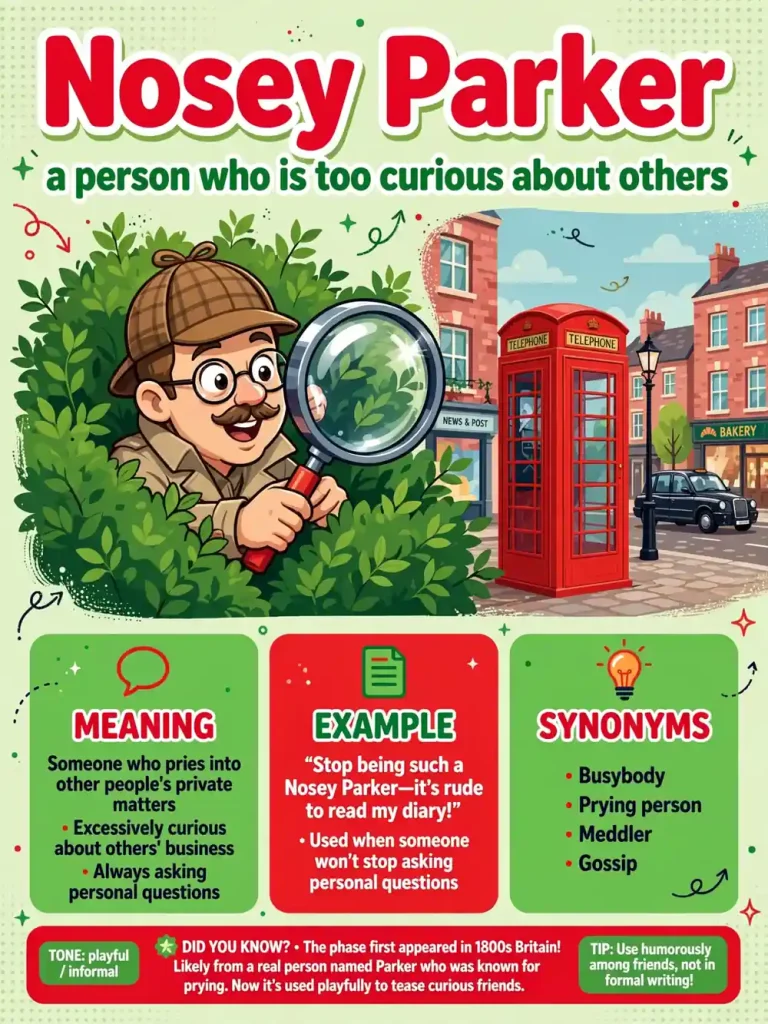
Nosey Parker is an informal expression for someone who interferes in other people’s business or shows excessive curiosity.
It is often used in British English.
Example:
Do not be such a nosey Parker. Their conversation is private.
The expression is usually teasing or disapproving. It does not describe a different type of behavior from being nosy.
You may also see the expression spelled nosy Parker. The spelling can vary, but the meaning remains the same.
Common Mistakes With Nosy and Nosey
1. Calling Nosey Completely Wrong
Nosey is an accepted spelling variant. It is less common than nosy, but it is not automatically an error.
Accepted:
My nosey neighbor asked about the delivery.
More common:
My nosy neighbor asked about the delivery.
2. Assuming the Words Have Different Meanings
The extra e does not create a new definition.
Both sentences mean that someone is overly curious:
3. Using Nosy When You Mean Curious
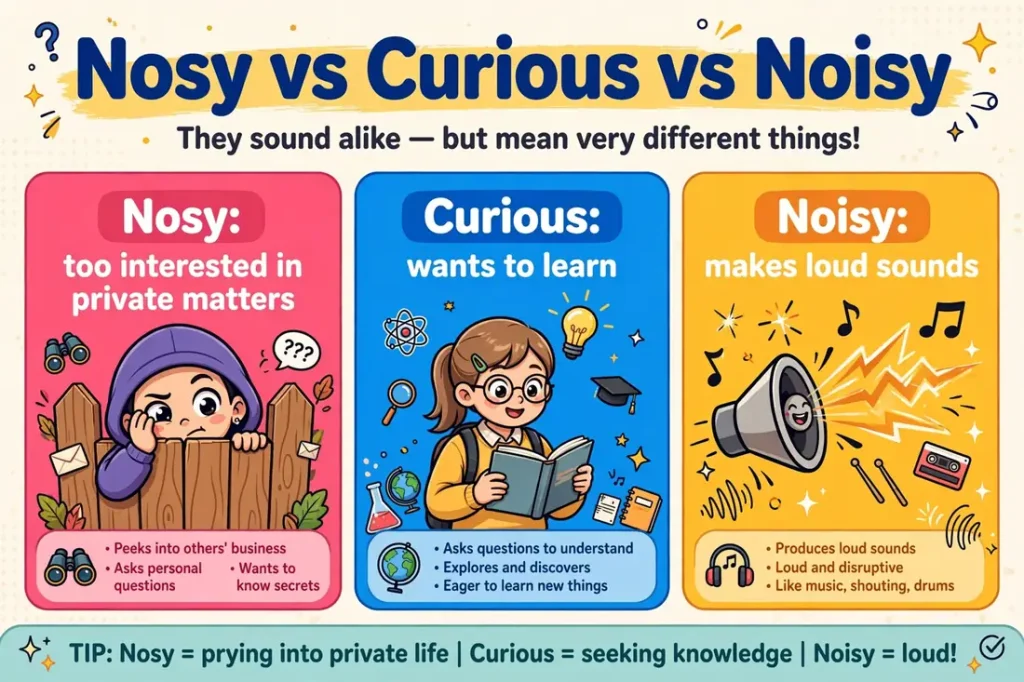
Curious and nosy are related, but their tone differs.
Curious can describe a neutral desire to learn.
I am curious about how the machine works.
Nosy suggests excessive interest in private matters.
I am nosy about my neighbor’s personal life.
Choose the word that matches your intended tone.
4. Confusing Nosy With Noisy
Nosy and noisy look similar, but they have different meanings.
Examples:
The nosy neighbor asked about our plans.
The noisy neighbor played music late at night.
Do not use nosey to mean loud. The word for making too much sound is noisy.
5. Changing the Spelling in One Article
Both forms are accepted, but mixing them without a reason can make an article look inconsistent.
For example:
My neighbor is nosy. Her nosey questions annoy me.
For a consistent style, write:
My neighbor is nosy. Her nosy questions annoy me.
Choose one form for your own writing and keep it consistent.
How to Remember the Correct Spelling
Use this simple reminder:
If you are writing for a general audience, choose nosy. It is widely recognized and avoids unnecessary spelling questions.
Frequently Asked Questions
Is Nosy or Nosey Correct?
Both are correct. Nosy is the more common spelling, while nosey is an accepted variant. They have the same meaning and pronunciation. For most writing, especially American English, nosy is the practical choice.
Is Nosey a Misspelling?
No. Nosey is a recognized alternative spelling of nosy. It is less common, but it is not simply a typo. Both forms describe someone who is too interested in other people’s private affairs.
Is Nosy American or British English?
Nosy is used in both American and British English. It is especially common in American writing. British English also recognizes nosey as a variant, but neither spelling belongs exclusively to one region.
What Does It Mean to Be Nosy?
Being nosy means showing too much interest in matters that do not concern you. A nosy person may ask intrusive questions, listen to private conversations, or interfere in other people’s affairs.
Is It Nosier or Noseier?
The usual comparative spelling is nosier. The superlative is nosiest. These forms come from nosy, even when someone uses nosey as the adjective.
What Is the Difference Between Nosy and Noisy?
Nosy means overly curious about other people’s private affairs. Noisy means making or producing a lot of sound. For example, a nosy neighbor asks personal questions, while a noisy neighbor plays loud music.
Conclusion
Nosy and nosey are accepted spellings of the same adjective. Both describe excessive curiosity about other people’s private matters. The shorter form, nosy, is more common and is the best default for most writing. Use nosey if it matches your preferred style, but keep your spelling consistent. Remember that noisy is a different word meaning loud or full of sound.