Yay or Nay: Meaning, Difference, and How to Use Them
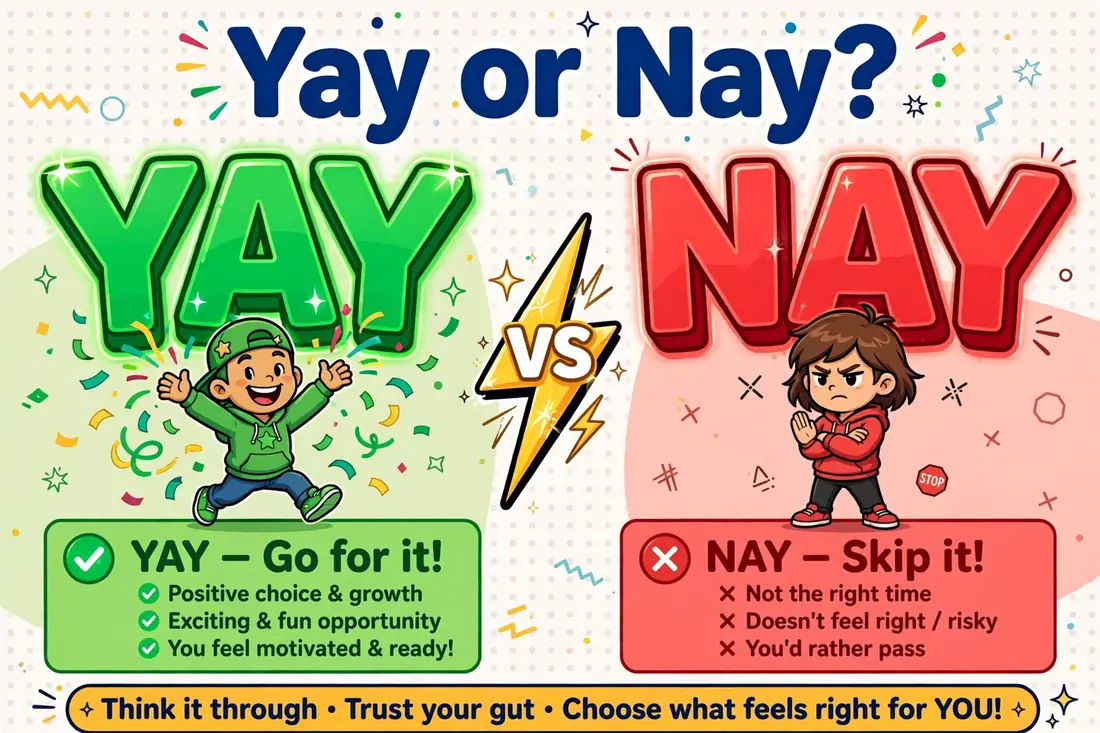
Yay or nay is an informal expression used to ask whether someone agrees with something or supports an idea. Yay means yes, approval, or excitement. Nay means no, rejection, or opposition.
Both words are correct, but they express opposite responses. The phrase often appears in casual conversations, polls, social media posts, and informal decisions.
Quick Answer
- Yay: An informal word expressing approval, excitement, or a positive response.
- Nay: A word meaning no, refusal, or opposition.
- Yay or nay: A phrase asking someone to give a simple yes-or-no opinion.
- Example: “Should we order pizza tonight, yay or nay?”
- Formal alternative: “Do you approve or disapprove?”
Quick Facts: Yay vs. Nay
| Word | Meaning | Tone | Example |
| Yay | Yes, approval, or excitement | Informal and enthusiastic | Yay! We won the game. |
| Nay | No, refusal, or opposition | Direct; sometimes formal or old-fashioned | I vote nay on this proposal. |
| Yay or nay | A request for approval or rejection | Casual and conversational | Is this outfit a yay or nay? |
What Does Yay Mean?
Yay is an interjection that expresses happiness, excitement, approval, or celebration. People often use it when something positive happens or when they support an idea.
It can also work as an informal answer meaning “yes.”
Examples of Yay in Sentences
- Yay! We are going on vacation.
- I got the job. Yay!
- Should we watch a movie tonight? Yay!
- Yay, our team made it to the final.
- Is this a yay or a nay for the party?
- She shouted “Yay!” when she heard the news.
In these examples, yay communicates a positive reaction.
Yay as a Sign of Approval
People often use yay to show that they like an idea, plan, or choice.
Examples:
- A new coffee shop near the office? Yay!
- More vacation days? That is a definite yay.
- The team approved the new design. It was a yay from everyone.
- Should we try the new restaurant? Yay, let’s go.
In casual writing, yay can make a response sound friendly and enthusiastic.
What Does Nay Mean?
Nay means no, refusal, or opposition. It is often used when someone rejects a suggestion or votes against a proposal.
Compared with no, nay can sound more formal, traditional, or deliberate. It commonly appears in voting contexts and set phrases.
Examples of Nay in Sentences
- I vote nay on the proposed changes.
- The committee voted nay on the motion.
- Is that a yay or a nay?
- My answer is nay because the timing is not suitable.
- The proposal received more nays than yays.
- She gave a firm nay to the invitation.
Nay in Voting
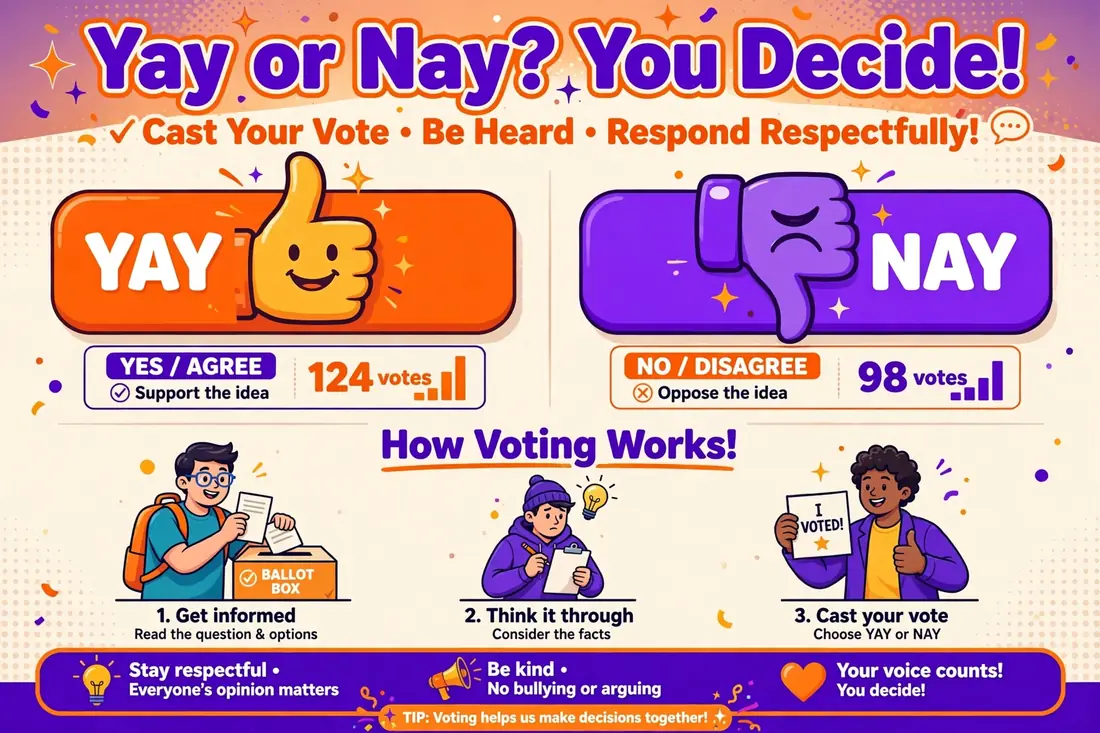
In formal voting, yea and nay are traditional terms for yes and no.
For example:
- The members voted yea.
- Three members voted nay.
- The motion passed despite several nays.
In everyday conversation, people more often say yes and no. However, nay remains familiar in voting language.
What Does Yay or Nay Mean?
The phrase yay or nay asks someone to choose between approval and rejection. It is similar to asking, “Yes or no?” or “Do you agree?”
The phrase is informal and works well when the decision is simple.
Examples:
- Should we book the hotel? Yay or nay?
- Is this movie worth watching, yay or nay?
- New office dress code: yay or nay?
- Should I buy these shoes?
- Is this a yay or nay for dinner?
The phrase does not usually require a detailed explanation. It invites a quick response.
Key Differences Between Yay and Nay
The main difference is their meaning. Yay expresses approval, while nay expresses disapproval.
| Feature | Yay | Nay |
| Basic meaning | Yes or approval | No or opposition |
| Common purpose | Showing excitement or support | Showing rejection or disagreement |
| Tone | Cheerful and enthusiastic | Direct, formal, or traditional |
| Common context | Casual conversation and celebrations | Voting and decisions |
| Example | Yay, let’s go! | Nay, I disagree. |
Although they can appear together in one question, they are not interchangeable.
When to Use Yay
Use yay when you want to express excitement, happiness, or support.
1. Celebrating Good News
Examples:
- Yay! I passed my driving test.
- We are finally moving into our new home. Yay!
- Yay, the weekend is here.
2. Supporting an Idea
Examples:
- Should we have lunch outside? Yay!
- A shorter workweek? That is a yay from me.
- The new website design gets a yay.
3. Giving an Informal Yes
Examples:
- “Want to join us for dinner?” “Yay!”
- “Should we leave early?” “Yay, that works.”
- “Do you like the new plan?” “Yay, I love it.”
In these situations, yay sounds more enthusiastic than a simple yes.
When to Use Nay
Use nay when you want to express disagreement, rejection, or a negative vote.
1. Rejecting a Suggestion
Examples:
- Should we cancel the trip? Nay, let’s wait.
- Is this the right time to launch? My answer is nay.
- A late-night meeting? That’s a nay for me.
2. Voting Against a Proposal
Examples:
- The board voted nay on the proposal.
- Two members voted yea, while four voted nay.
- The motion failed after several members voted nay.
3. Giving a Firm Negative Response
Examples:
- I must say nay to that request.
- Her response was a clear nay.
- The team gave a nay to the proposed schedule.
In casual conversation, no often sounds more natural. Nay may sound more deliberate or formal.
Yay or Nay vs. Yea or Nay
Yay or nay and yea or nay are similar, but their usual contexts differ.
- Yay or nay: Informal expression asking for approval or rejection.
- Yea or nay: Traditional voting expression meaning yes or no.
Examples:
- “New haircut, yay or nay?” asks for a casual opinion.
- “All those in favor, say yea; those opposed, say nay” uses traditional voting language.
The word yay expresses enthusiasm. Yea is mainly associated with agreement or voting.
Comparison Table
| Phrase | Meaning | Typical Context |
| Yay or nay | Approval or rejection | Casual decisions and opinions |
| Yea or nay | Yes or no vote | Meetings, formal votes, and traditional expressions |
| Yes or no | Agreement or disagreement | Everyday and formal communication |
| Pros or cons | Advantages or disadvantages | Evaluating a decision |
Is Yay or Nay Formal or Informal?
The phrase yay or nay is generally informal. It suits conversations, text messages, social media polls, and casual workplace discussions.
It may sound too casual in formal reports, legal documents, or official business communication.
Informal Examples
- New restaurant for Friday? Yay or nay?
- Should we add another color to the design?
- Weekend road trip: yay or nay?
- Is this outfit a yay or nay?
More Formal Alternatives
For professional or formal writing, consider:
- Do you approve or disapprove?
- Do you support this proposal?
- Are you in favor or opposed?
- Should we proceed with this plan?
- Do you agree or disagree?
Choose the wording that matches your audience and situation.
How to Respond to a Yay or Nay Question
A yay-or-nay question usually expects a direct answer. You can respond with either word or explain your choice.
Positive Responses
- Yay!
- Definitely yay.
- That’s a yes from me.
- I’m in favor.
- Absolutely, let’s do it.
Negative Responses
- Nay.
- That’s a no from me.
- I would vote against it.
- Not for me.
- I don’t support that idea.
Responses With a Reason
You can also give a short explanation.
Examples:
- Yay, because the plan fits our budget.
- Nay, because we do not have enough time.
- Definitely yay. The new design looks clearer.
- Nay for now. We should review the details first.
This approach makes your response more useful when the decision involves practical considerations.
Common Mistakes With Yay and Nay
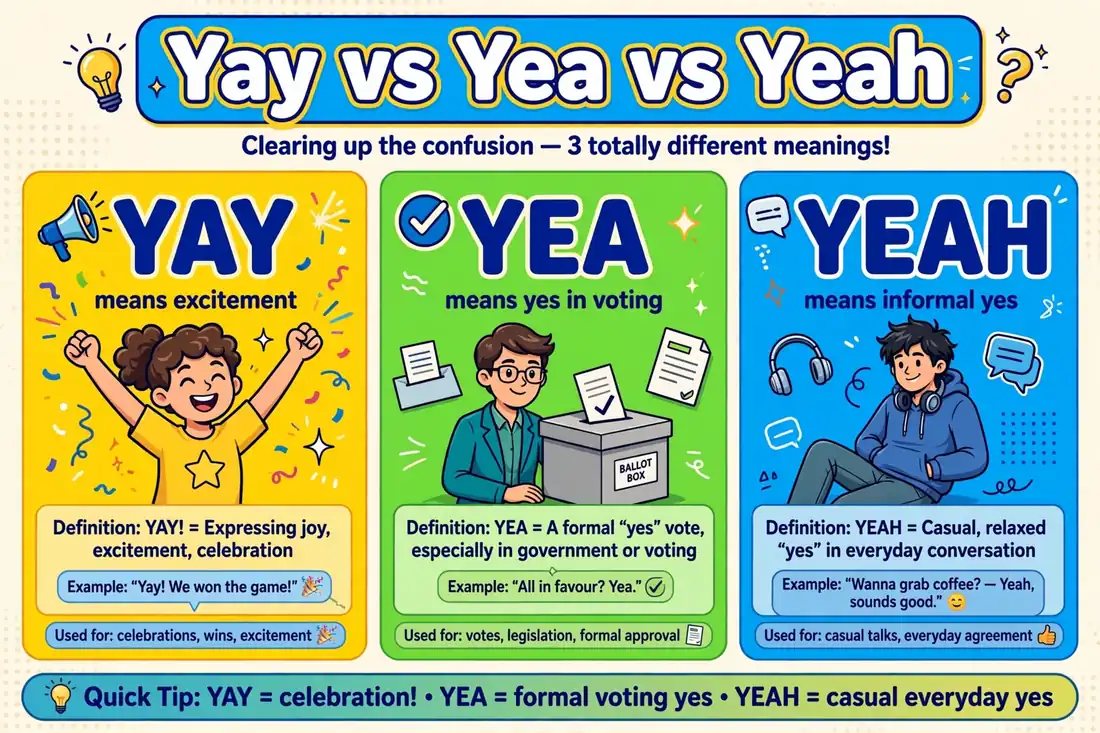
1. Confusing Yay With Yeah
Yay expresses excitement or approval. Yeah is an informal form of yes.
Examples:
- Yay! We won the competition.
- Yeah, I can help you tomorrow.
They may sound similar, but their meanings and uses differ.
2. Confusing Yay With Yea
Yay often expresses excitement. Yea means yes or agreement, especially in voting.
Examples:
- Yay! We are going to the beach.
- The members voted yea on the motion.
3. Using Nay When You Mean Yay
The words express opposite responses.
Incorrect: “Should we celebrate?” “Nay!” if you mean you support celebrating.
Correct: “Should we celebrate?” “Yay!”
4. Treating Nay as the Only Formal Alternative to No
Nay can sound traditional or formal, but it is not always the best choice in professional writing.
For clear communication, no, oppose, or do not approve may be more suitable.
Frequently Asked Questions
Does Yay Mean Yes?
Yes. Yay can mean yes or approval in informal conversation. It also expresses excitement and happiness.
Does Nay Mean No?
Yes. Nay means no, refusal, or opposition. It is especially familiar in voting language.
Is Yay or Nay Grammatically Correct?
Yes. Yay or nay is a common informal expression. It asks someone to choose between approval and rejection.
What Is the Difference Between Yay and Yea?
Yay usually expresses excitement or enthusiastic approval. Yea means yes or agreement and often appears in formal voting contexts.
Is Yay or Nay Professional?
It can work in casual workplace conversations, but it may sound too informal in official documents. Use “approve or disapprove” or “in favor or opposed” when a formal tone is needed.
What Is Another Way to Say Yay or Nay?
You can say “yes or no,” “for or against,” or “approve or disapprove.” The best alternative depends on how formal the situation is.
Conclusion
Yay means approval, excitement, or an enthusiastic yes. Nay means rejection, opposition, or no. Together, yay or nay asks someone to give a quick opinion or decision.