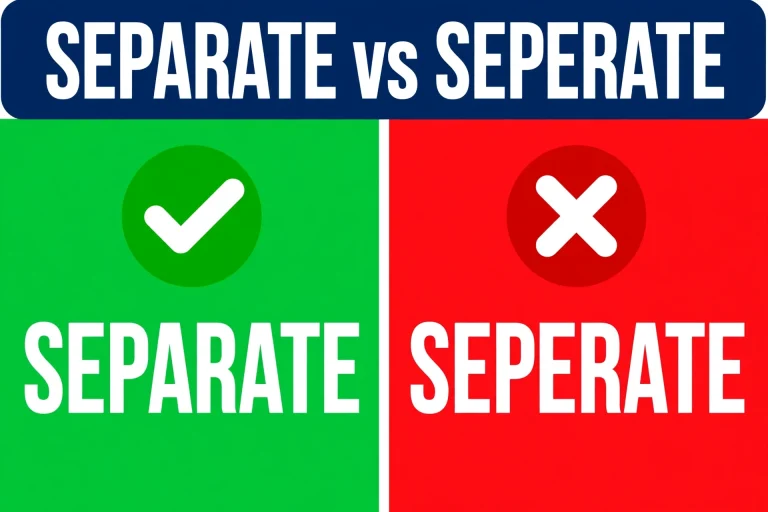
Weird or Wierd: What’s the Difference?
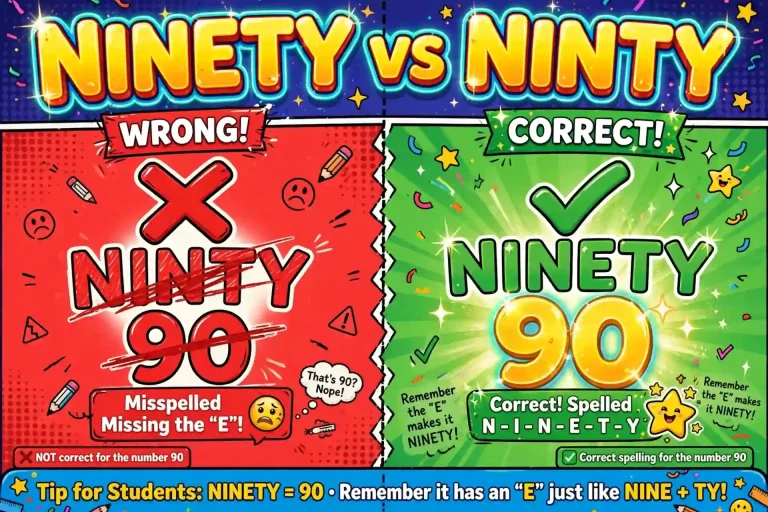
Weird is the correct spelling — it means strange, odd, or unusual. Wierd is a misspelling that catches even careful writers, because the famous “i before e except after c” rule makes E-before-I feel wrong here. The irony is part of the lesson: “The old house made a weird creaking sound in the wind,” while “wierd” is never the right choice in any sentence.
Quick Answer
| Word | Part of Speech | Main Meaning | Example |
|---|---|---|---|
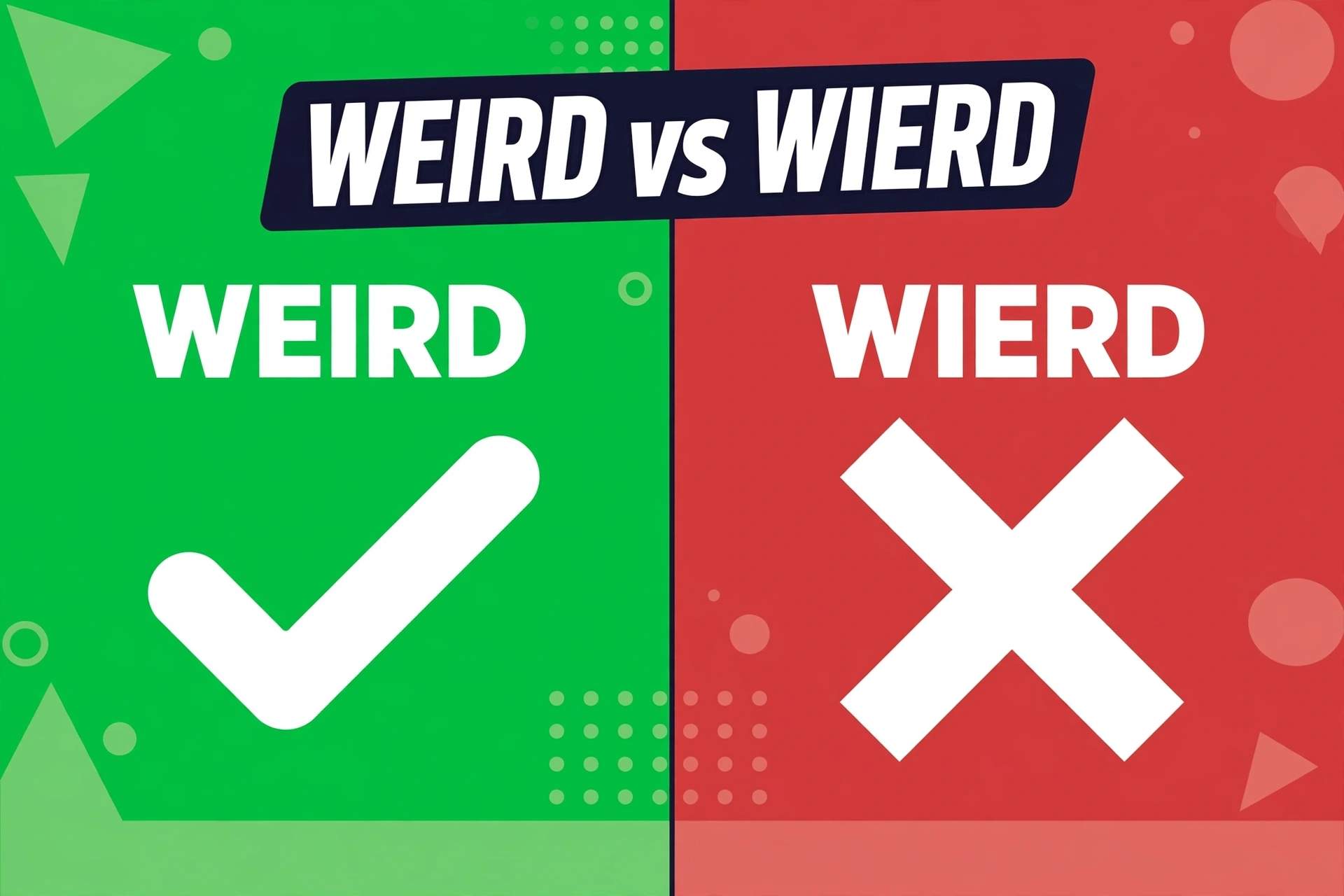
| weird | Adjective (also noun, rare) | Strange, odd, or unusual; eerie or supernatural | ✅ “That’s a weird coincidence.” |
| wierd | Not a word | A misspelling of “weird” | ❌ “That’s a wierd coincidence.” |
Simple rule: Weird is spelled W-E-I-R-D — the E comes before the I, even though every spelling rhyme in school told you otherwise.
What Does Weird Mean?
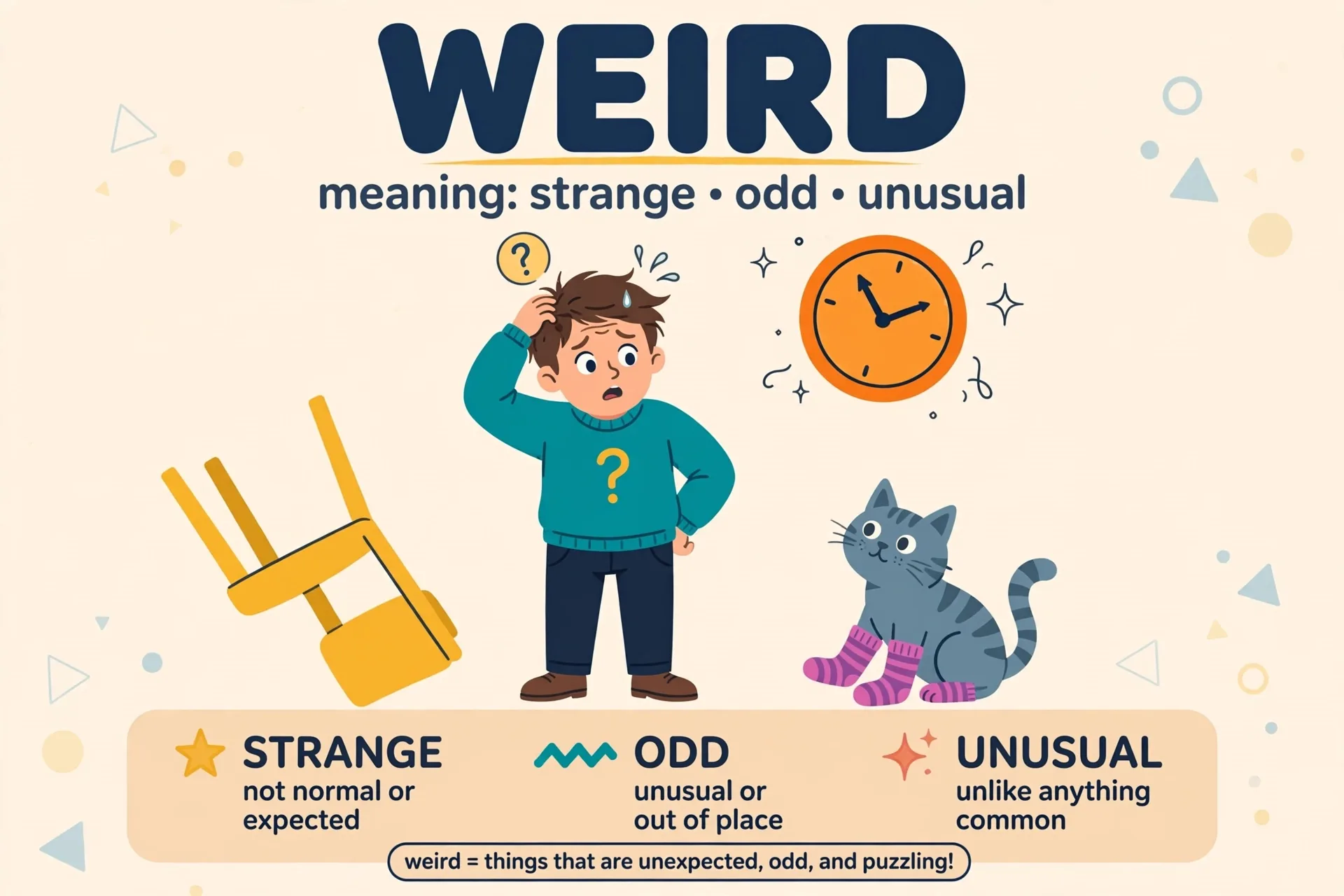
Weird is an adjective meaning strange, odd, or out of the ordinary. It covers everything from mild quirks (“a weird habit of humming while he cooks”) to genuinely eerie things (“a weird silence fell over the room”). Merriam-Webster’s entry for “weird” also records the older, deeper sense: connected to the supernatural or the uncanny, the way the “weird sisters” in Macbeth are the witches.
Strange or unusual
This is the everyday sense — something that departs from what you expect. It can be affectionate, critical, or neutral depending on the sentence.
- “She has a weird talent for remembering license plates.”
- “The movie had a weird ending that nobody understood.”
- “It felt weird to see my childhood home turned into a coffee shop.”
- “He gave me a weird look when I asked about his weekend.”
- “The dog does a weird little spin before lying down.”
Eerie or supernatural
The stronger sense carries a shiver with it — something unnatural or hard to explain. The word’s roots lie in Old English wyrd, meaning fate or destiny, which is why it still feels heavier than plain “strange.”
- “A weird fog rolled in and swallowed the streetlights.”
- “The attic made weird noises all through the night.”
- “She had the weird feeling someone was watching her.”
- “The abandoned house had a weird energy that kept buyers away.”
What Does Wierd Mean?
Wierd means nothing — it is simply “weird” spelled wrong, with the E and I swapped. No dictionary lists it, no region uses it as an accepted variant, and it never appears in edited writing. Every instance of “wierd” is meant to be weird, the author just typed the vowels in the wrong order.
The misspelling is so common that spellcheckers flag it instantly, and it even shows up in published memes and social media posts — which is why many people have seen it so often that it starts to look right. These are all cases of the intended word:
- “I had such a wierd dream last night.” (meant: weird)
- “That was a wierd thing to say.” (meant: weird)
- “The weather has been so wierd this week.” (meant: weird)
- “Stop being wierd.” (meant: weird)
- “She has a wierd sense of humor.” (meant: weird)
Frequency doesn’t make a spelling correct. Millions of people write “wierd,” and every one of them would be marked wrong on a spelling test.
Weird vs. Wierd: Key Differences
| Feature | weird | wierd |
|---|---|---|
| Status | Correct, standard spelling | Misspelling — not a word |
| Meaning | Strange, odd, eerie | None (meant as “weird”) |
| Pronunciation | WEERD (rhymes with “beard”) | Same — the swap is only visual |
| The “i before e” rule | Breaks the rule (E before I) | Follows the rule — but still wrong |
| Parts of speech | Adjective; rare noun (“the weird and the wonderful”) | None |
| Example | ✅ “a weird noise” | ❌ “a wierd noise” |
The correct spelling breaks the famous rule; the wrong one obeys it — which is exactly why the mistake is so hard to unlearn.
Weird and Wierd in Real Sentences
At Home
✅ “The fridge is making a weird humming noise.”
❌ “The fridge is making a wierd humming noise.”
At home you describe the noise once and get on with fixing it — the spelling only matters when it goes in a text or a maintenance request.
At Work
✅ “The client sent a weird revision request this morning.”
❌ “The client sent a wierd revision request this morning.”
In a work email, “wierd” reads as careless, and carelessness in small things makes people doubt the big ones.
In Conversation
✅ “Isn’t it weird how quiet the city gets after midnight?”
❌ “Isn’t it wierd how quiet the city gets after midnight?”
In speech the two are identical — the whole battle between them happens on the page, which is why it’s worth settling now.
Online and in Writing
✅ “Weird flex, but okay.”
❌ “Wierd flex, but okay.”
Even in slang and memes, the correct spelling holds: the popular phrase is “weird flex, but okay,” and the joke lands harder when it’s spelled right.
Common Mistakes
Spelling traps cluster around the same famous rule — the “dieing” vs “dying” spelling trap shows how the i-before-e instinct misfires on common verbs, and the “recieve” vs “receive” mix-up shows what happens when the rule leads you to the wrong vowel order. The weird/wierd traps:
Mistake 1: Applying “i before e” to “weird”
❌ “That’s so wierd.”
✅ “That’s so weird.”
Why: The school rhyme “i before e except after c” was never a real law — English has dozens of exceptions (seize, protein, neighbor, weigh). “Weird” is one of the famous ones, and trusting the rhyme here guarantees the wrong answer.
Mistake 2: Swapping the vowels in every form
❌ “wierder,” “wierdest,” “wierdly”
✅ “weirder,” “weirdest,” “weirdly”
Why: Once the base spelling is wrong, every derived form inherits the error. Learn W-E-I-R-D once and all its children — weirder, weirdest, weirdly, weirdness — spell themselves.
Mistake 3: “Weird” as a noun spelled wrong
❌ “I love the wierd in his writing.”
✅ “I love the weird in his writing.”
Why: The rare noun use (“the weird and the wonderful”) follows the same spelling. There is no form of this word where I-before-E is acceptable.
Mistake 4: Assuming the misspelling is a regional variant
❌ “Isn’t ‘wierd’ the British spelling?”
✅ “No — ‘weird’ is the spelling everywhere.”
Why: Unlike color/colour or center/centre, this word has no US-vs-UK split. “Weird” is the only correct spelling in every English-speaking country.
Pronunciation
Weird is pronounced WEERD — one syllable, long E sound, rhyming with “beard,” “seared,” and “geared.” The misspelling wierd changes nothing in speech, which is why the error survives: your ears never catch it, only your eyes (or your spellchecker) can.
How to Remember the Difference
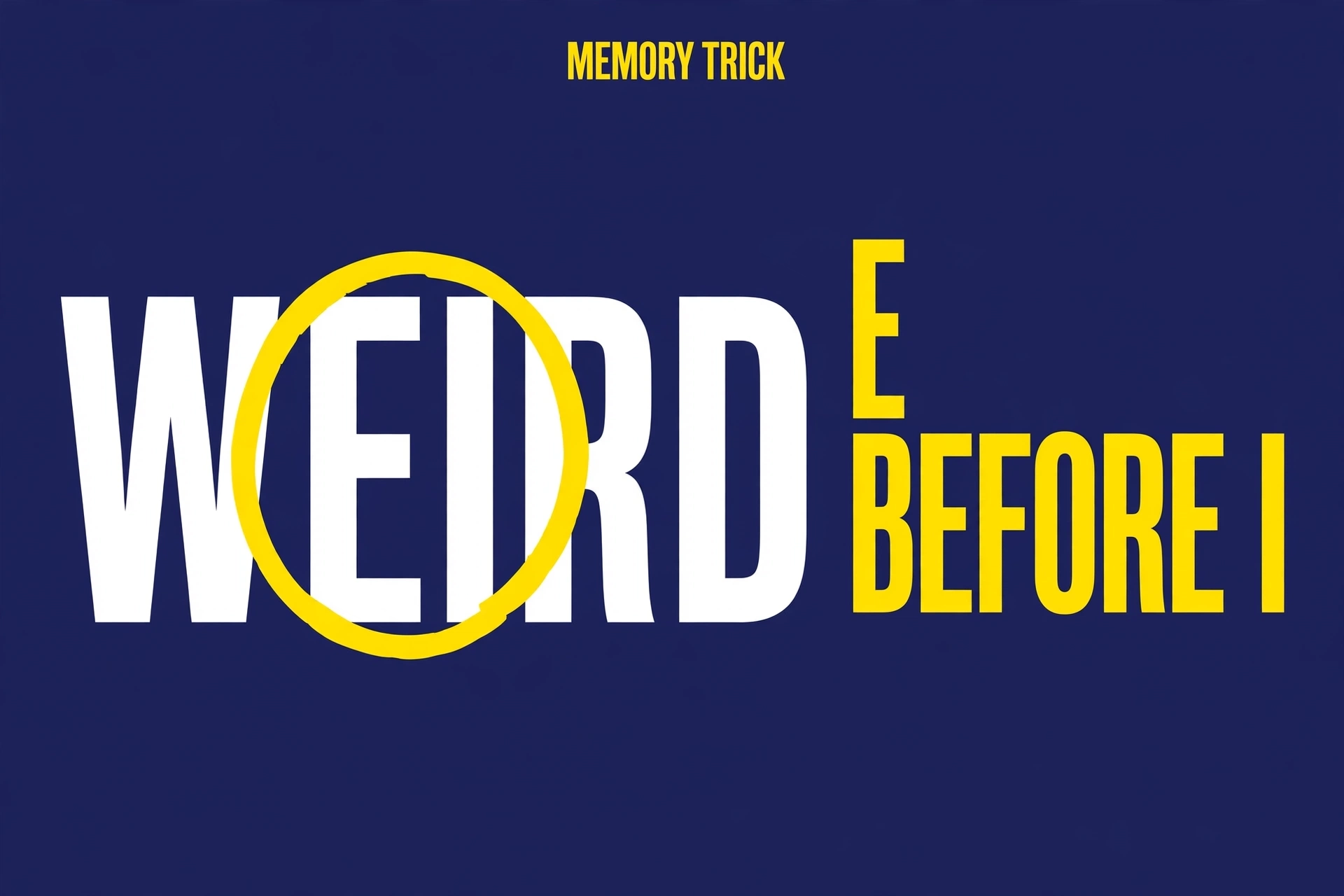
The memory trick hides in the word itself: WE are weird — the E of “we” comes before the I, just as the E comes before the I in weird. Say it once — “we are weird” — and the correct vowel order locks in.
- We-are-weird: the E in “we” precedes the I, giving you W-E-I-R-D.
- Embrace the exception: “weird” is famously weird — the word breaks the i-before-e rule, and remembering that its spelling is as odd as its meaning ends the confusion.
- Recheck derived forms: weirder, weirdest, weirdly, weirdness all keep the E-before-I order.
- Let spellcheck help: “wierd” is one of the most-flagged misspellings in English — if your editor underlines it in red, believe it.
Frequently Asked Questions
Is it weird or wierd?
It is “weird” — W-E-I-R-D. “Wierd” is a misspelling, even though it follows the “i before e” rhyme that “weird” breaks.
Why is “weird” spelled with E before I?
Because the “i before e” rule was never reliable. English inherited “weird” from Old English wyrd (fate), and its modern spelling settled with E before I centuries ago — one of the rule’s many exceptions, alongside “seize,” “protein,” and “neighbor.”
Is “wierd” ever correct?
Never. No dictionary lists “wierd,” and no regional spelling accepts it. Every use is simply “weird” spelled wrong.
What does “weird” mean?
Strange, odd, or unusual — and in its stronger sense, eerie or supernatural. “A weird coincidence” is just odd; “a weird presence in the room” is unsettling.
Is “weird” spelled differently in British English?
No. Unlike pairs like color/colour, “weird” is spelled W-E-I-R-D in American, British, Canadian, and Australian English alike.
What rhymes with “weird”?
“Beard,” “seared,” “geared,” and “feared” all rhyme with it — one syllable, WEERD.
Conclusion
Weird is the word; wierd is the trap. The correct spelling breaks the i-before-e rule on purpose — remember that we are weird, and the E-before-I order will never slip again.