Mrs or Miss: Which Is Correct?
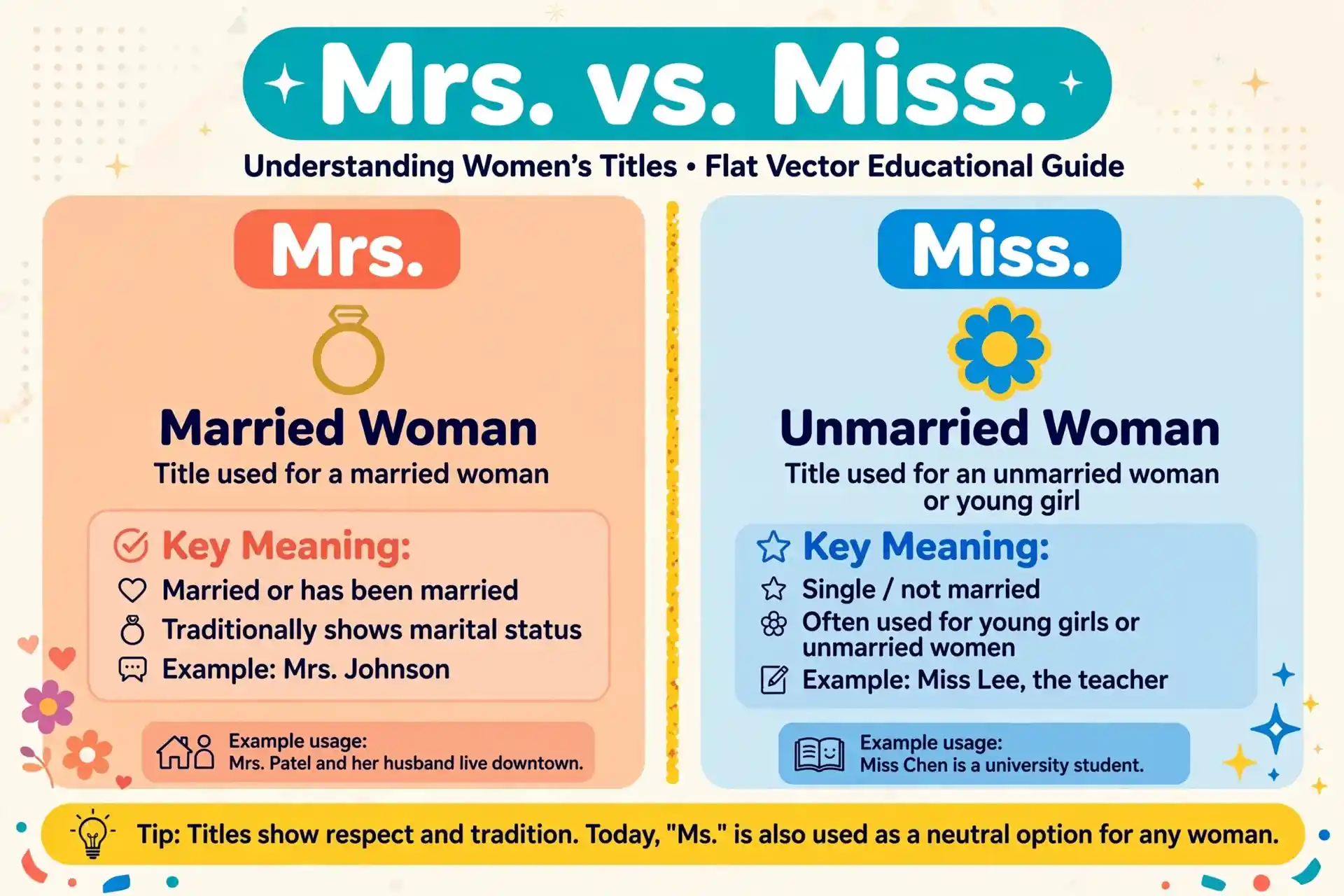
Mrs or Miss? These titles tell a woman’s marital status. Mrs (pronounced “missus”) is used for a married woman, as in “Mrs. Parker lives next door”. Miss is traditionally used for an unmarried woman or a young girl, as in “Miss Carter is in room 4”. Both are always followed by the woman’s surname.
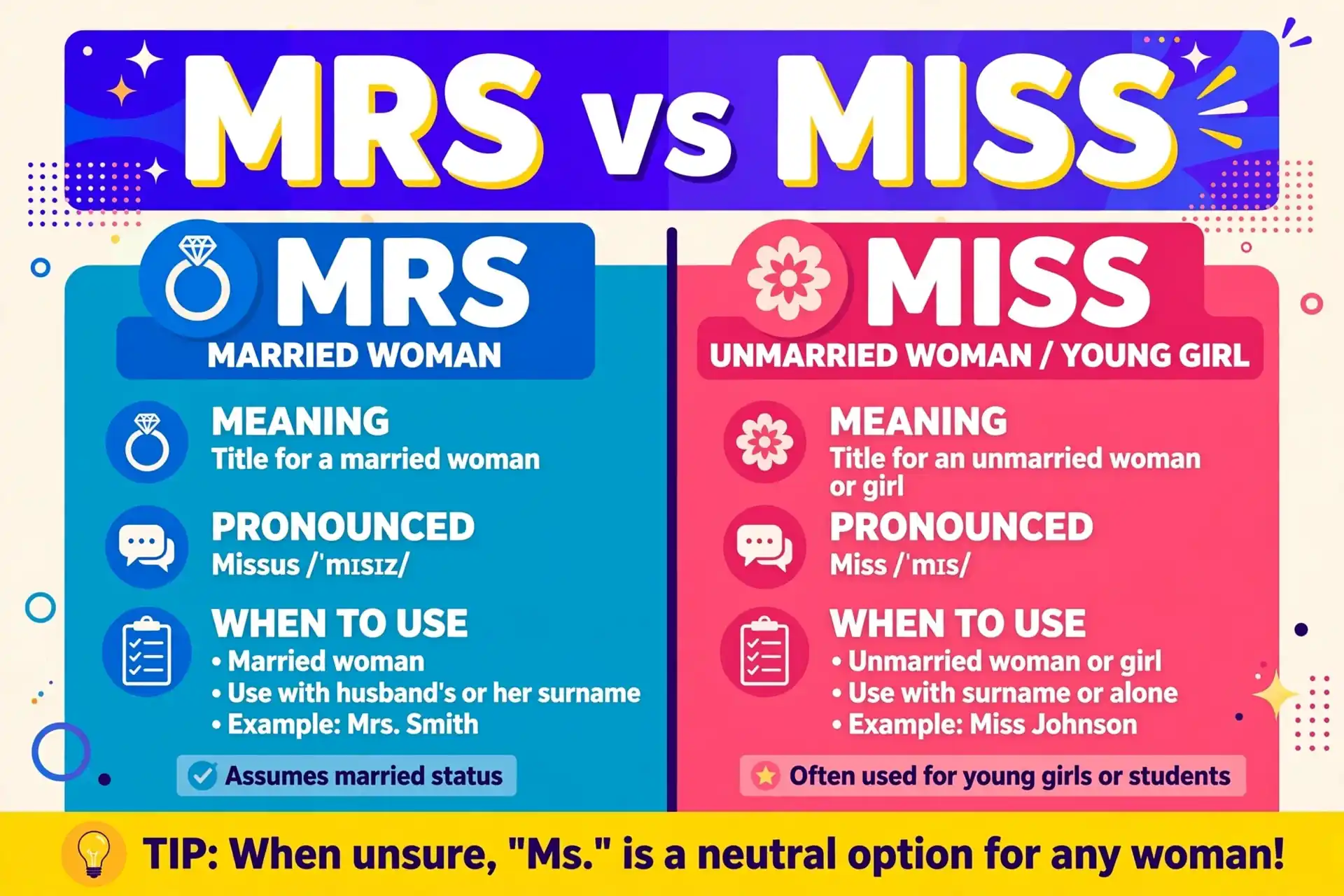
Table of Contents
Quick Answer
| Word | Part of Speech | Main Meaning | Example |
|---|---|---|---|
| Mrs | Honorific (title) | A married woman’s title, used with her surname | “Mrs. Ahmed will see you now.” |
| Miss | Honorific (title) | An unmarried woman’s or young girl’s title, used with her surname | “Miss Ahmed will see you now.” |
Simple rule: Mrs means she is married; Miss means she is traditionally unmarried. When in doubt, use Ms, which works for everyone.
What Does Mrs Mean?
Mrs (pronounced “missus”) is the traditional title for a married woman, placed before her surname. It comes from “mistress,” which once simply meant a woman in charge of a household, before the spelling was shortened to Mrs. See the dictionary entry at Mrs on Cambridge Dictionary for its full definition and pronunciation.
Examples:
- Mrs. Johnson teaches science at the middle school.
- We invited Mr. and Mrs. Patel to the wedding.
- “Good morning, Mrs. Alvarez,” said the receptionist.
- The letter was addressed to Mrs. Chen.
- Mrs. Okafor has run the bakery for twenty years.
What Does Miss Mean?
Miss is the traditional title for an unmarried woman or a young girl, also placed before her surname. It was once the abbreviation of “mistress” applied to younger women, and it remains in wide use in schools, formal letters, and customer service.
Examples:
- Miss Rivera teaches science at the middle school.
- The invitation was addressed to Miss Thompson.
- “Good afternoon, Miss Davies,” said the waiter.
- Miss Park won the regional tennis championship.
- The young patient prefers being called Miss Liu.
Mrs vs. Miss: Key Differences
| Feature | Mrs | Miss |
|---|---|---|
| Marital status | Married woman | Unmarried woman or young girl |
| Pronunciation | “Missus” | “Miss” |
| Used with | Surname (Mrs. Brown) | Surname (Miss Brown) |
| Period after? | Yes in US (Mrs.), no in UK (Mrs) | Never has a period |
| Modern alternative | Ms works for married women too | Ms works for unmarried women too |
| Example | “Mrs. White called.” | “Miss White called.” |
The titles differ in two things: marital status and pronunciation. Mrs is said “missus,” never “mrs” — while Miss is said exactly as it is written.
Usage in Real Sentences
At Home
✅ “Mrs. Garcia brought over the casserole.”
✅ “Miss Garcia is home from college.”
At home these titles separate the married and unmarried members of a household — context tells you which one fits.
At Work
✅ “Mrs. Kim approved the budget.”
✅ “Miss Kim sent the agenda.”
In offices, Ms is now the safer default, since it doesn’t reveal marital status — many women prefer it.
In Conversation
✅ “Have you met Mrs. Bennett?”
✅ “Have you met Miss Bennett?”
When introducing someone, use the title she herself uses — never guess her marital status from her title.
Common Mistakes
Titles are social as well as grammatical, so mistakes here are about manners too — similar to other usage questions like whose vs whos and homophone mix-ups like isle vs aisle.
Mistake 1: Pronouncing Mrs as “miss”
❌ Saying “Miss Parker” when she is married.
✅ Saying “Mrs. Parker” (“missus Parker”).
Why: Mrs is always pronounced “missus” — writing it as “Miss” for a married woman is both a spelling and a social error.
Mistake 2: Guessing a woman’s marital status
❌ Writing “Miss” for every young woman in the office.
✅ Using Ms when you don’t know her preference.
Why: you can’t tell someone’s marital status by looking. Ms (pronounced “miz”) is the neutral title that works for all women.
Mistake 3: Using the title with only a first name
❌ “Mrs. Sarah will help you.”
✅ “Mrs. Sarah Collins will help you.”
Why: Mrs and Miss go with the surname (or full name), never with a first name alone.
Mistake 4: Adding a period to Miss
❌ “Please welcome Miss. Carter.”
✅ “Please welcome Miss Carter.”
Why: Miss is a complete word, not an abbreviation, so it never takes a period. Mrs does take one in American English (Mrs.), but not in British English (Mrs).
Pronunciation
Mrs is pronounced “MISS-us” — it never sounds like “mrs” spelled out. Miss is pronounced exactly as written: “miss,” rhyming with “kiss” and “bliss.” The neutral alternative Ms is pronounced “miz,” rhyming with “whiz.”
How to Remember the Difference
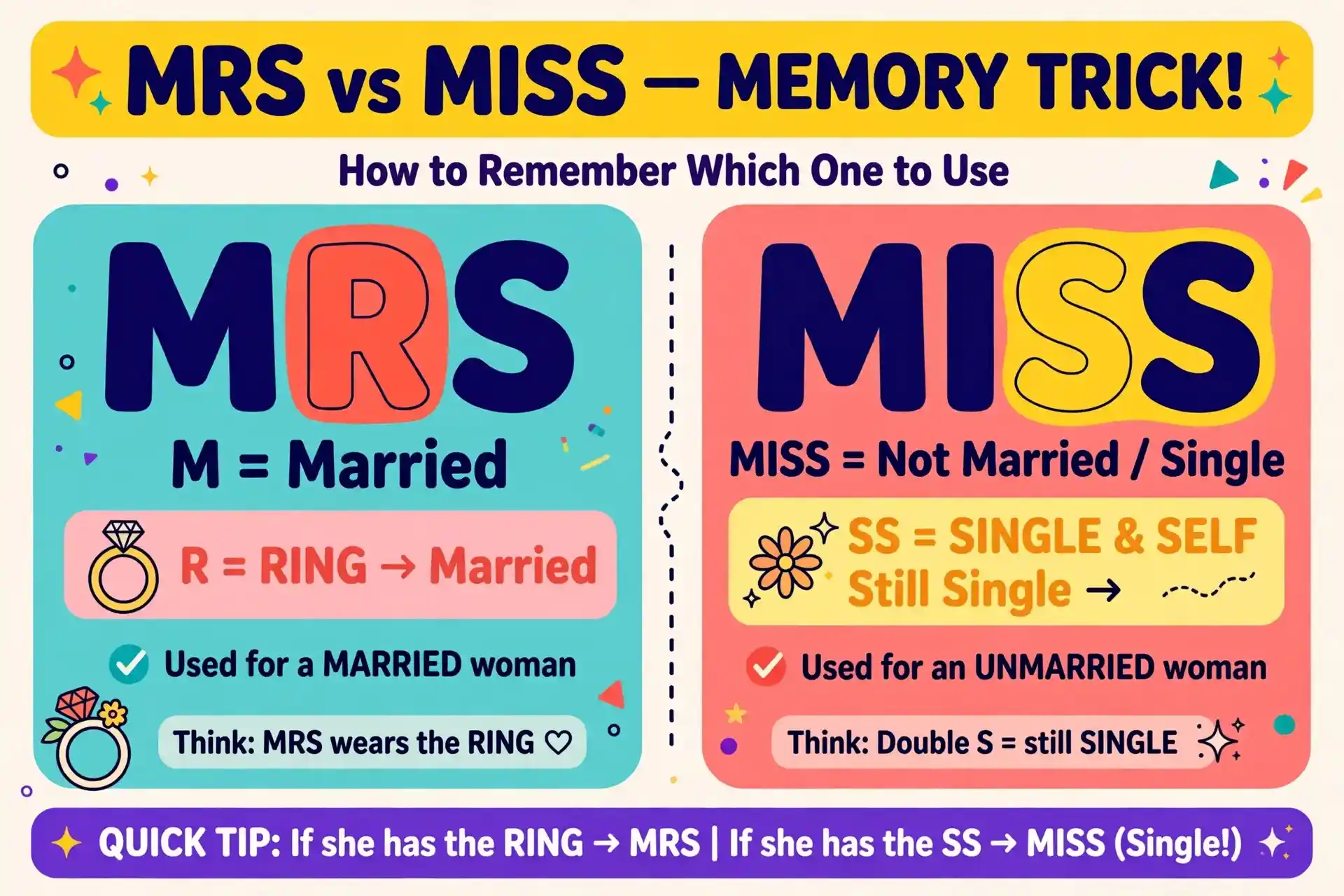
Remember: “Married women are Mrs; Miss is for the missing ring.”
- Mrs has an R — think of the wedding ring she wears.
- Miss is short and simple — for a young, unmarried woman, or when you’re not sure.
- When in doubt, Ms (miz) always works — it reveals nothing about marital status.
Frequently Asked Questions
Is it Mrs or Miss for a married woman?
Use Mrs for a married woman — it is pronounced “missus” and placed before her surname, like Mrs. Adams.
Is Miss only for unmarried women?
Traditionally yes. Miss is the title for an unmarried woman or a young girl, though some unmarried women now prefer Ms.
What is the difference between Mrs, Miss, and Ms?
Mrs means married, Miss means traditionally unmarried, and Ms is the neutral title that works for any woman regardless of marital status.
Do you put a period after Mrs?
In American English, yes — Mrs. In British English, no period: Mrs. Miss never takes a period anywhere.
Is it rude to call someone Miss instead of Mrs?
It can be. Using the wrong title signals the wrong marital status, so the safest choice is to use the title she uses herself — or default to Ms.
Should I use Mrs or Ms on a form?
Use Ms unless you know the woman is married and prefers Mrs. Ms (pronounced “miz”) is the modern default on forms, in workplaces, and in correspondence because it does not reveal or assume marital status — which is why most official paperwork now offers Ms as the standard option.
Conclusion
Mrs (pronounced “missus”) marks a married woman, while Miss traditionally marks an unmarried woman or young girl. Both go before the surname — and when you don’t know which one fits, the modern, neutral Ms is always the right call.