Naive or Nieve: Which Is Correct?
Naive is the correct spelling — it means innocent, trusting, or lacking experience. Nieve is not an English word at all; it’s simply a misspelling of naive, though it happens to be the Spanish word for “snow.” So if you’re writing in English, the answer is always naive.
Example: “She was too naive to see through the scam.” Not: “She was too nieve to see through the scam.”
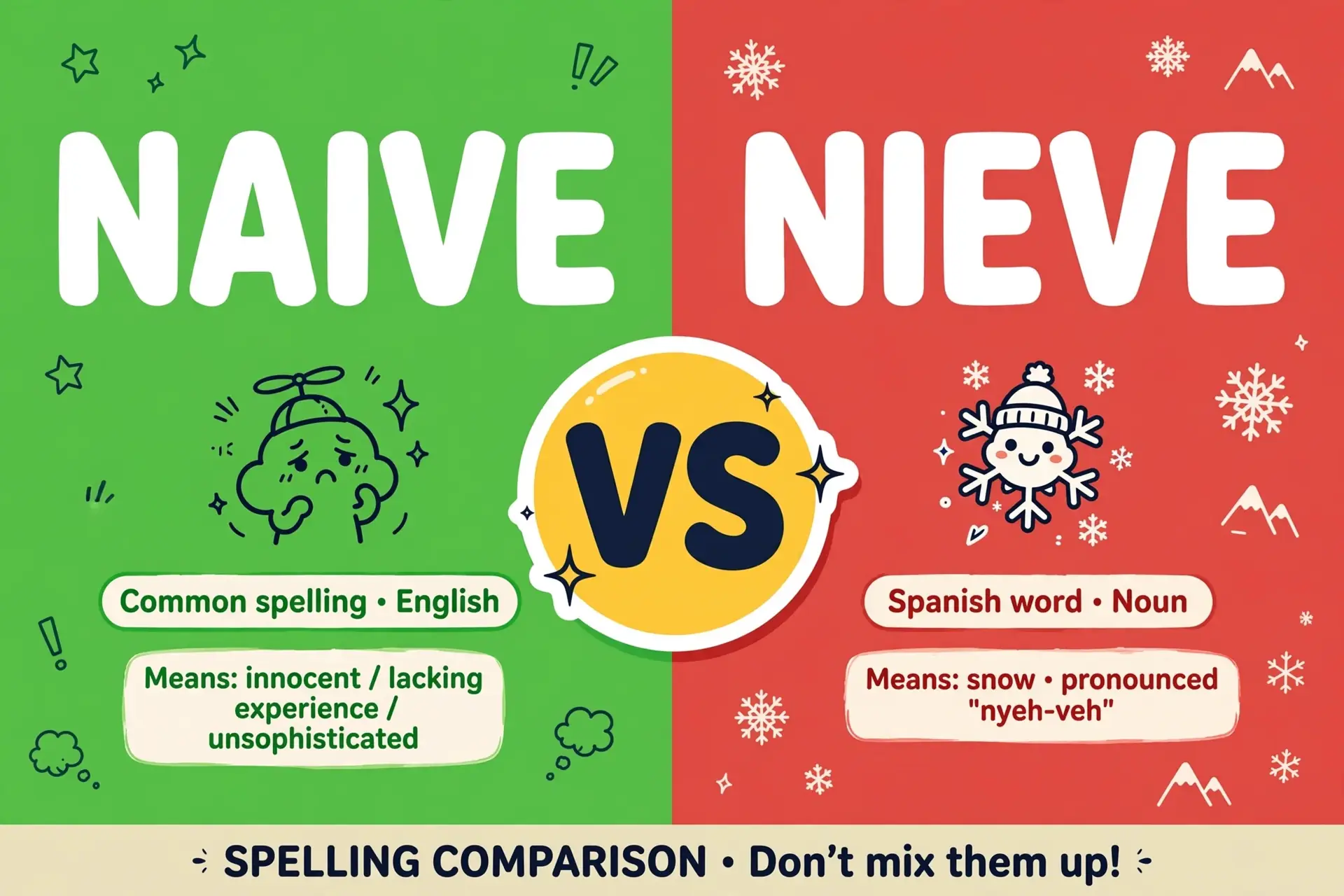
Table of Contents
Quick Answer
| Word | Part of Speech | Main Meaning | Example |
|---|---|---|---|
| Naive | Adjective | Lacking experience, innocent, overly trusting | His naive optimism made him an easy target. |
| Nieve | Not an English word | A misspelling of naive; Spanish for “snow” | ❌ “a nieve question” — should be naive |
Simple rule: If you mean innocent or inexperienced, write naive — the “i” comes before the “e” is wrong; the “a” comes before the “i” is right.
What Does Naive Mean?
Naive is an adjective describing someone who lacks experience, wisdom, or sophistication in judgment — often in a way that makes them overly trusting. It can be gentle (“sweetly naive”) or critical (“dangerously naive”). The word comes from the French naïve, and English keeps the option of writing it with the diaeresis (the two dots over the ï): naïve. Both naive and naïve are correct in English; the diaeresis is optional and mostly marks that the “i” is pronounced as its own syllable (nah-EEV, not “nave”).
Examples:
- The naive intern believed every excuse the client gave her.
- It was naive of me to think the train would be on time during the storm.
- His naive questions actually cut straight to the heart of the problem.
- Only a naive investor would sign a contract without reading the fine print.
- She smiled at his naive excitement on his first day in the city.
A Note on the Diaeresis (ï)
The two dots over the ï in naïve are called a diaeresis, and they tell the reader that the “a” and “i” are pronounced as separate vowels. In everyday American English, most people drop it and write naive — naive on Merriam-Webster lists both forms. Use naïve in formal or literary writing if you like; never “correct” it to nieve.
What Does Nieve Mean?
Nieve has no meaning in English. It is simply the misspelled form of naive, produced when writers flip the “ai” into “ie” — the same ie/ei trap seen in the ie/ei trap in recieve vs receive. The confusion is easy to understand, because so many English words do follow the “i before e” pattern.
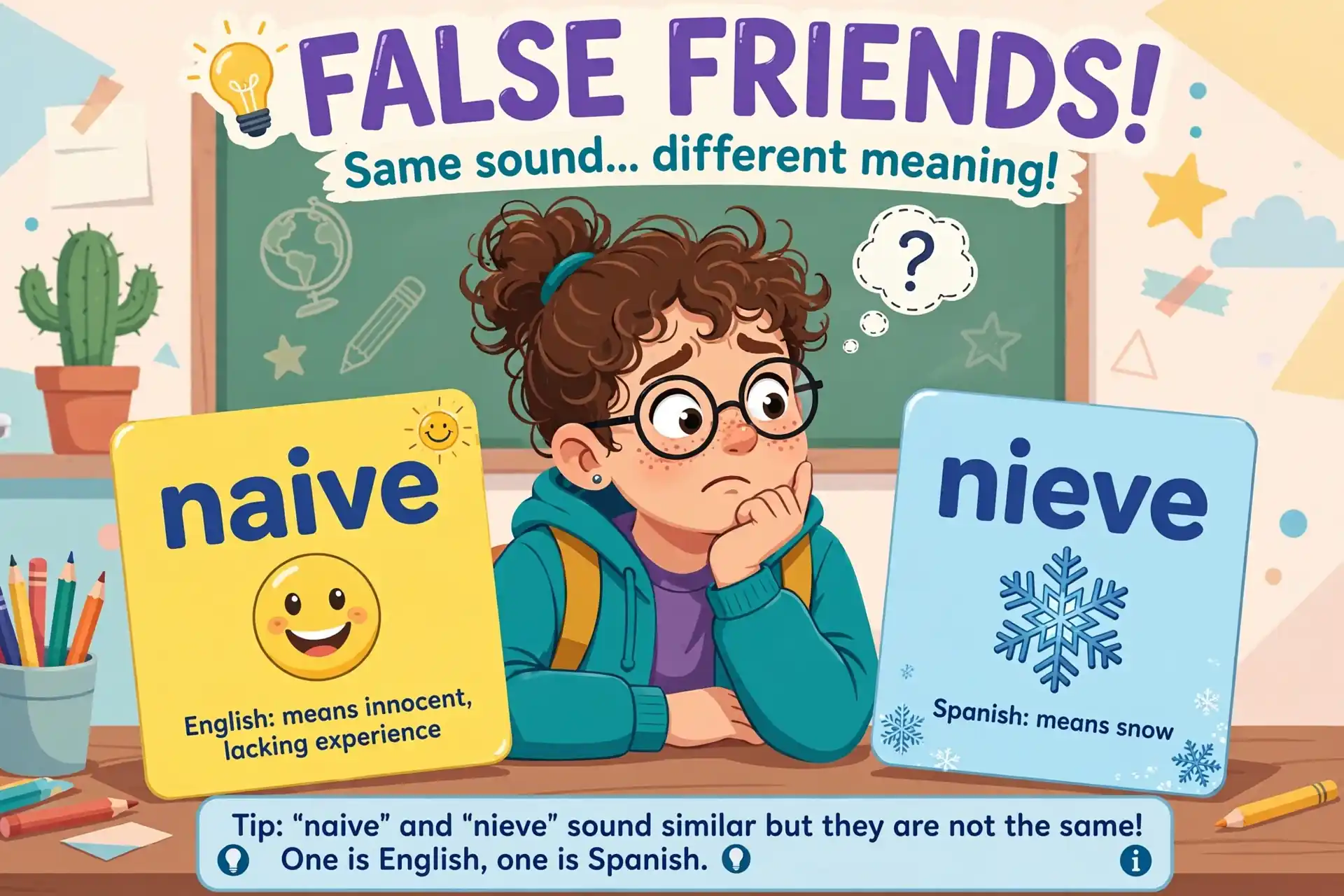
One wrinkle: nieve is a real word in Spanish, where it means “snow.” So if you spot “nieve” in a Spanish menu or weather report, it’s correct there — but in English text, it’s a spelling error, full stop.
Examples of the mistake in English:
- ❌ “Don’t be so nieve.” → ✅ “Don’t be so naive.”
- ❌ “His nieve smile gave him away.” → ✅ “His naive smile gave him away.”
- ✅ “La nieve cubre las montañas.” (Spanish: “The snow covers the mountains.”)
Naive vs. Nieve: Key Differences
| Feature | Naive | Nieve |
|---|---|---|
| Status in English | Correct, standard spelling | Not a word — a misspelling |
| Meaning | Innocent, inexperienced, overly trusting | Nothing (Spanish: “snow”) |
| Part of speech | Adjective | — |
| Origin | French naïf/naïve | Spanish noun |
| Acceptable variants | naïve (with diaeresis) | None in English |
| Pronunciation | nah-EEV | N/A |
The two look like regional spelling rivals, but they aren’t: naive is the word, and nieve is the error.
Naive and Nieve in Real Sentences
At Home
“My little brother’s naive belief that money grows on trees is adorable.” ❌ “nieve belief” would be a typo. The contrast here is innocence versus a slip of the fingers.
At Work
“The new manager’s naive timeline assumed nobody would ever get sick.” A spellchecker may not flag “nieve” since it isn’t recognized as wrong everywhere, so proofread the vowel order yourself.
In Conversation
“You sound naive if you think he’ll change after one talk.” Saying “nieve” aloud would actually sound identical — this is purely a spelling problem, not a speaking one.
Common Mistakes
The nieve misspelling usually comes from over-applying the “i before e” rule, just like verb-form confusions like dieing vs dying come from over-applying “add -ing” patterns. Watch for these:
Mistake 1: Writing “nieve” for the adjective
❌ “It was nieve to trust the email.”
✅ “It was naive to trust the email.”
Why: In English, nieve is never the adjective — it means “snow” in Spanish.
Mistake 2: Adding the diaeresis to the wrong vowel
❌ “naïeve”
✅ “naïve” or “naive“
Why: The diaeresis sits on the ï only, and the vowel order stays a-ï.
Mistake 3: Assuming spellcheck will always catch it
❌ Relying on the red squiggle to fix “nieve.”
✅ Re-reading the word and checking the vowel order yourself.
Why: Some tools treat “nieve” as a foreign word and let it pass; your eyes are the final check.
Mistake 4: Pronouncing it “nave”
❌ “He was so NAVE.”
✅ “He was so nah-EEV.”
Why: Naive has three syllables’ worth of sound in two beats — “nah-EEV” — and rhymes with “achieve” and “believe” (minus the l).
Pronunciation
Naive is pronounced “nah-EEV” — the stress lands on the second syllable, and both vowels are heard. It rhymes with “achieve,” “believe,” and “reprieve.” Hearing it correctly can actually help your spelling: if you say “nah-EEV” slowly, the “a” sound comes first, matching the a-i order in naive.

How to Remember the Difference
A comes before I. Picture the phrase “Always Innocent” — the A in “always” and the I in “innocent” sit in exactly the order they appear in naive. “Nieve” puts the vowels backwards, the way snow (nieve in Spanish) falls backwards through your fingers.
- A before I → naive ✓
- I before E → nieve ✗ (the classic ie/ei trap)
- Bonus: naïve with the diaeresis is also correct — the dots never move the vowels
Frequently Asked Questions
Is it naive or nieve?
It’s naive. “Nieve” is a misspelling in English (though it means “snow” in Spanish). Whenever you mean innocent or inexperienced, write naive.
Is naïve with the two dots correct?
Yes. Naïve with the diaeresis is the original French form and is perfectly correct in English — it’s just optional. Most American publications use plain naive.
What does naive mean in simple terms?
It means lacking experience or being overly trusting — like someone who believes everything they’re told because they haven’t learned to be skeptical yet.
Why do people spell it “nieve”?
Because of the “i before e except after c” rule drilled into English learners. Naive is an exception borrowed from French, so the rule misleads people into flipping the vowels.
Is “nieve” ever correct?
Only in Spanish, where nieve means “snow.” In English writing, it’s always an error — use naive.
How do you pronounce naive?
“Nah-EEV,” with the stress on the second syllable. It rhymes with “believe” and “achieve.”
Conclusion
Naive is the correct English spelling for innocent or inexperienced; nieve is a misspelling (and Spanish for “snow”). Remember A before I — naive — and you’ll never flip the vowels again.