Looser or Loser: What’s the Difference? (With Examples)
Looser and loser are both real English words — but they have nothing to do with each other. Looser is the comparative of loose: less tight, more free. A loser is someone who loses a game or competition.
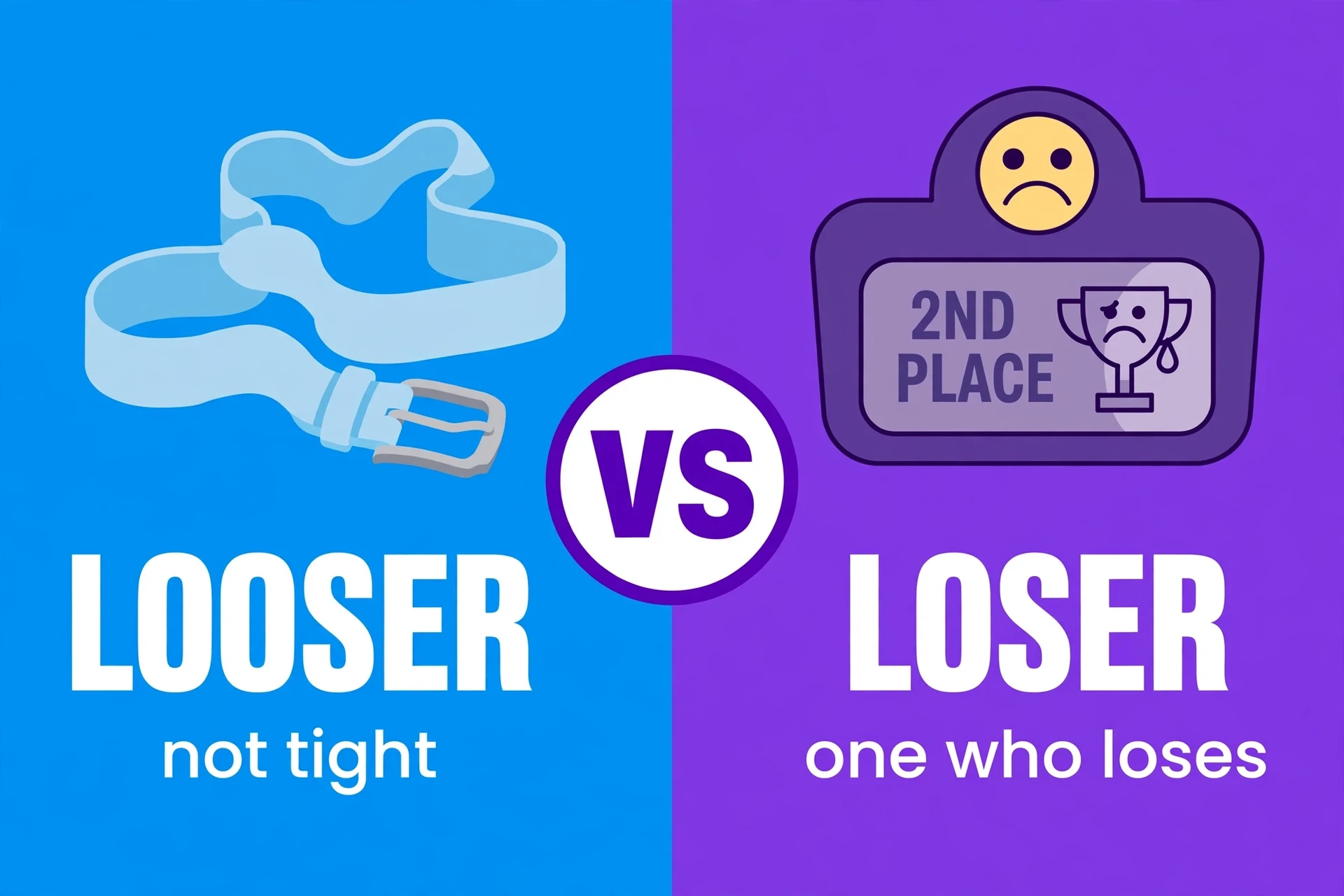
Table of Contents
Quick Answer
| Word | Part of Speech | Main Meaning | Example |
|---|---|---|---|
| Looser | Adjective (comparative) | Less tight; more free or relaxed (comparative of “loose”) | These shoes are looser than my old pair. |
| Loser | Noun | A person or team that loses; an unsuccessful person | The loser of the match shook hands with the winner. |
Simple rule: if it describes how tight something is, it’s looser (two Os, like loose). If it’s a person who lost, it’s loser (one O, like lose).
What Does Looser Mean?
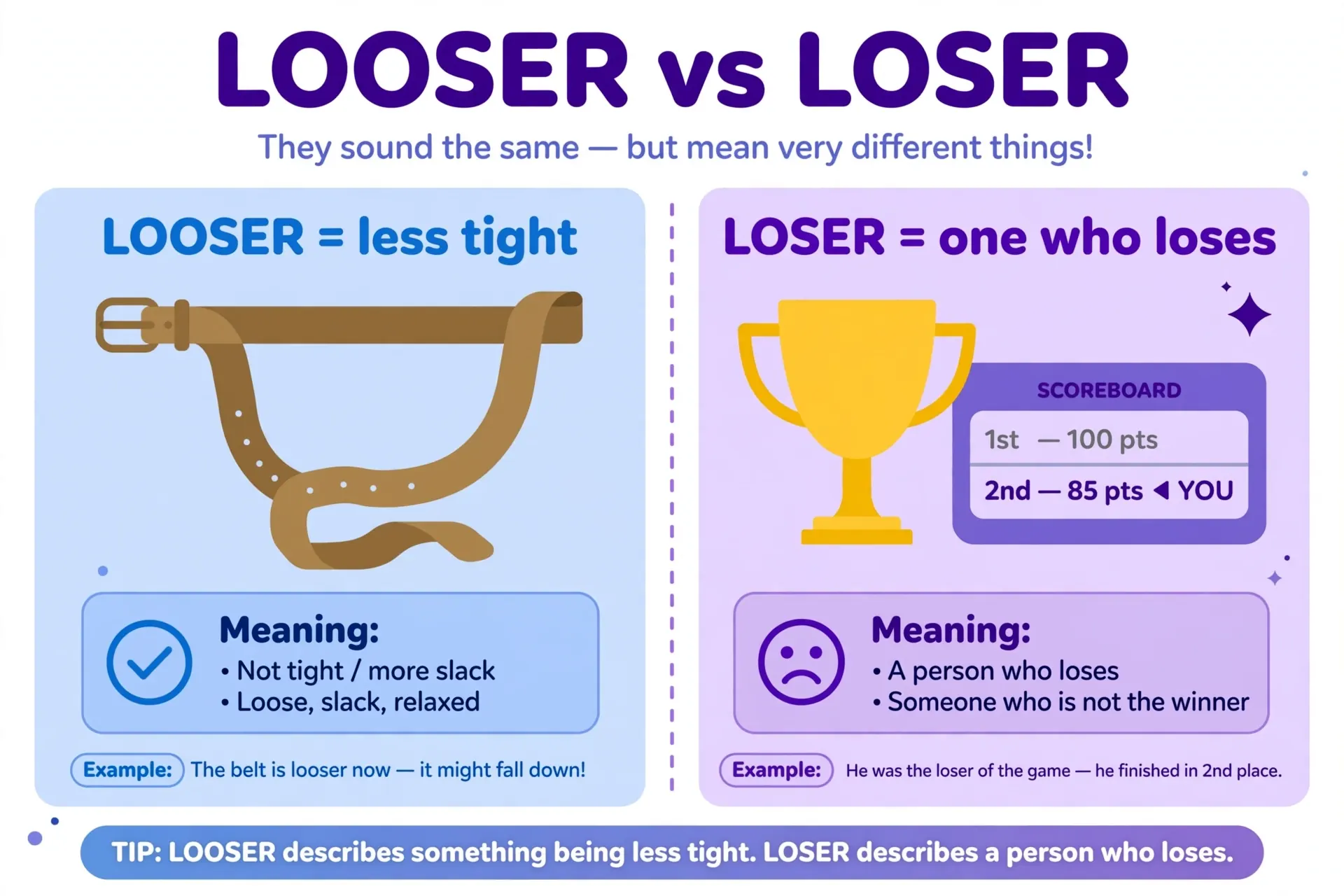
Looser is the comparative form of loose — it means “less tight” or “more free” than something else. It’s the word for jeans that don’t hug, knots that don’t hold, and rules that aren’t strict. Merriam-Webster lists looser as the comparative of loose: “not tightly fastened,” taken one step further.
- These jeans are looser than the pair I tried on yesterday.
- Can you make the knot a little looser? It’s hurting my wrist.
- The new schedule is looser — we finally have free afternoons.
- He prefers a looser grip on the golf club.
- The lid gets looser every time you open the jar.
What Does Loser Mean?
A loser is a person or team that loses — a game, a match, an election, a bet. In informal speech it can also be an unkind label for someone seen as unsuccessful, which is why the word stings when it’s aimed at you. It comes from the verb lose, not from loose.
- The loser of the bet had to wash the dishes.
- She’s a graceful loser — she congratulated the winner right away.
- Calling someone a loser is never a kind thing to do.
- Our team were the losers in the final, 3–2.
- Every loser in the tournament still played brilliantly.
Looser vs. Loser: Key Differences
| Feature | Looser | Loser |
|---|---|---|
| Comes from | Loose (adjective) | Lose (verb) |
| Part of speech | Adjective (comparative) | Noun |
| Core meaning | Less tight, more free | One who loses |
| The O count | Two Os — like loose | One O — like lose |
| The S sound | /s/ — hisses, like loose | /z/ — buzzes, like lose |
| Example | “a looser grip” | “the loser of the bet” |
They share five of six letters, but one is about tightness and the other is about defeat.
Looser vs. Loser in Real Sentences
At Home
These new jeans are looser around the waist — much more comfortable.
Dad was the loser of our chess match, so he’s making dinner.
At home, looser describes the fit of your clothes; loser describes who lost the game.
At Work
The new policy is looser about working from home.
Nobody wants to be the loser in the sales contest this quarter.
One word relaxes the rules; the other names the person who came last.
In Conversation
“This lid is looser than the last one — it leaks.”
“Don’t call yourself a loser just because you lost once.”
Looser talks about things; loser talks about people.
Common Mistakes
The loose/lose family trips up even confident writers — it’s the same root as the classic loose vs lose mix-up. And if small sound-alike spellings keep catching you, the fix works just like whose or who’s: sound the word out, then check the spelling.
Mistake 1: “Looser” for a person who lost
❌ He’s such a looser for dropping the ball.
✅ He’s such a loser for dropping the ball.
Why: A person who loses is a loser — one O, from lose.
Mistake 2: “Loser” for something less tight
❌ These jeans are loser than my old ones.
✅ These jeans are looser than my old ones.
Why: Less tight is the comparative of loose — looser, two Os.
Mistake 3: “Loser” in a comparative sentence
❌ Tie it loser so I can breathe.
✅ Tie it looser so I can breathe.
Why: You’re comparing tightness, so the double-O comparative looser is correct.
Mistake 4: Insulting with the wrong spelling
❌ Don’t be a looser — try again.
✅ Don’t be a loser — try again.
Why: The noun for someone who loses is spelled loser. (And kinder to encourage than to label.)
Pronunciation
The S sound tells them apart. Looser is “LOO-ser” (/ˈluːsər/) with a hissing /s/, rhyming with juicer. Loser is “LOO-zer” (/ˈluːzər/) with a buzzing /z/, rhyming with chooser and user. The rule of thumb: loose hisses, lose buzzes — and the comparatives and nouns follow their roots.
How to Remember the Difference
LOOse → LOOser: the double O carries over. LOse → LOser: the single O carries over. Just count the Os — loose-words keep two, lose-words keep one.
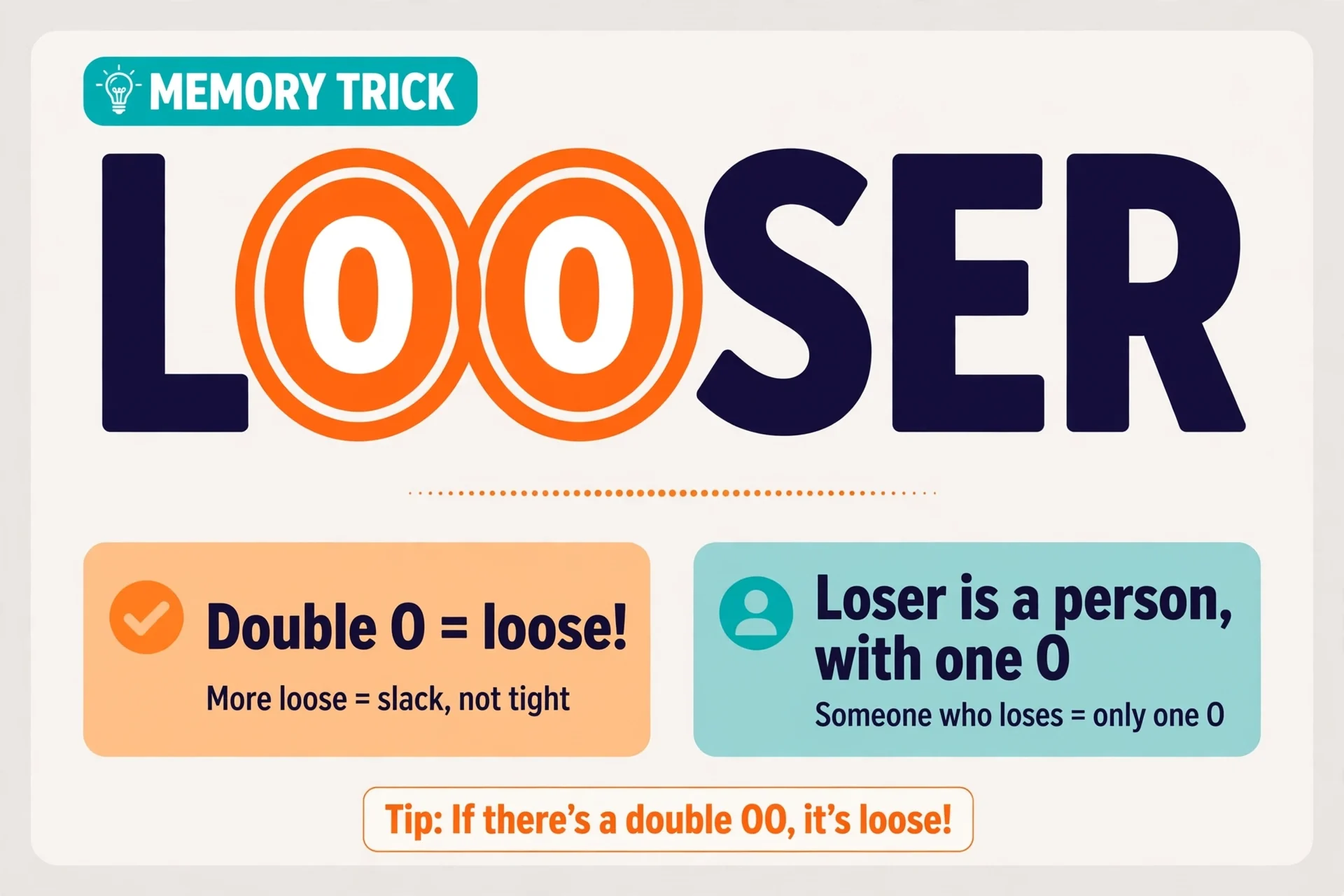
- Looser (2 Os) = less tight — from loose.
- Loser (1 O) = one who lost — from lose.
- Sound check: hissing /s/ = looser; buzzing /z/ = loser.
Frequently Asked Questions
Is it looser or loser?
It depends on your meaning. Use looser for “less tight” (“a looser belt”) and loser for “one who loses” (“the loser of the game”).
Is “looser” a real word?
Yes — it’s the standard comparative of loose, recognized by every major dictionary. “Looser,” “loosest”: looser jeans, loosest knot.
What’s the difference between loose and lose?
Loose (double O, hissing S) is an adjective meaning “not tight.” Lose (single O, buzzing Z) is a verb meaning “to be defeated” or “to misplace.” Looser and loser follow their roots exactly.
How do you spell “loser”?
L-O-S-E-R — one O. It comes from lose, so it keeps lose’s single O.
Why do people confuse looser and loser?
They differ by one O and sound almost identical in fast speech. Because both are real words, spellcheck won’t flag the mix-up — only the meaning tells you which is right.
Can “looser” ever mean a person?
Almost never. Technically “looser” can mean “one who looses (releases)” something, like an archer loosing an arrow — but this is archaic and vanishingly rare. In modern English, looser means “less tight.”
Conclusion
Looser is about tightness — the comparative of loose. Loser is about defeat — one who loses. Count the Os, listen for the hiss or the buzz, and the right word will be obvious.