Bellow or Below: What’s the Difference? (With Examples)
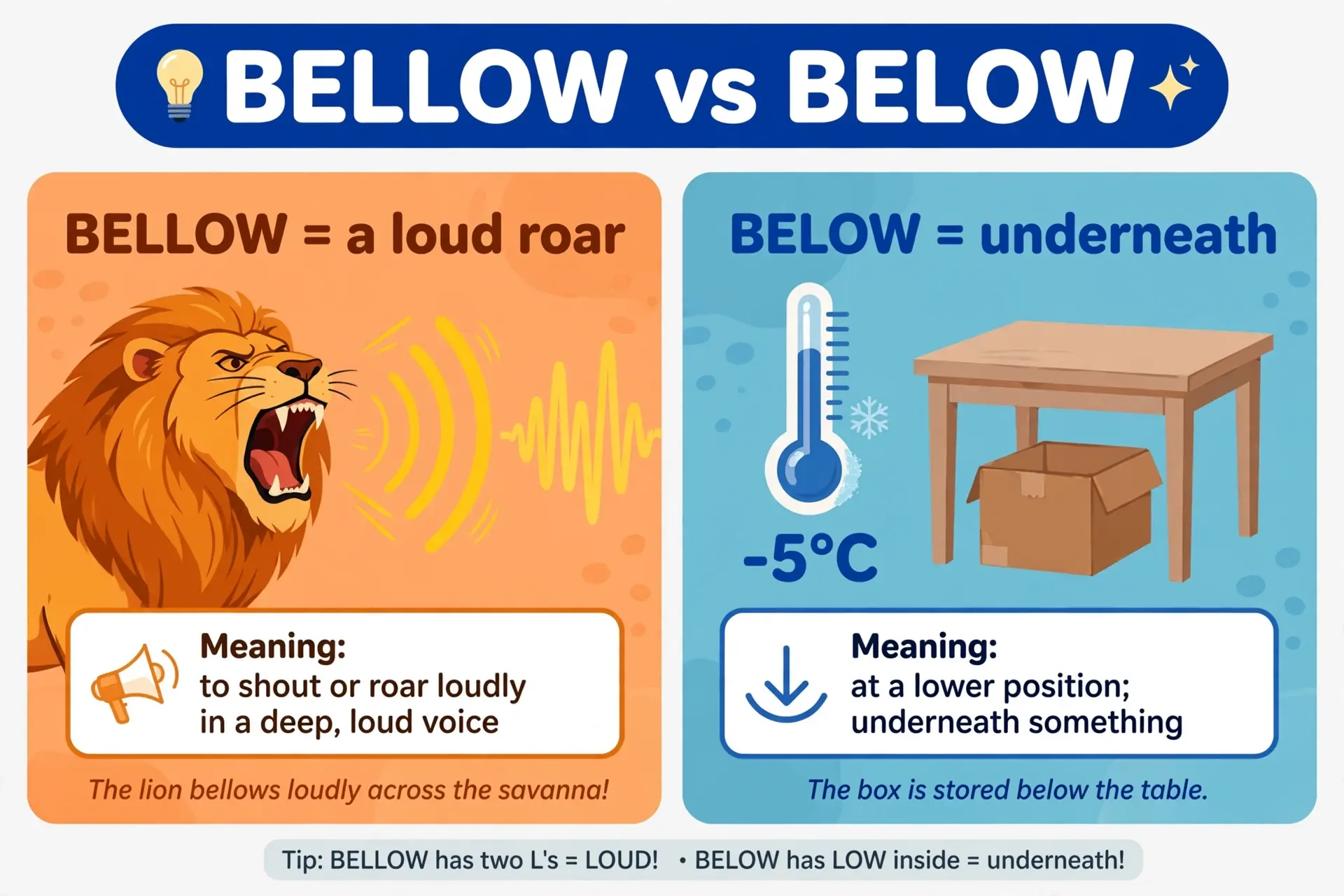
Both bellow and below are correct English words, but they mean completely different things. Bellow means to roar or shout in a deep, loud voice, while below means under something or lower than a level.
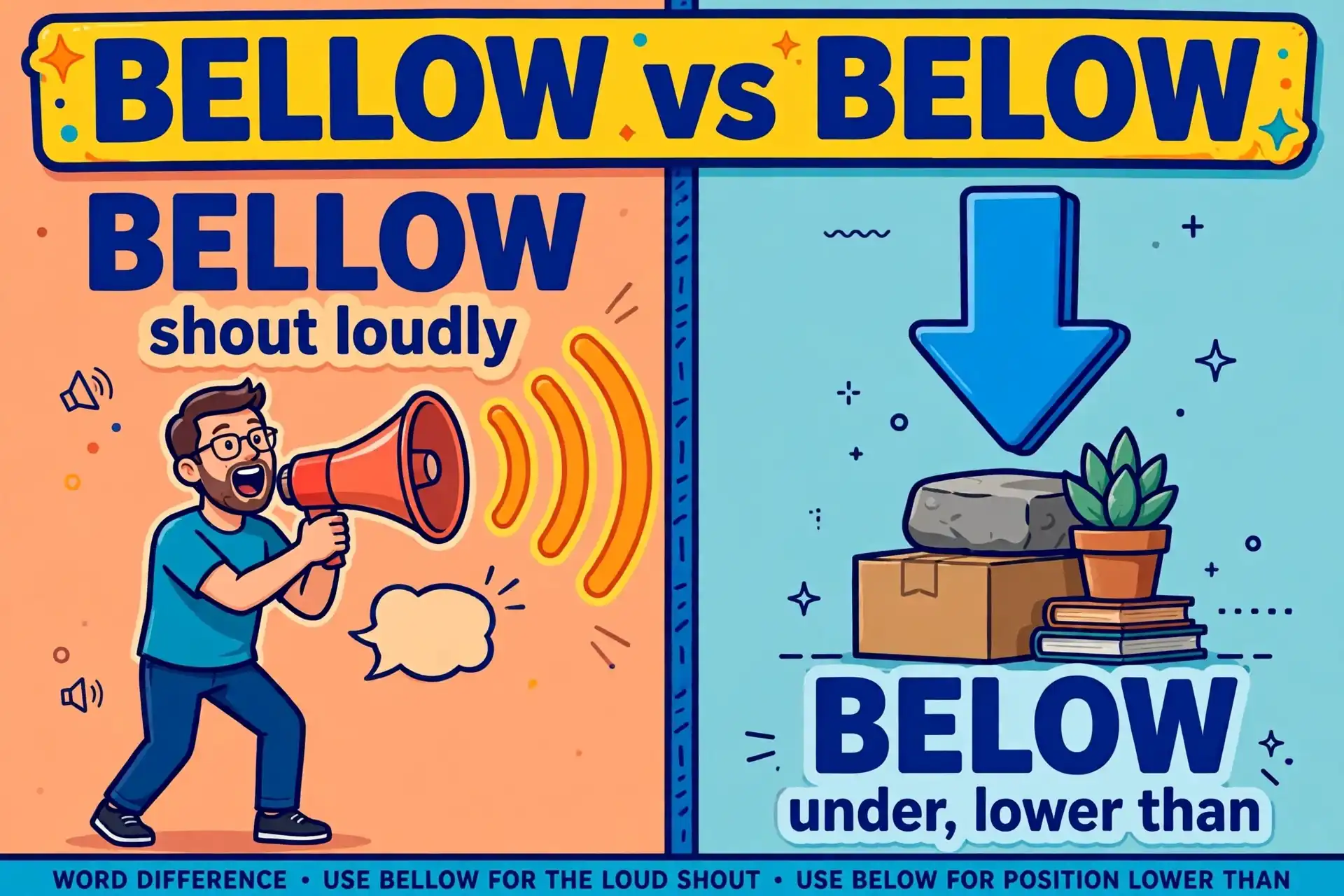
Table of Contents
Quick Answer
| Word | Part of Speech | Main Meaning | Example |
|---|---|---|---|
| bellow | verb / noun | to shout or roar in a deep, loud voice; such a roar | “The sergeant bellowed across the parade ground.” |
| below | preposition / adverb / adjective | under; lower in position, rank, or level | “The cat hid below the table.” |
Simple rule: If a loud voice is involved, it is bellow; if something is lower or underneath, it is below.
What Does Bellow Mean?
To bellow is to let out a deep, powerful roar — the kind of sound that rattles windows. People, bulls, and lions bellow; the noun form names the sound itself. Check the full entry for bellow in Merriam-Webster’s dictionary for both the verb and noun forms.
Examples:
- “The drill sergeant bellowed the order across the field.”
- “The bull bellowed when the gate swung open.”
- “The crowd bellowed with laughter at the joke.”
- As a noun: “He let out a bellow of rage.”
- “The captain’s bellow carried over the storm.”
What Does Below Mean?
Below points to a lower position, rank, or level. It is a workhorse preposition for anything underneath something else — physically, numerically, or on a page.
Examples:
- “The cat slept below the table.”
- “Temperatures fell below freezing overnight.”
- “Her score was below average.”
- “Write your name in the box below.”
- “The plane flew below the clouds for the entire approach.”
- “Anyone below the age of eighteen needs a guardian’s signature.”
- As an adjective: “Please see the below address for details.”
Bellow vs. Below: Key Differences
| Feature | Bellow | Below |
|---|---|---|
| Part of speech | Verb (also noun) | Preposition / adverb / adjective |
| Core meaning | Shout or roar loudly | Under; lower than |
| Involves sound | Always — it is a loud noise | Never — it describes position |
| Opposite | Whisper, murmur | Above, over |
| Can it be a noun? | Yes — “a bellow of rage” | No |
| Memory hook | The double L stands for Loud, Loud | Contains the word low |
The two words sound nearly identical, but their jobs could not be further apart: bellow fills a room with noise, while below quietly points downward.
Usage in Real Sentences
At Work
Bellow: “The foreman bellowed instructions over the noise of the machines.”
Below: “His productivity fell below the team’s minimum standard.”
The foreman’s voice was the loudest thing in the room; the productivity number sat at the bottom of the chart.
At the Zoo
Bellow: “The elephant bellowed and the whole crowd jumped.”
Below: “The penguins live on the level below the polar bears.”
One sentence is about a startling sound, the other is about which floor an exhibit is on.
In Conversation
Bellow: “There’s no need to bellow — I’m standing right here.”
Below: “Please sign on the line below.”
Shouting at someone is the opposite of politely pointing to a spot lower on the page.
In Writing
Bellow: “The novelist described the villain’s bellow as something that shook the rafters.”
Below: “As explained in the paragraph below, the policy changed in January.”
Writers use below to point readers to later lines, while bellow belongs in dialogue and description where volume matters.
Common Mistakes
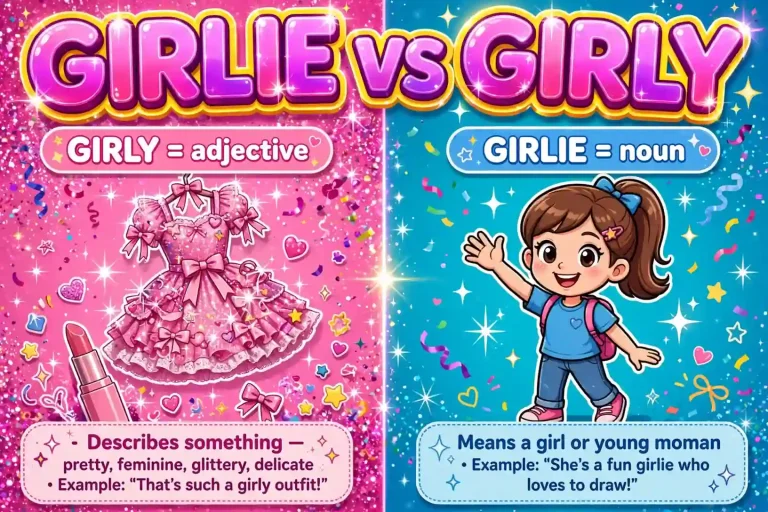
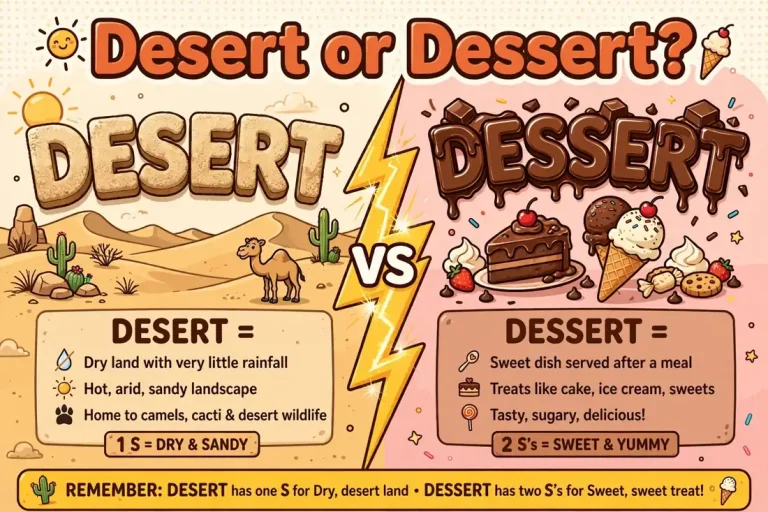
Swapped letters create some of English’s most stubborn errors — the dieing or dying question trips up millions, and the desert or dessert mix-up is a classic. Bellow and below belong in the same lineup, so watch for these.
Mistake 1: Writing “from bellow the stairs”
❌ “She shouted from bellow the stairs.”
✅ “She shouted from below the stairs.”
Why: The sentence describes a position — under the stairs — so it needs below.
Mistake 2: “Belowed” is not a word
❌ “The captain belowed the order.”
✅ “The captain bellowed the order.”
Why: The shouting verb is bellow; its past tense is bellowed, never “belowed”.
Mistake 3: A crying baby
❌ “The baby belowed for attention.”
✅ “The baby bellowed for attention.”
Why: Loud, full-throated crying is bellowing — sound means bellow.
Mistake 4: Details at the bottom of the page
❌ “See the details bellow.”
✅ “See the details below.”
Why: Referring to text lower on the page is a position, so below is correct.
Pronunciation
Bellow (BEL-oh) rhymes with “yellow” and “fellow”, with the stress on the first syllable. Below (buh-LOH) rhymes with “flow” and “glow”, with the stress on the second syllable. That stress shift is the only spoken difference between them.
How to Remember the Difference
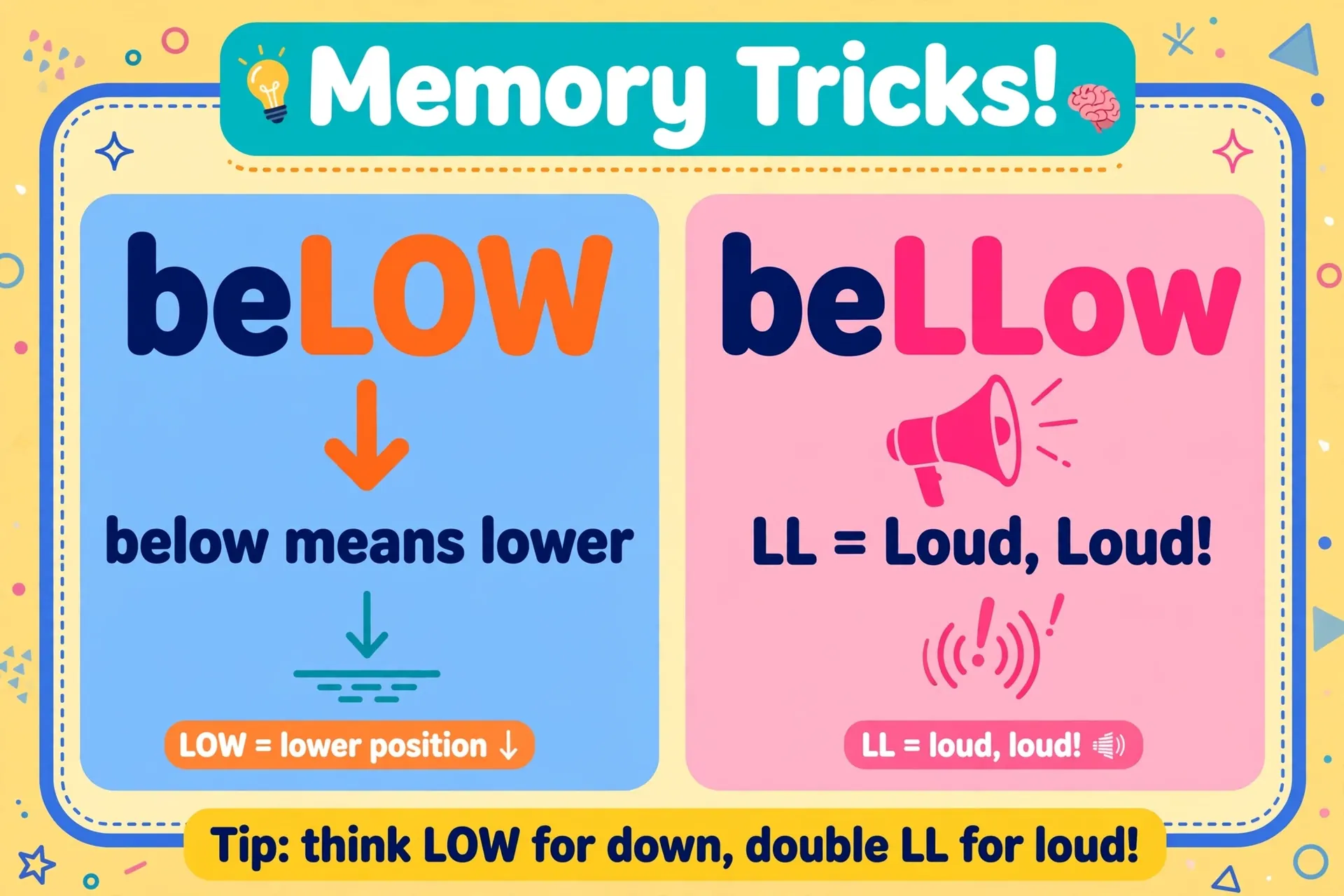
BeLOW literally contains the word low — and low things sit below. BeLLow, on the other hand, has a double L: Loud, Loud! When you see two Ls, think of a lion roaring.
- BeLOW → contains LOW → lower position
- BeLLow → double L → Loud, Loud voice
- If you can whisper it, it cannot be a bellow
FAQ
Is it bellow or below?
Use bellow when someone or something is shouting or roaring (“He bellowed in anger”). Use below when something is under or lower than something else (“The basement is below the lobby”).
Can below be used as a verb?
No. Below is a preposition, adverb, or adjective, never a verb. If you need an action word for shouting, bellow is the one you want.
Is bellow only used for animals?
Not at all. Bulls, elephants, and lions bellow, but so do drill sergeants, sports coaches, and angry parents — anyone producing a deep, loud roar. The verb also crosses into figurative use: a foghorn can bellow, and so can a stadium crowd.
Does below ever mean “in the text that follows”?
Yes, and this is one of its most common uses in writing. “See below” or “details below” directs the reader to information further down the page, which is exactly why “see the details bellow” is such a frequent typo.
What is the opposite of below?
Above (or over). The opposite of bellow would be whisper or murmur.
What is the past tense of bellow?
Bellowed — simply add -ed: “She bellowed his name across the parking lot.” There is no such word as “belowed”.
Conclusion
Bellow is all about volume — a deep roar from a throat — while below is all about position — anything sitting lower or underneath. Spot the word “low” inside below, remember the LL of Loud, Loud in bellow, and you will never mix them up again.