Diner or Dinner: What’s the Difference? (With Examples)
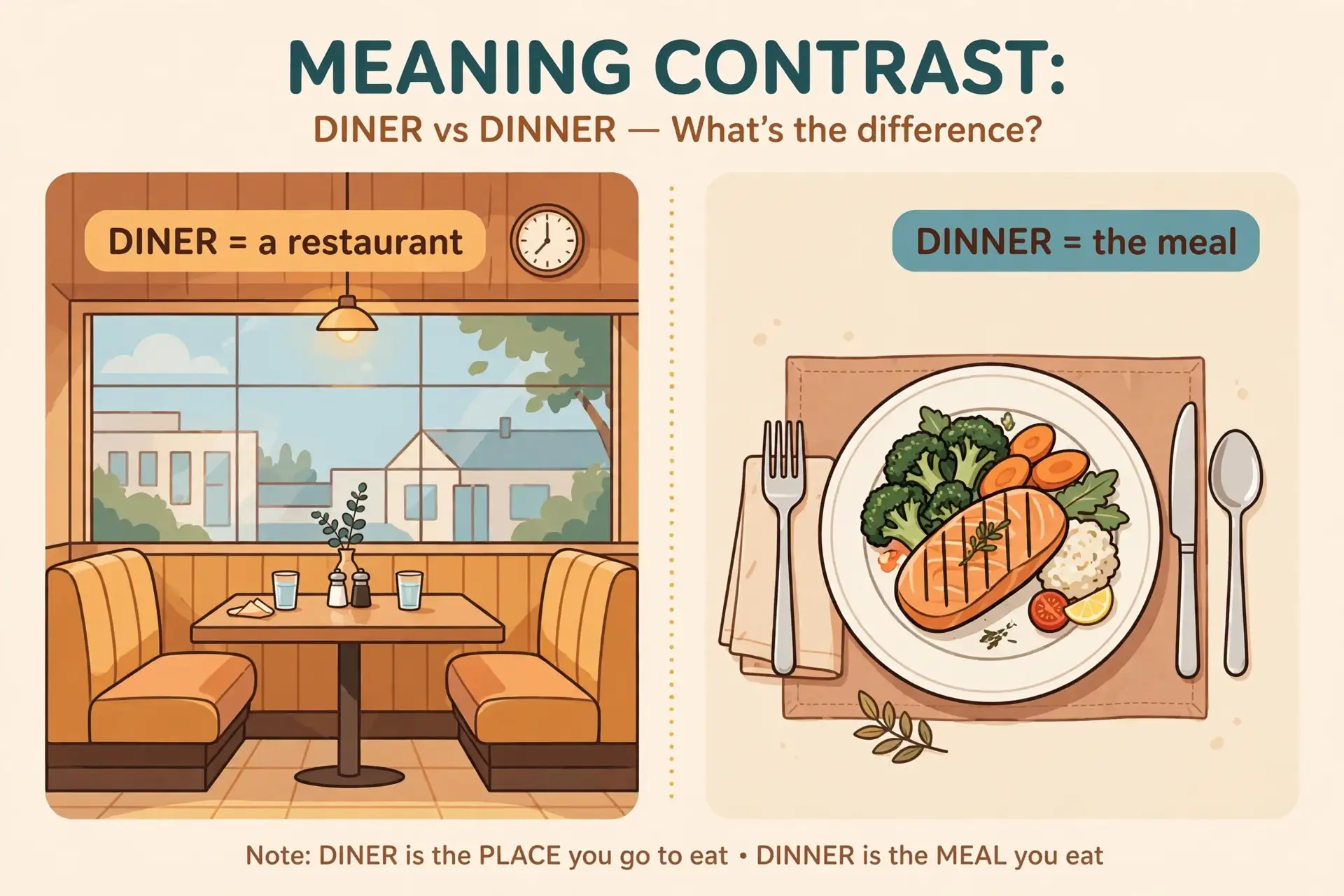
Diner and dinner are two different words separated by a single letter N. A diner is a casual restaurant — the place where you eat. Dinner is the meal itself, usually the one served in the evening.
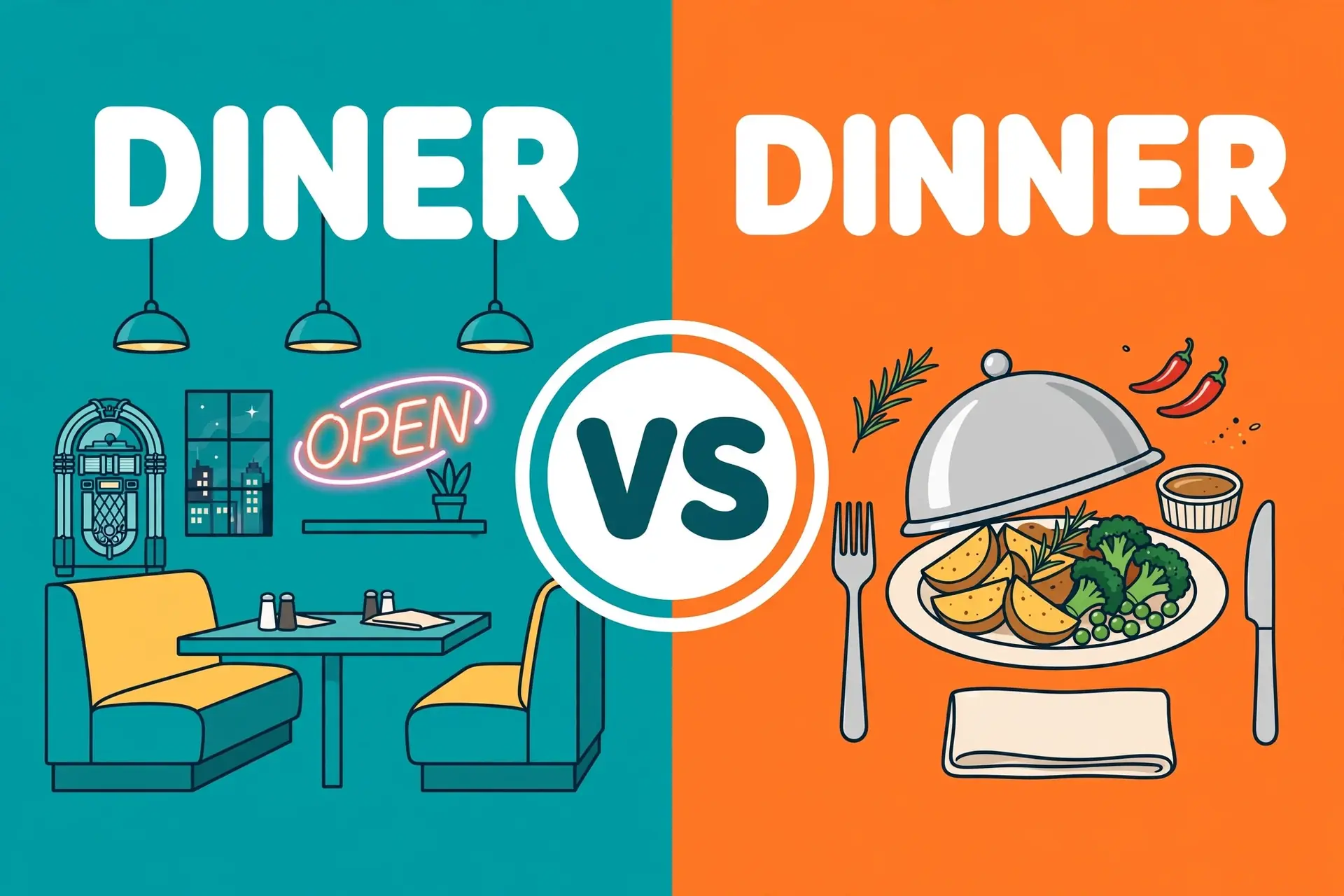
Table of Contents
Quick Answer
| Word | Part of Speech | Main Meaning | Example |
|---|---|---|---|
| Diner | Noun | A casual, inexpensive restaurant; also, a person who is dining | We had breakfast at a roadside diner. |
| Dinner | Noun | The main evening meal (sometimes a formal midday meal) | Dinner is served at seven o’clock. |
Simple rule: the meal has two Ns — dinner. The place (or the person eating) has one N — diner.
What Does Diner Mean?
Diner most often means a small, casual restaurant — the classic American kind with booths, a long counter, and a menu of burgers, pancakes, and coffee at any hour. It can also mean a person who is dining, as in “the other diners at the restaurant.” Merriam-Webster defines diner as both “a small restaurant” and “one that dines.”
- We stopped at a roadside diner for pancakes on the way home.
- The diner on the corner is open twenty-four hours.
- A diner is the perfect place for a late-night breakfast.
- The restaurant’s diners kept raving about the apple pie.
- She’s a quiet diner who always tips generously.
What Does Dinner Mean?
Dinner is the meal — typically the main meal of the day, eaten in the evening. In some families and traditions it can also mean a formal midday meal (think Christmas dinner or Sunday dinner at noon), and it shows up in set phrases like “TV dinner” and “dinner party.”
- Dinner is ready — come to the table!
- They invited us over for dinner on Friday night.
- What’s for dinner tonight?
- We had a three-course dinner at the hotel.
- Thanksgiving dinner is the biggest meal of our year.
Diner vs. Dinner: Key Differences
| Feature | Diner | Dinner |
|---|---|---|
| Core meaning | The place (or the person eating there) | The meal on the plate |
| Can you eat it? | No — you eat at a diner | Yes — dinner is food |
| Number of Ns | One N | Two Ns |
| Pronunciation | “DYE-nur” (long I) | “DIN-ur” (short I) |
| Plural | Diners (restaurants or people) | Dinners (meals) |
| Example | “Let’s meet at the diner.” | “Let’s have dinner.” |
The two words share almost all their letters, but one names a place and the other names a plate.
Diner vs. Dinner in Real Sentences
At Home
Mom said dinner would be ready at seven.
Dad suggested the new diner downtown for Saturday breakfast.
At home, dinner is the meal on your table; the diner is the restaurant you drive to.
On a Road Trip
We pulled over at a neon-lit diner for coffee and pie.
We ended up eating dinner in the car because the diner was closed.
Here the diner is the building with the glowing sign, and dinner is whatever you managed to eat.
In Conversation
“Have you tried the diner on Main Street?”
“Not yet — want to grab dinner there tonight?”
One asks about the restaurant; the other proposes the meal — and they fit together perfectly.
Common Mistakes
Typing one N when you need two (or two when you need one) is the classic slip — the same one-letter family as mixing up loose vs lose, and just as food-related as desert vs dessert.
Mistake 1: “Diner” for the meal
❌ What time is diner tonight?
✅ What time is dinner tonight?
Why: The evening meal is always dinner with two Ns.
Mistake 2: “Dinner” for the restaurant
❌ There’s a great new dinner on Main Street.
✅ There’s a great new diner on Main Street.
Why: A restaurant is a diner with one N.
Mistake 3: Mixing up the person sense
❌ The dinner complained that his steak was cold.
✅ The diner complained that his steak was cold.
Why: A person who is dining is a diner — a dinner can’t complain about anything.
Mistake 4: Wrong plural
❌ We tried three different dinners on the strip.
✅ We tried three different diners on the strip.
Why: Three restaurants = three diners; three meals = three dinners.
Pronunciation
The vowels give them away. Diner is pronounced “DYE-nur” (/ˈdaɪnər/), rhyming with liner, finer, and minor. Dinner is pronounced “DIN-ur” (/ˈdɪnər/), rhyming with winner, thinner, and sinner. So the restaurant has the long “dye” sound, and the meal has the short “din” sound.
How to Remember the Difference
You eat diNNer at a diNer. The meal is the bigger word — it gets the extra N (two of them). The place is shorter — one N. Think of it this way: dinner needs two Ns because it’s the main event; the diner just serves it.
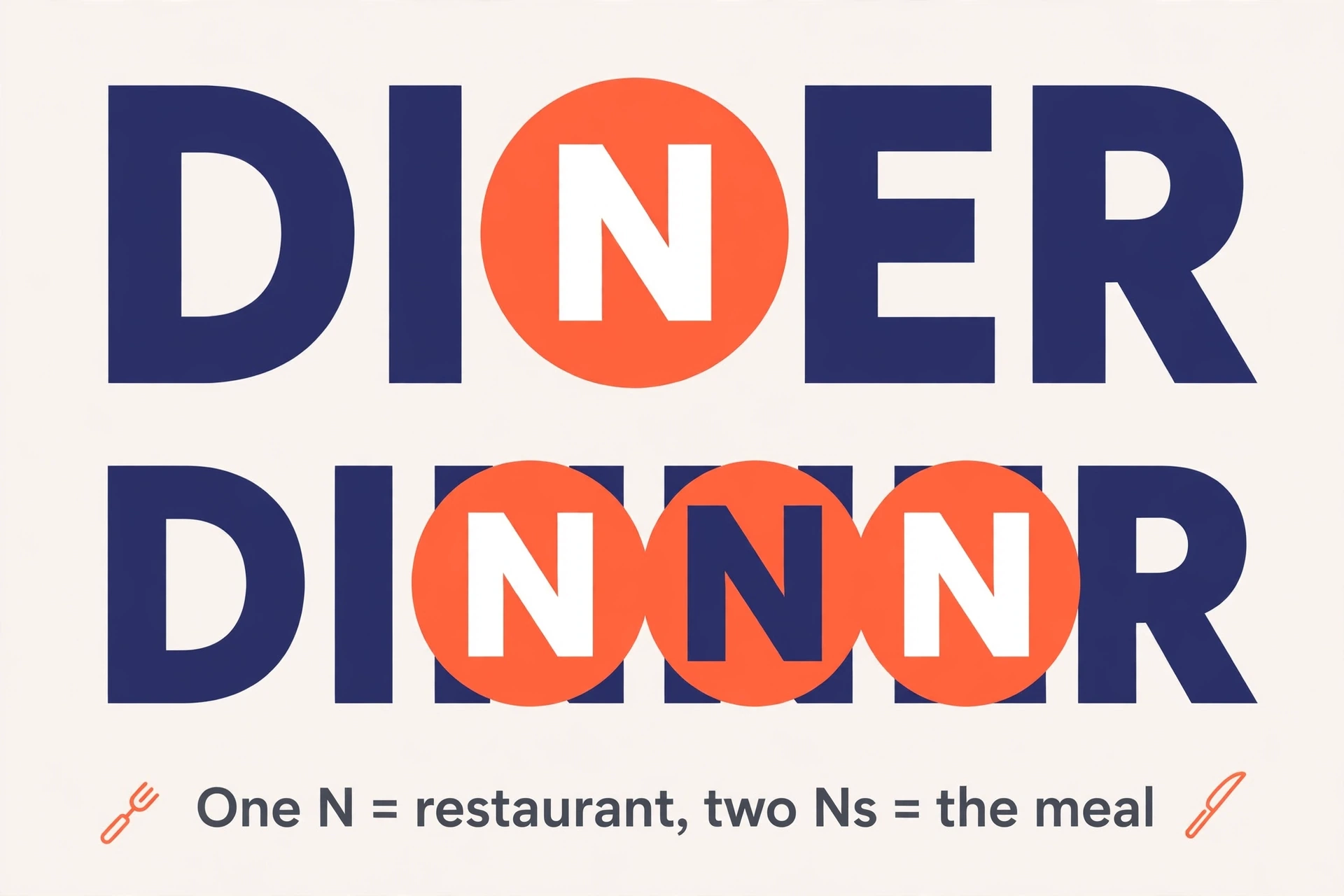
- Diner (1 N) = the place — or the person eating there.
- Dinner (2 Ns) = the meal on the plate.
- Pronunciation check: “DYE-nur” = restaurant; “DIN-ur” = meal.
Frequently Asked Questions
Is it diner or dinner?
It depends what you mean. Say diner for the casual restaurant (or a person dining) and dinner for the evening meal. “We had dinner at the diner” uses both correctly.
What is a diner?
A diner is a small, casual, usually inexpensive restaurant — in American English it often means the classic chrome-and-neon kind serving breakfast, burgers, and coffee around the clock.
Can “diner” mean a person?
Yes. A diner is also anyone who is dining — “the diners at the next table.” This is actually the older, original sense of the word.
Why do people confuse diner and dinner?
They differ by a single N and sound somewhat alike, so fast typing produces the wrong one. Spellcheck won’t help, because both are real, correctly spelled words.
Is “dinner at the diner” correct?
Yes — it’s the perfect example sentence. Dinner (the meal) eaten at the diner (the restaurant). Both words used correctly in one phrase.
Where did the word “diner” come from?
From railroad dining cars. In the late 1800s, horse-drawn lunch wagons parked outside factories served workers through the night; their owners borrowed the “dining car” idea and the name shortened to “diner.” By the 1920s, companies were manufacturing prefabricated diners — the stainless-steel, neon-signed buildings that became an American icon. So the restaurant sense grew directly out of the “person dining” sense: a diner is where diners dine.
Is dinner always eaten in the evening?
Not necessarily. Dinner traditionally means the main meal of the day, whenever it happens. That is why “Christmas dinner” and “Sunday dinner” are eaten at midday, and why in parts of Britain the midday meal is called dinner and the evening one is tea or supper. The evening-only idea is an American habit, not a rule — so if someone invites you to dinner at noon, they are not confused.
Conclusion
A diner is where you eat; dinner is what you eat. Count the Ns — one for the place, two for the meal — and you’ll never mix them up again.