Firey or Fiery: Which Spelling Is Correct?
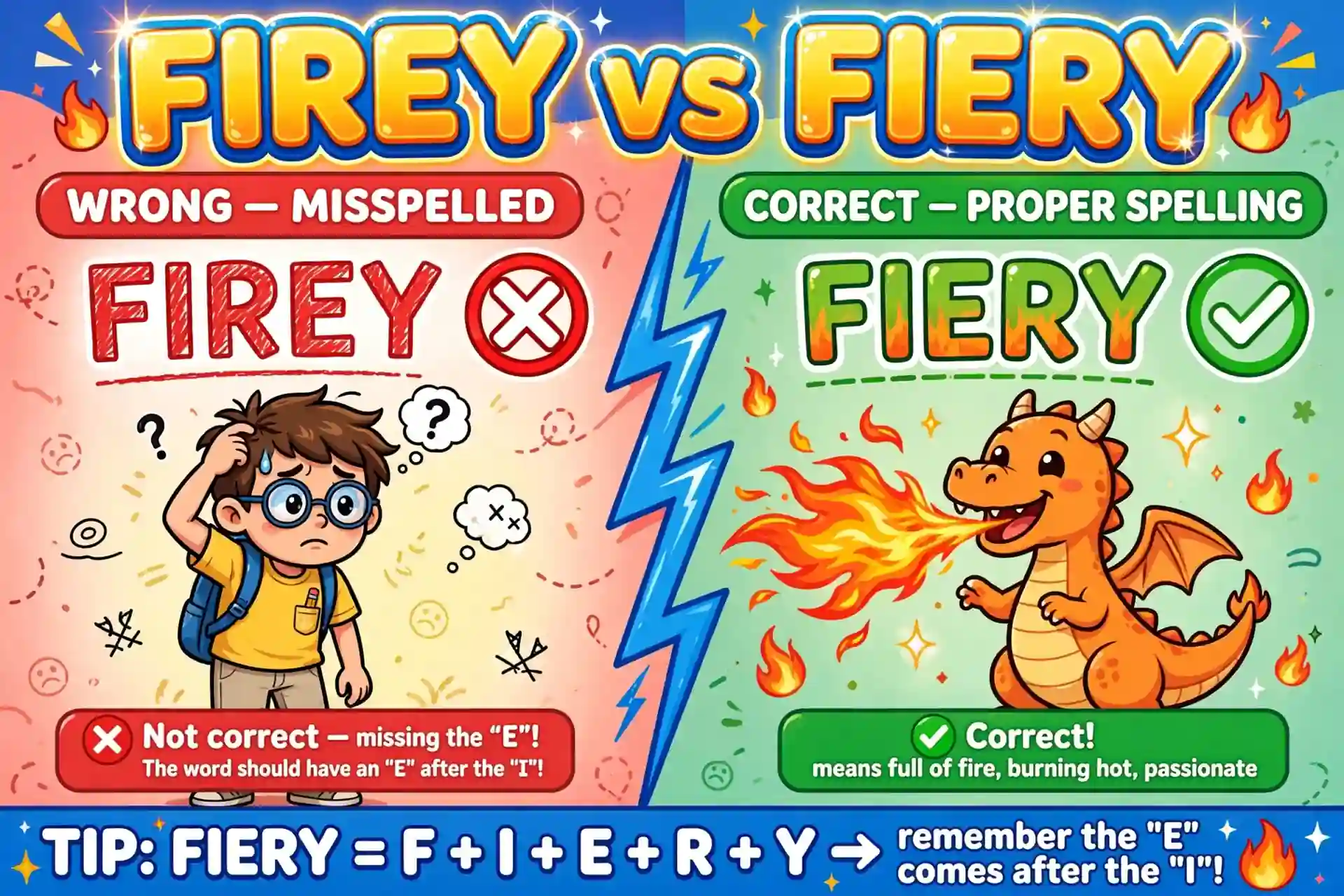
Fiery is the correct spelling. Firey is a common misspelling — it looks logical, but no dictionary accepts it. Fiery describes something burning, flame-colored, or intensely passionate.
For example, “a fiery sunset” and “a fiery debate” are correct. Writing “firey” is one of the most frequent spelling mistakes in English, right up there with the -ing confusions in dyeing vs dying.
Quick Answer
| Word | Part of Speech | Main Meaning | Example |
|---|---|---|---|
| Fiery | ✅ Correct | Burning; intensely passionate | She gave a fiery speech. |
| Firey | ❌ Misspelling | — (not a word) | Never use this spelling. |
Simple rule: Always write fiery — with “ie”, never “firey”.
What Does Fiery Mean?
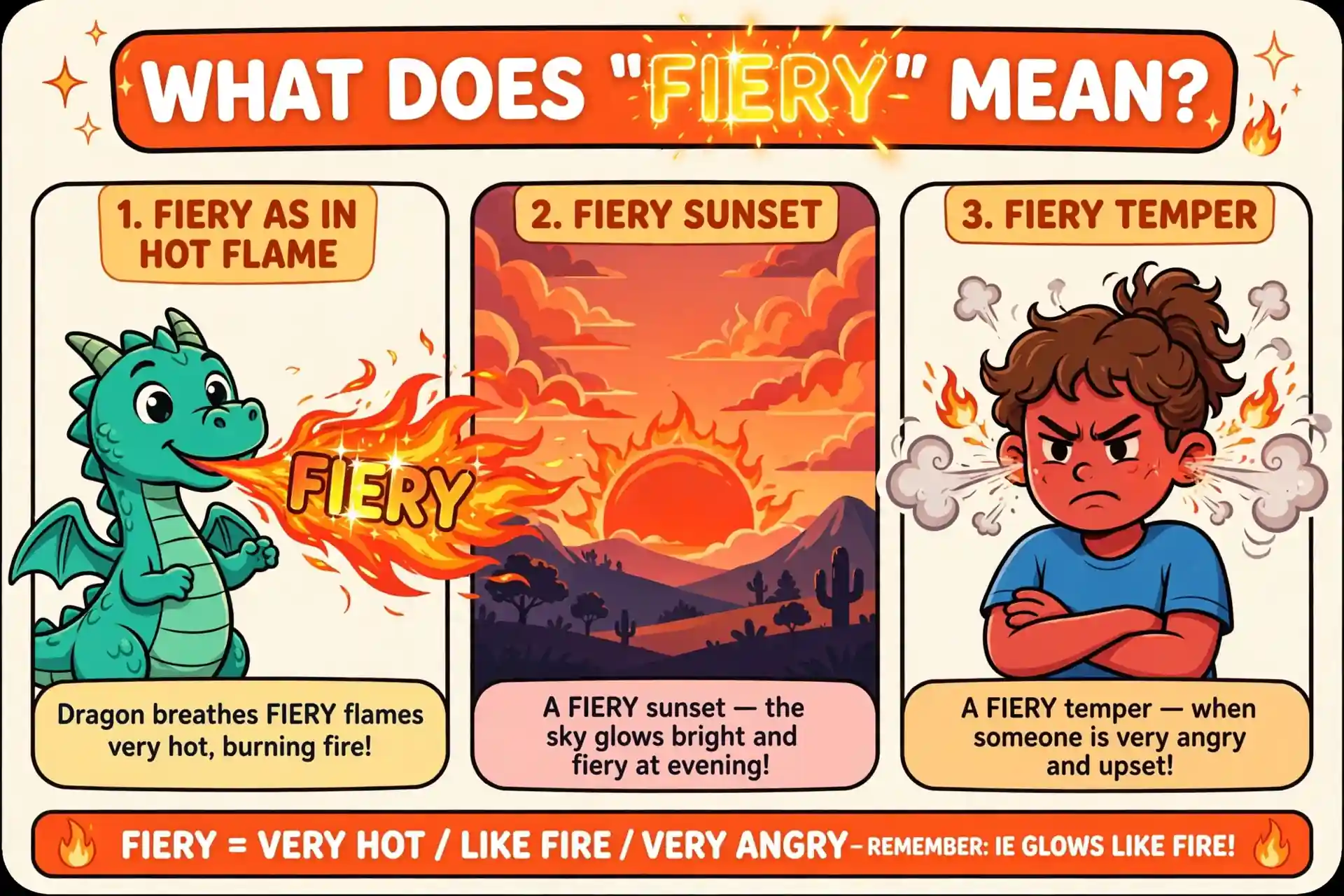
Fiery is an adjective with three related senses: like fire or burning, intensely passionate in temperament, and bright red or orange like flames.
Examples:
- The fiery glow of the campfire lit their faces.
- He is known for his fiery temper.
- A fiery sunset filled the evening sky.
- She delivered a fiery rebuttal to the criticism.
- The chili sauce was fiery enough to make him sweat.
Why “Firey” Looks Right (But Isn’t)
The misspelling comes from a real spelling rule. When you add -y to a word ending in a silent e, you normally drop the e: shine becomes shiny, ice becomes icy, smoke becomes smoky.
Fire breaks this pattern. Instead of dropping the e, it keeps it and the spelling becomes fiery — with “ie”. Writers who apply the normal rule get “firey”, which is wrong. English has a handful of these exceptions, and fiery is one of the most common, much like the irregular forms in spelled vs spelt.
Fiery vs. Firey: Key Differences
| Feature | Fiery | Firey |
|---|---|---|
| Status | Correct spelling | Misspelling |
| In dictionaries | Yes | No |
| Meanings | Burning; passionate; flame-colored | None |
| Adverb form | Fierily | — |
| Example | A fiery debate. | Never correct. |
There is no context in which “firey” is acceptable. Every use of the intended meaning calls for fiery.
Examples of Fiery in Real Sentences
Describing Flames
✅ The fiery glow of the campfire lit their faces.
❌ The firey glow of the campfire lit their faces.
When describing actual fire or flame-like light, the spelling is fiery.
Describing People
✅ He is known for his fiery temper.
❌ He is known for his firey temper.
Fiery also describes intense personality — a fiery speaker, a fiery argument.
Describing Color
✅ A fiery sunset filled the evening sky.
❌ A firey sunset filled the evening sky.
Bright reds and oranges are fiery, from hair color to autumn leaves.
Common Mistakes With Fiery
Mistake 1: Writing “Firey Dragon”
❌ The firey dragon breathed smoke.
✅ The fiery dragon breathed smoke.
Why: The adjective from fire is always fiery, with “ie”.
Mistake 2: Writing “Firey Red Hair”
❌ She dyes her hair a firey red.
✅ She dyes her hair a fiery red.
Why: Flame-colored hair is fiery hair. The misspelling is especially common here.
Mistake 3: Over-Applying the Drop-the-E Rule
❌ Since shine becomes shiny, fire becomes firey.
✅ Shine becomes shiny, but fire becomes fiery — it is an exception.
Why: Most silent-e words drop the e before -y, but fire keeps it as “ie”. Memorize the exception.
Pronunciation: Fiery
Fiery is pronounced /ˈfaɪəri/ — “FY-uh-ree”, with the stress on the first syllable. It rhymes roughly with wiry.
There is no separate pronunciation for “firey” because it is not a word.
How to Remember the Difference
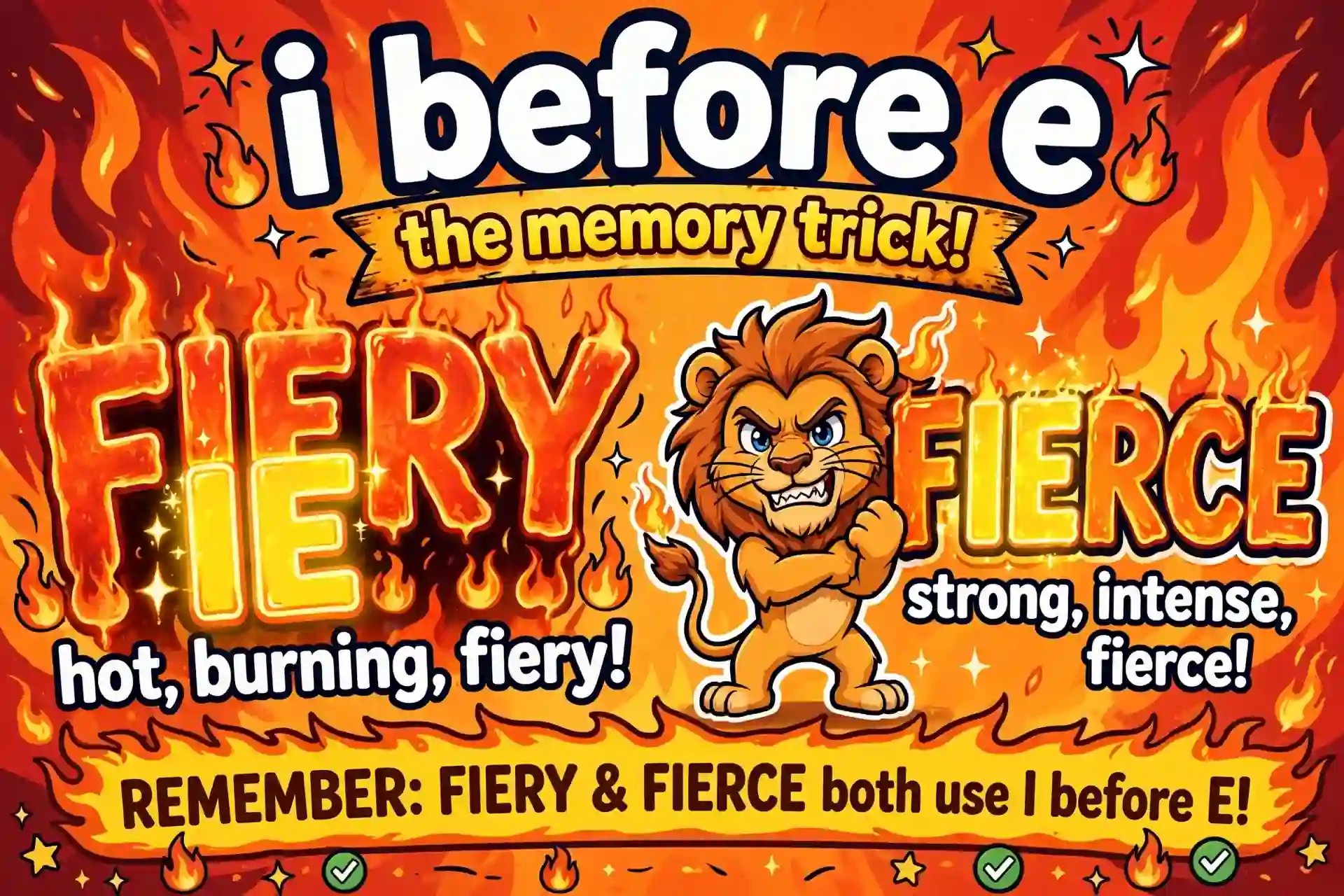
Memory trick: Fiery follows the “i before e” pattern — just like fierce. Both words describe something intense, and both spell it “ie”.
- Fiery → “i before e”, like fierce.
- If you write “firey”, you have broken the “i before e” pattern.
Think “fierce fire” — both fierce and fiery keep the “ie” together.
Frequently Asked Questions
Is it firey or fiery?
Always fiery. “Firey” is a misspelling and is not accepted in any dictionary.
Why is it “fiery” and not “firey”?
Fire is an exception to the rule that drops a silent e before -y (as in shine → shiny). Instead of dropping the e, fire keeps it as “ie”: fiery.
What does “fiery” mean?
It means burning or flame-like, intensely passionate (a fiery temper), or bright red-orange (a fiery sunset).
Is “firey” ever correct?
No. There is no context, dialect, or historical period in which “firey” is the accepted spelling.
What is the adverb form of “fiery”?
Fierily — as in “She argued fierily against the proposal.” Note the “ie” stays.
Conclusion
Fiery is the only correct spelling; firey is always a mistake. Remember the “i before e” link with fierce, and treat fire as the famous exception to the drop-the-e rule. For the full dictionary entry, see fiery on Merriam-Webster.