Sang or Sung: What’s the Difference? (With Examples)
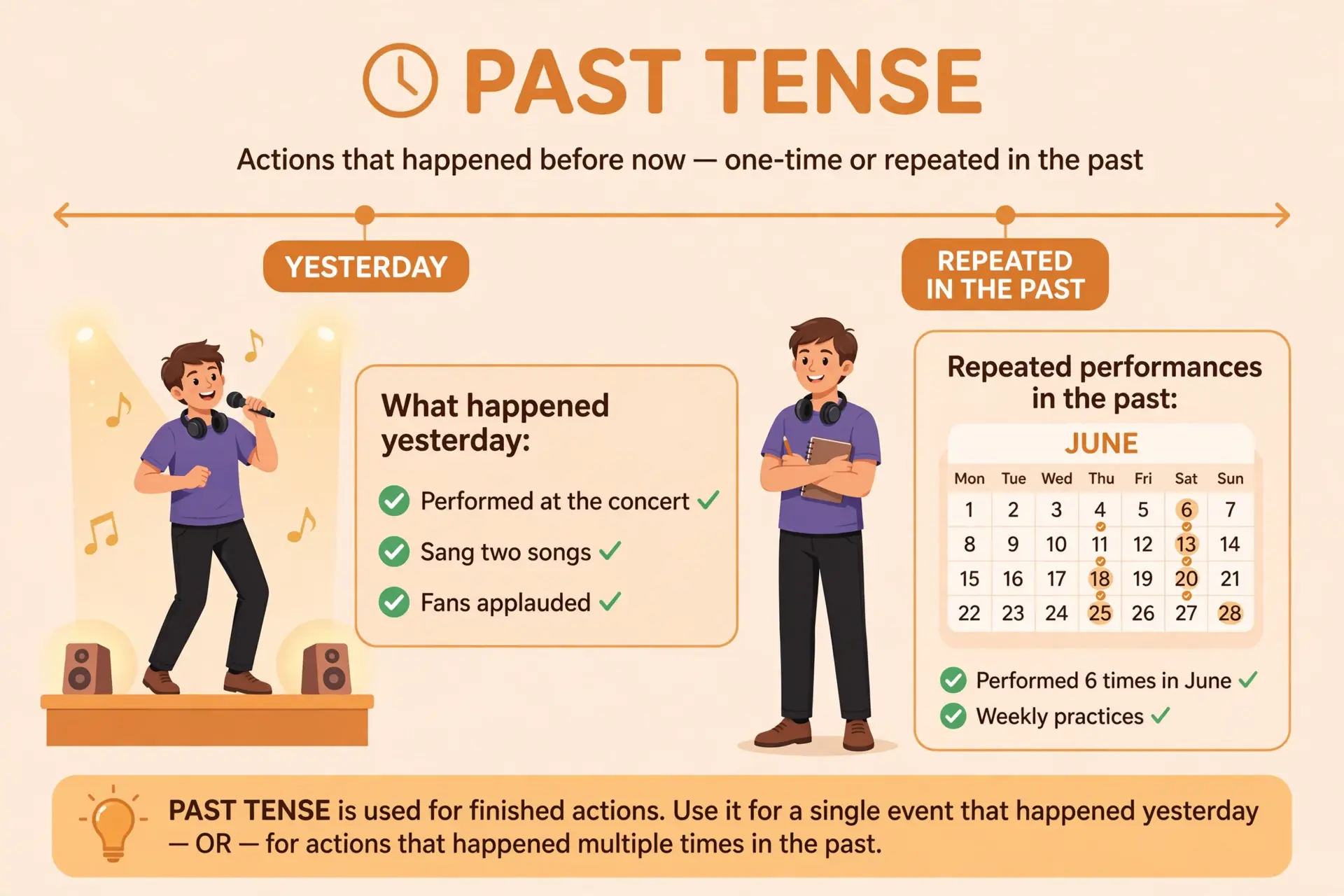
Both sang and sung are correct words — they are simply two different past forms of the verb sing. The rule is short: sang is the simple past (“She sang last night”), while sung is the past participle and always appears with have, has, or had (“She has sung here before”).
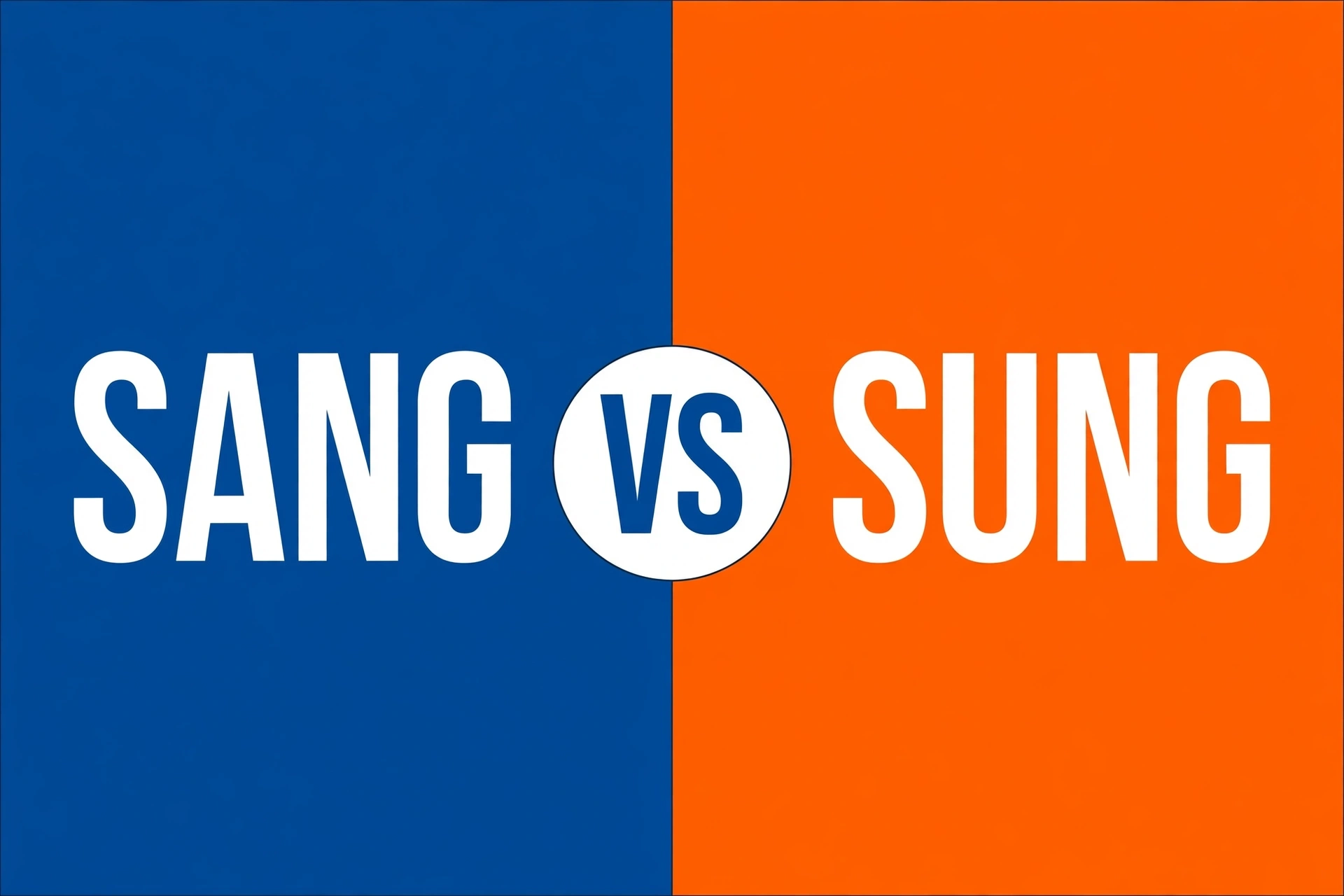
Table of Contents
Quick Answer
| Word | Part of Speech | Main Meaning | Example |
|---|---|---|---|
| sang | Verb (simple past) | The past tense of sing; a finished singing action | She sang at the party last night. |
| sung | Verb (past participle) | The participle form of sing; used with have, has, or had | She has sung at this venue many times. |
Simple rule: if the sentence contains have, has, or had, use sung — in every other past-tense sentence, use sang.
What Does Sang Mean?
Sang is the simple past tense of sing. It describes a singing action that started and finished in the past, with no link to the present moment. It works on its own as the main verb and never needs a helper verb.
Examples:
- I sang in the school choir when I was ten.
- He sang the national anthem before the match.
- They sang together at my grandmother’s wedding.
- She sang a lullaby until the baby fell asleep.
- We sang all the way home from the concert.
What Does Sung Mean?
Sung is the past participle of sing. It cannot stand alone as a main verb — it always pairs with a helper such as have, has, had, or was/were in passive sentences. It is listed as the past participle of sing in Merriam-Webster’s dictionary entry for “sing”.
Examples:
- I have sung this song a hundred times.
- She has sung at this venue every summer.
- They had sung the same verse twice before anyone noticed.
- The anthem was sung by the entire stadium.
- He has sung opera since he was sixteen.
Sang vs. Sung: Key Differences
| Feature | Sang | Sung |
|---|---|---|
| Verb form | Simple past tense | Past participle |
| Helper verb needed | No — stands alone | Yes — needs have, has, had (or was/were) |
| Time reference | A finished action in the past | A completed action linked to the present or an earlier past |
| Typical time markers | yesterday, last night, in 2019 | ever, never, before, since |
| Example | “She sang beautifully.” | “She has sung beautifully.” |
Think of it this way: sang reports what happened, while sung teams up with a helper verb to show what has happened.
Usage in Real Sentences
At Home
Sang: “Mom sang along with the radio while cooking dinner.”
Sung: “She has sung that chorus so often she knows it by heart.”
One sentence pins down a finished moment; the other connects past singing to the present.
In Conversation
Sang: “I sang karaoke with my cousins last weekend.”
Sung: “I’ve sung that song before — pick another one.”
Last weekend calls for the simple past, while the contraction I’ve hides a have that demands the participle.
At School
Sang: “The choir sang at the morning assembly.”
Sung: “They had sung the same anthem every year since 2015.”
A single finished event takes sang; an action completed before another past moment takes sung with had.
In a Story
Sang: “He sang the final verse softly and left the stage.”
Sung: “By midnight, she had sung three encores.”
The first sentence moves the story forward; the second looks back from a later point in the story.
Common Mistakes
Mixing up verb forms is one of the most common grammar slips in English — the same kind of slip behind confusions like dieing or dying and loose or lose. Watch for these four.
Mistake 1: Using “sang” after “has”
❌ “She has sang at this venue before.”
✅ “She has sung at this venue before.”
Why: has calls for the past participle, which is sung.
Mistake 2: Using “sung” with no helper verb
❌ “They sung a song at the wedding.”
✅ “They sang a song at the wedding.”
Why: with no helper verb in the sentence, the simple past sang is the right choice.
Mistake 3: Using “sang” after “had”
❌ “I had sang it twice already.”
✅ “I had sung it twice already.”
Why: had always pairs with the past participle sung.
Mistake 4: Using “sang” in the passive voice
❌ “The song was sang beautifully.”
✅ “The song was sung beautifully.”
Why: passive voice (was + verb) also takes the past participle, so sung wins here too.
Pronunciation
Sang rhymes with bang, hang, and rang — the “a” sounds like the “a” in cat. Sung rhymes with young, tongue, and rung — the “u” sounds like the “u” in cup. That vowel shift is the only sound difference between them.

How to Remember the Difference
Sang has an A — use it for a finished action in the past. Sung has a U — it needs a helper, and the helper is always with “you“: pair it with have, has, or had.
- Sang = simple past, stands alone.
- Sung = past participle, always brings a helper verb.
- Spot have, has, or had in the sentence? Choose sung.
- No helper in sight? Choose sang.
Frequently Asked Questions
Is it sang or sung?
Both are correct English. Sang is the simple past of sing and sung is its past participle — the sentence around the word decides which one fits.
Can I say “I have sang”?
No. After have, has, or had, always use sung: “I have sung.” “I have sang” is one of the most common mistakes with this verb.
What is the past participle of sing?
Sung. The full set is sing (base), sang (past), sung (past participle) — the same vowel pattern as ring, rang, rung and drink, drank, drunk.
Is “singed” the same as “sung”?
No. Singed (with an extra “e”) is the past tense of singe, meaning to burn something lightly — a completely different verb with nothing to do with music.
Which one is more common in everyday speech?
Sang shows up more often in casual speech, simply because simple past sentences outnumber perfect-tense ones. But sung is just as correct wherever have, has, or had leads the way.
Conclusion
Sang and sung are two halves of the same verb: one stands alone in the past, the other leans on a helper. Keep the have/has/had test in mind and you will pick the right one every time.