Color or Colour: US vs UK Spelling Explained
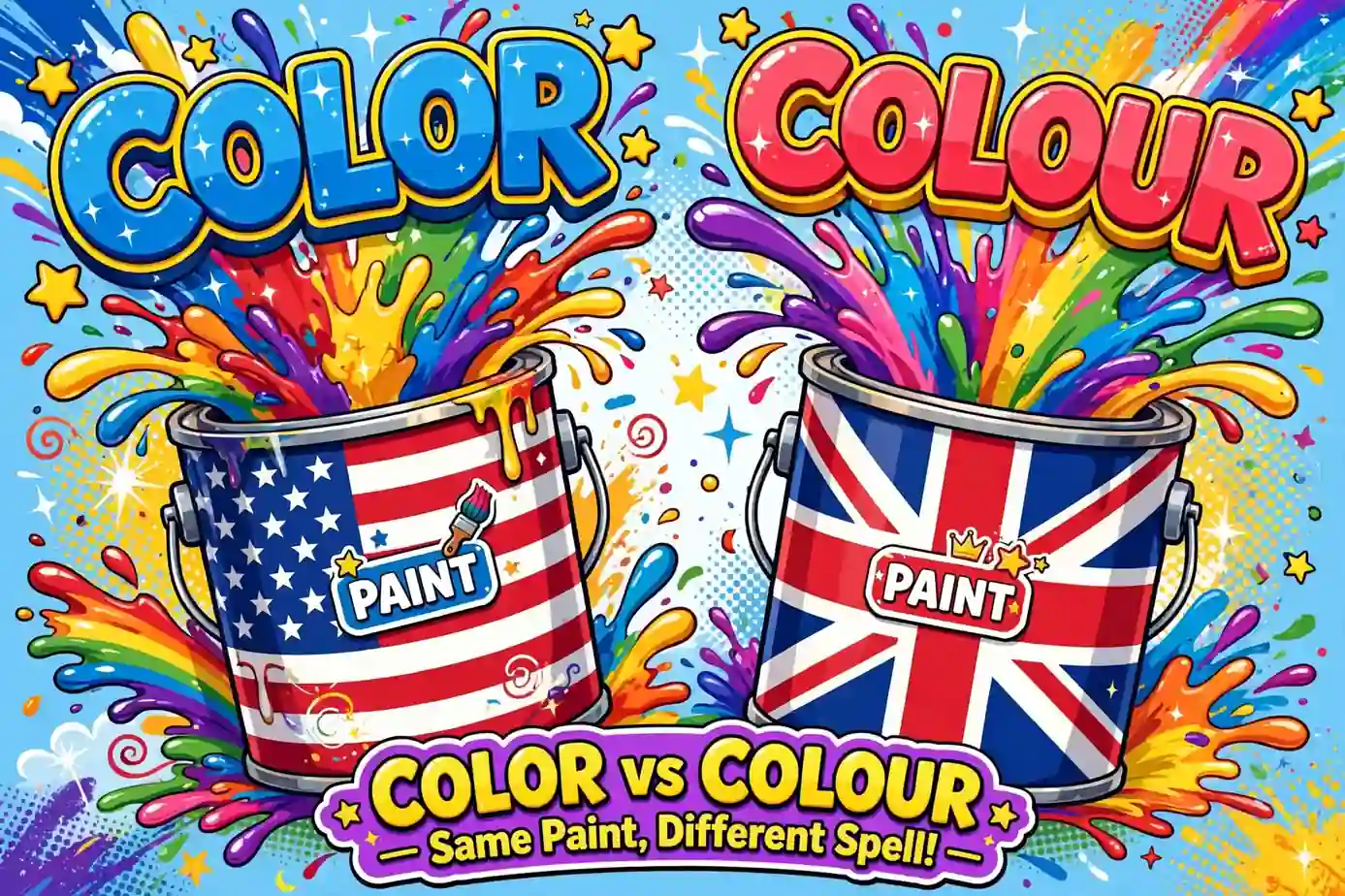
Color is the American spelling, and colour is the British spelling. Both are correct; the right choice depends on your audience. Use color for American readers and colour for British, Canadian, and Australian readers.
For example, “What is your favorite color?” is natural in the US, while “What is your favourite colour?” is natural in the UK. The difference is purely regional, not a matter of correctness.

Quick Answer
| Spelling | Region | Example |
|---|---|---|
| Color | United States | Her favorite color is blue. |
| Colour | United Kingdom, Canada, Australia | Her favourite colour is blue. |
Simple rule: Writing for Americans? Use color. Writing for British readers? Use colour.
What Does Color Mean?
Color is the standard American spelling of the word for the visual property of things, such as red, blue, or green. It was popularized in the US by Noah Webster’s spelling reforms in the early 1800s.
Examples:
- What color is your new car?
- The artist mixed several colors on the palette.
- She added a splash of color to the room.
- The leaves change color in autumn.
American style guides, schools, and publishers consistently use color, just as they prefer other simplified forms like labeled over labelled.
See Cambridge Dictionary’s entry for color for pronunciation and usage.
What Does Colour Mean?
Colour is the standard British spelling, also used in Canada, Australia, New Zealand, and Ireland. It means exactly the same thing as color.
Examples:
- What colour is your new car?
- The artist mixed several colours on the palette.
- She added a splash of colour to the room.
- The leaves change colour in autumn.
British publications, schools, and official documents use colour without exception.
Color vs. Colour: Key Differences
| Feature | Color | Colour |
|---|---|---|
| Region | American English | British English |
| Meaning | Identical | Identical |
| Pronunciation | /ˈkʌlər/ | /ˈkʌlə/ |
| Related forms | Colored, coloring, colorful | Coloured, colouring, colourful |
The -or vs. -our pattern runs through many words: humor/humour, favor/favour, honor/honour, labor/labour, and neighbor/neighbour. Learning one pair helps with them all.
Related -or / -our Word Pairs
| American | British |
|---|---|
| Color | Colour |
| Flavor | Flavour |
| Honor | Honour |
| Humor | Humour |
| Labor | Labour |
| Neighbor | Neighbour |
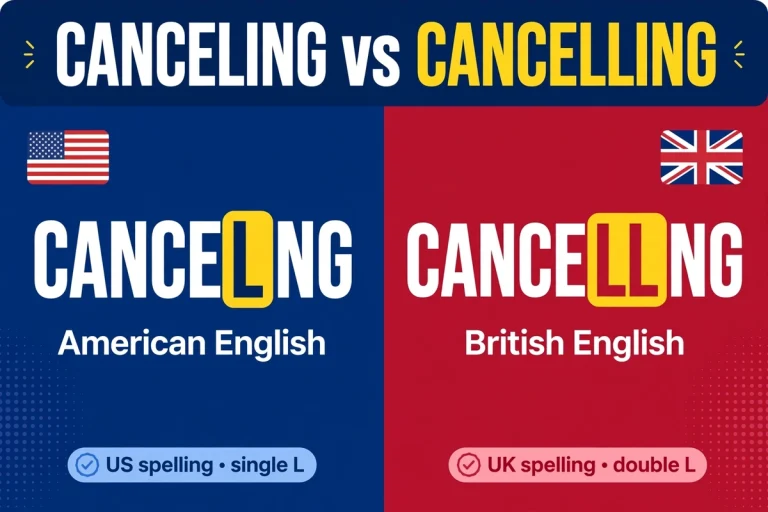
American English dropped the u from these French-derived words; British English kept it. Neither choice is more “correct”, just as with cancelled vs canceled.
Common Mistakes With Color and Colour
Mistake 1: Mixing Spellings in One Document
❌ Her favorite colour is blue, and the color suits her.
✅ Her favorite color is blue, and the color suits her. (US)
✅ Her favourite colour is blue, and the colour suits her. (UK)
Why: Pick one regional standard and stay consistent throughout a document.
Mistake 2: Using the Wrong Regional Forms Together
❌ The colorful flowers added colour to the garden. (mixed US/UK)
✅ The colorful flowers added color to the garden. (US)
✅ The colourful flowers added colour to the garden. (UK)
Why: Derived forms follow the base spelling: colorful with color, colourful with colour.
How to Remember the Difference
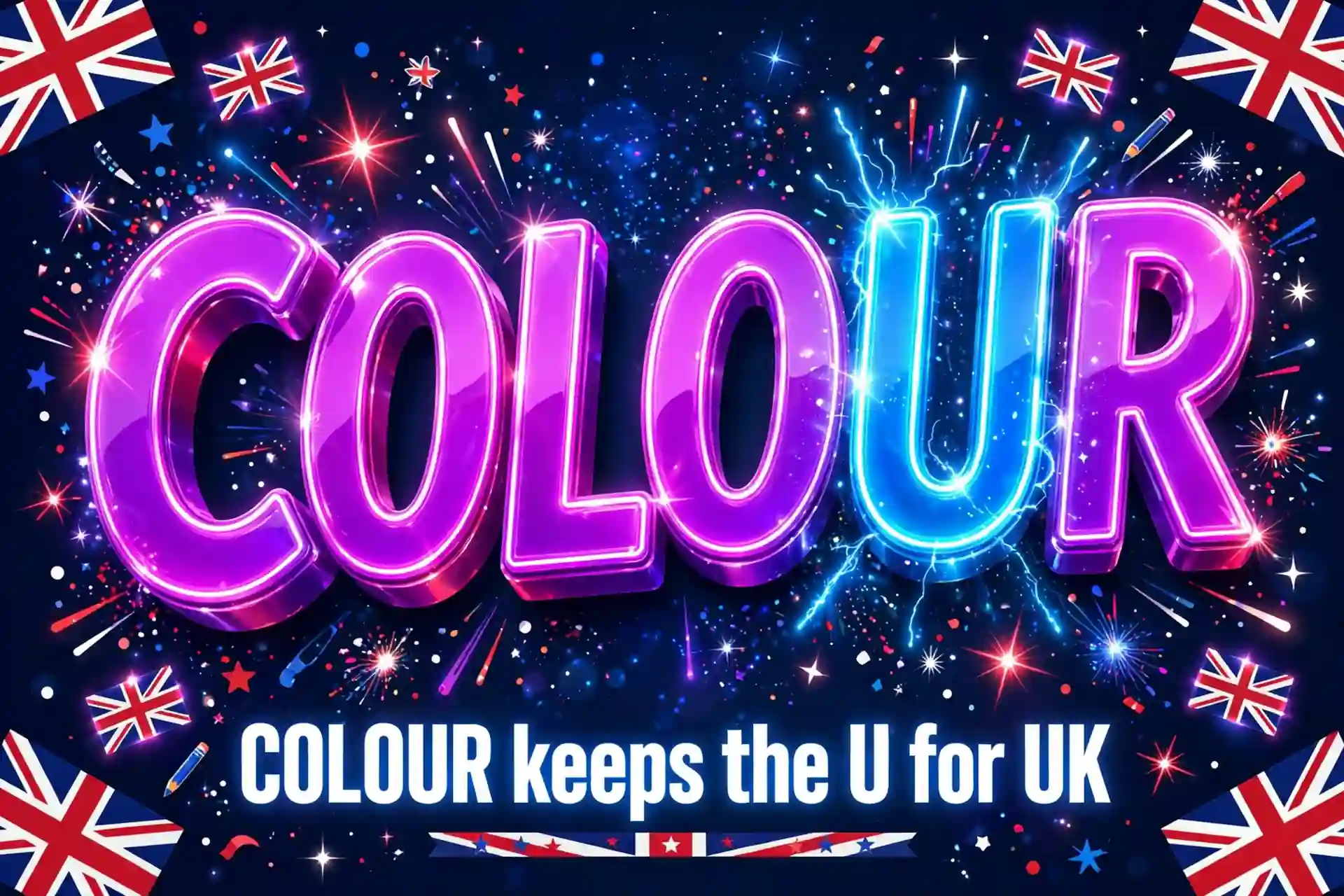
Memory trick: Colour keeps the u — think “u for UK.” American color dropped it, so if your audience is American, drop the u too.
Frequently Asked Questions
Which is correct: color or colour?
Both are correct. Color is American English; colour is British English (also used in Canada and Australia).
Is “color” wrong in British English?
In formal British writing, color is considered an Americanism and would be marked wrong. Use colour for UK audiences.
Why do Americans spell it “color”?
Noah Webster’s 1828 dictionary promoted simplified spellings to distinguish American English from British English. Dropping the u was one of his reforms.
Do Canadians use color or colour?
Canadians generally use colour, following British spelling, though American influence means you will sometimes see color.
Is it “colored” or “coloured”?
American: colored. British: coloured. The derived forms always match the base spelling.
Conclusion
Color is American and colour is British. Both are correct within their regions. Choose the spelling your readers expect, keep it consistent, and apply the same -or/-our pattern to related words like flavor/flavour and honor/honour.