Pajamas or Pyjamas: US vs UK Spelling Explained
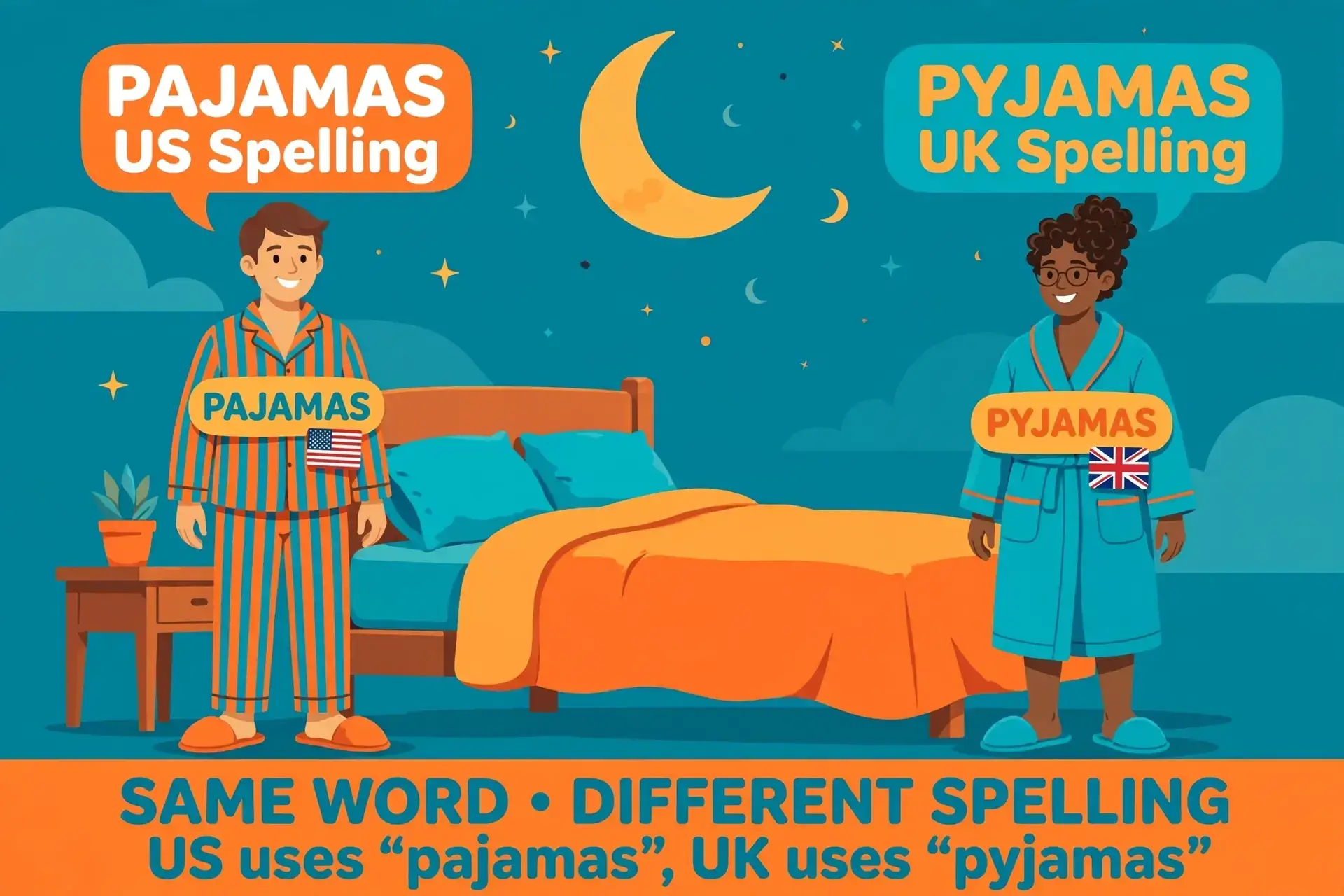
Pajamas and pyjamas are both correct spellings of the same thing — the loose clothes people wear to sleep in. The difference is regional: pajamas is the American spelling, while pyjamas is the British spelling. An American store sells “flannel pajamas”; a British shop sells the identical set as “flannel pyjamas.”
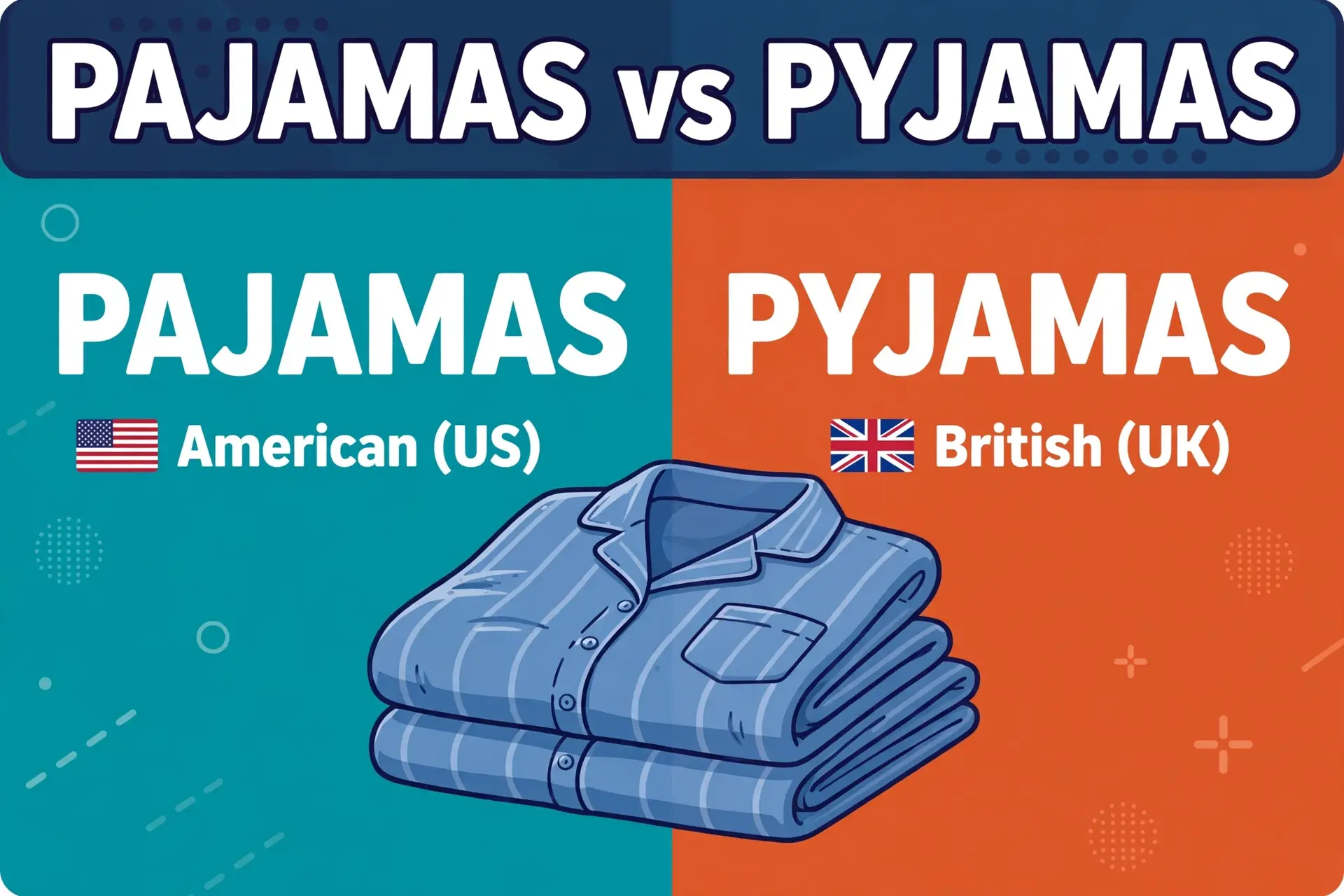
Table of Contents
Quick Answer
| Word | Region | Main Meaning | Example |
|---|---|---|---|
| Pajamas | American English (US) | Loose clothes worn for sleeping, usually a top and trousers | He changed into his pajamas before the movie. |
| Pyjamas | British English (UK) | The exact same sleepwear | He changed into his pyjamas before the film. |
Simple rule: writing for an American audience? Use pajamas. Writing for a British audience? Use pyjamas. Both spell the same bedtime outfit.
What Does Pajamas Mean?
Pajamas is the American spelling for sleepwear — the soft shirt-and-trousers sets (and one-piece suits) worn to bed or for lounging at home. Americans also use it in compounds like “pajama party” and “pajama top,” and in the casual abbreviation “PJs.” Merriam-Webster’s definition of pajamas lists it as chiefly a US spelling of the same word the British write with a Y.
- The kids brushed their teeth and climbed into their pajamas.
- She hosted a pajama party for her tenth birthday.
- He answered the door in striped pajamas and slippers.
- The store’s holiday catalog featured matching family pajamas.
- I bought a silk pajama top to go with the pants I already owned.
What Does Pyjamas Mean?
Pyjamas is the British spelling for exactly the same sleepwear. A London department store sells “cotton pyjamas,” and British children get invited to “pyjama parties.” Because the word reached Britain through colonial India, the older spelling held on there — and it is also the form most of the Commonwealth (Canada, Australia, India) still uses today.
- The children were already in their pyjamas when the guests arrived.
- He packed his pyjamas for the overnight train journey.
- Mum bought herself a new pair of flannel pyjamas.
- The whole class came to school in pyjamas for charity day.
- She curled up on the sofa in her pyjamas with a cup of tea.
Why Two Spellings?
The word began far from either spelling: it comes from the Persian and Urdu pāy-jāma, literally “leg garment,” describing the loose trousers worn across South and West Asia. British traders and soldiers in colonial India adopted both the garment and the word in the early 1800s, bringing “pyjamas” home — the Y preserves the sound of the original. When the comfortable two-piece suit caught on as Western sleepwear, Americans borrowed the word too, but American dictionaries standardized the simplified form pajamas, dropping the Y in the same spirit that turned colour into color. So the British spelling is older and closer to the word’s Asian roots, while the American spelling is the streamlined newcomer.
Pajamas vs. Pyjamas: Key Differences
| Feature | Pajamas | Pyjamas |
|---|---|---|
| Spelling | Starts pa-j, no Y | Starts py-j, with a Y |
| Region | United States | United Kingdom and most of the Commonwealth |
| Meaning | Sleepwear: top and trousers (or a one-piece) | Identical meaning |
| Pronunciation | “puh-JAH-muhz” — the Y is silent either way | “puh-JAH-muhz” — exactly the same sound |
| Compounds | pajama party, pajama top | pyjama party, pyjama top |
| Age of the form | Newer American simplification | Older form, closer to the Persian/Urdu original |
The Y is the whole story: it changes nothing about the sound or the meaning, and the garment in the drawer is the same. Pajamas/pyjamas sits in a familiar family of transatlantic pairs:
| US Spelling | UK Spelling | Meaning |
|---|---|---|
| pajamas | pyjamas | Sleepwear |
| gray | grey | The color between black and white |
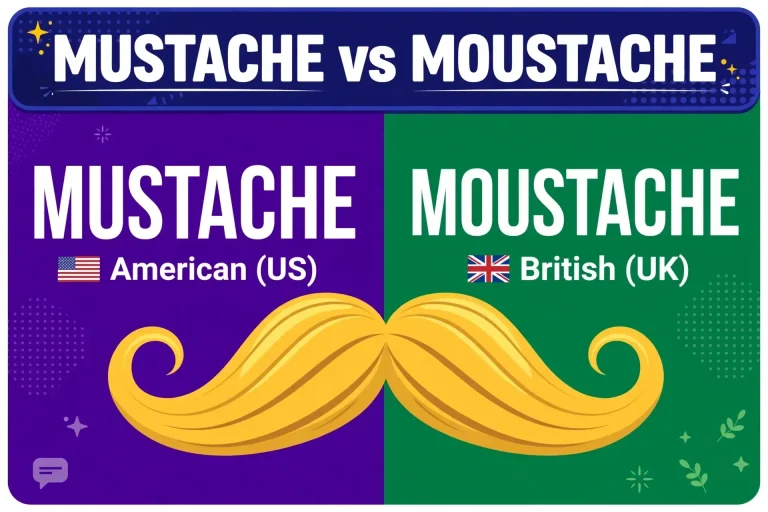
| mustache | moustache | Facial hair above the lip |
| check | cheque | The bank payment slip |
Real-Life Examples
Shopping for Sleepwear
US: “These fleece pajamas are on sale for twenty dollars.” UK: “These fleece pyjamas are on sale for twenty pounds.”
The fabric, the fit, and the price tag logic are identical — the label just follows the local spelling.
Bedtime with Kids
US: “Brush your teeth and put on your pajamas.” UK: “Brush your teeth and put on your pyjamas.”
Parents on both sides of the Atlantic give the same order every night; only the spelling in the parenting book differs.
In a Hotel or Travel Guide
US: “The resort’s spa provides robes, but bring your own pajamas.” UK: “The hotel provides dressing gowns, but bring your own pyjamas.”
Travel writers match the spelling to their readers — an American travel site with “pyjamas” would look as odd as a British one with “pajamas.”
Common Mistakes
Regional spelling slips into product listings and essays more often than writers expect. The same American-British instinct that separates analyze vs analyse and apologize vs apologise decides this word too. These are the mistakes to avoid:
Mistake 1: Using “pyjamas” on an American site
❌ Our new line of cotton pyjamas is here.
✅ Our new line of cotton pajamas is here.
Why: US shoppers search for and expect “pajamas” — the British spelling can even hurt search visibility on American stores.
Mistake 2: Adding an apostrophe
❌ She folded her pajama’s neatly.
✅ She folded her pajamas neatly.
Why: the final S is simply the plural — no apostrophe is needed unless something belongs to the pajamas.
Mistake 3: Mixing both spellings in one text
❌ He wore striped pajamas with a pyjama top.
✅ He wore striped pajamas with a pajama top.
Why: choose one regional spelling and keep every compound consistent with it.
Mistake 4: Spelling it “pijamas”
❌ The baby’s pijamas have ducks on them.
✅ The baby’s pajamas have ducks on them.
Why: “pijamas” is a genuine misspelling — only pajamas (US) and pyjamas (UK) are correct.
Pronunciation
Both spellings sound the same: pajamas and pyjamas are pronounced “puh-JAH-muhz,” rhyming with dramas. The Y in the British spelling is completely silent, so the transatlantic difference exists only on paper — you would never hear which spelling a speaker has in mind.
How to Remember the Difference
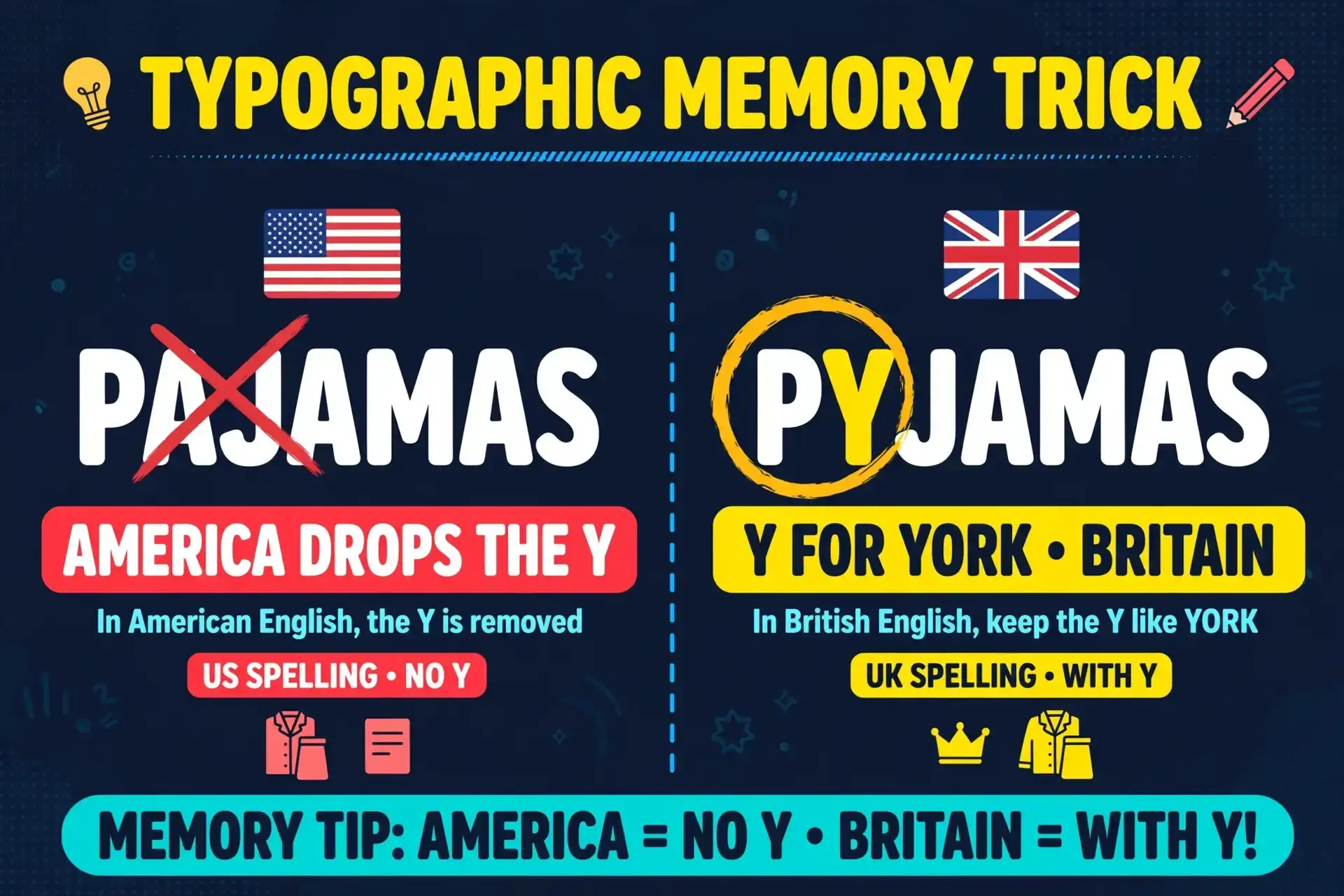
Watch the letter Y:
- Y for York → pyjamas: Britain kept the exotic Y from the word’s Asian roots.
- America dropped the Y → pajamas: the streamlined US spelling has no Y at all.
- The Y is silent either way, so it is purely a spelling signal — spot the Y, and you are looking at the British form.
- Bonus link: the Y also survives in the older sense — in South Asia a “pyjama” can still mean the loose trousers themselves.
Frequently Asked Questions
Is it pajamas or pyjamas?
Both are correct. Use pajamas for American readers and pyjamas for British readers — the sleepwear is the same.
Why do British people spell it pyjamas?
The word came to Britain from colonial India in the 1800s, from Persian/Urdu pāy-jāma (“leg garment”). The Y preserves the original sound, and British English simply never dropped it.
What is the singular of pajamas?
The word is almost always plural — “a pair of pajamas.” As an adjective it goes singular: “a pajama top” (US) or “a pyjama top” (UK).
Are pyjamas and pajamas pronounced differently?
No. Both are said “puh-JAH-muhz.” The Y in pyjamas is silent, so no listener could tell which spelling you mean.
What does “pyjama” mean in India?
In South Asia, “pyjama” can refer to the loose drawstring trousers themselves — the original garment — rather than the full Western sleepwear set.
Do Americans ever say “pyjama party”?
They say the same thing but spell it “pajama party.” The event is identical; only the spelling follows the local convention.
Conclusion
Pajamas and pyjamas dress the same bedtime in two spellings — the American form without the Y, the British form with it. Pick the spelling your readers expect, keep it consistent through every compound, and you will never lose sleep over this word again.