Gray or Grey: US vs UK Spelling Explained
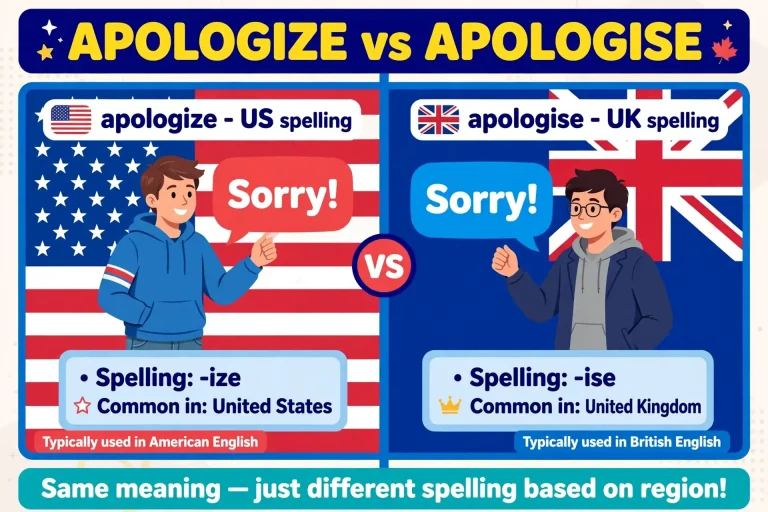
Gray and grey are both correct spellings of the same color — the neutral shade that sits halfway between black and white. The difference is purely regional: gray is the standard spelling in American English, while grey is the standard spelling in British English. An American website advertises a “sleek gray sedan”; a British dealer lists the identical car as “sleek grey.”
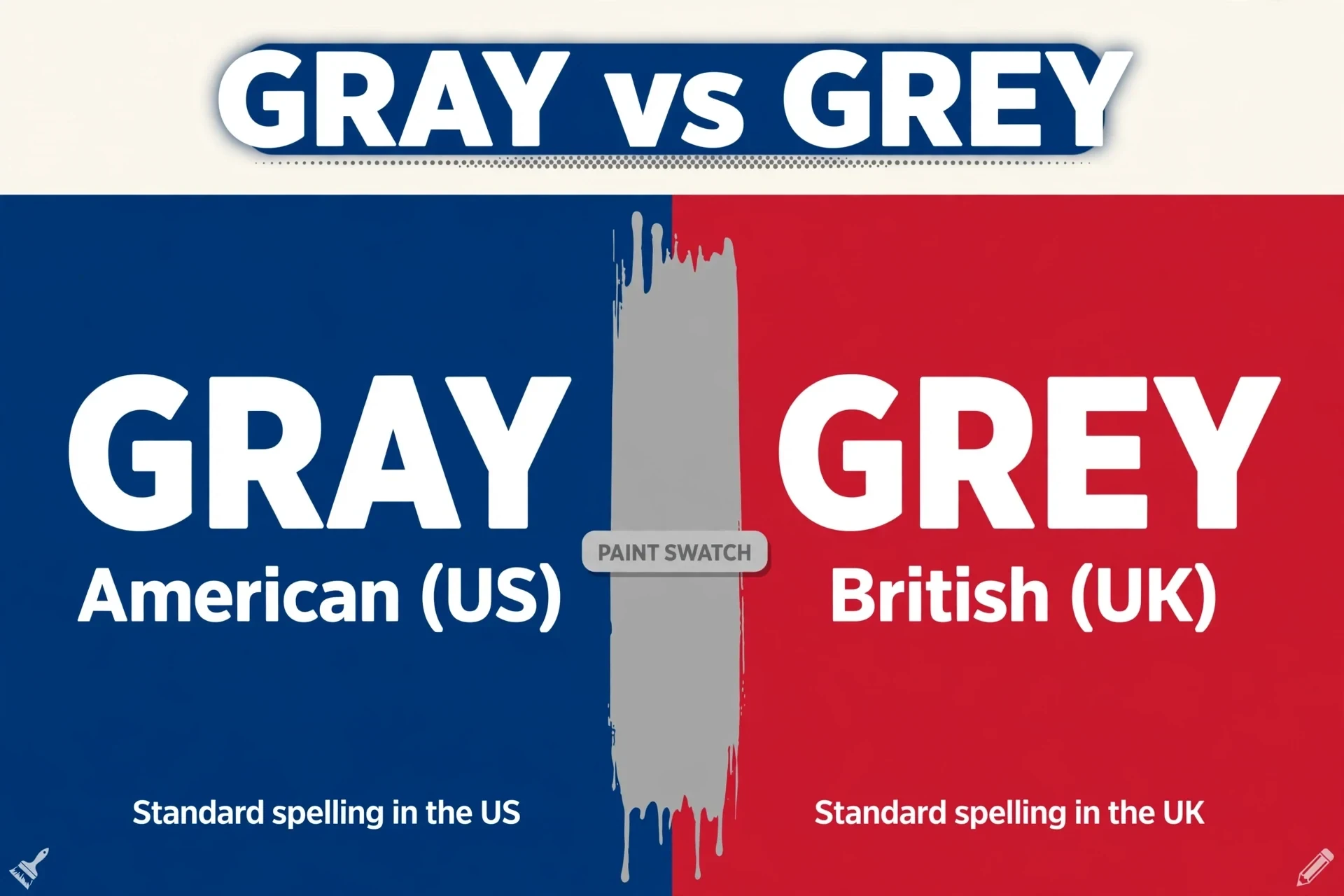
Table of Contents
Quick Answer
| Word | Region | Main Meaning | Example |
|---|---|---|---|
| Gray | American English (US) | The color between black and white; also dull, gloomy, or ambiguous | She painted the bedroom a soft gray. |
| Grey | British English (UK) | The exact same color and the same extended meanings | She painted the bedroom a soft grey. |
Simple rule: writing for an American audience? Use gray. Writing for a British audience? Use grey. Neither spelling is a mistake.
What Does Gray Mean?
Gray is the American spelling of the color you get by mixing black and white. The word stretches well beyond paint chips: it describes dull or overcast weather (“gray skies”), hair that has lost its pigment (“going gray”), and situations that are unclear or morally murky (“a gray area”). Merriam-Webster’s definition of gray covers all of these senses. There is even a scientific use — the gray (symbol Gy) is the SI unit of absorbed radiation dose, named after British physicist Louis Harold Gray, and it keeps the A spelling even in British journals.
- He wore a charcoal gray suit to the interview.
- Her father started going gray in his early forties.
- The morning commute was miserable under a flat gray sky.
- There is a gray area in the company policy about working from home.
What Does Grey Mean?
Grey is the British spelling, carrying the identical full range of meanings — the color, the gloomy weather, the aging hair, the ambiguity. Open a London newspaper and you will find “grey clouds over the Thames” and “a grey area in the new tax rules.” The spelling also survives in fixed proper nouns that keep the E all over the world, most famously Earl Grey tea and the grey squirrels of British parks — the very same animal Americans call the gray squirrel.
- The estate agent described the flat as having grey walls.
- A grey squirrel darted across the garden path.
- She takes her tea as Earl Grey with lemon.
- The committee’s report landed in a grey area of the law.
Why Two Spellings?
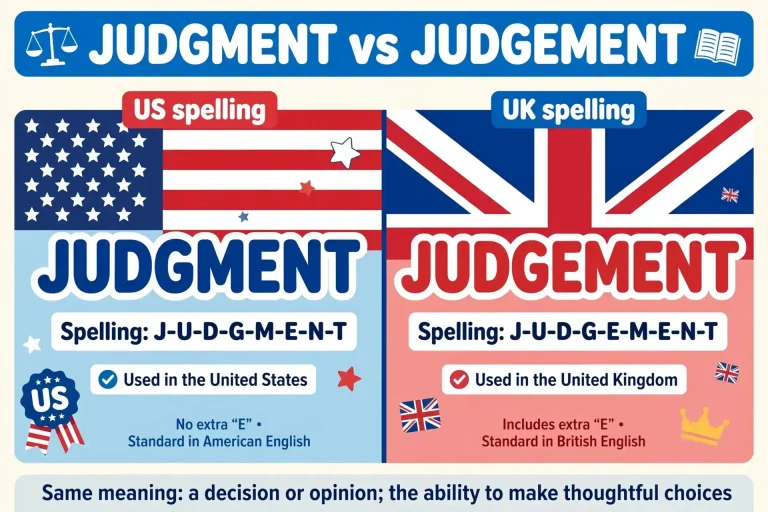
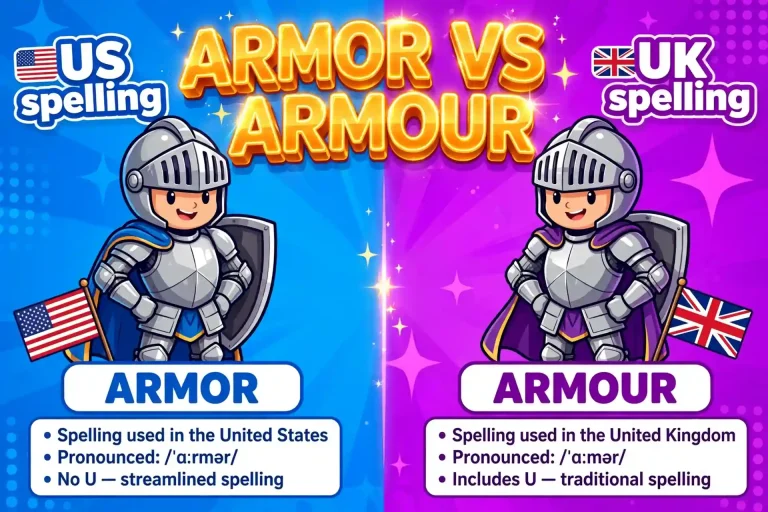
Both spellings lived side by side for centuries. The Old English word was grǣg, and through Middle English both “gray” and “grey” appeared in manuscripts on both sides of the Atlantic. The split hardened in the early 1800s thanks to Noah Webster, the American lexicographer whose dictionaries deliberately standardized a distinct American spelling system — the same project that gave the world color instead of colour and center instead of centre. Webster preferred “gray,” and American publishing followed him. British publishing settled on “grey,” and the Atlantic Ocean did the rest. Speakers never changed how they say the word — only how they write it.
Gray vs. Grey: Key Differences
| Feature | Gray | Grey |
|---|---|---|
| Spelling | With an A | With an E |
| Region | United States | United Kingdom (and most Commonwealth countries) |
| Meaning | The color between black and white, plus “dull” and “ambiguous” senses | Identical in every sense |
| Pronunciation | Identical — one syllable, rhymes with day | Identical — one syllable, rhymes with day |
| Related forms | grayish, graying | greyish, greying |
| Fixed proper nouns | The radiation unit gray (Gy) keeps the A everywhere | Earl Grey tea keeps the E everywhere |
The vowel is the only thing that changes — the color, the connotations, and the sound stay exactly the same. Gray/grey belongs to a whole family of transatlantic pairs that follow the same pattern:
| US Spelling | UK Spelling | Meaning |
|---|---|---|
| gray | grey | The color between black and white |
| color | colour | The property of hue |
| pajamas | pyjamas | Sleepwear |
| mustache | moustache | Facial hair above the lip |
Real-Life Examples
At the Paint Store
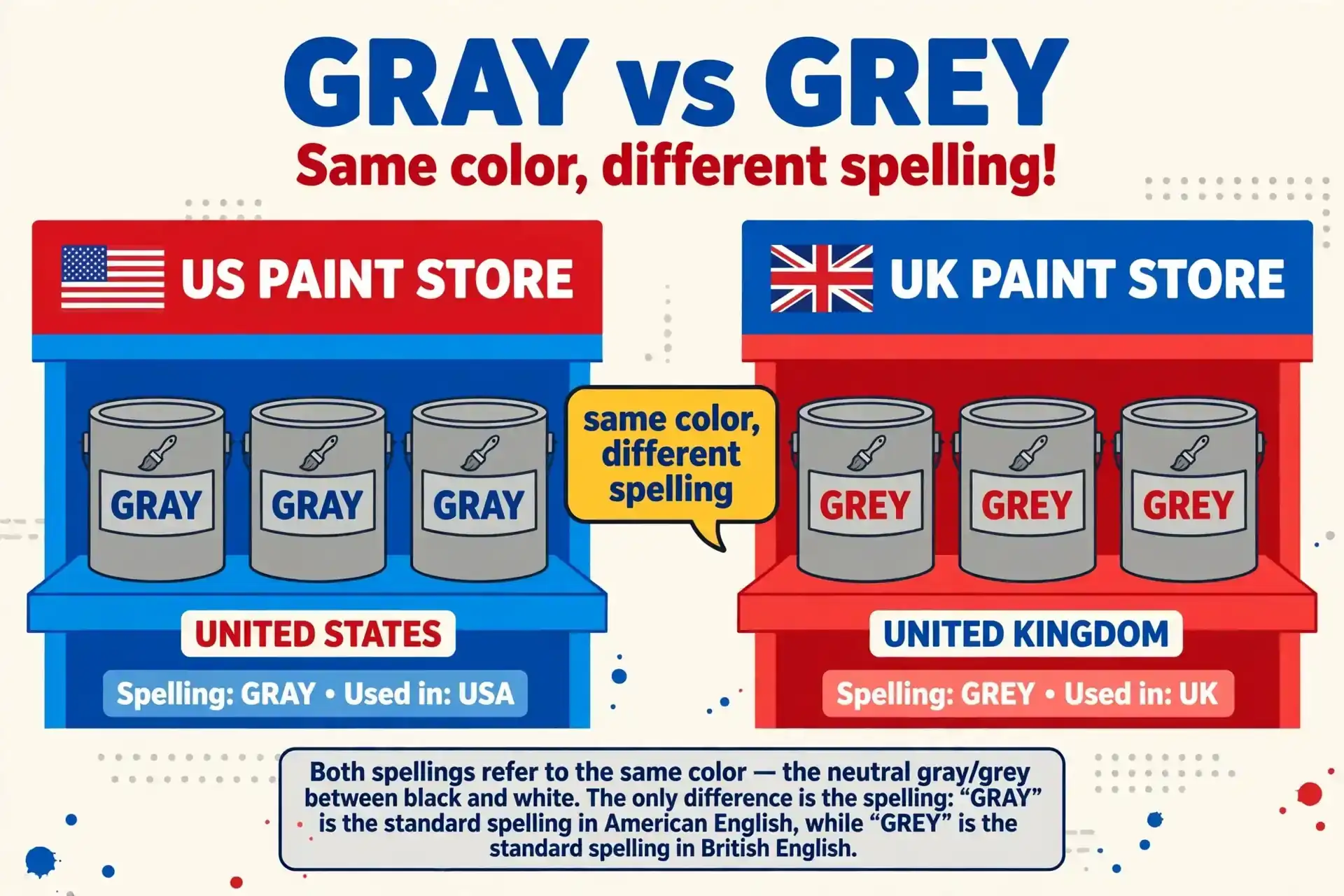
US: “We need two gallons of warm gray for the hallway.” UK: “We need two litres of warm grey for the hallway.”
The shopping list is the same on both sides of the ocean — only the tin on the shelf follows local spelling.
Talking About the Weather
US: “The forecast calls for gray skies all weekend.” UK: “The forecast calls for grey skies all weekend.”
Weather presenters describe the identical overcast sky; the spelling simply matches their audience.
On the Page or Screen
US: “His eyes were a pale, stormy gray.” UK: “His eyes were a pale, stormy grey.”
Editors choose the spelling that matches the book’s market — mixing the two in one novel reads like a proofreading error.
Common Mistakes
Writers stumble over regional spelling more often than they admit. The same instinct that mixes up jewelry vs jewellery in a product catalog can just as easily blur modeled vs modelled in a company report. These are the four traps to watch for with gray and grey:
Mistake 1: Using “grey” in an American document
❌ The brochure describes a grey wool coat.
✅ The brochure describes a gray wool coat.
Why: American style guides standardize on gray, so grey reads as an inconsistency to US editors.
Mistake 2: “Correcting” a proper noun
❌ She ordered a cup of Earl Gray tea.
✅ She ordered a cup of Earl Grey tea.
Why: proper nouns keep their fixed spelling everywhere — never change the E in Earl Grey, even in American writing.
Mistake 3: Mixing both spellings in one document
❌ The gray paint clashed with the grey trim.
✅ The gray paint clashed with the gray trim.
Why: pick one regional spelling and keep it consistent from the first sentence to the last.
Mistake 4: Calling one of them a typo
❌ “Grey is just a misspelling of gray.”
✅ “Grey is the standard British spelling; gray is the standard American spelling.”
Why: both are fully correct — flagging either one as an error is itself the error.
Pronunciation
Pronunciation is where the two spellings completely agree: gray and grey sound exactly the same — one smooth syllable rhyming with day, play, and tray. No accent on either side of the Atlantic pronounces the A/E difference; it is visible only on the page, never in speech.
How to Remember the Difference
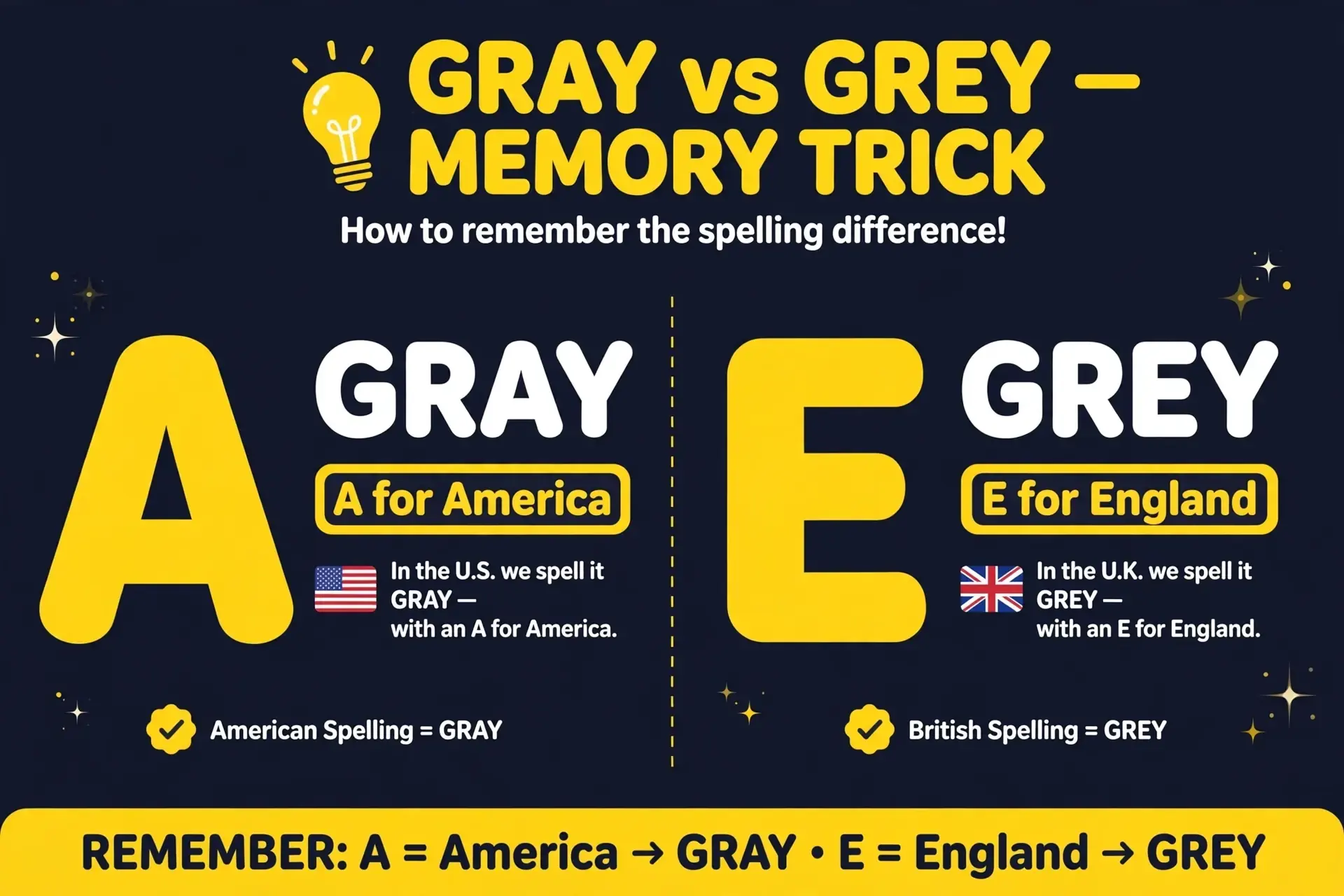
Match the vowel inside the word to the country that uses it:
- America → grAy (the A in America matches the A in gray)
- England → grEy (the E in England matches the E in grey)
- The vowel in the middle of the word echoes the first vowel of the country name.
- Keep proper nouns out of the trick: Earl Grey keeps its E worldwide, and the English poet Thomas Gray kept his A.
Frequently Asked Questions
Is it gray or grey?
Both are correct. Use gray when writing for an American audience and grey for a British audience — the meaning never changes.
Do gray and grey mean exactly the same thing?
Yes — every sense is shared: the color, dull weather, aging hair, and ambiguous situations (“a gray/grey area”). The difference is spelling only.
Why is it Earl Grey and not Earl Gray?
Earl Grey tea is named after Charles Grey, the 2nd Earl Grey, so the spelling is fixed as a proper noun. It keeps the E in every country, including the United States.
Is gray hair spelled differently in the UK?
The condition is the same; only the spelling changes. Americans write “going gray,” while Britons write “going grey.”
Conclusion
Gray and grey name the same color and carry the same range of figurative meanings — the only real question is who you are writing for. Match the spelling to your audience, keep proper nouns untouched, and stay consistent from the first sentence to the last.