Analyze or Analyse: US vs UK Spelling Explained
Both analyze and analyse are correct — they are the same verb, just spelled differently on either side of the Atlantic. Americans write analyze with a Z; British writers use analyse with an S.
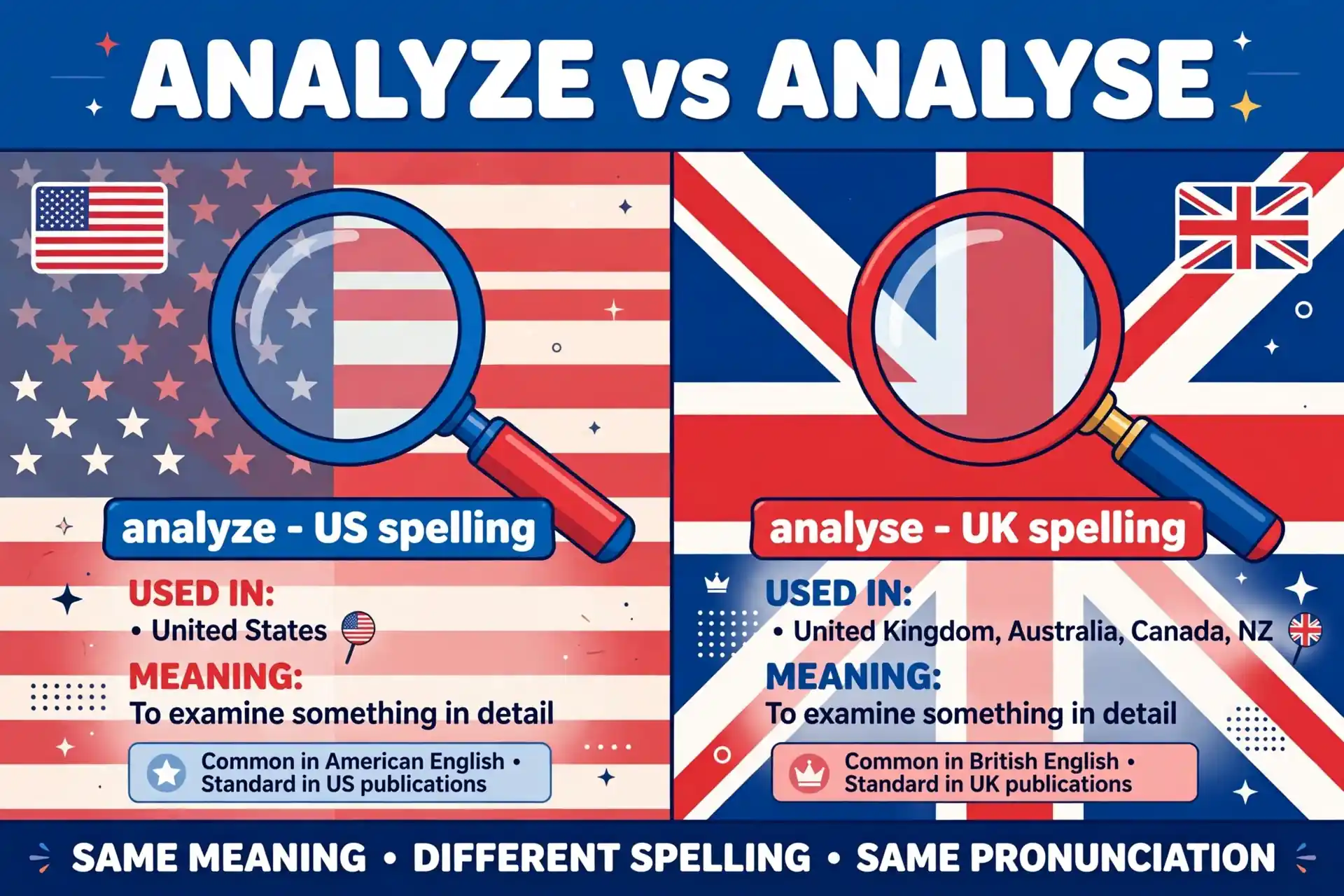
Table of Contents
Quick Answer
| Word | Part of Speech | Main Meaning | Example |
|---|---|---|---|
| Analyze | Verb | To examine something in detail to understand it (US spelling) | “The scientists analyzed the samples.” |
| Analyse | Verb | To examine something in detail to understand it (UK spelling) | “The scientists analysed the samples.” |
Simple rule: use analyze in American English and analyse in British English — pick one and stay consistent.
What Does Analyze Mean?
Analyze is the American spelling of the verb meaning to examine something methodically — break it into parts and study it to understand how it works. It comes from the Greek analyein, “to loosen up.”
Examples:
- The lab will analyze the water samples this week.
- He analyzed the opponent’s strategy before the match.
- We need to analyze last quarter’s sales figures.
- She analyzed the poem line by line for her essay.
- The software analyzes traffic patterns in real time.
What Does Analyse Mean?
Analyse is the British spelling of exactly the same verb — to examine something in detail to understand it. The meaning, pronunciation, and usage are identical; only the Z/S spelling differs.
Examples:
- The lab will analyse the water samples this week.
- He analysed the opponent’s strategy before the match.
- We need to analyse last quarter’s sales figures.
- She analysed the poem line by line for her essay.
- The software analyses traffic patterns in real time.
Why Two Spellings?
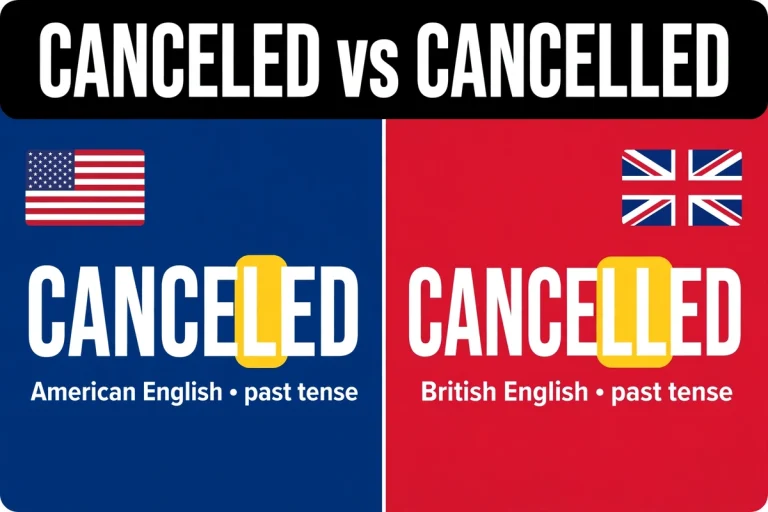
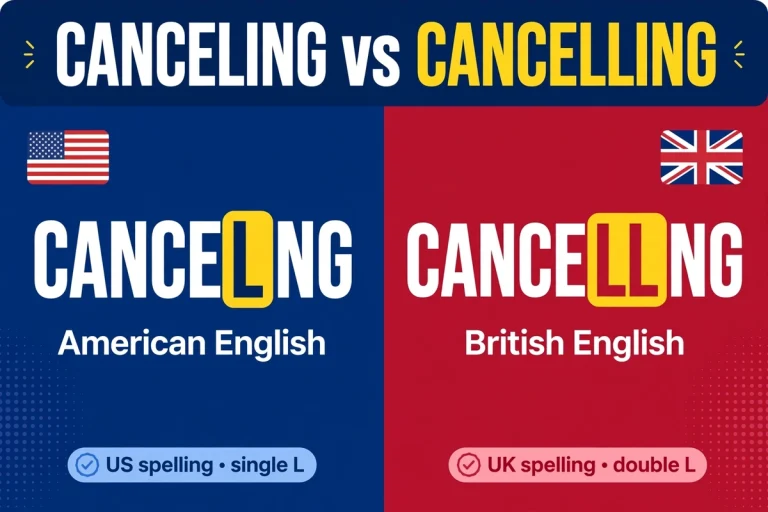
The split traces back to Noah Webster, the American lexicographer whose 1828 dictionary pushed for simpler, more phonetic spelling. One of his reforms swapped the French-influenced -ise ending for -ize in verbs like analyze. Britain kept the older -ise forms, and both conventions stuck. The same Atlantic divide runs through dozens of words — including the single-vs-double-L split in canceled or cancelled.
Analyze vs. Analyse: Key Differences
| Feature | Analyze | Analyse |
|---|---|---|
| Spelling | -ize ending | -ise ending |
| Region | United States (also common in Canada) | United Kingdom, Australia, much of the Commonwealth |
| Pronunciation | “AN-uh-lyze” | Identical: “AN-uh-lyze” |
| Past tense | analyzed | analysed |
| Present participle | analyzing | analysing |
| Meaning | Examine in detail to understand | Exactly the same |
Beyond the Z/S swap and the verb forms that follow from it, there is no difference at all between the two spellings.
Other -ize vs. -ise Word Pairs
| US Spelling | UK Spelling | Meaning |
|---|---|---|
| realize | realise | To become aware of |
| organize | organise | To arrange or put in order |
| recognize | recognise | To identify from memory |
| criticize | criticise | To judge or find fault with |
| apologize | apologise | To express regret, say sorry |
Analyze and Analyse in Real Sentences
At Home
Analyze (US): “I analyzed our electricity bill and found we can cut usage by half.”
Analyse (UK): “I analysed our electricity bill and found we can cut usage by half.”
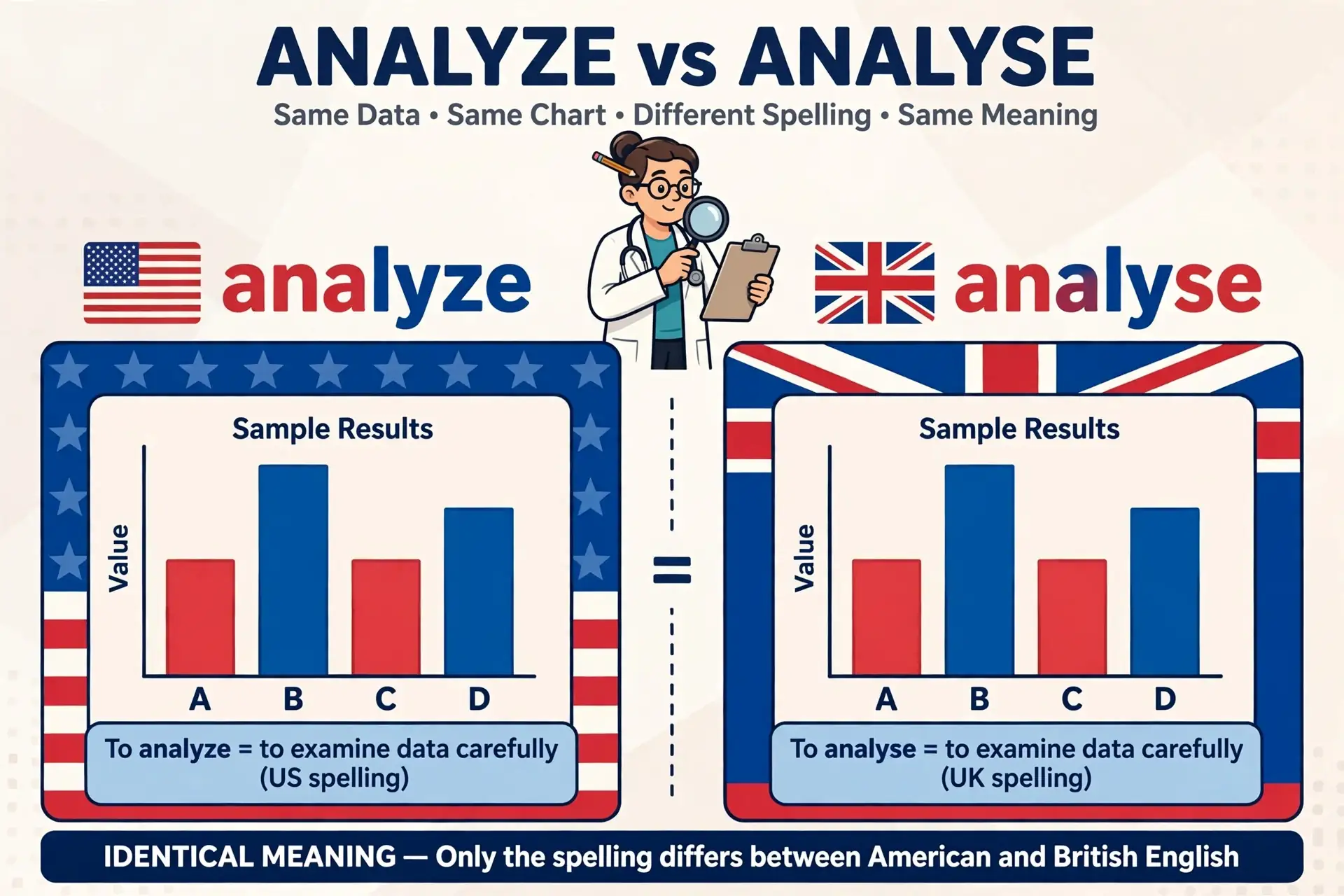
The contrast: same sentence, same meaning — only the Z or S changes, matching the writer’s country.
At Work
Analyze (US): “The team will analyze the survey results on Monday.”
Analyse (UK): “The team will analyse the survey results on Monday.”
The contrast: an American report uses analyze; a British report uses analyse — mixing them in one document looks sloppy.
In Conversation
Analyze (US): “Stop analyzing everything I say!”
Analyse (UK): “Stop analysing everything I say!”
The contrast: spoken aloud they are identical — the difference exists only on the page.
Common Mistakes
Nobody confuses the meaning — the mistakes here are all about consistency, a familiar trap if you have ever mixed up loose or lose.
Mistake 1: Mixing spellings in one document
❌ “We will analyze the data, then the London office will analyse the results.”
✅ “We will analyze the data, then the London office will analyze the results.”
Why: pick the American or British spelling and use it throughout.
Mistake 2: Using analyse in American writing
❌ (US college essay) “The study analyses three decades of data.”
✅ (US college essay) “The study analyzes three decades of data.”
Why: American style guides expect analyze.
Mistake 3: Using analyze in British writing
❌ (UK publication) “The report will analyze the findings.”
✅ (UK publication) “The report will analyse the findings.”
Why: British style guides expect analyse.
Mistake 4: Wrong verb forms
❌ “She has analyze the results.”
✅ “She has analyzed the results.” / “She has analysed the results.”
Why: the past tense follows the spelling you chose — analyzed with Z, analysed with S.
Pronunciation
Both spellings are pronounced “AN-uh-lyze” — they rhyme with paralyze. The Z/S swap changes nothing about how the word sounds.
How to Remember the Difference
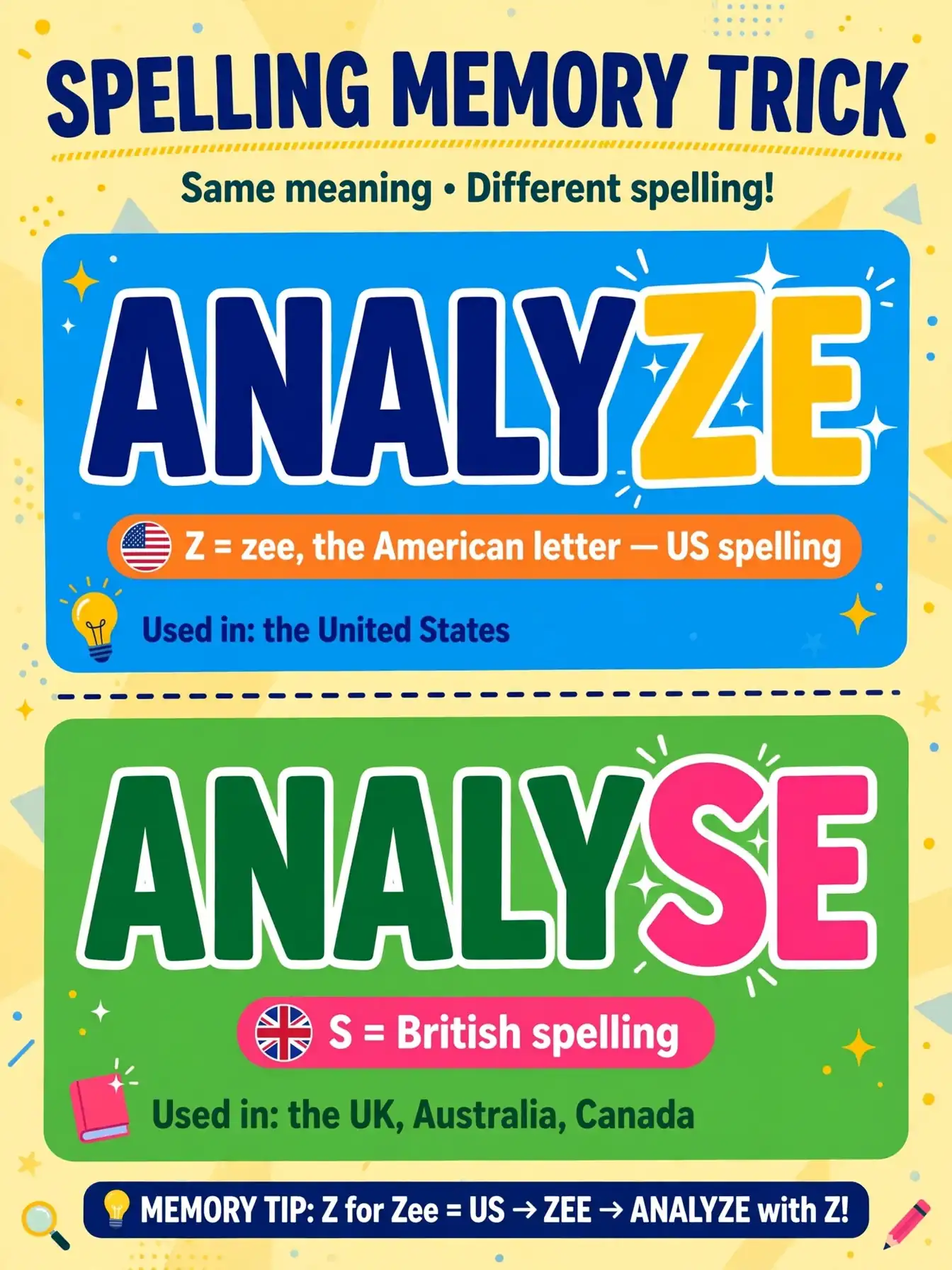
Link the letter to the country: the American spelling uses Z — think of the letter Z as in “zee,” the American name for the last letter of the alphabet. The British spelling uses S — think “S for the UK’s spelling.”
- Z = American “zee” → analyze.
- S = British spelling → analyse.
- Match your spelling to your audience, and stay consistent throughout.
Frequently Asked Questions
Is it analyze or analyse?
Both are correct. Use analyze in American English and analyse in British English.
Which spelling is correct in Canada and Australia?
Australia follows British analyse; Canada accepts both but generally prefers analyze.
Do analyze and analyse mean the same thing?
Yes — exactly the same verb, meaning to examine something in detail. See Merriam-Webster’s entry for analyze for the full definition.
What about analyzed vs analysed?
The past tense follows your spelling: analyzed (US), analysed (UK) — and the same goes for analyzing vs. analysing.
Are there other words like this?
Dozens — realize/realise, organize/organise, recognize/recognise, criticize/criticise, and apologize/apologise all follow the same -ize/-ise split.
Which should I use in an international document?
Match your audience or house style; if there is none, pick one spelling and use it consistently from start to finish.
Why did American and British English split on this?
Blame Noah Webster. His 1828 dictionary deliberately simplified American spelling, and -ize was one of his standardizations — it also happens to be the older, etymological form, from the Greek -izein. Britain drifted toward -ise under French influence. Ironically, the Oxford University Press still prefers -ize even in British books (“Oxford spelling”), so you will occasionally meet “analyze” in a London-published journal.
Why is the noun “analysis” spelled the same everywhere?
Because the Z/S split only affects the verb ending. The noun analysis (plural analyses) is identical in American and British English — the same goes for paralysis, catalysis, and dialysis. So you analyze (US) or analyse (UK), but everyone writes an analysis.
Conclusion
Analyze and analyse are the same verb in different national dress — Z for America, S for Britain. Learn the pattern once, and you have mastered a whole family of -ize/-ise words.