Mustache or Moustache: US vs UK Spelling Explained
Mustache and moustache are both correct spellings of the same facial hair — the strip grown above the upper lip. The difference is regional: mustache is the American spelling, while moustache is the British spelling. A New York barber advertises “mustache trims”; a London barber offers the identical service as “moustache trims.”
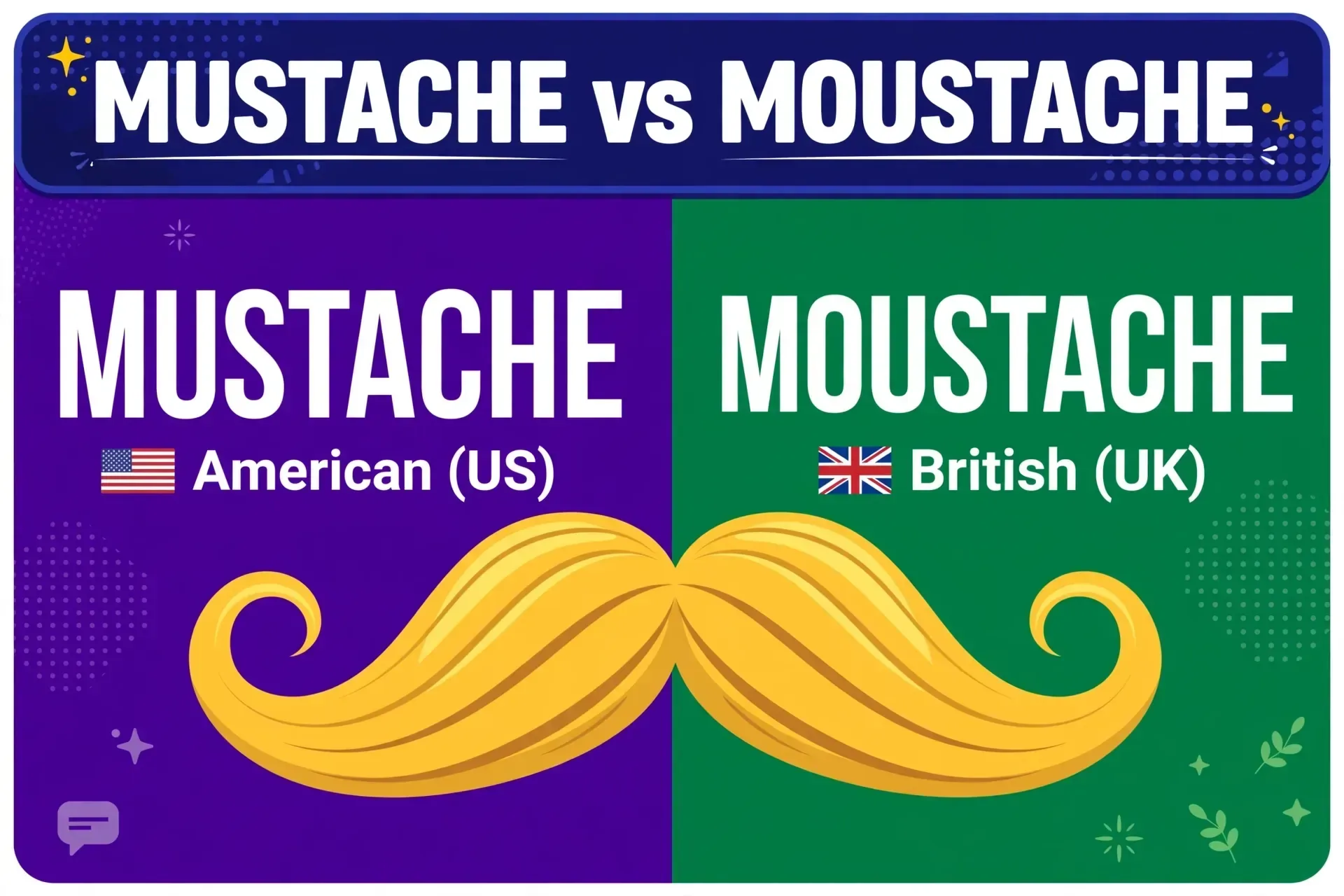
Table of Contents
Quick Answer
| Word | Region | Main Meaning | Example |
|---|---|---|---|
| Mustache | American English (US) | Hair grown on the upper lip | He grew a thick mustache over the summer. |
| Moustache | British English (UK) | The exact same facial hair | He grew a thick moustache over the summer. |
Simple rule: writing for an American audience? Use mustache. Writing for a British audience? Use moustache. The hair itself doesn’t change.
What Does Mustache Mean?
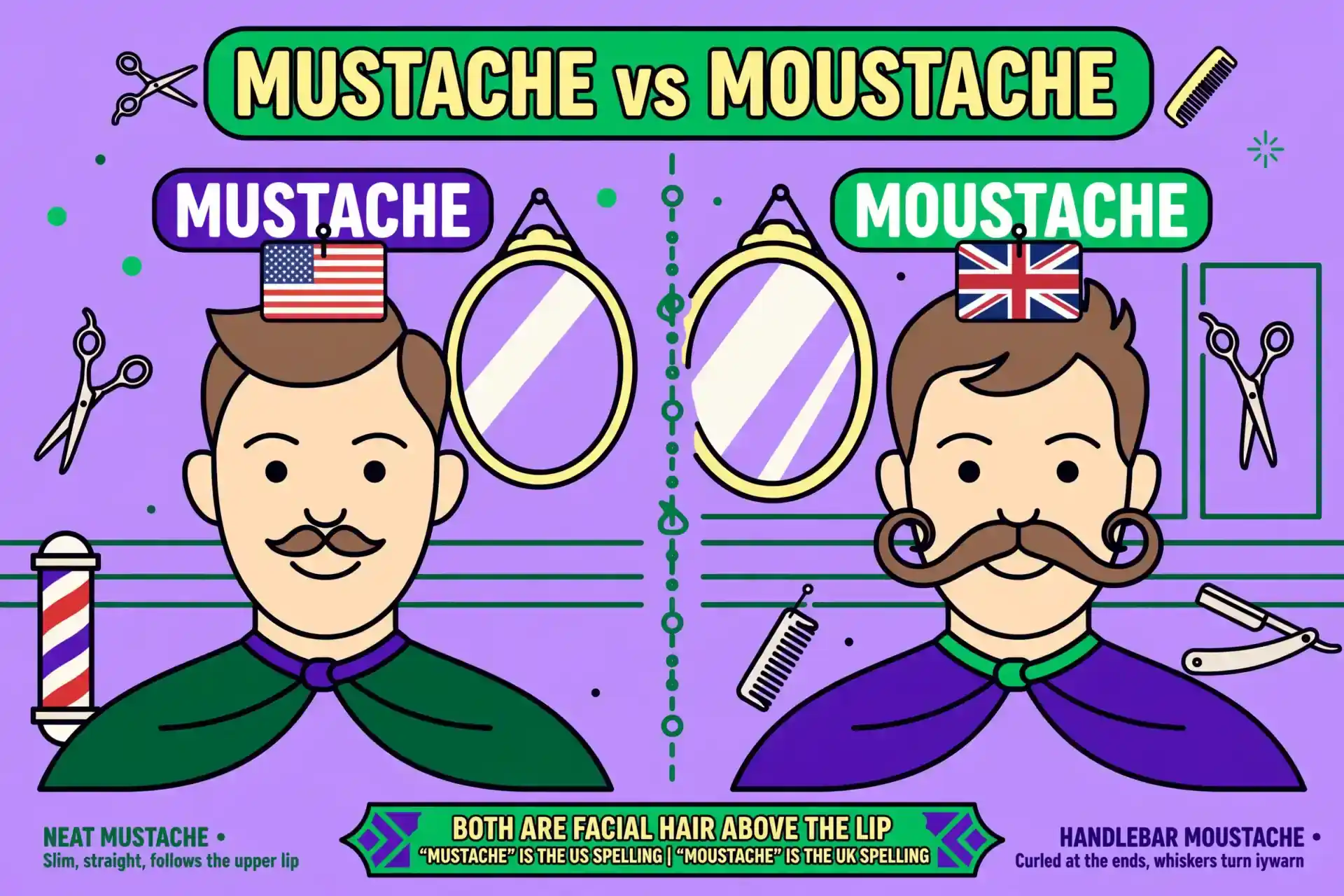
Mustache is the American spelling for the hair a person grows above the upper lip, whether it is a neat pencil line or a full handlebar. The word covers all styles — chevron, walrus, toothbrush — and appears in compounds like “mustache wax” and “mustache cup” (the Victorian cup with a guard to keep the hair dry). Merriam-Webster’s definition of mustache notes it as the standard US form of the older British “moustache.”
- He shaved off his mustache after ten years.
- The actor wore a fake mustache for the role.
- My grandfather’s mustache was famous in our neighborhood.
- He twisted the ends of his mustache into points.
- The detective’s only disguise was a stick-on mustache.
What Does Moustache Mean?
Moustache is the British spelling for exactly the same facial hair. A London barbershop advertises “moustache trims,” British novels describe “a neat moustache,” and the Movember charity campaign runs on both spellings depending on the country. The O in the middle is the French inheritance — Britain kept the original French spelling while America trimmed it.
- He grew a moustache for the charity fundraiser.
- The sergeant major’s moustache was perfectly waxed.
- She remembered her father by his bushy moustache.
- The barber shaped his moustache with hot wax.
- Poirot’s neat moustache is famous in detective fiction.
Why Two Spellings?
The word traveled a long road to English: from Greek mystax (upper lip) to Italian mostaccio to French moustache, entering English in the 1500s with its French spelling intact. For centuries everyone wrote “moustache.” The American change came with the great 19th-century spelling simplification led by Noah Webster, whose dictionaries trimmed silent and “extra” letters wherever they could — the same campaign that gave America color for colour and check for cheque. Dropping the O after the M produced mustache, and American publishing adopted it. British English, as usual, kept the older French form, so the O remains in London while it vanished in New York.
Mustache vs. Moustache: Key Differences
| Feature | Mustache | Moustache |
|---|---|---|
| Spelling | No O after the M: mustache | Extra O after the M: moustache |
| Region | United States | United Kingdom and most of the Commonwealth |
| Meaning | Hair on the upper lip, all styles | Identical meaning, all styles |
| Adjective form | mustached (“a mustached gentleman”) | moustached (“a moustached gentleman”) |
| Pronunciation | Usually stressed on the first syllable: “MUS-tash” | Usually stressed on the second syllable: “muh-STAHSH” |
| Origin of the form | 19th-century American simplification | Original 16th-century French borrowing |
Unlike most US/UK pairs, this one even sounds a little different — but the hair in the mirror is the same. Mustache/moustache belongs to a familiar family of transatlantic pairs:
| US Spelling | UK Spelling | Meaning |
|---|---|---|
| mustache | moustache | Facial hair above the lip |
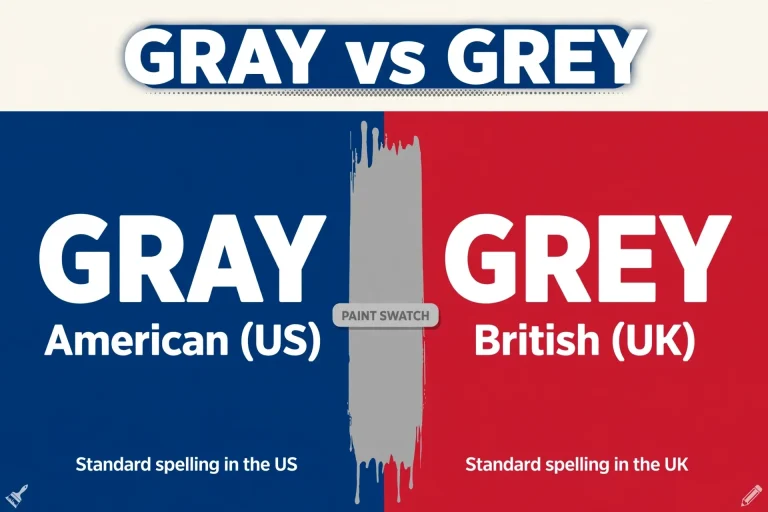
| gray | grey | The color between black and white |
| pajamas | pyjamas | Sleepwear |
| donut | doughnut | The fried ring-shaped cake |
Real-Life Examples
At the Barbershop
US: “Just a trim on the mustache, please.” UK: “Just a trim on the moustache, please.”
The clippers do the same job — the appointment book just follows local spelling.
Describing a Character
US: “The villain twirled his waxed mustache.” UK: “The villain twirled his waxed moustache.”
Novelists pick the spelling their readers expect; the menace of the character is unaffected.
In a Product Listing
US: “Our mustache wax holds all day.” UK: “Our moustache wax holds all day.”
Grooming brands localize the label — an American shopper searches for “mustache wax,” a British one for “moustache wax.”
Common Mistakes
The extra O trips up writers in both directions. The same regional instinct that separates labeling vs labelling and modeling vs modelling applies here too. Watch for these four:
Mistake 1: Dropping the final E
❌ He combed his mustach carefully.
✅ He combed his mustache carefully.
Why: both regional spellings end in -ache — “mustach” is simply a misspelling.
Mistake 2: Using “mustache” in a British publication
❌ The London salon offers mustache styling.
✅ The London salon offers moustache styling.
Why: British readers and spell-checkers expect the O — “mustache” looks like an American import.
Mistake 3: Mixing the adjective forms
❌ The moustached actor wore a fake mustache.
✅ The moustached actor wore a fake moustache.
Why: the adjective follows the noun’s regional spelling — keep mustached with mustache and moustached with moustache.
Mistake 4: “Correcting” it in a quotation
❌ Changing a British author’s “moustache” to “mustache” when quoting.
✅ Leave quoted text exactly as written.
Why: quotations preserve the original spelling — “fixing” them introduces an error, not a correction.
Pronunciation
This pair is unusual: the pronunciation shifts slightly with the spelling. Americans usually stress the first syllable — “MUS-tash,” rhyming with must dash said quickly. Britons usually stress the second syllable — “muh-STAHSH,” with a longer “ah” sound. Either pronunciation will be understood everywhere, but matching the stress to your audience sounds the most natural.
How to Remember the Difference
Watch the letter O:
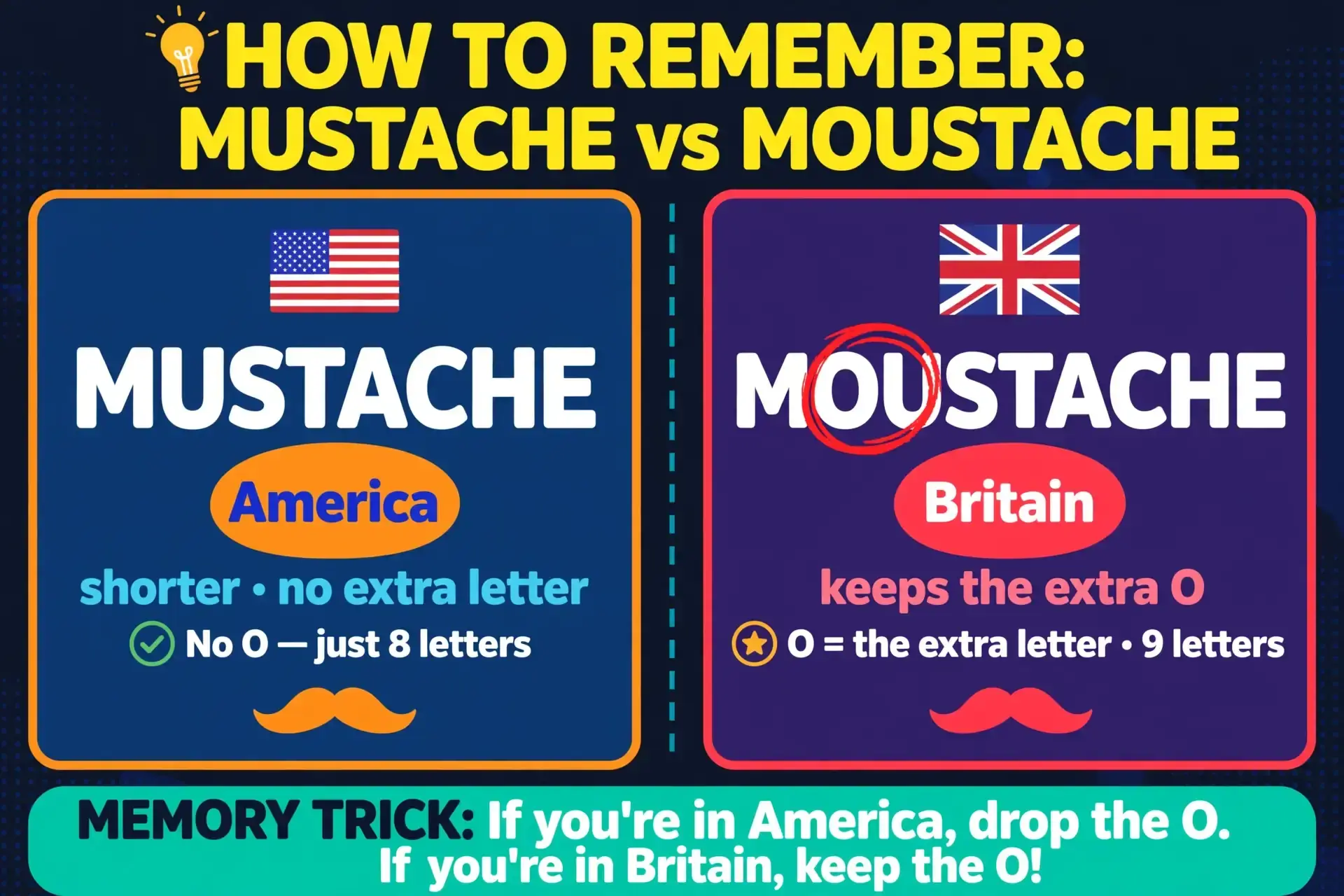
- Britain keeps the extra O → moustache (O for Old French — the original borrowing).
- America dropped the O → mustache (the streamlined spelling has no extra letter to remember).
- The O is silent, so like the Y in pyjamas, it is a spelling signal only — spot the O, and you are looking at the British form.
- The same O survives in the fancier cousin mustachioed, which keeps its spelling on both sides of the Atlantic.
Frequently Asked Questions
Is it mustache or moustache?
Both are correct. Use mustache for American readers and moustache for British readers — the facial hair is identical.
Why do Americans spell it mustache?
Noah Webster’s 19th-century spelling reforms trimmed “extra” letters from many words. Dropping the O from “moustache” fit the same pattern that produced color and check.
How do you pronounce moustache in British English?
Usually “muh-STAHSH,” with the stress on the second syllable. Americans more often say “MUS-tash,” stressing the first syllable.
What is the adjective form — mustached or moustached?
Both, regionally: mustached in American English (“a mustached gentleman”) and moustached in British English. Match the adjective to the spelling you are using.
What does “mustachioed” mean?
It means having a large or prominent mustache, from the Italian-derived “mustachio.” Unlike mustache/moustache, “mustachioed” is spelled the same way everywhere.
Is “mustache” ever correct in the UK?
British dictionaries list it as the American variant, so it is understood but not standard. In formal British writing, stick with moustache.
Conclusion
Mustache and moustache describe the same strip of facial hair — the American spelling simply trimmed the silent O that Britain kept from French. Match the spelling (and the adjective form) to your audience, and the only thing left to decide is the style of the hair itself.