Finaly or Finally: What’s the Difference? (With Examples)
Finaly is not a real English word — it’s a common misspelling of finally. Finally is an adverb meaning ‘at last’ or ‘after a long time’.
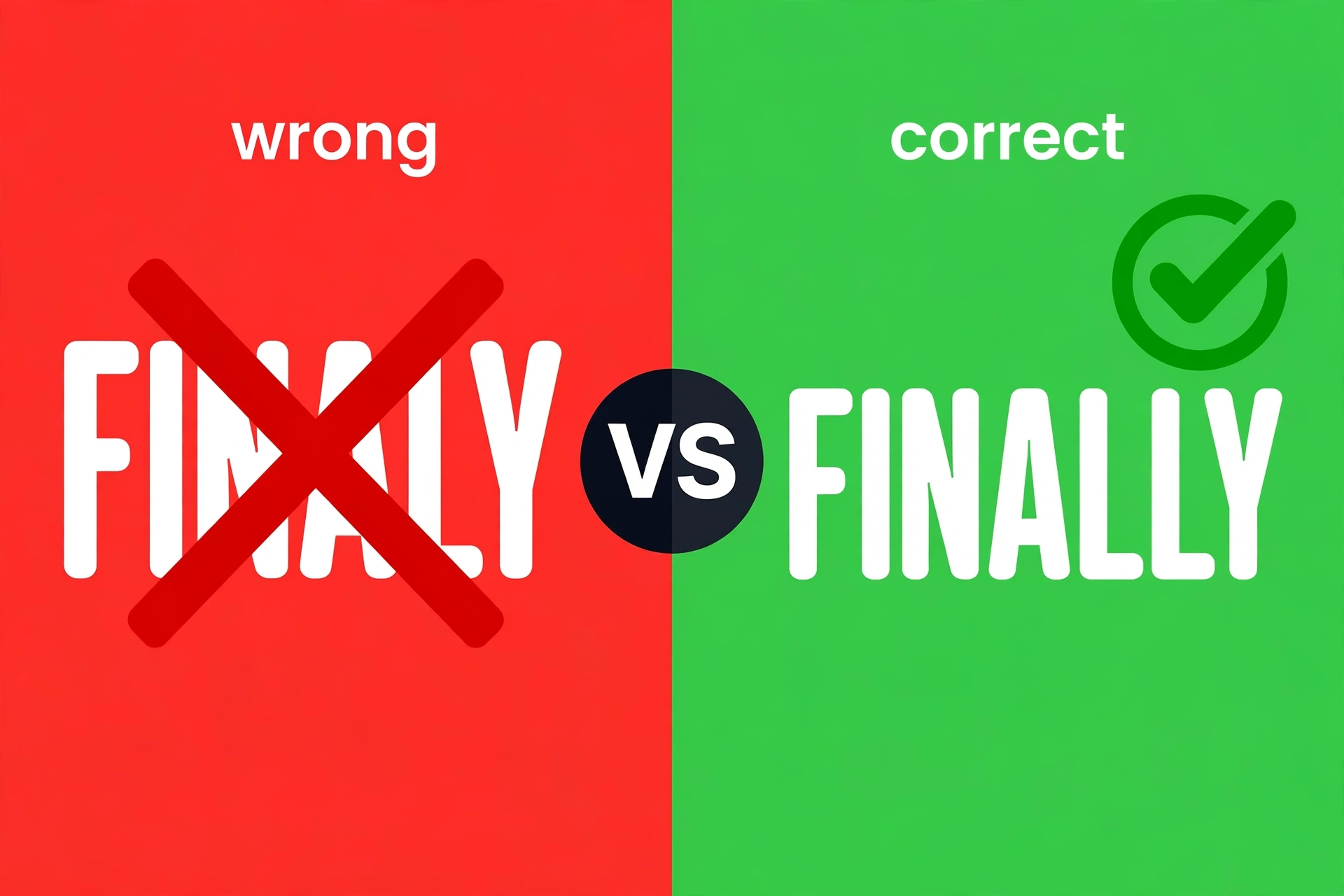
Table of Contents
Quick Answer
| Word | Part of Speech | Main Meaning | Example |
|---|---|---|---|
| Finaly | Misspelling | Not a real word — the incorrect spelling of “finally” | ❌ “We finaly arrived.” (wrong) |
| Finally | Adverb | At last; after a long time or much effort; in conclusion | ✅ “We finally arrived.” (right) |
Simple rule: finally always has two Ls — if you wrote it with one, it’s a typo.
What Does Finaly Mean?
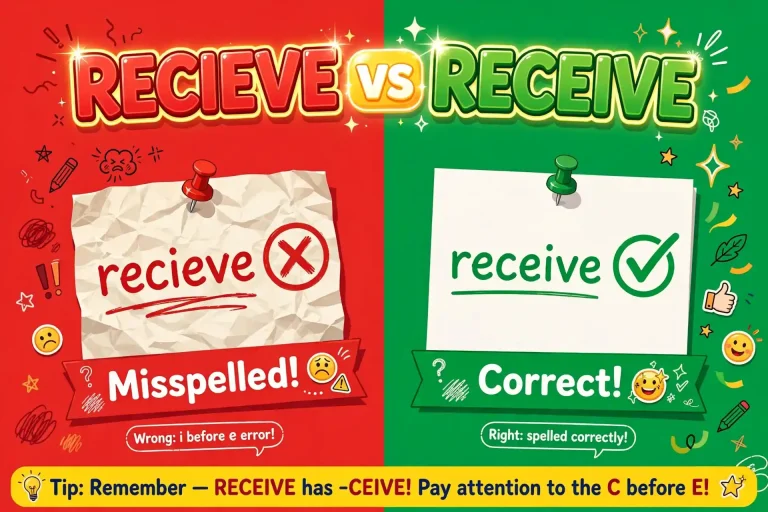
Finaly doesn’t mean anything — it isn’t a recognized English word and appears in no dictionary. It shows up in writing because people drop one of the two Ls in finally while typing quickly, or because the spoken pronunciation (“FY-nuh-lee”) makes the double L easy to forget. It’s the same instinct behind recieve vs receive: the ear hears one sound, but the spelling keeps two.
Typical typos and their fixes:
- ❌ “We finaly got the keys.” → ✅ “We finally got the keys.”
- ❌ “Finaly, the weekend is here.” → ✅ “Finally, the weekend is here.”
- ❌ “He finaly admitted he was wrong.” → ✅ “He finally admitted he was wrong.”
- ❌ “The bus finaly showed up.” → ✅ “The bus finally showed up.”
What Does Finally Mean?
Finally is an adverb with two main jobs. First, it means “at last” — after a long time, a wait, or a struggle. Second, it introduces the last point in a list or argument, meaning “in conclusion.” Merriam-Webster defines finally as “after a long time” and “at the end.”
Finally = at last
- After three delays, our flight finally took off.
- She finally passed her driving test on the fourth try.
- We finally agreed on a date for the wedding.
- The rain finally stopped just before noon.
Finally = in conclusion
- Finally, I’d like to thank everyone who helped.
- Finally, remember to save your work before closing.
- The report covers costs, risks, and, finally, recommendations.
- Finally, let me answer the question you all asked first.
Finaly vs. Finally: Key Differences
| Feature | Finaly | Finally |
|---|---|---|
| Word status | Misspelling — in no dictionary | Correct, standard English adverb |
| Meaning | None | “At last” / “in conclusion” |
| Spelling | One L | Two Ls |
| Spellcheck | Usually flagged as an error | Passes |
| Use in writing | Never | “Finally, we agree.” |
| Fix | Add the missing L | — |
One L is always a typo; two Ls is always correct.
Finaly vs. Finally in Real Sentences
At Work
❌ “We finaly sent the proposal to the client.”
✅ “We finally sent the proposal to the client.”
In a work email, the typo version looks careless — the double L version looks professional.
In Conversation
❌ “He finaly texted me back after two days.”
✅ “He finally texted me back after two days.”
Texting is casual, but the word is still spelled finally — autocorrect may even fix it for you.
In an Essay or Email
❌ “Finaly, this essay will argue that…”
✅ “Finally, this essay will argue that…”
As a transition word meaning “in conclusion,” finally keeps both Ls — it’s one of the most common academic linking words in English.
Common Mistakes
Dropping a letter is one of the most common spelling slips in English — the same instinct behind recieve vs receive and dieing or dying.
Mistake 1: One L instead of two
❌ We finaly finished the report.
✅ We finally finished the report.
Why: Finally always keeps both Ls — no exceptions.
Mistake 2: The typo as a transition word
❌ Finaly, I’d like to thank everyone.
✅ Finally, I’d like to thank everyone.
Why: The “in conclusion” transition is spelled finally, double L.
Mistake 3: Trusting your ears
❌ “It sounds like one L, so I wrote one L.”
✅ Say it slowly: “fy-NUH-lee” — the middle syllable hides the second L.
Why: Pronunciation drops the doubled sound, but spelling keeps it.
Mistake 4: Confusing it with “finely”
❌ He sliced the onions finally.
✅ He sliced the onions finely.
Why: Sliced thin = finely (thin slices); finally means “at last.” Different word, different meaning.
Pronunciation
Finally is pronounced “FY-nuh-lee” (/ˈfaɪnəli/), rhyming with finely and divinely. That middle “nuh” syllable is exactly where the second L hides — say it slowly, “fy-NUH-lee,” and you’ll feel why people forget to write it.
How to Remember the Difference
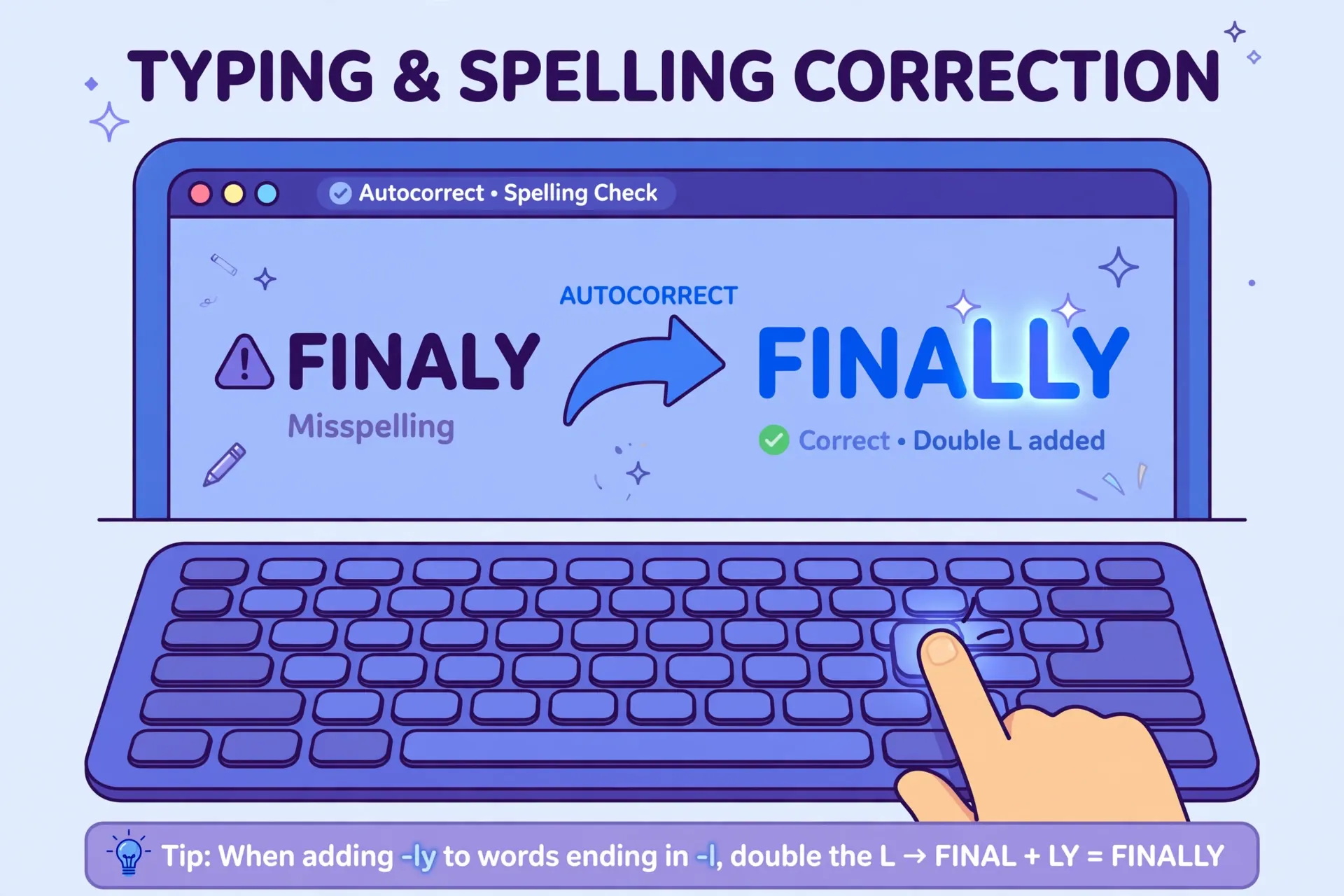
Finally is built from final + ly — and adjectives ending in L keep their L when -ly is added (actual → actually, normal → normally). So FINALLY has two Ls: one from “final” and one from “ly.” Or simpler: at Last, after a Long wait — two Ls for two good reasons.
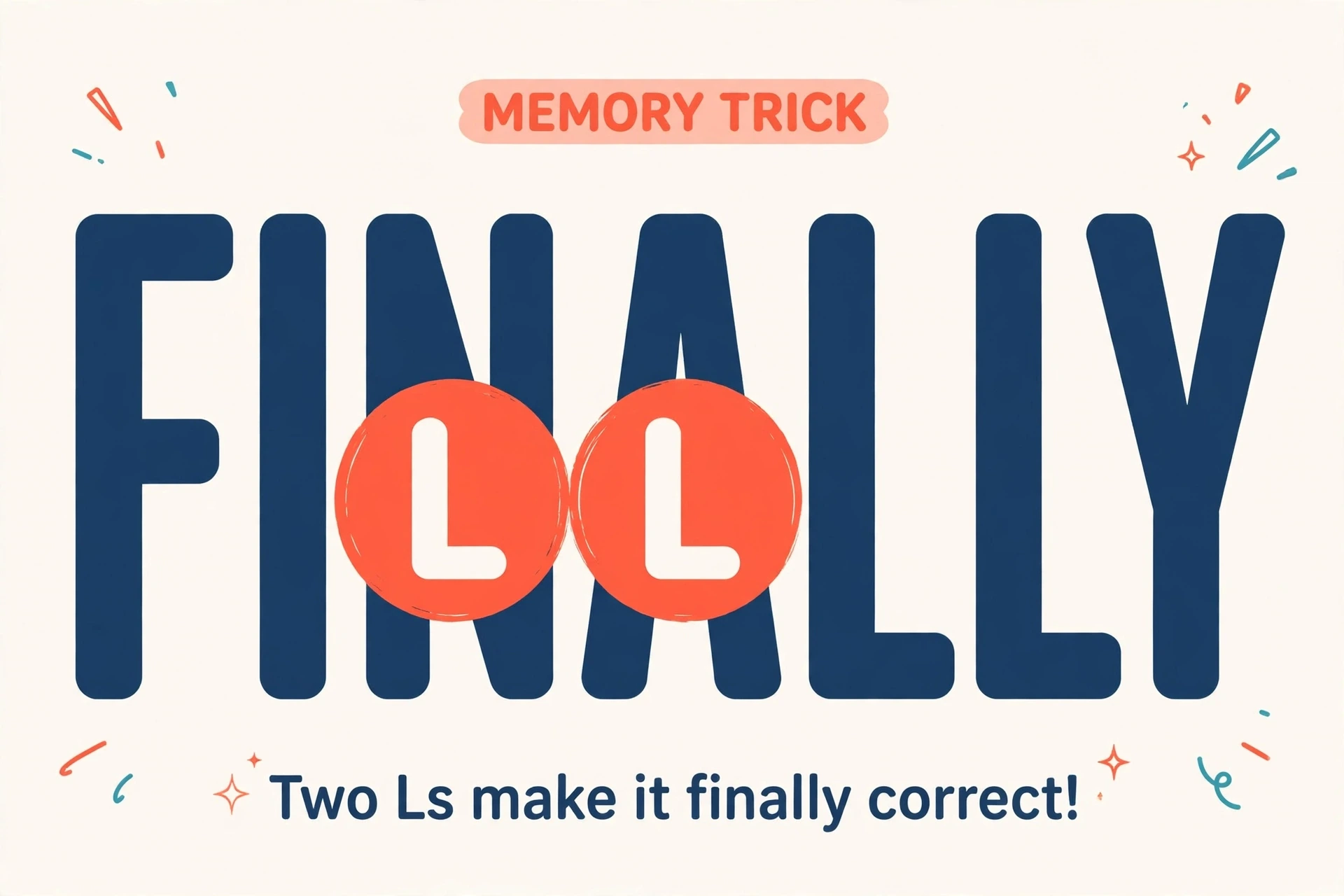
- Finaly (1 L) = typo. Delete it on sight.
- Finally (2 Ls) = final + ly, and the L never drops.
- Say “fy-NUH-lee” — the middle syllable hides the second L.
Frequently Asked Questions
Is it finaly or finally?
Always finally. Finaly is a misspelling — add the missing L and you’re correct.
Is “finaly” a word?
No. It appears in no standard dictionary. Every use of “finaly” is a typo for finally.
Why does finally have two Ls?
It comes from the adjective final plus the adverb ending -ly. When an adjective ends in L, the L is kept: final → finally, just like actual → actually.
What’s the difference between finally and “at last”?
There’s no real difference in meaning — finally is simply the single-word adverb form of “at last.” “We finally left” and “At last, we left” say the same thing.
How do you use finally in a sentence?
Use it for something that happened after a wait (“She finally called”) or to introduce your last point (“Finally, thank you all”).
Is “finaly” ever acceptable?
No — not in formal writing, not in texts, not anywhere. Spellcheck will usually flag it, and readers will read it as a typo.
Which other adverbs double the L like “finally”?
The rule is consistent: when an adjective ends in L, the adverb keeps it and adds -ly. So actual becomes actually, usual becomes usually, beautiful becomes beautifully, and careful becomes carefully. If you learn this pattern once, you will never write “actualy” or “beautiffuly” either — the same habit fixes a whole family of typos.
What is the difference between “finally” and “eventually”?
Both describe something happening after a wait, but the feeling differs. Finally carries relief or impatience — “She finally called!” suggests you were waiting and are glad it happened. Eventually is neutral about slow processes: “The stain eventually faded.” You can swap them in many sentences, but “finally” always sounds a little more human.
Conclusion
Finaly is always a mistake; finally is always the word you want. Remember that final + ly keeps both Ls, and the double-L spelling will come naturally.