Was or Were: What’s the Difference? (With Examples)
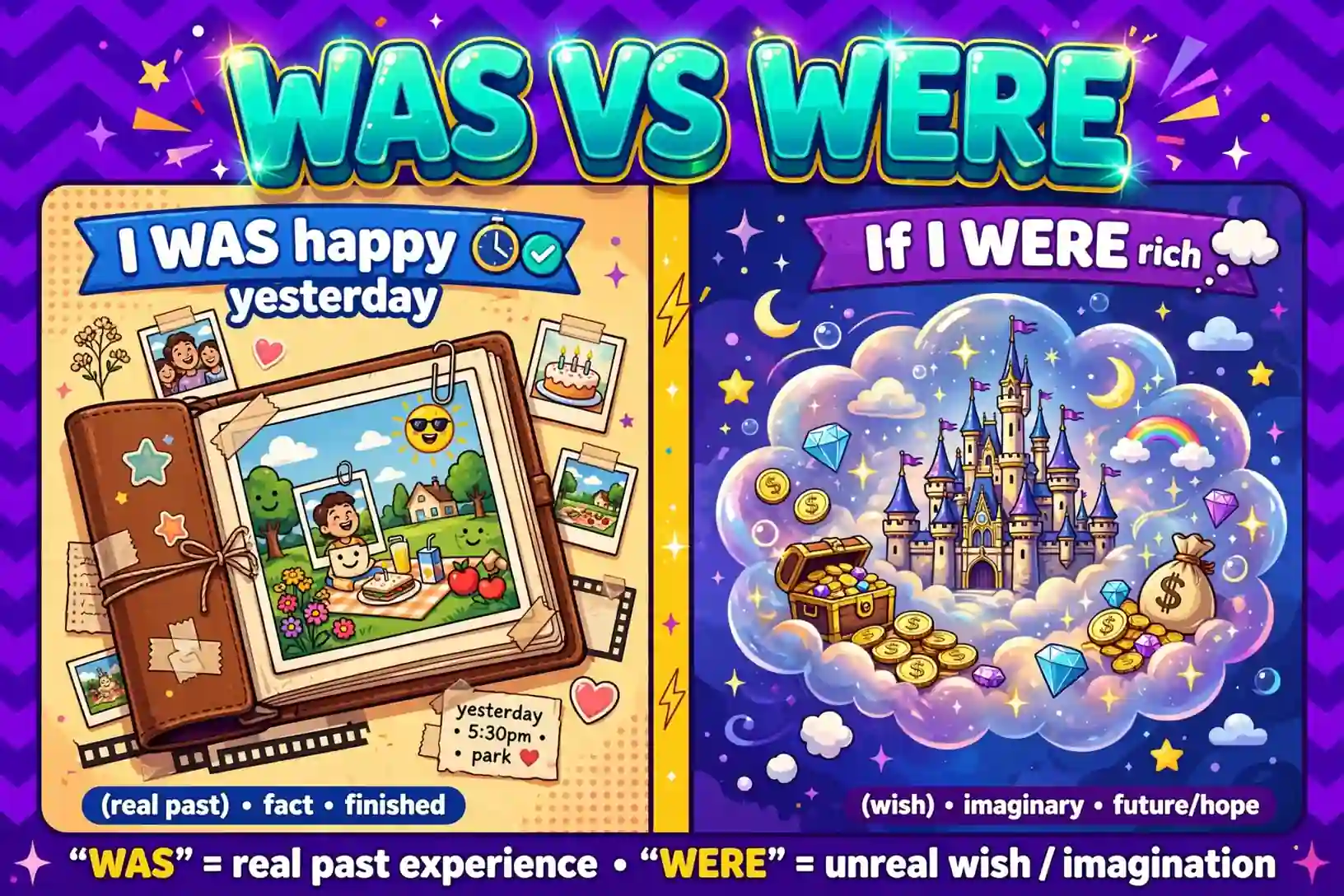
Was is the past tense of be for real, factual situations: “I was tired.” Were is the past tense for you and plurals, and it is also the form used for wishes and hypotheticals: “If I were rich.”
For example, “She was at home” states a fact about the past. “I wish she were here” expresses a wish about the present. Choosing wrong marks the sentence as ungrammatical to careful readers.
Quick Answer
| Word | Part of Speech | Main Meaning | Example |
|---|---|---|---|
| Was | Verb (past of be) | Real past, singular subjects (I, he, she, it) | He was late. |
| Were | Verb (past of be) | Past with you/plurals; wishes and hypotheticals | If I were you, I’d go. |
Simple rule: Stating a fact about the past? Use was with I/he/she/it. Expressing a wish or an unreal situation? Use were.
What Does Was Mean?
Was is the simple past tense of the verb be, used with singular subjects (I, he, she, it) to describe something that actually happened or was true.
Examples:
- I was exhausted after the long flight.
- She was the first one to arrive.
- It was raining all morning.
- He was a teacher before he became a writer.
- The movie was better than I expected.
Was deals with reality: things that truly occurred in the past.
What Does Were Mean?
Were is the simple past of be for you, we, they and all plural subjects. It is also the subjunctive form used for wishes, hypotheticals, and unreal conditions with any subject, including I.
Were: Ordinary Past (You and Plurals)
- You were right about the traffic.
- They were playing outside when it started to rain.
- We were happy to hear the news.
Were: Wishes and Hypotheticals (Subjunctive)
- If I were taller, I could reach the shelf.
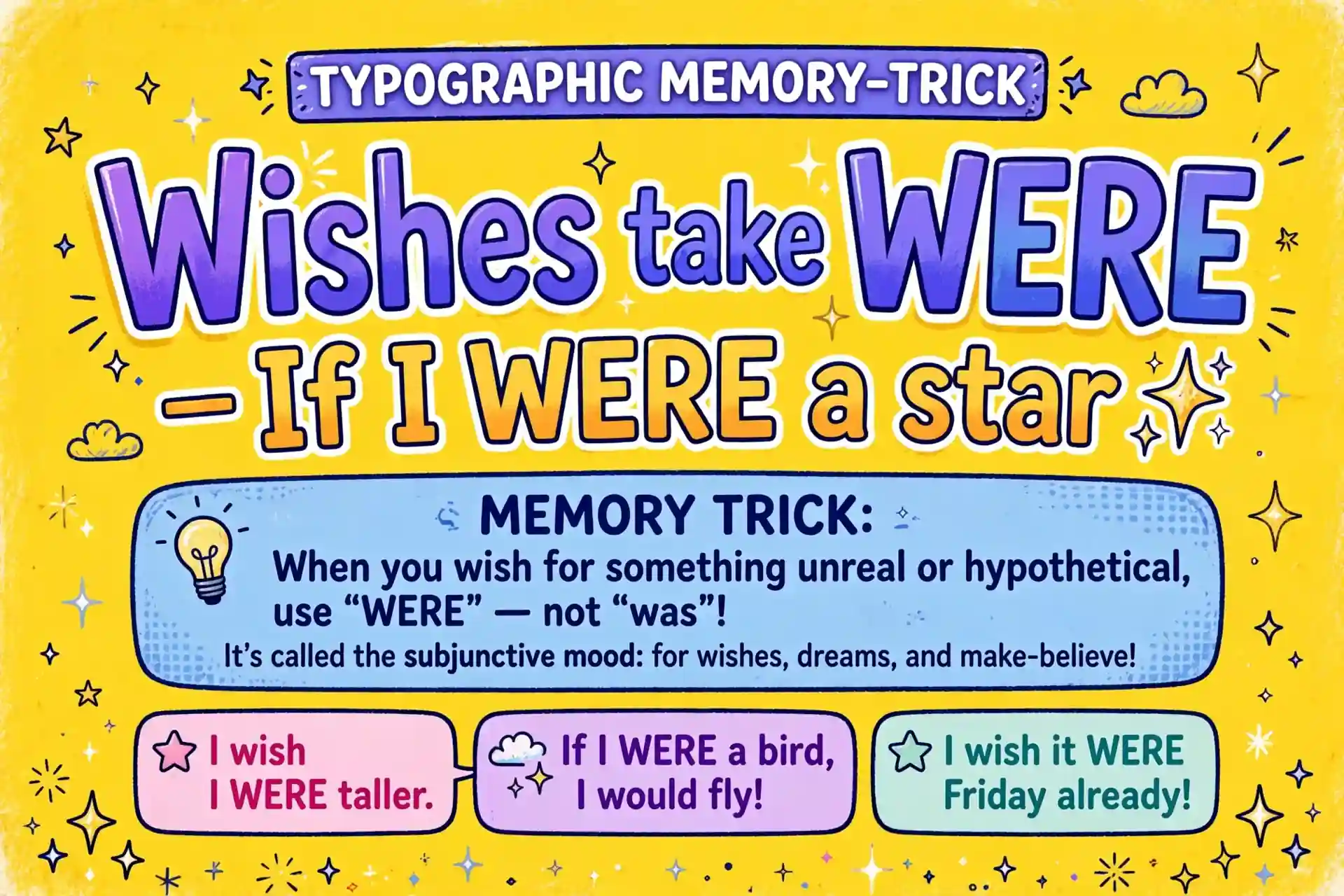
- I wish she were here right now.
- Suppose he were the manager; what would change?
- She acts as if nothing were wrong.
For the full dictionary entry, see were on Merriam-Webster.
Was vs. Were: Key Differences
| Feature | Was | Were |
|---|---|---|
| Used with | I, he, she, it (singular) | You, we, they (plural); any subject in wishes |
| Mood | Indicative (real) | Indicative or subjunctive (unreal) |
| Time feeling | Something that happened | Something imagined or wished |
| Example | I was at home. | If I were at home… |
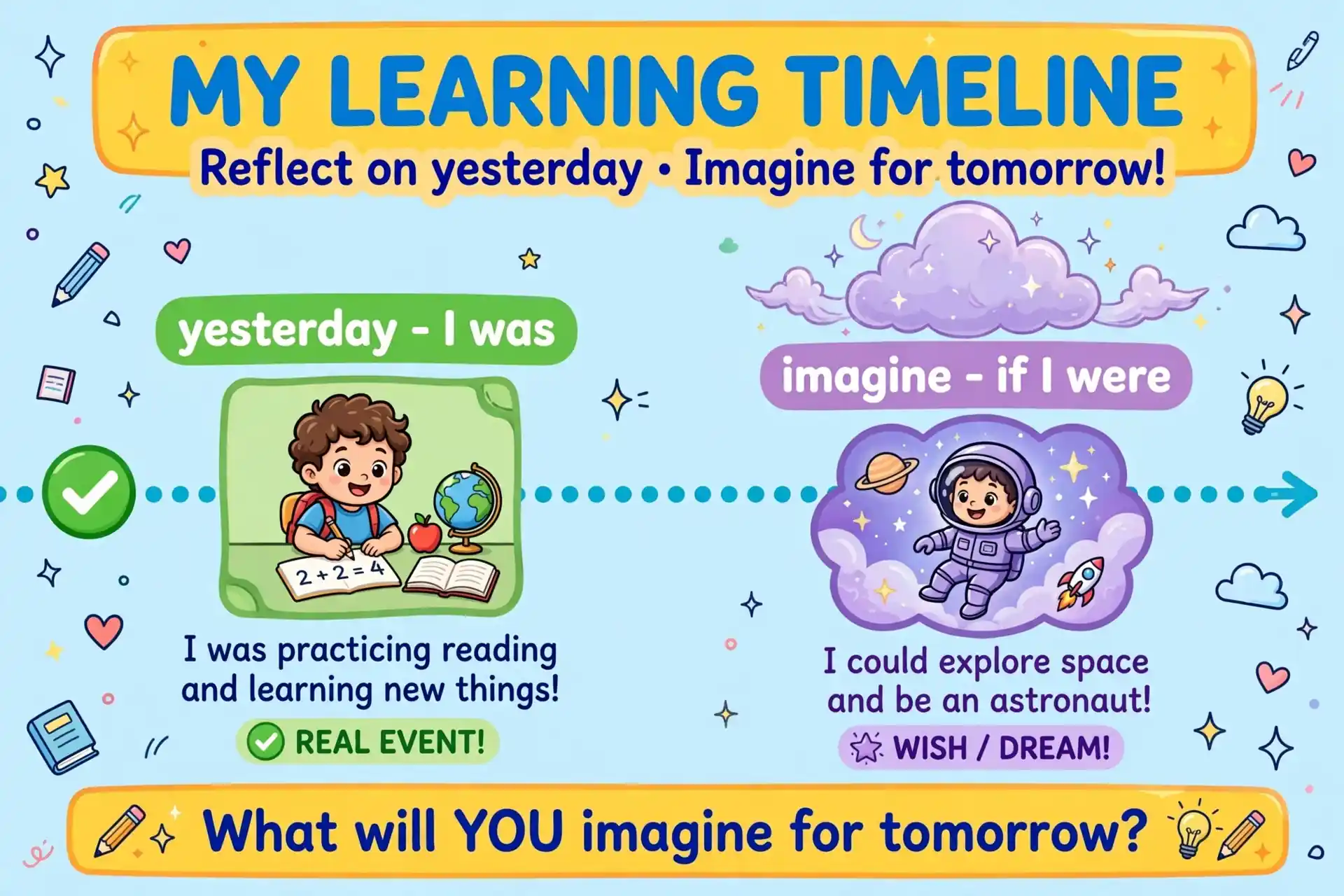
The split is about reality versus imagination. Was reports what was true; were explores what is wished or supposed, a distinction English keeps even though many verb-form confusions like dieing vs dying have simpler answers.
Examples of Was and Were in Real Sentences
Talking About Yesterday
Was: “I was stuck in traffic for an hour.”
Were: “You were lucky to miss it.”
Both describe real past events; the subject decides the form.
Making a Wish
Were: “I wish it were Friday already.”
Was: “It was Friday yesterday, and I wasted it.”
The wish takes were; the fact takes was.
Imagining Alternatives
Were: “If he were here, he’d know what to do.”
Was: “He was here an hour ago, but he left.”
Same person, different reality status — and different verb forms.
Common Mistakes With Was and Were
Mistake 1: “If I Was” for a Hypothetical
❌ If I was you, I would apologize.
✅ If I were you, I would apologize.
Why: Hypothetical situations take the subjunctive were, even with I.
Mistake 2: “They Was” for a Plural Subject
❌ They was waiting outside.
✅ They were waiting outside.
Why: Plural subjects always take were in the past tense.
Mistake 3: “I Wish I Was” for a Present Wish
❌ I wish I was taller.
✅ I wish I was taller.
Why: Wishes about the present use were. (In very casual speech “was” is heard, but “were” is the correct formal choice.)
Mistake 4: Using “Were” for a Real Past Singular
❌ She were at the meeting yesterday.
✅ She was at the meeting yesterday.
Why: A real past event with a singular subject takes was.
Pronunciation: Was vs. Were
Was is pronounced /wʌz/, rhyming with buzz. Were is pronounced /wɜːr/, rhyming with her and stir.
Unlike many easily confused everyday words, these two sound different, which helps keep them apart.
How to Remember the Difference
Memory trick: Wishes take WERE. Both start with W: “Wish” → “were.”
- Real past + I/he/she/it → was (“I was there”).
- You/we/they → were (“They were there”).
- Wish, if-only, suppose, as-if → were (“If I were rich”).
Ask yourself: “Am I describing reality or imagining?” Reality with a singular subject means was; imagination means were.
Frequently Asked Questions
Is it “if I was” or “if I were”?
Use “if I were” for hypotheticals: “If I were you.” Use “if I was” only when the condition might actually have been true: “If he was there, I didn’t see him.”
What is the difference between was and were?
Was is the past of be for singular subjects describing real events. Were covers you and plurals in the past, plus all wishes and hypothetical situations.
Is “I wish I was” wrong?
In formal writing, yes — use “I wish I were.” In casual conversation “I wish I was” is extremely common and widely understood, but “were” remains the correct formal choice.
Why do songs say “if I was”?
Songwriters often choose “was” for rhythm, rhyme, or casual tone. Grammar guides still prescribe “were” for the unreal conditional.
Do Americans and Brits differ on was vs were?
No. The was/were distinction, including the subjunctive, works the same in American and British English.
Conclusion
Was reports real past events with singular subjects; were handles you, plurals, and every wish or hypothetical. Remember “wishes take were,” and the choice becomes automatic.