Meant or Ment: What’s the Difference? (With Examples)
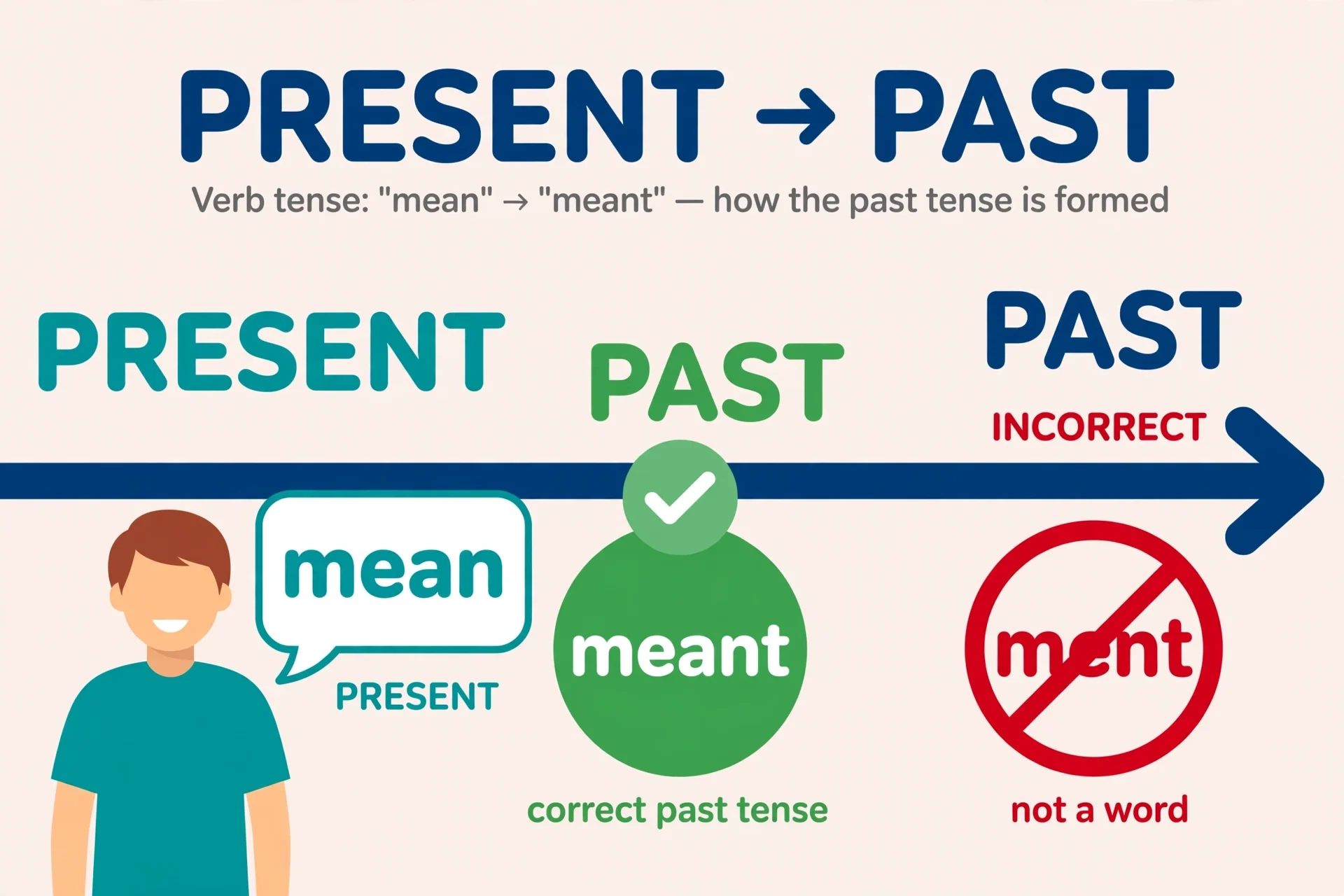
Is it meant or ment? Meant is the past tense of mean — as in I meant to call. Ment is not a standalone English word; it is a common misspelling.
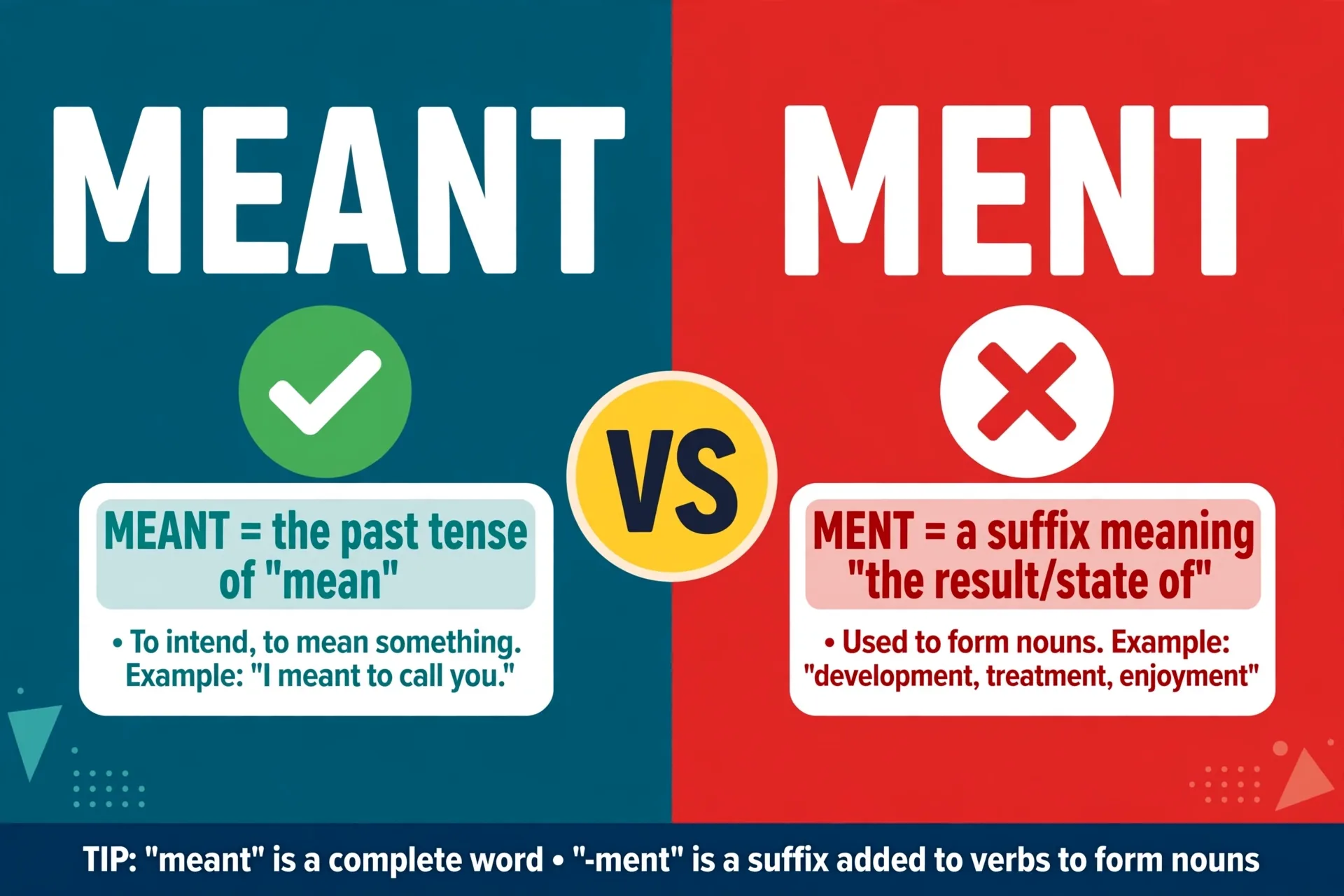
Table of Contents
Quick Answer
| Word | Part of Speech | Main Meaning | Example |
|---|---|---|---|
| Meant | Verb (past of mean) | Intended, or signified in the past | “She meant every word.” |
| Ment | Not a standard word | Usually a typo for meant | ❌ “I ment well” → ✅ “I meant well” |
Simple rule: if the present-tense verb is mean, the past form keeps its “a” — meant.
What Does Meant Mean?
Meant is the past tense and past participle of mean. It covers two closely related ideas: having something in mind as an intention, and signifying or referring to something. The Cambridge Dictionary entry for “meant” lists it under the verb mean, with senses for both intending and signifying.
Intending or planning
- I meant to finish the report by Friday, but the power went out.
- She meant no harm — it was an honest mistake.
- We meant to call earlier, but the meeting ran long.
- He had meant to apologize in person, not over text.
- They meant well, even if the surprise party flopped.
Signifying or referring to
- What did he mean by that comment? (present) → What he meant was clear enough. (past)
- Her silence meant more than any speech could.
- The red light meant the experiment had failed.
- His letter meant the world to her.
- That look meant trouble.
What Does Ment Mean?
Strictly speaking, ment means nothing on its own — it is not listed as a standalone word in standard dictionaries. The confusion comes from two places. First, -ment is a common noun-forming suffix in words like enjoyment, payment, and movement. But the suffix is never a word by itself. Second, because meant is pronounced exactly like it would look without the “a,” the spelling slip happens easily in fast typing.
- ❌ “I ment to text you back.” (typo)
- ✅ “I meant to text you back.”
- ❌ “That’s not what I ment.” (typo)
- ✅ “That’s not what I meant.”
Meant vs. Ment: Key Differences
| Feature | Meant | Ment |
|---|---|---|
| Is it a real word? | Yes | No (not standalone) |
| Part of speech | Verb (past of mean) | — |
| Meaning | Intended / signified | None — a misspelling |
| Keeps the “a” from mean | Yes: m-e-a-n + t | No |
| Safe to use in writing | Yes | Never |
Think of it this way: meant is a working word with a job to do, while ment is that word with a letter knocked out.
Meant or Ment in Real Sentences
At Home
Correct: “I meant to buy milk, but I forgot the list.” Incorrect: “I ment to buy milk.” The sentence is about a past intention, so it needs the full past-tense form.
At Work
Correct: “What she meant was that the deadline is firm.” Incorrect: “What she ment was that the deadline is firm.” Dropping the “a” turns a real word into a typo that spellcheckers may not flag.
In Conversation
Correct: “I know what you meant — no offense taken.” Incorrect: “I know what you ment.” In speech nobody hears the difference, which is why this error hides so well in writing.
Common Mistakes
The meant/ment mix-up is one of the sneakiest typo-style errors in English — right up there with receive or recieve and their or thier, where the wrong version looks almost right.
Mistake 1: Dropping the “a”
❌ “I ment to say hello at the store.”
✅ “I meant to say hello at the store.”
Why: Meant is built directly from mean plus a “t” — every letter of mean survives, including the “a.”
Mistake 2: Writing “well-ment”
❌ “It was a well-ment comment.”
✅ “It was a well-meant comment.”
Why: the adjective well-meant keeps the full past participle, “a” and all.
Mistake 3: Using “ment” after “have”
❌ “I have ment to ask you something.”
✅ “I have meant to ask you something.”
Why: after have, English needs the past participle — meant, never ment.
Mistake 4: Trusting autocorrect to catch it
❌ Assuming your phone will fix “I ment it.”
✅ Proofread for it yourself: “I meant it.”
Why: because ment resembles the real suffix -ment, some checkers wave it through.
Pronunciation
Meant is pronounced “ment” — one syllable, rhyming with sent, went, and tent. That’s exactly why the misspelling is so common: what you hear gives you no hint about the silent “a.” If ment were a word, it would sound identical.
How to Remember the Difference
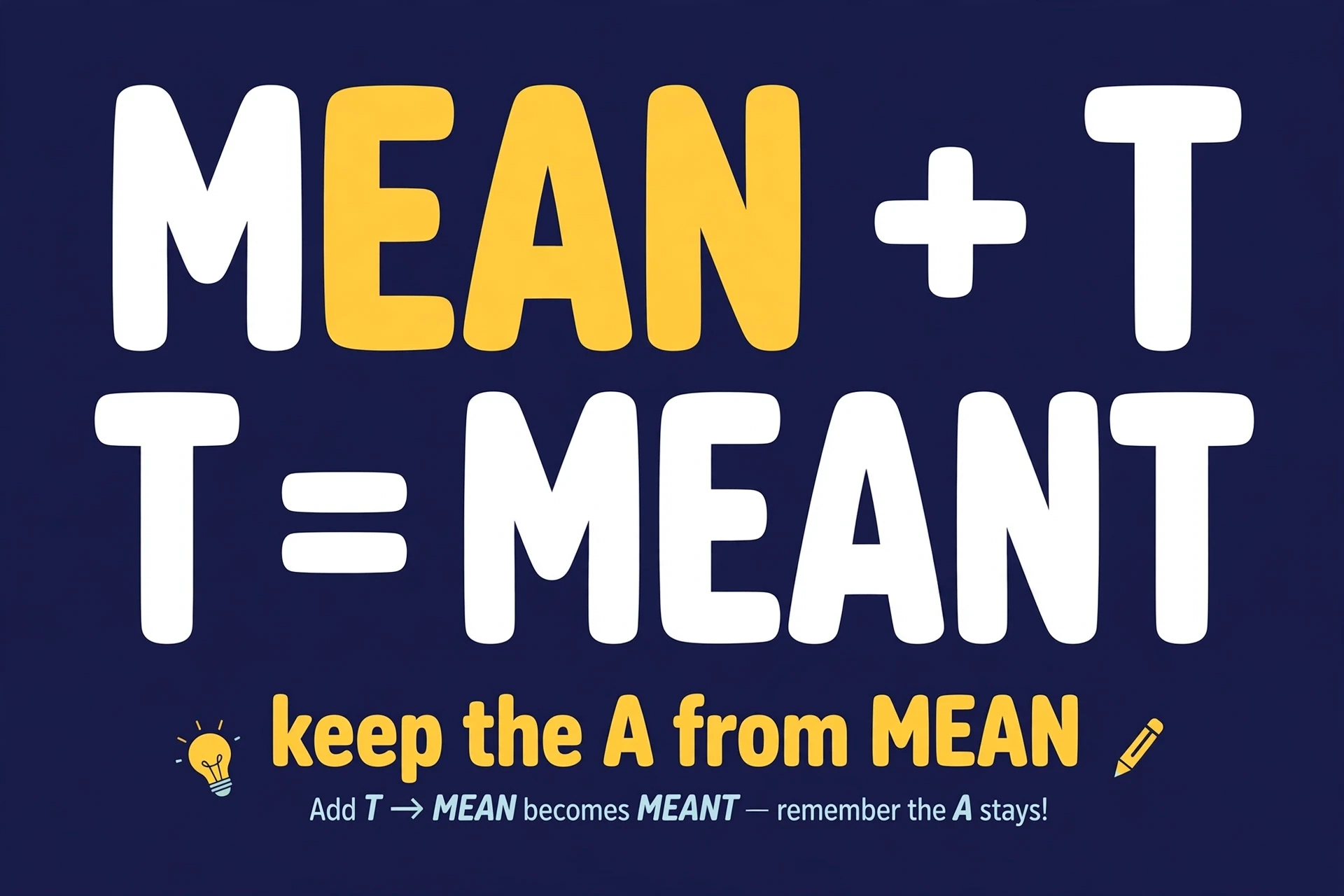
The trick is in the build: MEAN + T = MEANT. The past tense keeps every letter of mean — including the A — and simply adds a “t” at the end.
- Ask yourself: “What is the present tense?” If it’s mean, the past is meant.
- Think: “I meant what I mean” — both keep the “a.”
- Ment alone is like a word with a missing tooth — if the “a” is gone, something’s wrong.
Frequently Asked Questions
Is it meant or ment?
It’s meant. Ment is not a standard English word — it’s a misspelling of meant, the past tense of mean.
Is “ment” a word?
Not on its own. -ment is a suffix used in nouns like enjoyment and payment, but standalone ment has no dictionary entry.
What is the past tense of “mean”?
Meant — spelled m-e-a-n-t. It works as both the simple past (“I meant it”) and the past participle (“I have meant to ask”).
Why do so many people write “ment”?
Because meant is pronounced “ment,” fast typing drops the silent “a.” The familiar -ment suffix makes the wrong spelling look plausible.
Is “I ment it” ever correct?
No. The correct sentence is “I meant it.” There is no standard context where standalone ment is right.
Does “ment” appear in any real words?
Yes — but only as a suffix, never alone. Think government, document, moment, and payment. That is exactly why the misspelling feels so natural: your brain has seen “ment” thousands of times at the ends of real words, so it accepts it at the end of mean too. The trick is remembering that meant keeps the full base word mean and just swaps the final letter pattern — the same way dream becomes dreamt.
Conclusion
Meant is the correct past tense of mean, covering both intention (“I meant to call”) and significance (“it meant a lot”). Ment is simply a misspelling — keep the “a,” and you’ll always be right.