Loosing or Losing: Which Spelling Is Correct?
Losing is the correct spelling when you mean misplacing something, failing to win, or no longer having something. Loosing is also a real English word, but it has a different meaning. It comes from the verb “loose,” which means to release, untie, or set free.
The confusion happens because both words sound similar and contain nearly the same letters. However, they have different meanings, grammatical uses, and sentence structures.
Quick Answer: Loosing or Losing?
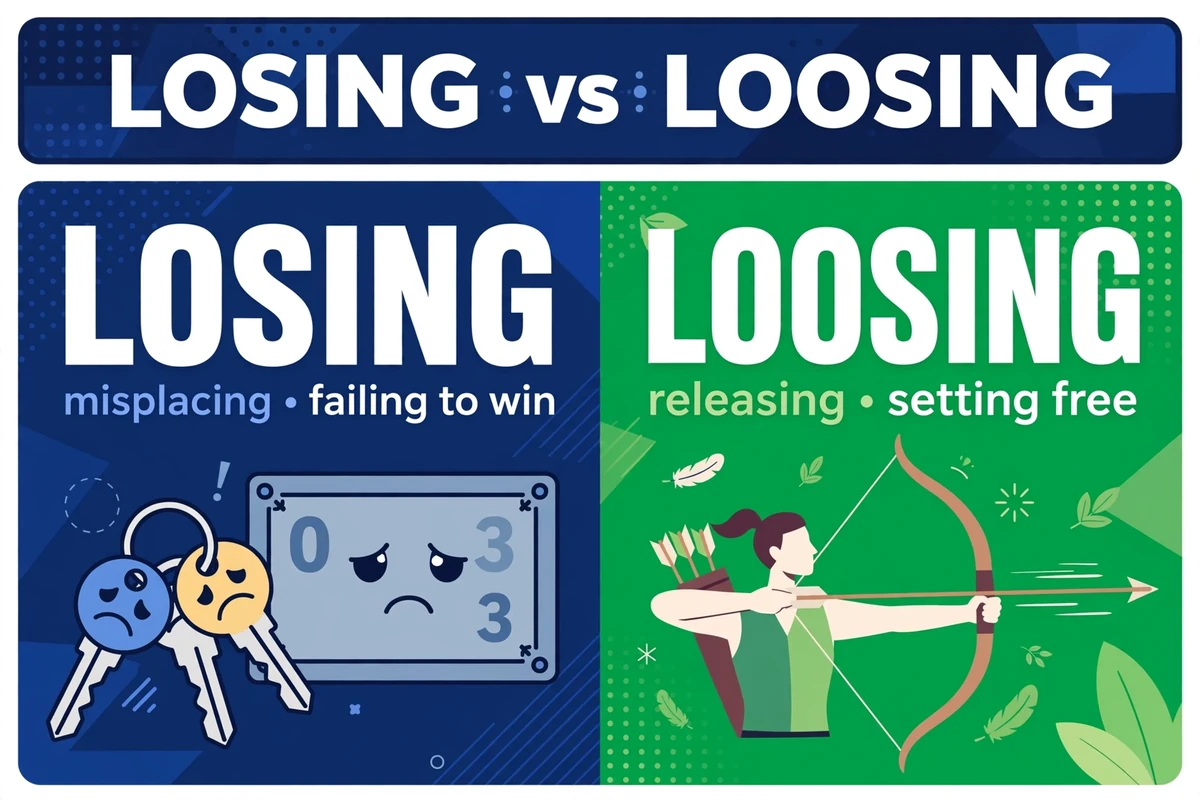
Use losing when describing the act of misplacing something, experiencing defeat, or having something taken away.
Use loosing when describing the act of releasing, freeing, or making something loose.
Examples:
- Correct: I am losing my keys again.
- Correct: The team is losing the match.
- Correct: The hunter is loosing an arrow.
- Correct: She is loosing the rope from the post.
Both spellings are correct, but they cannot replace each other in every sentence.
Quick Facts About Loosing and Losing
| Feature | Losing | Loosing |
| Base verb | Lose | Loose |
| Meaning | Misplacing or failing to win | Releasing or making loose |
| Part of speech | Present participle or gerund | Present participle or gerund |
| Pronunciation | LOO-zing | LOO-sing |
| Common usage | Very common | Less common |
| Example | Losing a competition | Loosing an arrow |
| Correct spelling | Yes | Yes |
What Does Losing Mean?
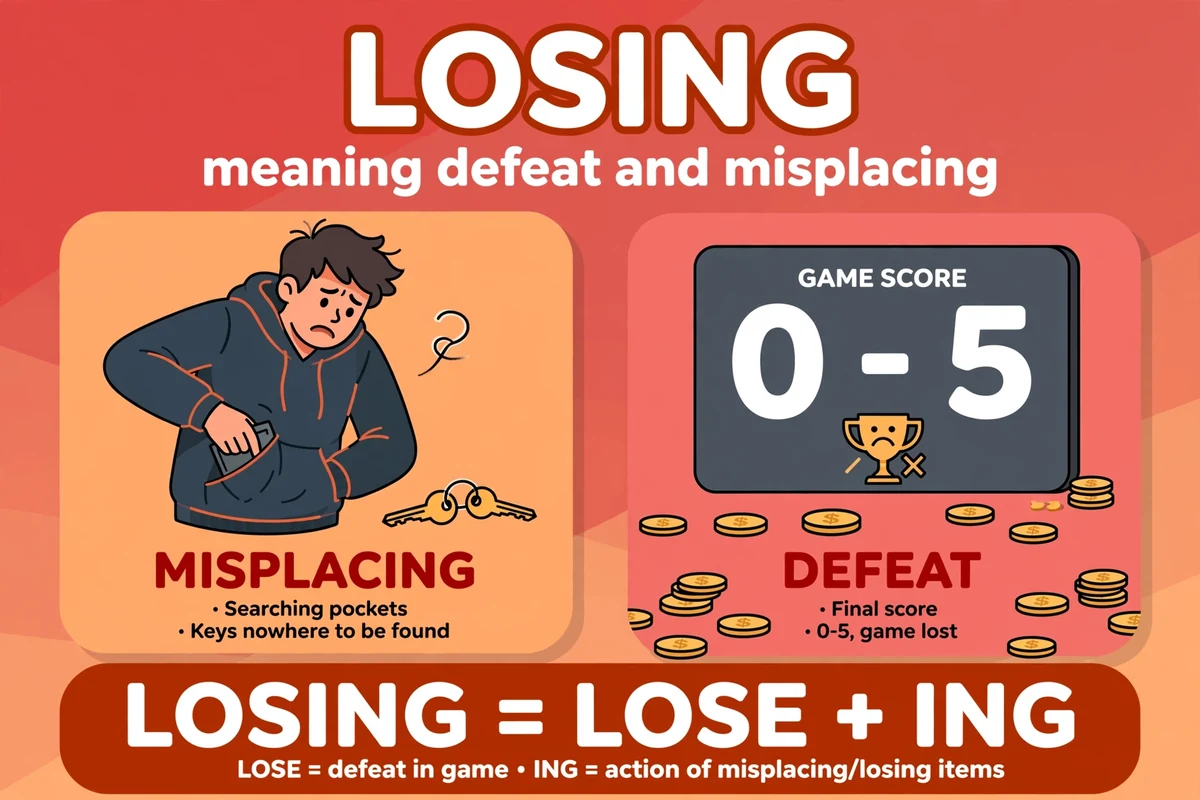
Losing is the present participle and gerund of the verb lose.
It describes the act of no longer having something, failing to win, or experiencing a decline.
People commonly use it when discussing personal belongings, competitions, relationships, money, opportunities, and control.
1. Losing Meaning Misplacing Something
Losing can describe accidentally misplacing an object or being unable to find something.
Examples:
- I keep losing my house keys.
- She is losing her phone every few days.
- He regrets losing his favorite watch.
- We are losing important documents.
- Stop losing your school supplies.
In these sentences, losing means misplacing something or failing to keep track of it.
2. Losing Meaning Failing to Win
The word also describes experiencing defeat in a competition, game, election, or contest.
Examples:
- Our team is losing the football match.
- She hates losing at chess.
- They are losing the championship.
- The player was losing against his opponent.
- Nobody enjoys losing an important competition.
Here, losing describes the opposite of winning.
3. Losing Meaning Experiencing a Decline
Losing can also describe a reduction in something valuable or important.
This meaning commonly appears in discussions about health, money, confidence, weight, and business performance.
Examples:
- He is losing weight through regular exercise.
- The company is losing customers.
- She is losing confidence before the interview.
- The business is losing money every month.
- The team is losing momentum.
The word describes a decrease or gradual decline.
4. Losing Meaning No Longer Having Something
Sometimes losing refers to the disappearance of something important, such as a relationship, opportunity, or sense of control.
Examples:
- He is losing his patience.
- She fears losing her best friend.
- The company is losing valuable employees.
- I am losing interest in the project.
- They are losing control of the situation.
These examples show how the word works beyond physical objects.
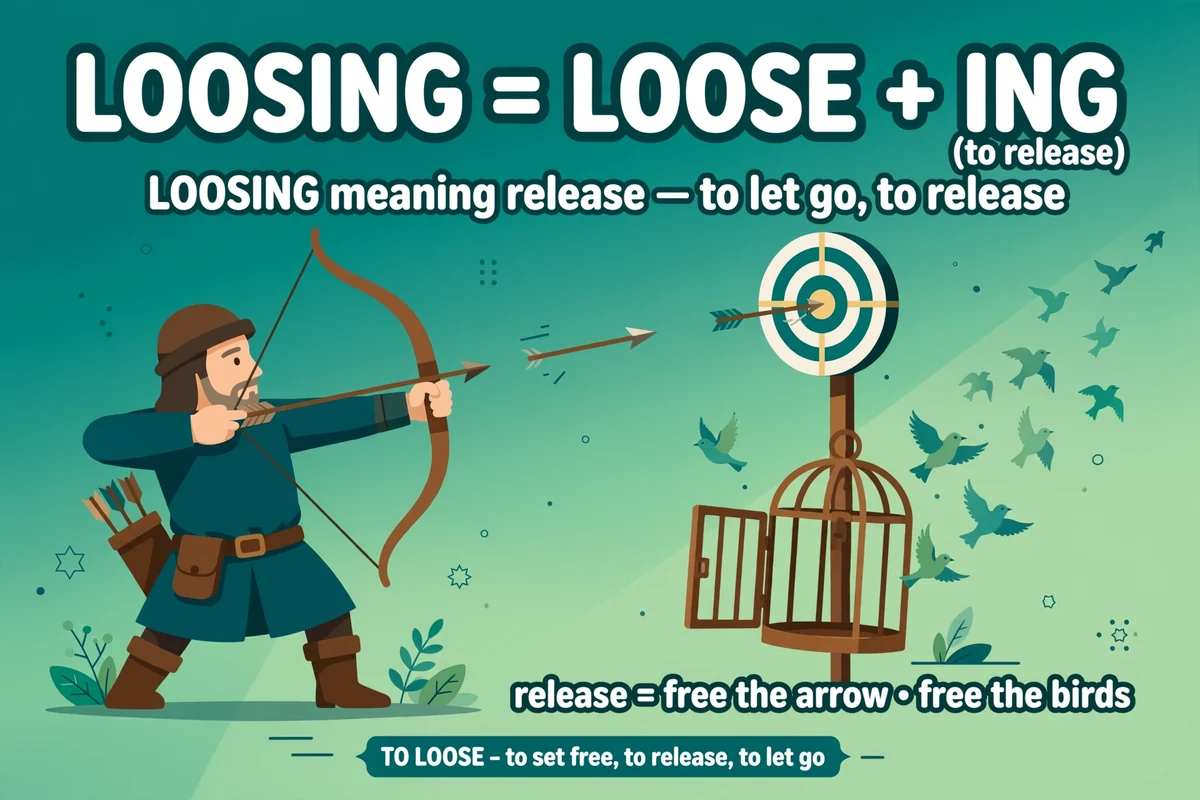
What Does Loosing Mean?
Loosing is the present participle and gerund of the verb loose.
It means releasing something, setting it free, or making it less tight.
Although the word is correct, it appears less frequently in everyday conversations than losing.
1. Loosing Meaning Releasing Something
Loosing can describe releasing an object, animal, or person from restraint.
Examples:
- The guard is loosing the dogs from their cages.
- She was loosing the horses into the field.
- The hunter is loosing an arrow toward the target.
- They are loosing the birds into the open sky.
- He is loosing the rope from the wooden post.
In these sentences, loosing means setting something free.
2. Loosing Meaning Making Something Less Tight
The word can also describe loosening a restriction or something that holds an object tightly.
However, in modern everyday English, loosening is usually more natural for this meaning.
Examples:
- He is loosing the knot.
- She is loosing the tightly secured rope.
- The worker is loosing the strap around the package.
For most everyday situations, these sentences sound more natural with “loosening.”
For example:
“She is loosening the strap around the package.”
This is the more common way to describe reducing tightness.
3. Loosing in Historical and Literary Writing
Loosing sometimes appears in older texts, poetry, and formal writing.
It can describe releasing arrows, freeing prisoners, or setting something loose.
For example:
“The archer was loosing arrows toward the enemy.”
This usage is grammatically correct, although modern writers may prefer more familiar wording.
Key Differences Between Loosing and Losing
The main difference comes from their base verbs.
Losing comes from lose, while loosing comes from loose.
| Comparison | Losing | Loosing |
| Base word | Lose | Loose |
| Main meaning | Misplace, fail to win, or decrease | Release, free, or make less tight |
| Common context | Games, money, belongings, relationships | Arrows, animals, ropes, restraints |
| Example | Losing a wallet | Loosing an arrow |
| Opposite concept | Winning or keeping | Restraining or tightening |
| Everyday frequency | More common | Less common |
The words are not interchangeable.
For example:
Losing: The player is losing the game.
Loosing: The player is loosing an arrow.
The first sentence describes defeat. The second describes releasing an arrow.
Lose vs Loose: Understanding the Base Words
Understanding the difference between lose and loose makes the correct “-ing” spelling easier.
What Does Lose Mean?
Lose is a verb.
It means to misplace something, fail to win, or no longer have something.
Examples:
- I do not want to lose my wallet.
- They might lose the competition.
- She could lose her job.
- We should not lose this opportunity.
- He does not want to lose control.
When you add “-ing,” lose becomes losing.
The final “e” disappears.
What Does Loose Mean?
Loose is mainly an adjective, but it can also function as a verb.
As an adjective, it means not tight, firmly fixed, or securely attached.
Examples:
- My shirt is too loose.
- The dog escaped from its loose collar.
- This screw is loose.
- The rope is loose around the box.
As a verb, loose means to release or set free.
Examples:
- The hunter will loose an arrow.
- They decided to loose the animals.
- The prisoner was loosed from his restraints.
When you add “-ing” to the verb loose, the result is loosing.
Why Is Losing Spelled With One O Instead of Two?
The spelling difference comes from the original words.
Lose contains one “o,” while loose contains two.
Their “-ing” forms retain this difference.
Notice that both verbs drop their final “e” before adding “-ing.”
However, the number of O’s stays unchanged.
This is why losing and loosing have different spellings.
Losing or Loosing in Different Sentence Structures
Both words can function as gerunds and present participles.
However, their meanings determine where they fit naturally.
1. Using Losing as a Present Participle
A present participle describes an ongoing action.
It commonly appears with helping verbs such as is, are, was, and were.
Examples:
- She is losing her patience.
- They are losing the competition.
- I am losing my concentration.
- The company is losing customers.
- He was losing his confidence.
2. Using Losing as a Gerund
A gerund is a verb ending in “-ing” that functions as a noun.
Examples:
- Losing is part of learning.
- I dislike losing important games.
- She fears losing her independence.
- Losing money can create stress.
- He regrets losing that opportunity.
3. Using Loosing as a Present Participle
Loosing describes the ongoing action of releasing something.
Examples:
- The archer is loosing an arrow.
- The handler is loosing the dogs.
- The workers are loosing the animals.
- He is loosing the rope from the gate.
4. Using Loosing as a Gerund
Loosing can also function as a noun when describing the action of releasing something.
Examples:
- Loosing the birds gave them freedom.
- The archer practiced loosing arrows.
- Loosing the animals required careful planning.
These constructions are correct, but they are less common than sentences using losing.
Losing vs Loosing vs Loosening: What’s the Difference?
Another word frequently causes confusion: loosening.
Although all three words look similar, they describe different actions.
| Word | Meaning | Example |
| Losing | Misplacing or failing to win | She is losing her keys. |
| Loosing | Releasing or setting free | He is loosing an arrow. |
| Loosening | Making something less tight | She is loosening the knot. |
When to Use Loosening
Use loosening when you mean reducing tightness or making something less firm.
It is the natural choice in most everyday situations.
Examples:
- He is loosening his shoelaces.
- The mechanic is loosening the bolts.
- She is loosening the tight knot.
- The doctor recommended loosening the bandage.
- The worker is loosening the screw.
Why Is Loosening Different From Loosing?
Loosening comes from the verb loosen.
It specifically describes making something less tight.
Loosing comes from loose and usually means releasing or setting something free.
Although their meanings can overlap in some contexts, they are not always interchangeable.
For example:
- Loosening a knot means making it less tight.
- Loosing an arrow means releasing it.
Examples of Losing and Loosing in Sentences
Practical examples can help you recognize the correct spelling.
Examples Using Losing
- I am losing my favorite pen.
- She is losing interest in the subject.
- Our team is losing the final match.
- He is losing money on the investment.
- They are losing valuable time.
- The company is losing its customers.
- My phone battery is losing power.
- She worries about losing her independence.
- He is losing confidence before the presentation.
- Losing a close friend can be difficult.
Examples Using Loosing
- The archer is loosing an arrow.
- The farmer is loosing the horses into the field.
- The handler was loosing the dogs from their cages.
- Loosing the birds allowed them to fly freely.
- The soldier was loosing arrows toward the target.
- They discussed loosing the captured animals.
- The hunter practiced loosing arrows accurately.
- The workers were loosing the rope from the equipment.
These examples show that loosing is generally connected with releasing something.
Common Mistakes When Using Losing or Loosing
Writers often confuse these words because they have similar spellings.
Here are the mistakes you should avoid.
Mistake 1: Using Loosing When You Mean Losing
Incorrect: I am loosing my phone.
Correct: I am losing my phone.
The sentence describes misplacing something. Therefore, losing is correct.
Mistake 2: Using Losing When You Mean Releasing
Incorrect: The archer is losing an arrow.
Correct: The archer is loosing an arrow.
The sentence describes releasing an arrow rather than experiencing defeat.
Mistake 3: Confusing Loose With Lose
Incorrect: My shoes are lose.
Correct: My shoes are loose.
Loose describes something that is not tight.
Lose is a verb that describes misplacing or failing to keep something.
Mistake 4: Using Loosing Instead of Loosening
Incorrect: She is loosing her shoelaces.
More natural: She is loosening her shoelaces.
When describing a reduction in tightness, loosening is usually the appropriate word.
Mistake 5: Assuming Loosing Is Always Incorrect
Loosing is a valid English word.
However, it has a different meaning from losing.
It is less common and usually appears in specific contexts involving release or freedom.
How to Remember the Difference
A simple memory trick can help you choose the correct spelling.
Remember These Three Words
LOSE → LOSING
Misplacing something or failing to win.
Example: I am losing the game.
LOOSE → LOOSING
Releasing or setting something free.
Example: The archer is loosing an arrow.
LOOSEN → LOOSENING
Making something less tight.
Example: She is loosening the knot.
Remember that losing has one O, while loosing has two.
You can also use this simple question:
Are you misplacing something or releasing something?
- Misplacing or failing to win = Losing.
- Releasing or setting free = Loosing.
- Making something less tight = Loosening.
Frequently Asked Questions
Is loosing a real word?
Yes. Loosing is a real English word derived from the verb loose. It means releasing or setting something free. However, it is less common than losing.
Is losing or loosing correct?
Both are correct words, but their meanings differ. Losing means misplacing something, failing to win, or experiencing a decline. Loosing means releasing or setting something free.
What is the difference between loose and lose?
Loose is usually an adjective meaning not tight. Lose is a verb meaning to misplace something or fail to win. For example, “My shirt is loose” and “I might lose my shirt.”
Is it losing weight or loosing weight?
The correct expression is losing weight. It describes a reduction in body weight. Loosing weight is incorrect in this context.
Is it losing my mind or loosing my mind?
The correct expression is losing my mind. It is an informal phrase describing confusion, stress, or feeling overwhelmed.
Is loosing the same as loosening?
No. Loosing usually means releasing or setting something free. Loosening means making something less tight. For example, loosing an arrow means releasing it, while loosening a knot means reducing its tightness.
Conclusion
Losing and loosing are both correct English words, but they have different meanings.
Losing comes from lose and describes misplacing something, failing to win, or experiencing a decline.
Loosing comes from loose and means releasing or setting something free.
Remember that loosening is the usual choice when describing something becoming less tight.
Understanding their base verbs makes the spelling difference easier to remember and helps you avoid common writing mistakes.