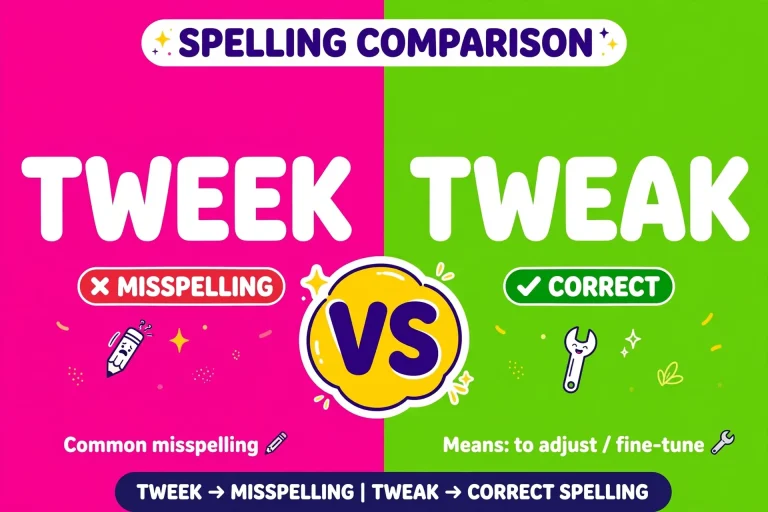
Definitely or Definately: What’s the Difference?
Definitely is an adverb meaning “certainly” or “without doubt” — as in “I will definitely be there.” Definately looks and sounds perfectly plausible, but it is not a word at all: it is the most common misspelling of “definitely.” The mix-up comes from the way the middle syllable is pronounced and a muddle over which vowel goes in the middle.
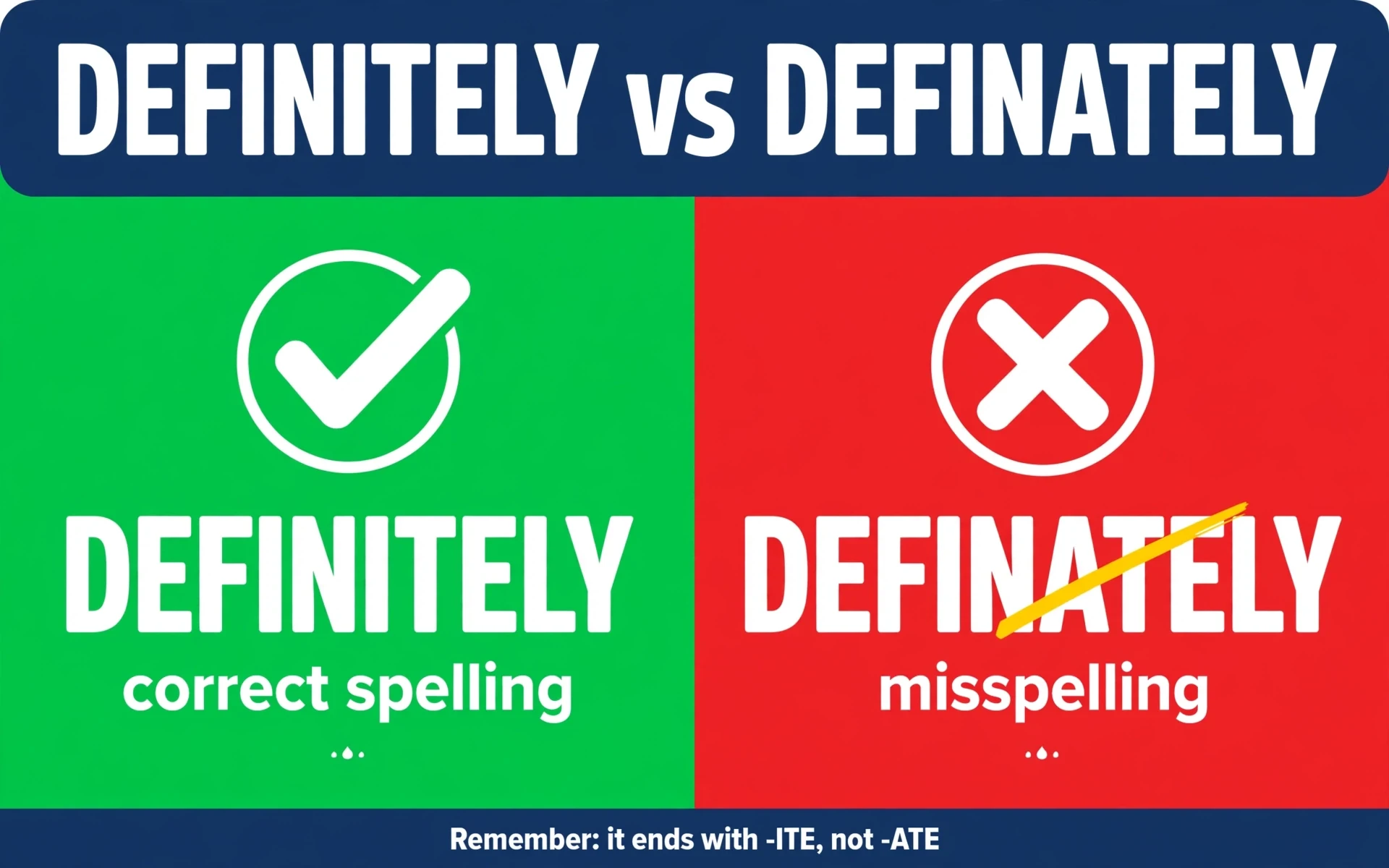
Quick Answer
| Word | Part of Speech | Main Meaning | Example |
|---|---|---|---|
| Definitely | Adverb | Certainly; without doubt | ✅ “She will definitely attend.” |
| Definately | Not a word | A common misspelling of “definitely” | ❌ “She will definately attend.” |
Simple rule: If you mean “certainly,” spell it definitely — with an I where the word “finite” hides inside: de-FIN-ite-ly.
What Does Definitely Mean?
Definitely is an adverb built from “definite” plus “-ly,” and it means “in a definite manner” — certainly, without any doubt. It strengthens whatever it touches: a promise (“I will definitely call”), a belief (“She is definitely the best player”), or a flat-out agreement (“Definitely!”). Merriam-Webster’s entry for “definitely” traces both the adverb sense and the stand-alone exclamation of strong agreement.
Examples:
- “I will definitely finish the report by Friday.”
- “This is definitely the best pizza in town.”
- “Are you coming to the wedding?” “Definitely!”
- “He is definitely not ready for the exam.”
- “The new policy will definitely affect small businesses.”
Notice the root: “definite” — as in a definite answer, a definite plan. The adverb keeps the root’s spelling exactly, which is why the middle vowel is an I, not an A.
What Does Definately Mean?
Definately means nothing — it is a misspelling, and it has no dictionary entry anywhere. It slips in for two reasons. First, the middle syllables are unstressed in speech, so “definitely” sounds like “DEF-nut-lee,” and that swallowed “uh” sound gets written as an A. Second, the pattern “-ately” feels familiar from words like “separately” and “desperately,” so the fingers reach for it automatically.
Where you will see it:
- ❌ “I definately want to go.” (texts and social media)
- ❌ “This is definately the right choice.” (forum posts)
- ❌ “We should definately meet up.” (casual emails)
- ❌ “Definately worth the price.” (product reviews)
- ❌ “He definately knows the answer.” (classroom notes)
Every one of those should read definitely. The “definately” spelling survives online because casual writing rarely gets proofread — but in anything formal, it reads as a spelling error, which it is.
Definitely vs. Definately: Key Differences
| Feature | Definitely | Definately |
|---|---|---|
| Status | A real English word | A misspelling — not a word |
| Part of speech | Adverb | None |
| Middle vowel | I (from “finite”) | A (the error) |
| Root word | Definite + -ly | No root — phonetic guesswork |
| Spellcheck | Passes | Flagged in every dictionary and checker |
| Usage | All writing, formal and casual | Avoid everywhere |
One letter decides the whole thing: the I from “finite” makes it definitely; the A makes it a mistake.
Definitely and Definately in Real Sentences
At Home
✅ “We are definitely ordering pizza tonight.”
❌ “We are definately ordering pizza tonight.”
Dinner plans survive either way, but only the first spelling survives a teacher’s red pen.
At Work
✅ “The deadline will definitely move to Monday.”
❌ “The deadline will definately move to Monday.”
In a work email, the misspelling quietly undercuts the message — precision in spelling reads as precision in thinking.
In Conversation
✅ “You should definitely see that movie.”
❌ “You should definately see that movie.”
Speech forgives everything; writing forgives nothing. The two sound identical, so the error only exists on the page.
In Texting and Online Writing
✅ “Definitely coming tomorrow 👍”
❌ “Definately coming tomorrow 👍”
Autocorrect catches this one most of the time — the people who still type “definately” usually have it saved in their personal dictionary by accident.
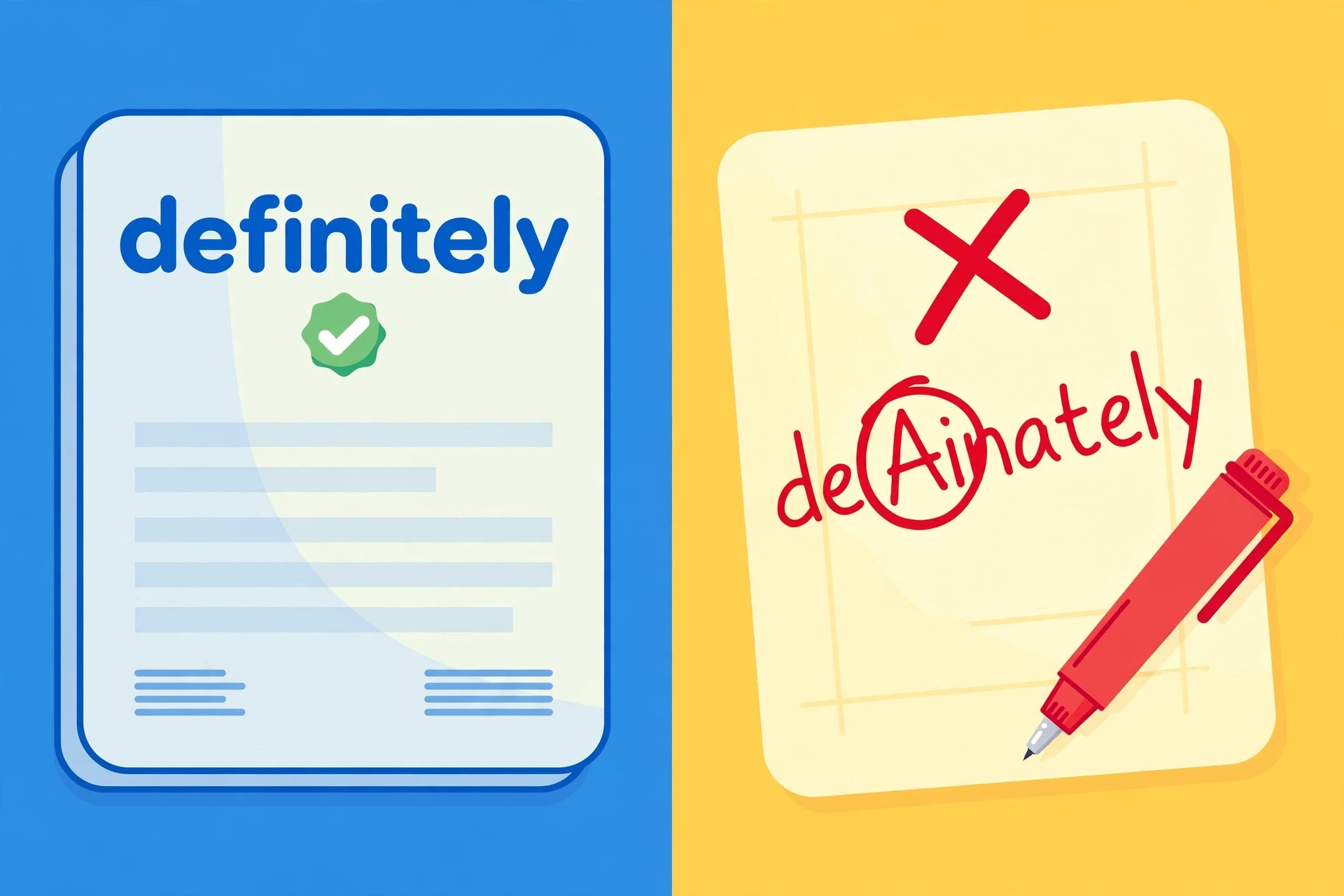
Common Mistakes
Middle-vowel mix-ups are a whole family of errors: the “finaly” vs “finally” spelling trap shows what happens when an adverb’s ending gets rushed, and the “recieve” vs “receive” i-before-e trap shows how one swapped vowel creates a brand-new mistake. The definitely traps:
Mistake 1: Writing “definately” in formal documents
❌ “The results definately support our conclusion.”
✅ “The results definitely support our conclusion.”
Why: In essays, reports, and job applications, “definately” reads as carelessness. One letter — the I from “finite” — fixes it.
Mistake 2: Overcorrecting to “defiantly”
❌ “I will defiantly be at the meeting.”
✅ “I will definitely be at the meeting.”
Why: “Defiantly” is a real word, but it means “in a rebellious, challenging way.” Spellcheck accepts it, so this one is sneakier: you arrive at the meeting sounding like you plan to start a fight.
Mistake 3: Dropping the E — “definitly”
❌ “That was definitly worth it.”
✅ “That was definitely worth it.”
Why: The “-ely” ending feels heavy, so fast typists cut the E. But “definitely” needs all ten letters: D-E-F-I-N-I-T-E-L-Y.
Mistake 4: Trusting phonetic spelling
❌ “She’s definately the fastest runner.”
✅ “She’s definitely the fastest runner.”
Why: English vowels in unstressed syllables all collapse toward “uh.” Writing what you hear produces “definately”; writing what the root word demands produces “definitely.”
Pronunciation
Definitely is pronounced DEF-in-it-lee, with the stress on the first syllable and the middle vowels reduced to a soft “uh” sound. That reduction is exactly why the misspelling happens — the ear hears “DEF-nut-lee” and the hand writes an A. It belongs to the same family as “infinite” (IN-fin-it) and “indefinite,” which share the “finite” root and the same swallowed middle syllables.

How to Remember the Difference
Look inside definitely and you will find finite — de-FIN-ite-ly. The word “finite” is spelled with an I, and it lends that I to “definite” and “definitely.” There is no “finate” in English, so there can be no “definately.”
- Finite test: can you spot “finite” in the middle? Then the vowel is I — definitely.
- Root test: the word comes from “definite,” not “definate” — keep the root’s spelling and add -ly.
- Ten-letter test: D-E-F-I-N-I-T-E-L-Y — count them when you are unsure; the misspelling has an A where the second I should be.
Frequently Asked Questions
Is it definitely or definately?
Always “definitely.” “Definately” is a misspelling with no dictionary entry — it is never correct in any context, formal or informal.
Why do so many people spell it “definately”?
The middle syllables are unstressed, so they sound like “uh,” which spellers write as A. The “-ately” pattern also feels familiar from words like “separately” and “desperately.”
What does “definitely” mean in a sentence?
It means “certainly” or “without doubt” — “I will definitely help” is a stronger promise than “I will help.” On its own (“Definitely!”) it is an exclamation of strong agreement.
Is “defiantly” the same as “definitely”?
No — and confusing them is a classic autocorrect trap. “Defiantly” means rebelliously, in defiance of authority. “I will defiantly attend” means you are going in protest.
Will spellcheck catch “definately”?
Yes — every dictionary and spellchecker flags it. The danger is the reverse: typing “defiantly” instead, which spellcheck accepts because it is a real word with a different meaning.
Is “definately” acceptable in casual texting?
People will understand you, but it still reads as a spelling error. It takes no extra effort to type the I, and the correct spelling works everywhere.
Conclusion
Definitely is the only correct spelling — an adverb meaning “certainly,” built on “definite” and the hidden word “finite.” Definately is never right, in any register. Find the “finite” inside it, and you will never misspell it again.