Believe or Beleive: What’s the Difference?
Believe is the correct spelling — beleive with the E before the I is always a misspelling, no matter how natural it looks. English learners flip those two middle letters because the “ee” sound feels like it should be spelled E-I, but “believe” obeys the famous “i before e” rule. “I believe you” is right; “I beleive you” will get circled in red every time.
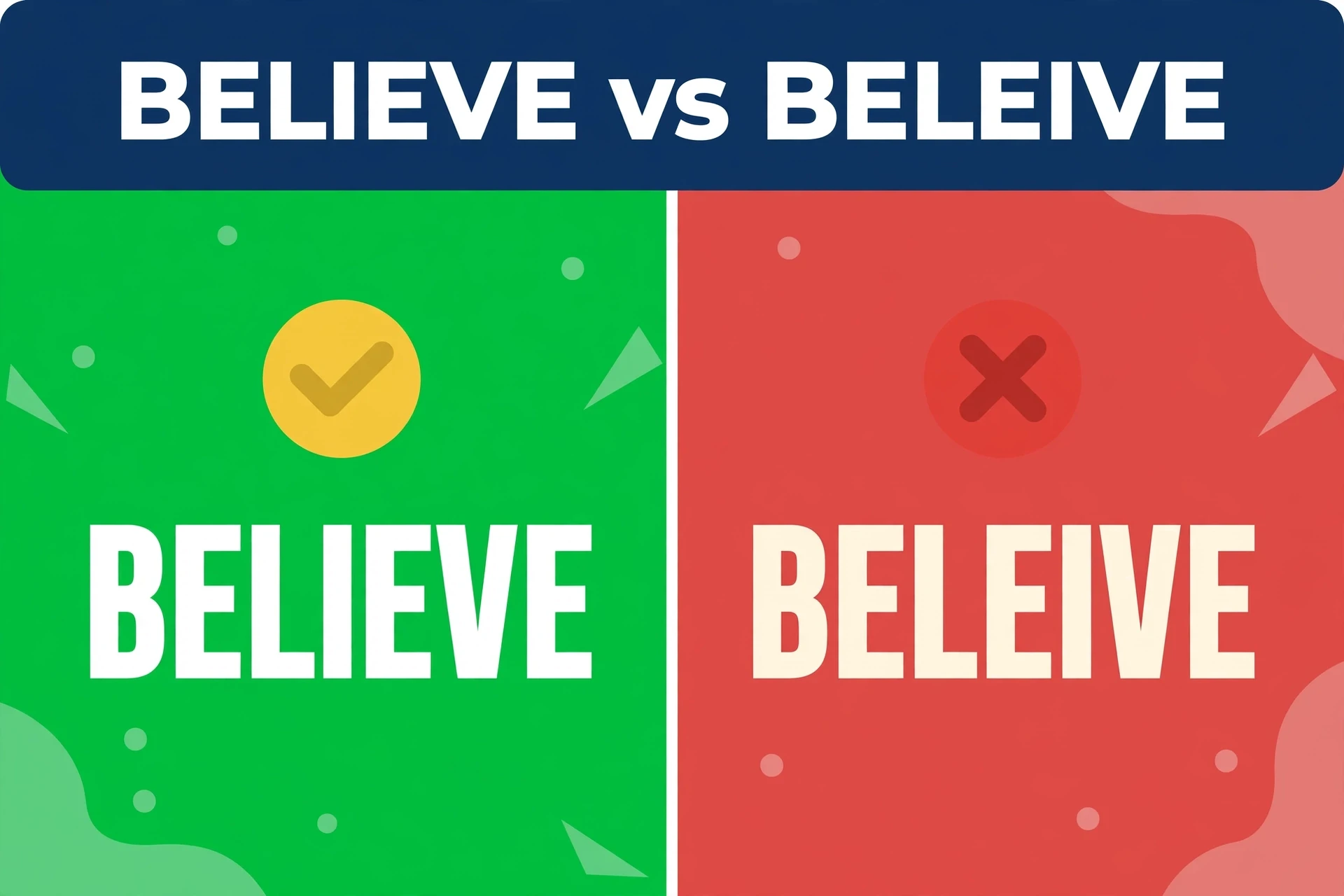
Quick Answer
| Word | Part of Speech | Main Meaning | Example |
|---|---|---|---|
| believe | Verb | To accept as true; to trust | ✅ “I believe her story.” |
| beleive | — (misspelling) | Not a standard English word | ❌ “I beleive her story.” |
Simple rule: Believe follows “i before e” — the I comes first. Beleive flips them and is never correct.
What Does Believe Mean?
Believe means to accept something as true or real, or to place trust in someone. It covers everything from quiet convictions (“she believes in hard work”) to religious faith (“they believe in God”) to simple trust (“I believe you”). Merriam-Webster’s entry for “believe” lists all of these senses, from “to consider to be true” to “to hold as an opinion.”
Examples:
- “I believe we can finish by Friday.”
- “She believes every word of the rumor.”
- “They believe in giving second chances.”
- “Do you believe in ghosts?”
- “He couldn’t believe his luck.”
The word also stretches into the noun belief — note that the noun keeps the same IE order, which is one more reason the verb never flips to EI.
What Does Beleive Mean?
Nothing in standard English. Beleive is a misspelling of “believe,” and it is one of the most common spelling errors in the language. It happens because the long “ee” sound in the middle of the word tempts writers to spell it E-I, the way “eight” or “weigh” do. But “believe” is not an exception word — it follows the basic “i before e” pattern, so the E-I version is simply wrong.
Examples of the misspelling (all incorrect):
- ❌ “I can’t beleive it’s already December.”
- ❌ “She beleives everything she reads online.”
- ❌ “Beleive in yourself and keep going.”
- ❌ “They beleived the forecast.”
Spellcheckers catch it instantly, but in handwriting and quick typing it slips through constantly — which is why it deserves a permanent place in your mental “never” list.
Believe vs. Beleive: Key Differences
| Feature | Believe | Beleive |
|---|---|---|
| Spelling status | Correct standard spelling | Misspelling — not a real word |
| Middle letters | IE (“i before e”) | EI (flipped, wrong) |
| Dictionary entry | Listed with full definitions | No entry |
| Related forms | belief, believer, believing, believed | None |
| Example | ✅ “Believe me.” | ❌ “Beleive me.” |
The entire difference is the order of two letters: believe puts I before E, and beleive gets them backwards.
Believe and Beleive in Real Sentences
At Home
✅ “I believe the kids are asleep already.”
❌ “I beleive the kids are asleep already.”
Evening check-ins are full of quiet beliefs — and every one of them is spelled with IE.
At Work
✅ “We believe this strategy will double sales.”
❌ “We beleive this strategy will double sales.”
In a proposal or email, “beleive” undermines the confidence the sentence is trying to project.
In Conversation
✅ “I can’t believe you remembered my birthday!”
❌ “I can’t beleive you remembered my birthday!”
Spoken, nobody hears the difference — which is exactly why the error hides so well in writing.
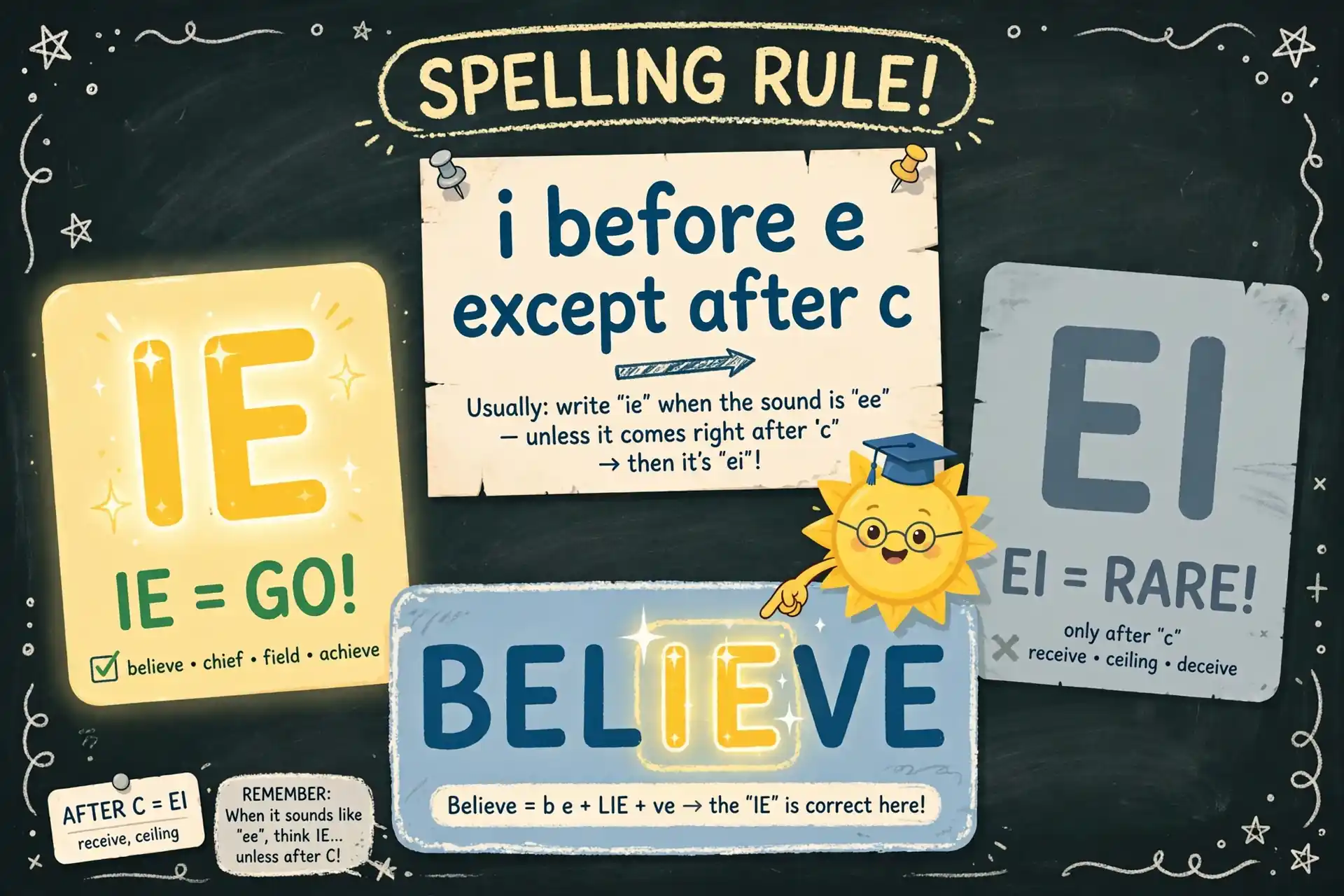
Common Mistakes
The IE/EI swap is one of English’s most reliable traps — the “recieve” vs “receive” ie/ei spelling rule shows the famous exception, and the “speach” vs “speech” spelling confusion shows the same flipped letters in another word. With believe, watch for:
Mistake 1: Spelling it “beleive” by sound
❌ “I beleive in miracles.”
✅ “I believe in miracles.”
Why: The “ee” sound suggests EI, but “believe” follows “i before e.” Sound is a bad guide here — the rule is better.
Mistake 2: Carrying the error into “believer”
❌ “She is a true beleiver.”
✅ “She is a true believer.”
Why: The noun and adjective forms keep the verb’s IE order. Fix the root word and the whole family follows.
Mistake 3: Writing “beleif” for the noun
❌ “It is my beleif that honesty wins.”
✅ “It is my belief that honesty wins.”
Why: The noun is “belief” — IE again, plus the F. The flipped version fails twice over.
Mistake 4: Trusting autocorrect blindly
❌ Typing “beleive” and assuming the phone fixed it.
✅ Glancing at the suggestion bar before sending.
Why: Autocorrect usually catches this one, but in names, passwords, and offline writing there is no safety net — learn the spelling itself.
Pronunciation
Believe is pronounced bih-LEEV, with the stress on the second syllable, rhyming with “relieve,” “achieve,” and “grieve.” The misspelling “beleive” would be pronounced exactly the same way — the error is purely visual, which is why proofreading by ear never catches it.
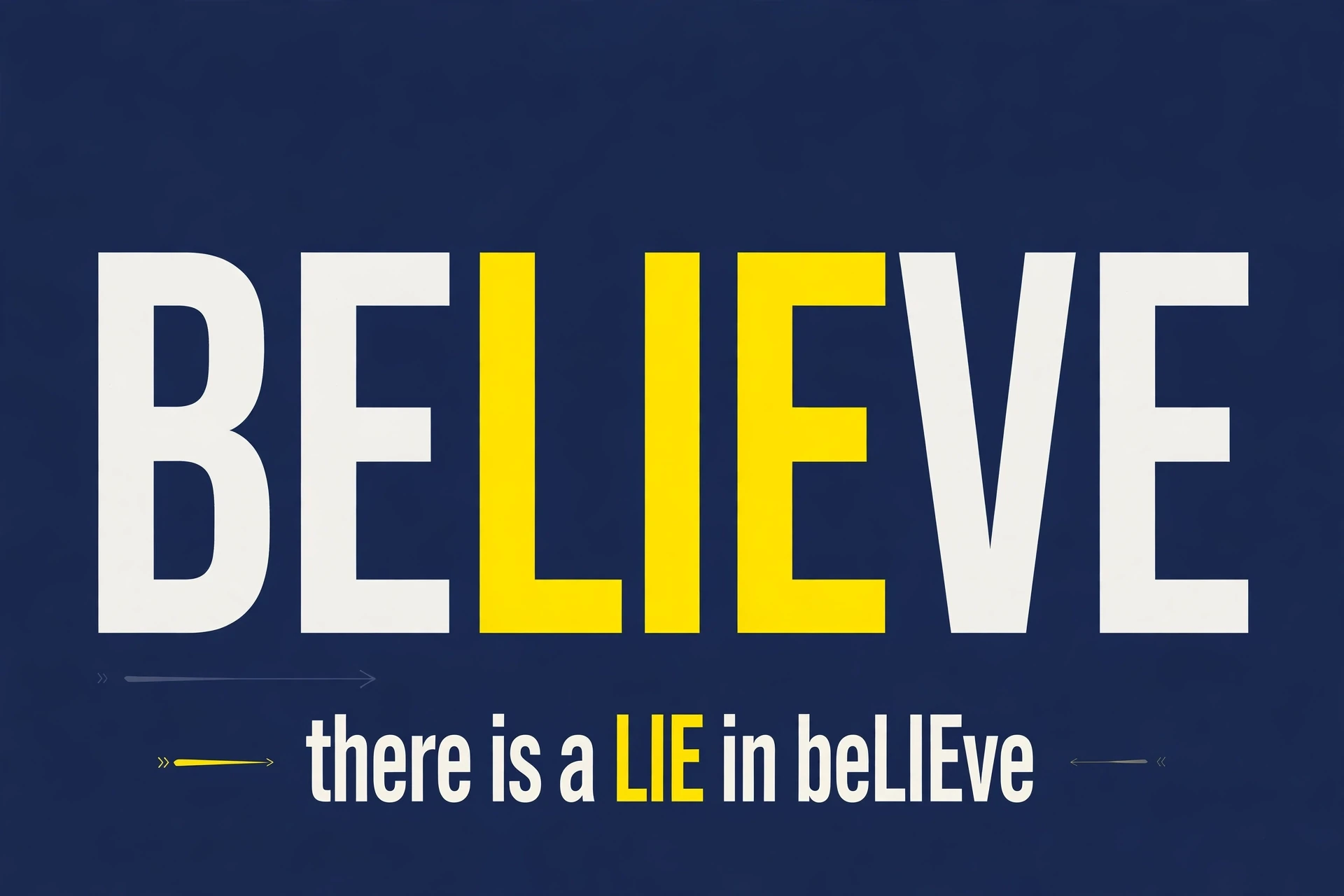
How to Remember the Difference
There is a LIE in beLIEve — and it would be a lie to spell it “beleive.” The trick does double duty: it locks in the IE order and reminds you the flipped version is dishonest spelling.
- LIE trick: be-LIE-ve — spot the word “lie” inside, and the I-before-E order is unmissable.
- Rule check: “i before e except after c” — there is no C in believe, so IE it is.
- Family test: belief, believer, believing — the whole family keeps IE, so the root must too.
Frequently Asked Questions
Is it believe or beleive?
Believe. “Beleive” is a misspelling and is never correct in standard English.
Why do so many people write “beleive”?
The long “ee” sound in the middle suggests EI, and words like “eight” and “weigh” reinforce the habit. But “believe” follows the basic “i before e” rule.
Does the “i before e” rule always work?
Not always — “receive,” “weird,” and “seize” break it — but it works for “believe,” and that is the word in question.
Is “beleif” a word?
No. The noun is “belief,” spelled with IE just like the verb.
What’s the difference between “believe” and “believe in”?
“Believe” alone means accepting something as true (“I believe you”); “believe in” adds trust or faith (“I believe in you”). The spelling is identical either way.
How do you spell the past tense?
“Believed” — just add D. The IE order never changes: believed, believing, believer.
Conclusion
Believe keeps I before E, and there is a LIE hiding inside it to prove the flipped version is dishonest. Write beleive and every reader who knows the rule will spot it — so lock in “believe” and never look back.