Speach or Speech: Which Is Correct?
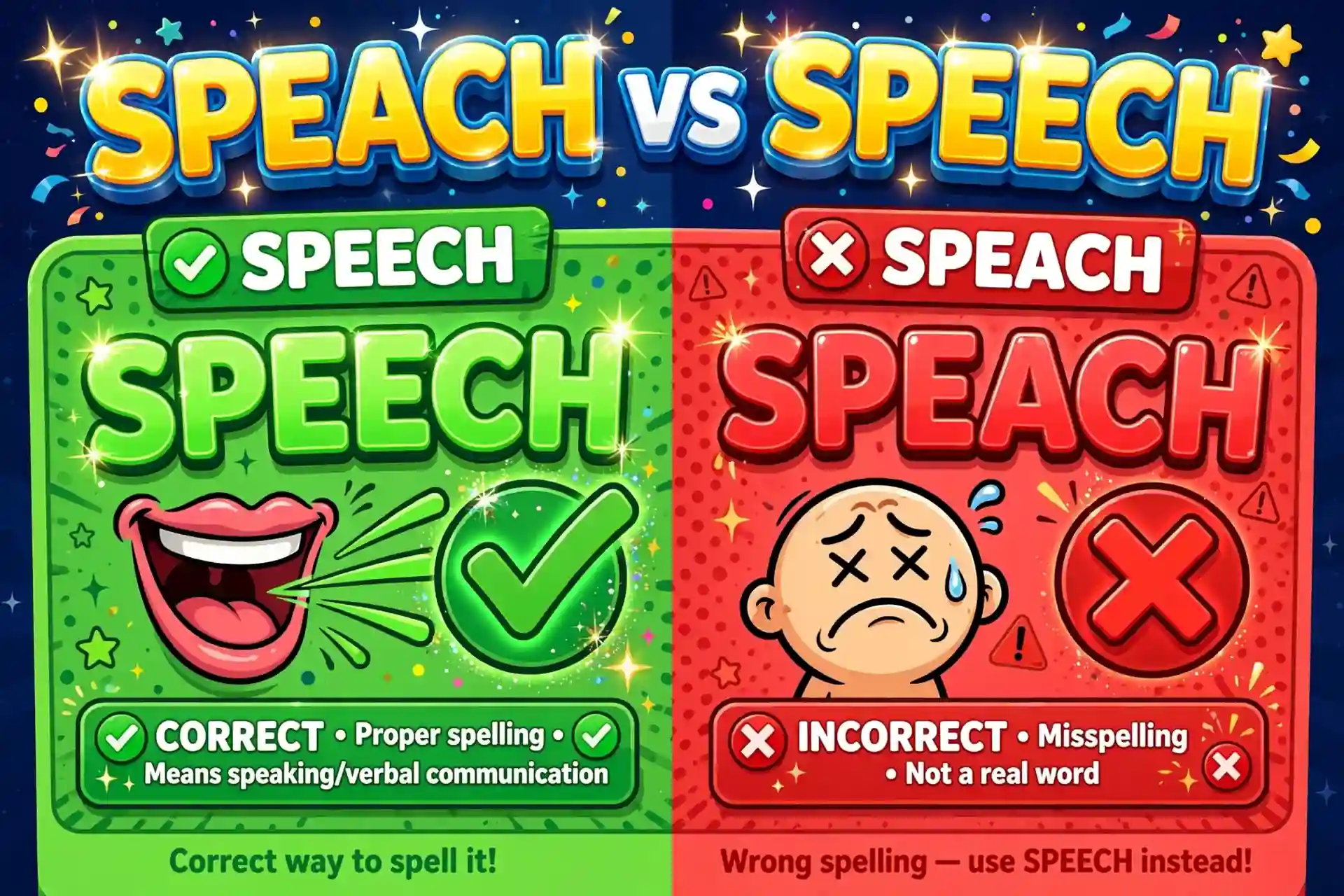
Speech is the correct spelling — the noun for spoken language or a formal talk. Speach is always a misspelling.
For example, “She gave a moving speech” is correct. “She gave a moving speach” is wrong. The ea spelling belongs to the verb speak (past: spoke), not to the noun.
Quick Answer
| Word | Part of Speech | Main Meaning | Example |
|---|---|---|---|
| Speech | Noun | Spoken language; a formal talk | His speech lasted an hour. |
| Speach | — | Not a word; always a misspelling | ❌ His speach lasted an hour. |
Simple rule: The noun is spelled speech with a double e — never ea.
What Does Speech Mean?
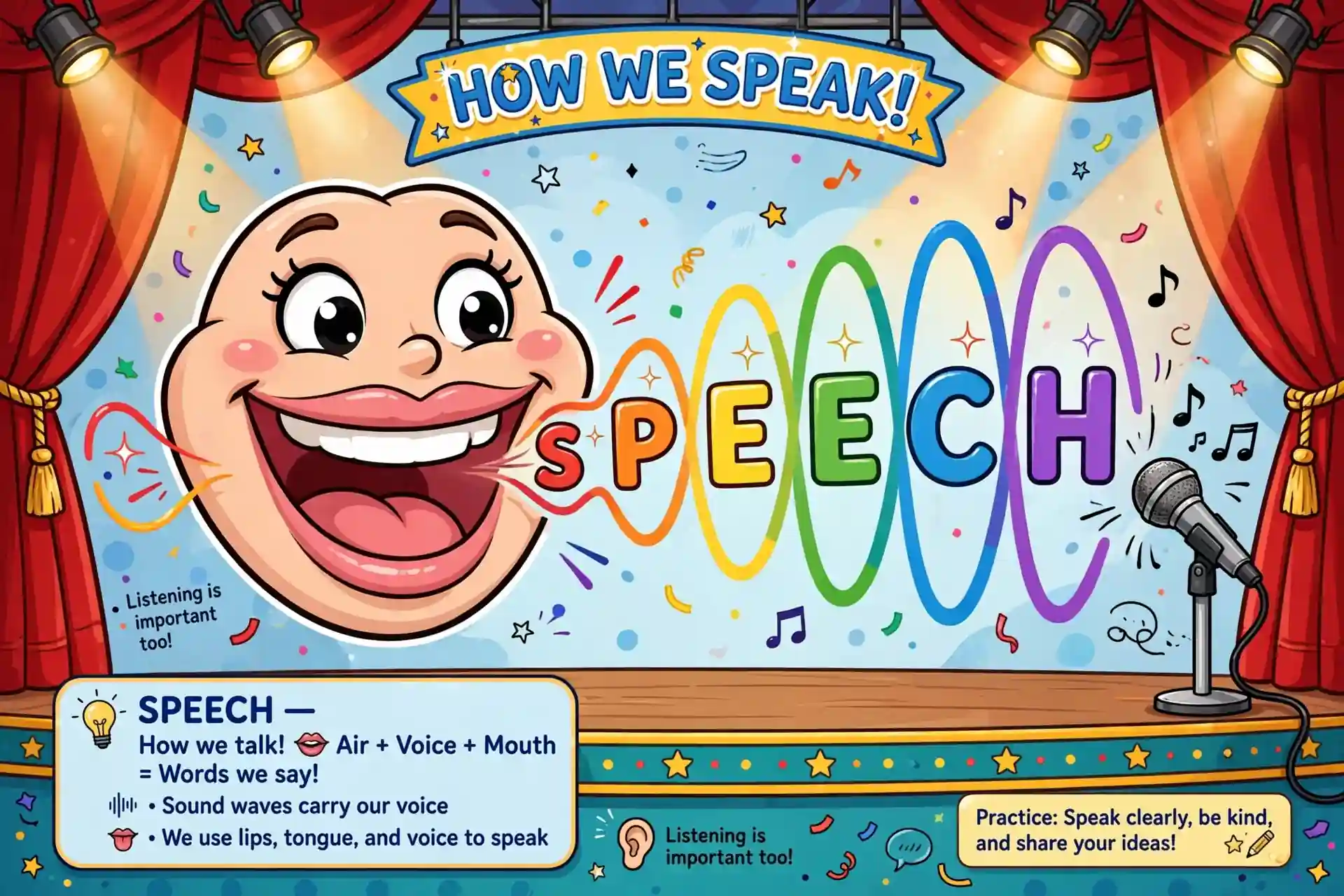
Speech has two main meanings: the faculty of speaking (“the power of speech”) and a formal talk given to an audience (“a campaign speech”).
Examples:
- Her speech brought the audience to its feet.
- Freedom of speech is a fundamental right.
- His speech was slurred after the long night.
- The president’s speech aired at nine.
- Speech therapy helped him regain his voice.
Related words keep the same root: speechless, speechwriter, speech impediment. See speech on Merriam-Webster.
What Does Speach Mean?
Speach means nothing — it is not a word. It is what speech looks like when the writer borrows the ea from speak.
The confusion is natural: speak, speaks, and speaking all use ea. But the noun broke away from that pattern centuries ago and settled on the double e — just as teach gives us teacher (keeping ea) while speak gives us speech (switching to ee).
Examples of the error:
- ❌ He wrote a beautiful speach.
- ❌ Her speach impediment improved.
- ❌ Freedom of speach matters.
Each should be speech.
Speach vs. Speech: Key Differences
| Feature | Speech | Speach |
|---|---|---|
| Correct? | Yes | Never |
| What it is | Noun (talk; spoken language) | Misspelling |
| Vowel | Double e | ea (borrowed from speak) |
| Dictionary entry? | Yes | No |
| Example | A fine speech. | ❌ A fine speach. |
English is full of verb/noun pairs whose vowels drifted apart over time — the same kind of quiet irregularity that makes quiet vs. quite tricky.
Examples of Speech in Real Sentences
At Home
Speech: “The baby’s speech is developing quickly.”
Here speech means the ability to talk.
At Work
Speech: “She was asked to give the keynote speech.”
Here speech means a formal talk.
In Conversation
Speech: “In his speech, he thanked everyone.”
Reporting what someone said in a talk.
In the News
Speech: “The speech focused on the economy.”
News reports always use the double-e spelling.
Common Mistakes With Speach and Speech
The ea-to-ee switch is the whole trap — similar to how small vowel changes create big spelling errors elsewhere.
Mistake 1: Borrowing “ea” From “Speak”
❌ He gave a wonderful speach.
✅ He gave a wonderful speech.
Why: The noun uses double e, even though the verb speak uses ea.
Mistake 2: Writing “Speachless”
❌ The news left her speachless.
✅ The news left her speechless.
Why: Compounds keep the root spelling — speechless, with double e.
Mistake 3: “Free Speach” in Slogans
❌ Defend free speach!
✅ Defend free speech!
Why: The set phrase is “freedom of speech” / “free speech” — always with ee.
Pronunciation: Speach vs. Speech
Speech is pronounced /spiːtʃ/ — “speach” as a sound, rhyming with beach, reach, and teach.
The irony: speech sounds exactly like it would be spelled “speach.” The pronunciation is no guide at all — only memory of the double e saves the spelling.
How to Remember the Difference
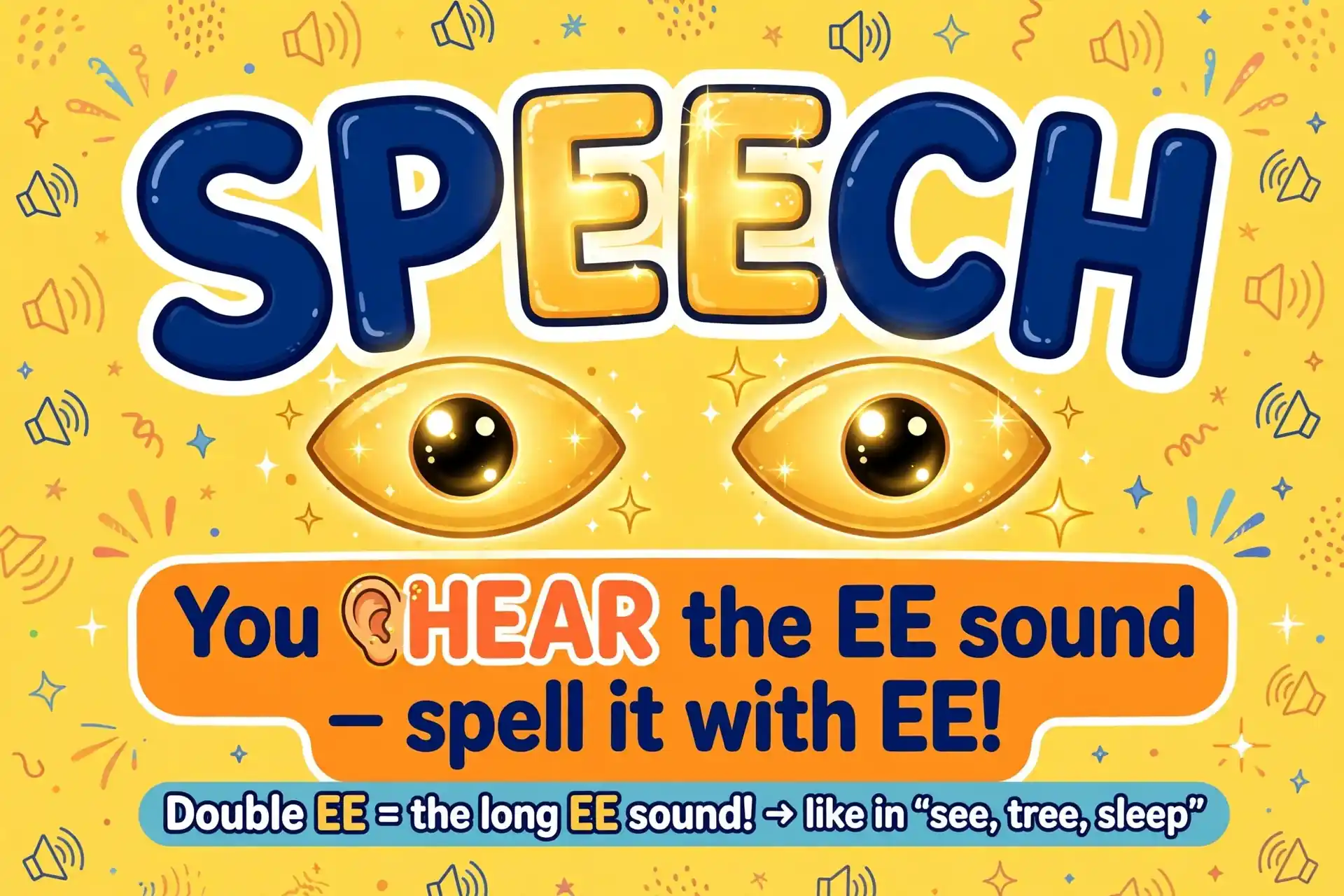
Memory trick: You HEAR the “ee” sound — so spell it with “ee.” The word speech contains its own pronunciation guide.
- Say it slowly: “sp-ee-ch” — the long e sound is right there.
- Pair it with beach and reach: they rhyme, but speech alone doubles the e. Unfair — but memorable.
- Write “spEEch” with the EE capitalized in practice until it sticks.
Frequently Asked Questions
Is it speach or speech?
Always speech with a double e. “Speach” is never correct.
Why is it “speech” but “speak”?
The noun and verb diverged centuries ago. Speak kept its ea; the noun speech settled on ee. English history, not logic, explains it.
What is the plural of speech?
Speeches — add -es: “She gave three speeches today.”
What does “speechless” mean?
Unable to speak, usually from shock or emotion: “The surprise left him speechless.” Note the double e carries over.
Is “free speech” one word or two?
Two words: free speech. It names the right to express opinions without censorship.
Conclusion
Speech — double e — is the only correct spelling, for both the faculty of speaking and a formal talk. Speach is always wrong, a borrowing from speak that the noun never authorized. Hear the “ee,” spell the “ee.”