Recieved or Received: Which Is Correct?
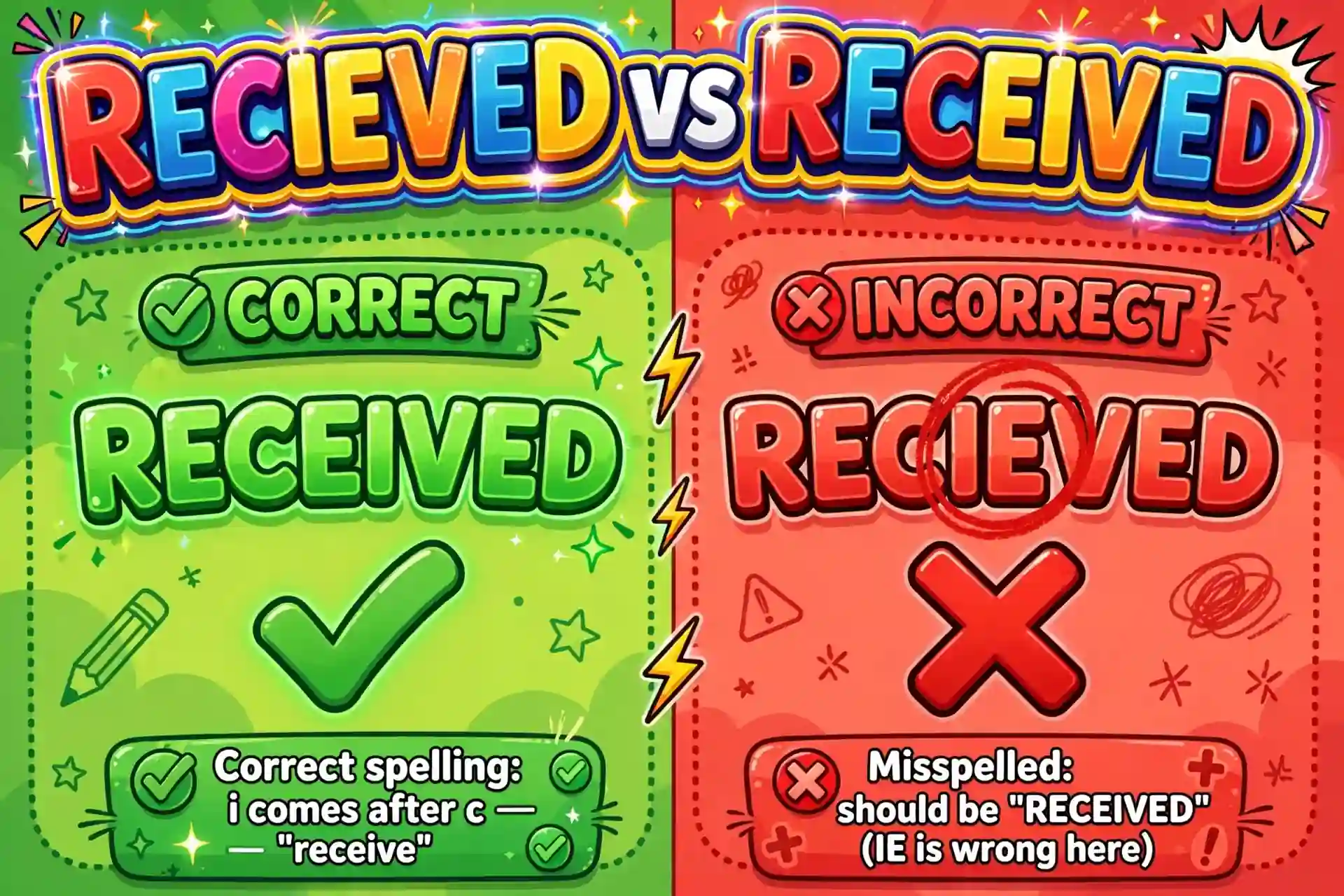
Received is the correct spelling — the past tense of receive, meaning to get or accept something. Recieved is always a misspelling, one of the most common in English.
For example, “I received your email” is correct. “I recieved your email” is wrong. The confusion comes from the famous “i before e” rule — and this word is the textbook example of its most important exception: except after c.
Quick Answer
| Word | Part of Speech | Main Meaning | Example |
|---|---|---|---|
| Received | Verb (past tense) | Got, accepted, was given | She received an award. |
| Recieved | — | Not a word; always a misspelling | ❌ She recieved an award. |
Simple rule: After the letter c, the e comes first — re-cei-ved.
What Does Received Mean?
Received is the past tense and past participle of receive: to get, accept, or take in something given or sent.
Examples:
- I received your message this morning.
- She received a promotion last month.
- They received a warm welcome at the airport.
- The package was received in perfect condition.
- He received praise for his quick thinking.
It also appears in set phrases: “received wisdom” (generally accepted ideas) and, in British English, “received pronunciation” (the prestige accent). See receive on Merriam-Webster.
What Does Recieved Mean?
Recieved means nothing — it is not a word. It is what received looks like when the writer follows “i before e” without learning the exception.
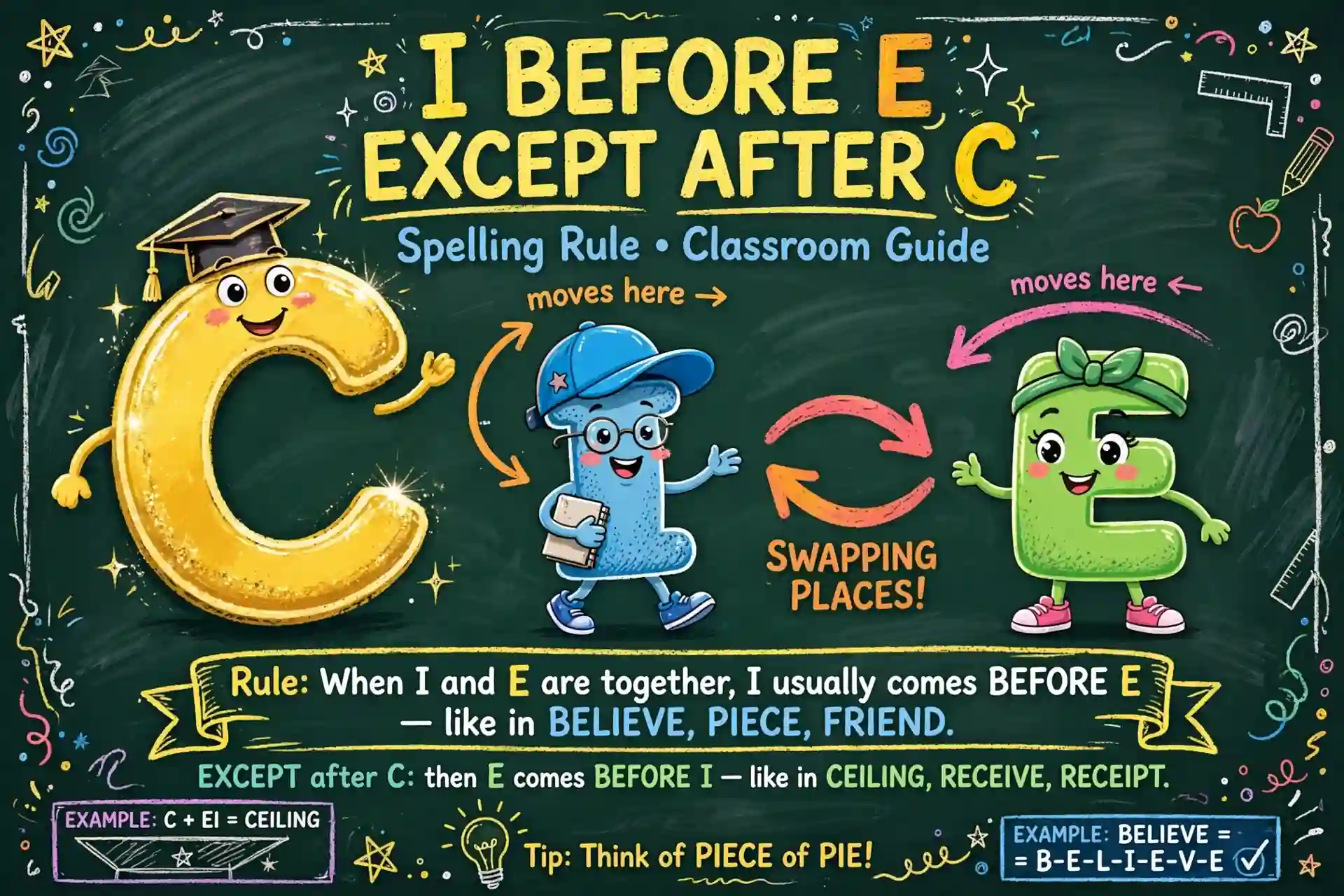
The full rule, taught in schools for generations, is: “i before e, except after c.” Since receive has a c right before the vowel pair, the e must come first: cei, not cie.
Examples of the error:
- ❌ I recieved the documents yesterday.
- ❌ She has not recieved a reply yet.
- ❌ The goods were recieved damaged.
Every one of these should be received. Spellcheckers flag “recieved” instantly.
Recieved vs. Received: Key Differences
| Feature | Received | Recieved |
|---|---|---|
| Correct? | Yes | Never |
| What it is | Past tense of receive | Misspelling |
| Vowel order | ei (after c) | ie (wrong after c) |
| Dictionary entry? | Yes | No |
| Example | We received the news. | ❌ We recieved the news. |
The “i before e except after c” rule covers this word perfectly — the same way it governs deceive, perceive, and ceiling. Similar one-form-is-always-wrong pairs include dieing vs. dying.
Examples of Received in Real Sentences
At Home
Received: “We received your invitation — thank you!”
A reply to good news; the correct spelling keeps the tone polished.
At Work
Received: “Please confirm you received the contract.”
Business emails are exactly where this misspelling hurts most — get it right.
In Conversation
Received: “Did you receive my text?”
Everyday speech transcribed correctly.
In the News
Received: “The team received a hero’s welcome.”
Journalists spell it received without thinking — the exception is automatic for practiced writers.
Common Mistakes With Recieved and Received
The root cause is always the half-remembered spelling rule — like other homophone-adjacent traps, the fix is learning the complete version.
Mistake 1: Writing “Recieved” (ie After C)
❌ I recieved your letter.
✅ I received your letter.
Why: After c, the e comes first: re-cei-ved.
Mistake 2: Misspelling Related Words the Same Way
❌ Deceived → “decieved” (wrong)
✅ Deceived, perceived, conceived — all follow “except after c.”
Why: The whole -ceive family keeps ei after c.
Mistake 3: Overcorrecting Other Words
❌ “Thier” is wrong because of the rule… wait, “their” follows “i before e” (no c involved).
✅ Their, friend, believe — ie when there is no c before it.
Why: The rule has two halves. No c → i before e. After c → e before i.
Pronunciation: Recieved vs. Received
Received is pronounced /rɪˈsiːvd/ — “ri-SEEVD.”
“Recieved” has no pronunciation because it is not a word. The vowel order changes nothing in speech, which is precisely why the error is so common — you cannot hear it.

How to Remember the Difference
Memory trick: re-CEI-ved — look at the C, and let the E follow it like a shadow.
- See the C? Then E comes first: cei.
- No C before the vowels? Then I comes first: believe, friend — though “their” breaks it. The rule has rebels, but receive obeys it.
- Chant: “C gets E first — receive.”
Frequently Asked Questions
Is it recieved or received?
Always received. “Recieved” is never correct — it is one of the most common misspellings in English.
What is the “i before e” rule?
“I before e, except after c” — and receive is the classic “except after c” example. After a c, write ei: receive, deceive, perceive.
Why do so many people write “recieved”?
Because they learned “i before e” but forgot the exception. The pronunciation gives no clue — /rɪˈsiːvd/ sounds the same either way — so only the rule (or memory) can save the spelling.
Is “recieve” also wrong?
Yes. The base verb is receive with ei. Every form — receives, receiving, received — keeps the e before the i.
What about “receipt”?
Receipt is spelled with ei too — and it even keeps a silent p. Same family, same rule.
Conclusion
Received is the only correct spelling — the e comes before the i because it follows a c. Recieved is always wrong. Remember “C gets E first,” and this classic misspelling will never catch you again.