Treck or Trek: Which Is Correct?
Treck is a misspelling. The correct spelling is trek — a long, difficult journey, especially one on foot through rough country. You’d write The trek through the mountains took three days, never The treck through the mountains.

Table of Contents
Quick Answer
| Word | Part of Speech | Main Meaning | Example |
|---|---|---|---|
| treck | — | Not a standard English word; a common misspelling of “trek” | ❌ The treck was exhausting. |
| trek | noun / verb | A long, arduous journey; to make such a journey | ✅ The trek to the summit took five hours. |
Simple rule: if you typed “treck,” delete the “c” — the word is always trek.
What Does Treck Mean?
Treck has no entry in standard English dictionaries. It is simply what trek looks like when people add an extra “c,” probably because the word sounds like it could rhyme with “check” or “deck.” You won’t find it defined in a dictionary, and spell-checkers will flag it.
Examples of correct usage:
- The treck across the desert wore everyone out. (Should be trek.)
- They trecked through the forest at dawn. (Should be trekked.)
- After a long treck, we finally reached the lodge. (Should be trek.)
- She is trecking in Nepal this spring. (Should be trekking.)
Every “treck” sentence above becomes correct once the extra “c” is removed.
What Does Trek Mean?
Trek comes from the Afrikaans and Dutch word trekken, meaning to pull or draw, and it entered English during the Great Trek — the mass migration of Dutch settlers across South Africa in the 1830s. Today it means a long, slow, demanding journey, often on foot. As a noun it names the journey itself; as a verb it describes making one.
As a Noun
Examples:
- Our trek through the Himalayan foothills lasted nine days.
- The annual trek to the summer pasture is a village tradition.
- After the long trek uphill, everyone was grateful for a hot meal.
- National Geographic called it one of the great treks of the world.
As a Verb
Examples:
- We trekked for hours before reaching the campsite.
- Commuters trek across the city every morning in the rain.
- She trekked through the snow to deliver the supplies.
- They are trekking the Annapurna Circuit next month.
You can double-check the official definition of trek on Merriam-Webster, which lists both the noun and verb senses.
Treck vs. Trek: Key Differences
| Feature | Treck | Trek |
|---|---|---|
| Correct spelling | No | Yes |
| Part of speech | None (not a word) | Noun and verb |
| Meaning | Nothing | A long, arduous journey; to make such a journey |
| Dictionary entry | Not listed | Listed in all standard dictionaries |
| Origin | — | Afrikaans/Dutch trekken, via the Great Trek |
| Should you use it? | Never | Yes, whenever you mean a hard journey |
The difference is simple: one letter turns a real word into an error.
Usage in Real Sentences
At Home
❌ Getting the kids ready for the treck to grandma’s house is exhausting.
✅ Getting the kids ready for the trek to grandma’s house is exhausting.
Even a long car ride counts as a trek in everyday speech — just spelled without the “c.”
At Work
❌ We trecked up four flights of stairs because the elevator was broken.
✅ We trekked up four flights of stairs because the elevator was broken.
Note the verb form doubles the “k” (trekked, trekking) — the correct spelling of the base word doesn’t change.
In Conversation
❌ How was the treck? It rained the whole way.
✅ How was the trek? It rained the whole way.
In casual speech the misspelling is common because “trek” sounds like it should rhyme with “check” — but it doesn’t have a “c.”
Common Mistakes
The extra “c” sneaks in because trek sounds like “check” or “deck,” and our brains pattern-match. The same instinct creates common misspellings like loose vs lose and other easily confused everyday words — but sound-alikes don’t share spellings.
Mistake 1: Writing “treck” for the noun
❌ The treck across the desert took six days.
✅ The trek across the desert took six days.
Why: Treck is not a word. The noun for a long journey is always trek.
Mistake 2: Writing “trecked” as the past tense
❌ We trecked for miles before sunset.
✅ We trekked for miles before sunset.
Why: The verb doubles the “k” in the past tense — trekked, not trecked.
Mistake 3: Writing “trecking” for the present participle
❌ They are trecking through the valley this weekend.
✅ They are trekking through the valley this weekend.
Why: Same doubling rule: trekking keeps the “k” doubled and drops any “c.”
Mistake 4: Using “treck” in formal writing
❌ The article described their treck across Antarctica.
✅ The article described their trek across Antarctica.
Why: Spell-checkers and editors will flag treck everywhere — in a résumé, essay, or email it reads as a careless error.
Pronunciation
Trek is pronounced /trek/ — it rhymes with “check,” “deck,” and “neck.” The irony is that it sounds like it should contain a “c,” which is exactly why the misspelling treck is so tempting. Pronunciation and spelling don’t always agree in English.
How to Remember the Difference
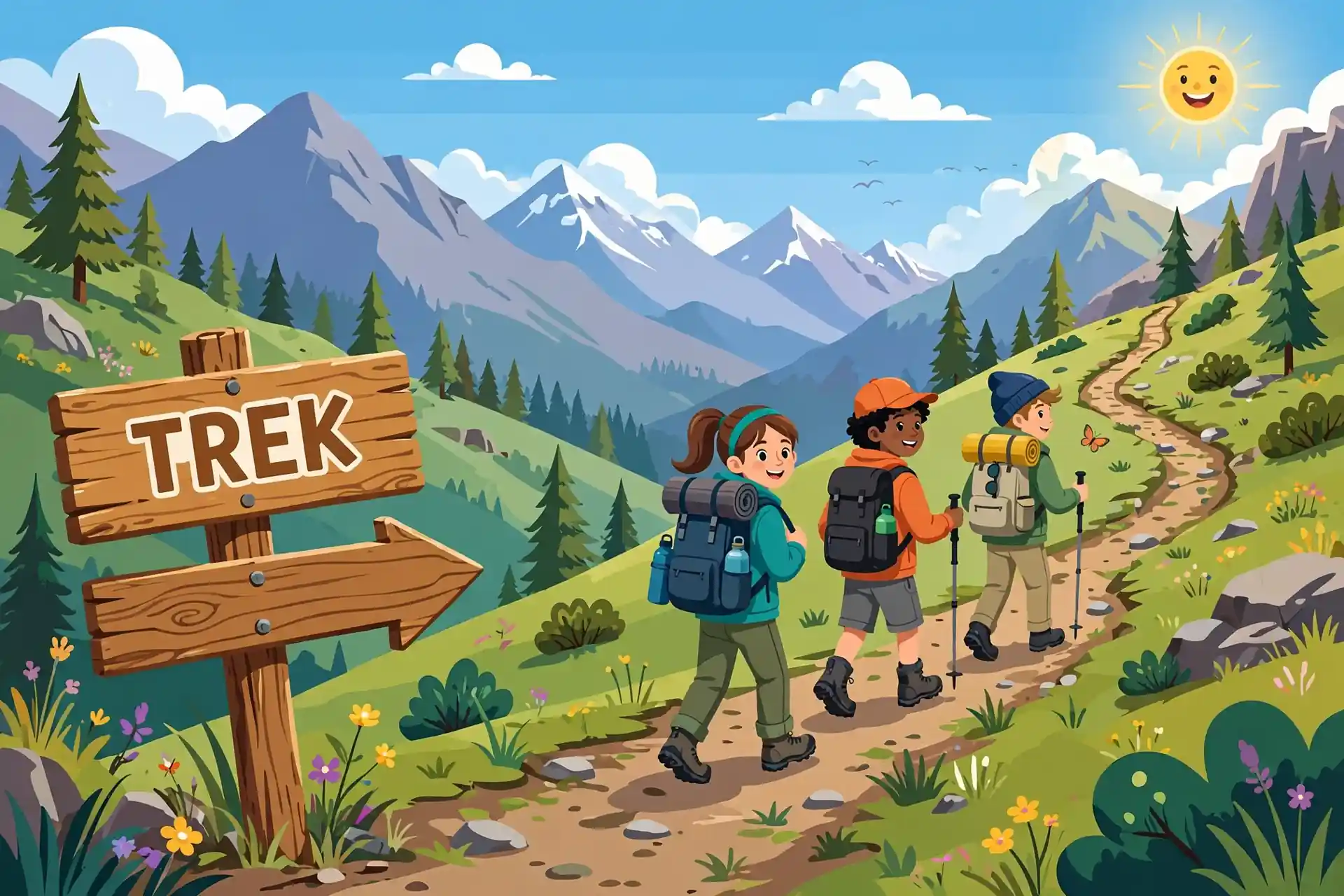
Think of it this way: a trek is a hard journey, and hard journeys have no easy shortcuts — and no extra letters, either. That unnecessary “c” in treck is dead weight, just like the pack you wish you’d left behind on a mountain trail.
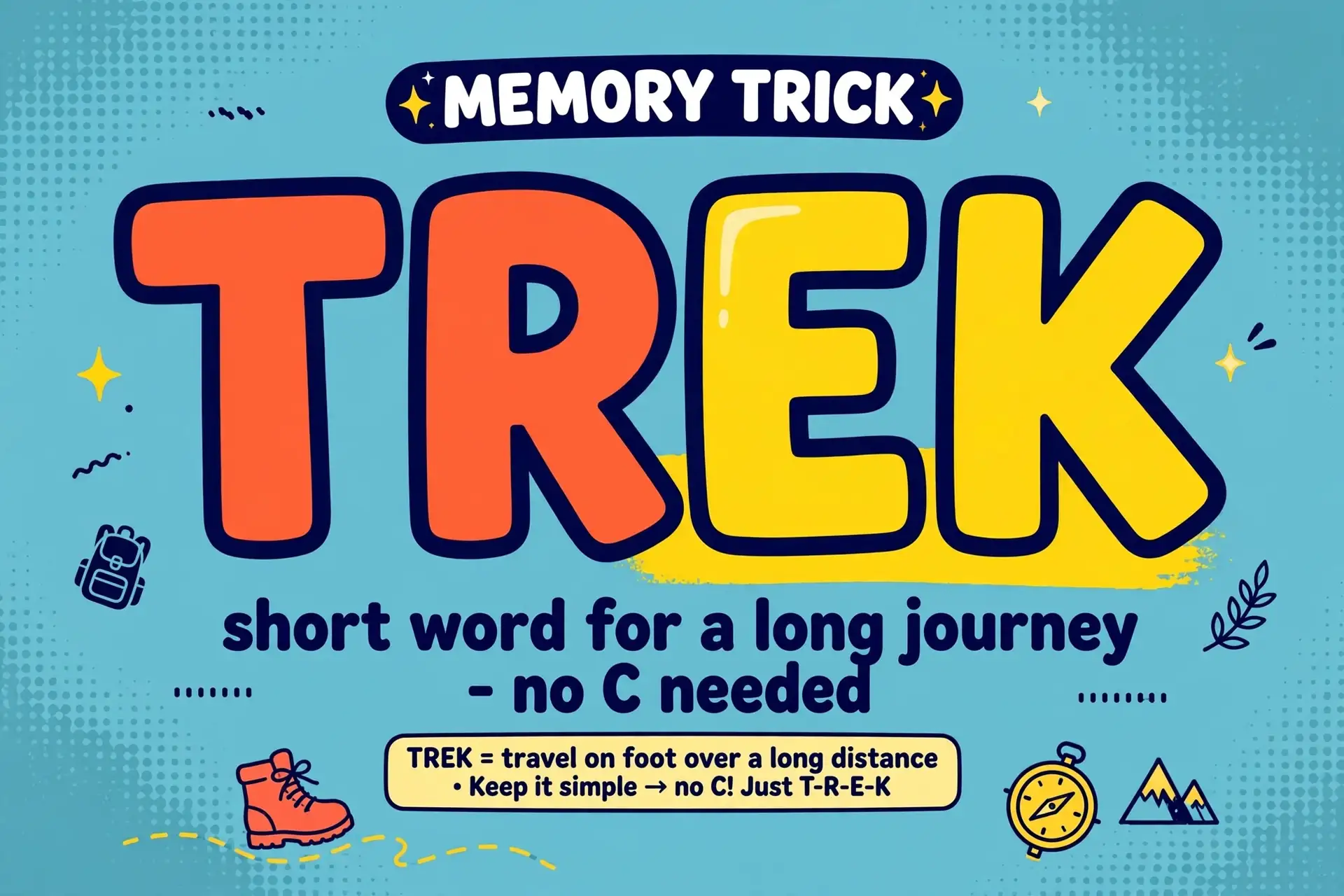
- Trek = the correct spelling (noun and verb).
- Treck = never correct; delete the “c.”
- The verb doubles the “k”: trekked, trekking.
- It rhymes with “check” but is spelled without a “c.”
Frequently Asked Questions
Is it treck or trek?
It’s trek. Treck is a misspelling that doesn’t appear in standard dictionaries.
Can “treck” ever be correct?
No. In standard English there is no word “treck” — use trek in every context.
What is the past tense of trek?
Trekked — the “k” doubles because the word ends in a single consonant after a short vowel.
Is trek a noun or a verb?
Both. As a noun it means a long, arduous journey (a grueling trek); as a verb it means making such a journey (we trekked all day).
Where does the word “trek” come from?
From Afrikaans/Dutch trekken (to pull or draw), entering English through the Great Trek — the 1830s migration of Dutch settlers across South Africa.
Conclusion
Treck is always a mistake; trek is always the answer. Whether you’re naming a grueling mountain journey or describing the act of making one, spell it with a single “k” and no “c.”