Wich or Which: Which Is Correct?
If you’re unsure between wich and which, the answer is simple: which is the correct spelling for the pronoun you use every day, and wich is a misspelling — except in a handful of old place names. One line says it all: “Which book do you want?” is correct; “Wich book do you want?” is not. The only time you’ll see “wich” spelled that way is in names like Norwich or Greenwich.
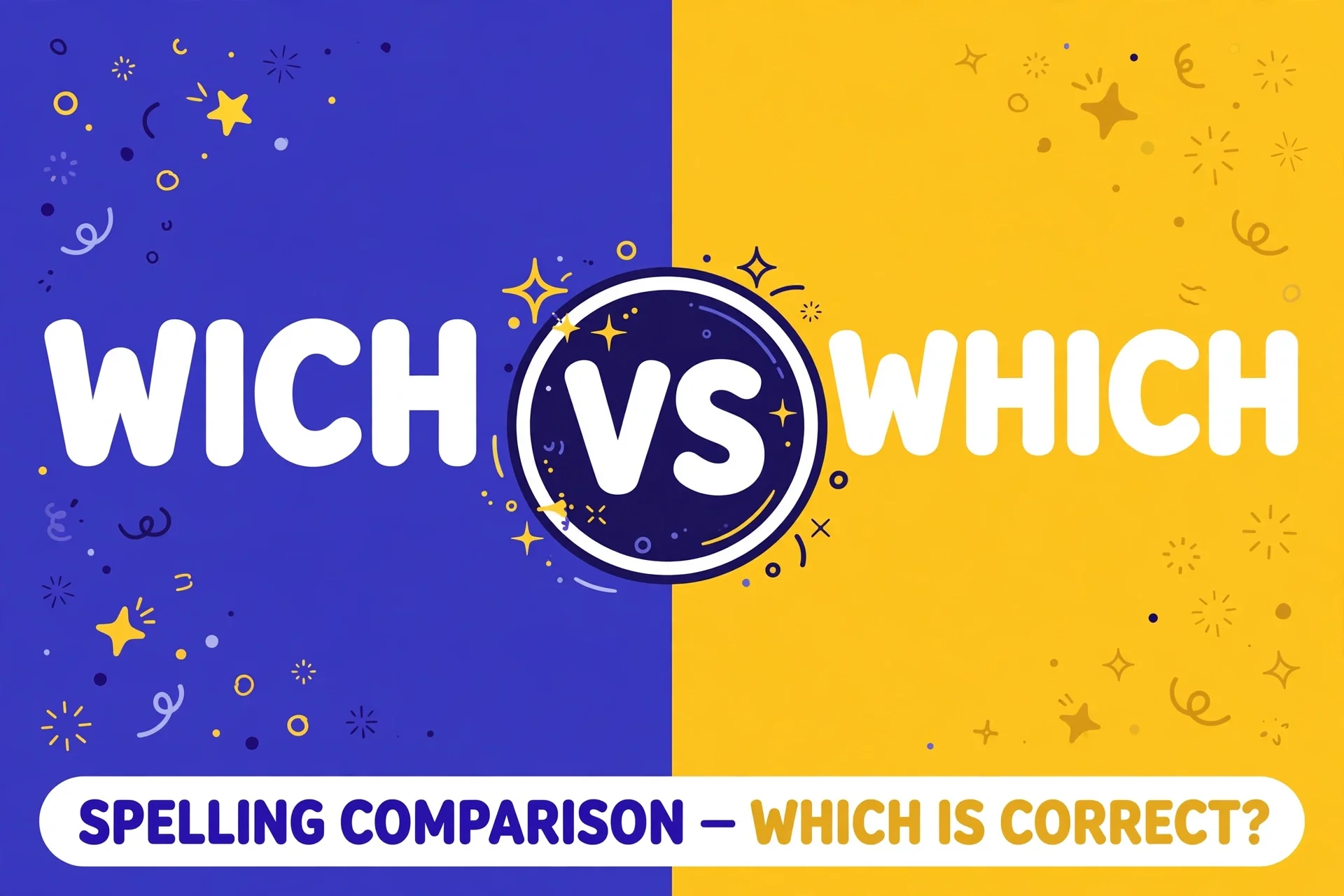
Table of Contents
Quick Answer
| Word | Part of Speech | Main Meaning | Example |
|---|---|---|---|
| Wich | Not a standard word (place-name element) | Old English element meaning a settlement or salt spring, kept in place names | Greenwich, Norwich, Ipswich |
| Which | Pronoun / Determiner | Used to ask about or refer to a choice among things | Which road should we take? |
Simple rule: if you’re writing a sentence, use which — the version without the “h” after “w” is never right except inside a place name.
What Does Wich Mean?
Wich is not a standalone English word in modern use. It survives only as an element inside certain place names, where it comes from the Old English wic, meaning a dwelling, settlement, trading place, or salt spring. Towns that grew up around salt works or trading settlements kept the ending, which is why you’ll find it in names like these:
- Norwich — from “north wic,” the northern settlement.
- Greenwich — from “green wic,” a settlement on the green.
- Ipswich — named for the River Gipping with the old wic ending.
- Droitwich — a town famous for its ancient salt springs.
- Sandwich — from “sand wic,” the settlement on the sands.
Outside of these place names, writing “wich” where you mean “which” is simply a spelling error — one of the classic slip-ups caused by typing too fast, much like common misspellings like loose vs lose.
What Does Which Mean?
Which is a pronoun and determiner used to ask about or point to one thing out of a set of possibilities. It does two main jobs in English.
As an interrogative (asking questions)
Which asks the listener to choose between options:
- Which color do you like better, blue or green?
- Which of these bags is yours?
- Which day works best for the meeting?
- Which team won the match last night?
As a relative pronoun (linking clauses)
Which introduces a clause that gives more information about a thing:
- The movie, which we watched twice, was brilliant.
- She bought a car which had only 20,000 miles on it.
- The house in which he grew up is now a museum.
- I need the report, which is due by Friday.
Like pronoun confusions like whose vs whos, errors with “which” usually come down to mixing up words that sound alike rather than not knowing the meaning.
Wich vs. Which: Key Differences
| Feature | Wich | Which |
|---|---|---|
| Status in English | Not a real word on its own | Fully standard word |
| Where it appears | Only inside place names (Norwich, Greenwich) | Everyday sentences |
| Part of speech | None (place-name element) | Pronoun / determiner |
| Meaning | Old English wic: settlement, salt spring | Asking about or referring to a choice |
| Can start a question? | No | Yes — “Which one is yours?” |
| Dictionary entry | No standalone entry | Listed at which on Merriam-Webster |
The gap between the two couldn’t be wider: which is one of the most common words in English, while wich is essentially a fossil preserved in a few town names.
Usage in Real Sentences
Asking a question
❌ Wich movie should we watch tonight?
✅ Which movie should we watch tonight?
Use which when offering a choice — the misspelling “wich” has no place in a question.
Describing a thing
❌ The laptop wich I ordered arrived yesterday.
✅ The laptop which I ordered arrived yesterday.
Use which as the relative pronoun linking the description to the laptop.
Writing a place name
✅ We visited Norwich last summer.
✅ The observatory is in Greenwich, London.
Inside these names, the “wich” spelling is correct and historical — don’t “fix” it to “which.”
At work
❌ Please confirm wich version of the draft you approved.
✅ Please confirm which version of the draft you approved.
In professional writing, which is the only correct choice.
Common Mistakes
Since wich isn’t a real word, every mistake here is the same one: dropping the “h.” Typing fast makes it easy — just as it does with common misspellings like loose vs lose.
Mistake 1: “Wich one do you prefer?”
❌ Wich one do you prefer?
✅ Which one do you prefer?
Why: interrogative pronouns always take the “which” spelling.
Mistake 2: “The book, wich I loved, is on sale.”
❌ The book, wich I loved, is on sale.
✅ The book, which I loved, is on sale.
Why: relative clauses need which, never “wich.”
Mistake 3: “Wich vs. witch” confusion
❌ She asked wich spell to use.
✅ She asked which spell to use.
Why: a witch casts spells; which asks you to choose. All three sound alike, so proofread carefully.
Mistake 4: “Correcting” Norwich to “Norwhich”
❌ We drove to Norwhich.
✅ We drove to Norwich.
Why: place names keep their historical spelling — “Norwich” never gains an “h” after the “w.”
Pronunciation
Which is pronounced /wɪtʃ/ — “witch,” rhyming with switch, ditch, and rich. In some Scottish and older accents you’ll hear a breathier /ʍɪtʃ/ with a distinct “hw” sound, but in most modern speech which and witch are perfect homophones. That’s exactly why the misspelling “wich” looks plausible — your ear can’t tell the difference, only the spelling can.
How to Remember the Difference
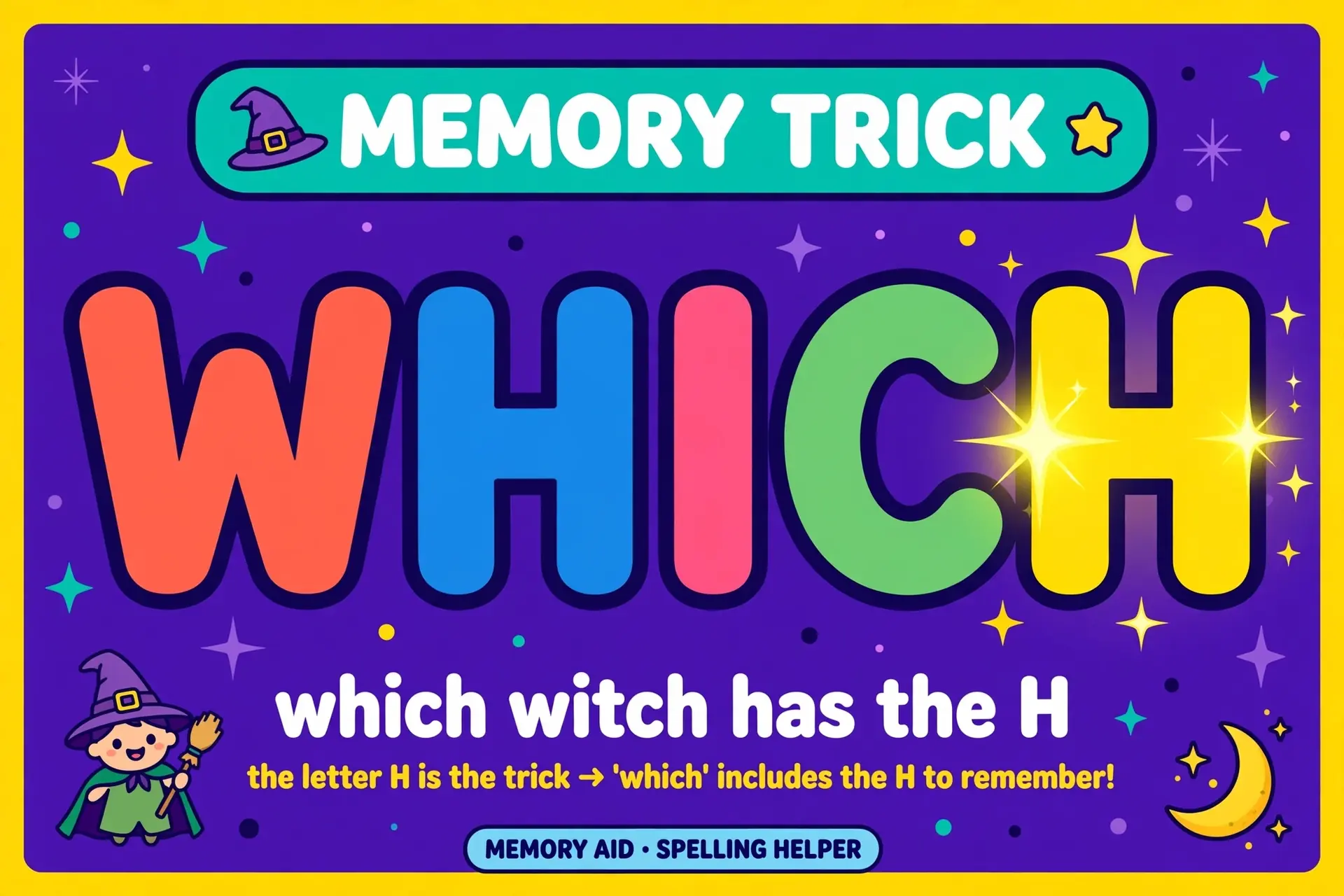
Think of the h in which as standing for helpful questions — which helps you choose. If there’s no h, there’s no real word, just a fragment of a town name.
- Which = the pronoun — always has the h.
- Wich = not a word — only correct inside names like Norwich and Greenwich.
- Witch = the spell-caster — a different word entirely.
Frequently Asked Questions
Is it wich or which?
It’s which. “Wich” is a misspelling in normal writing and is only correct as part of certain place names like Norwich and Greenwich.
Is “wich” ever a real word?
Not as a standalone modern English word. It survives only as an element in old place names, from the Old English wic meaning a settlement or salt spring.
Why do people write “wich” instead of “which”?
Mostly typing speed and the fact that which sounds exactly like witch, so the ear gives no clue about the correct spelling. Spellcheck usually catches it.
Which witch or wich is correct?
It depends on meaning: use which for choices (“Which one?”), witch for the magical person, and never write “wich” outside a place name.
Is it Norwich or Norwhich?
Norwich. The historic spelling keeps “wich” without an “h” after the “w” — the same is true of Greenwich, Ipswich, and Droitwich.
Should I use which or that?
Both can introduce relative clauses, but which is typically used with a comma for extra, non-essential information (“The car, which was red, sped off”), while that is used for essential information without a comma.
Conclusion
Which is the correct spelling for the pronoun you use to ask questions and describe things — it always carries the h. Wich is a misspelling everywhere except in historic place names like Norwich and Greenwich. Remember the h that asks helpful questions, and you’ll never mix them up again.