Defense or Defence: US vs UK Spelling Explained
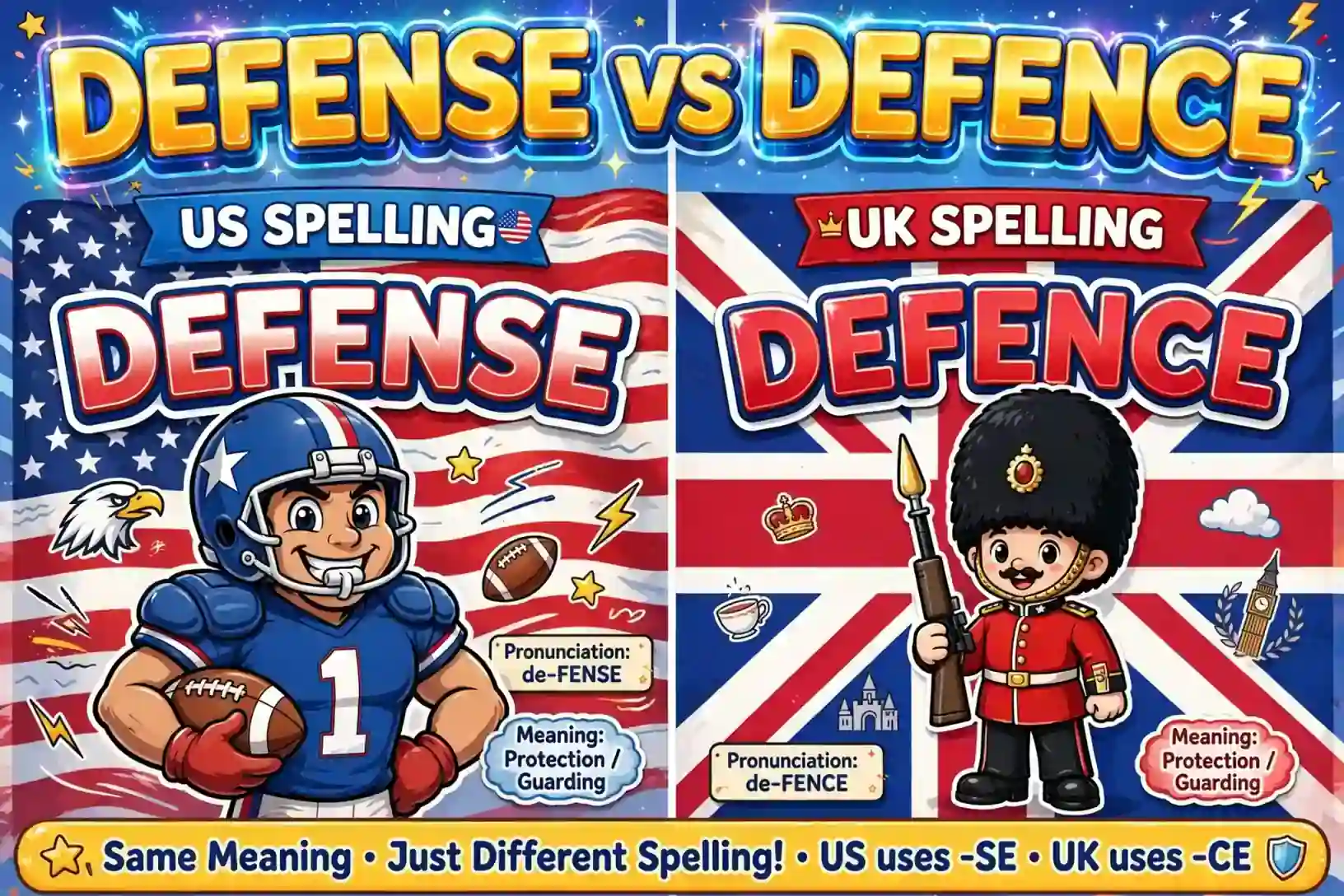
Defense is the American spelling, and defence is the British spelling. Both are correct; the right choice depends on your audience. Use defense for American readers and defence for British, Canadian, and Australian readers.
For example, “The defense played well” is natural in the US, while “The defence played well” is natural in the UK. Note that the verb is always defend in every variety of English — only the noun changes spelling.
Quick Answer
| Spelling | Region | Example |
|---|---|---|
| Defense | United States | The defense budget increased. |
| Defence | United Kingdom, Canada, Australia | The defence budget increased. |
Simple rule: Writing for Americans? Use defense with an s. Writing for British readers? Use defence with a c.
What Does Defense Mean?
Defense is the standard American spelling of the noun meaning protection against attack, or the act of defending. It covers military defense, legal defense, and sports defense alike.
Examples:
- The Secretary of Defense announced the new policy.
- Her lawyer presented a strong defense in court.
- The team’s defense held firm in the final quarter.
- The castle’s defenses included a moat and high walls.
American style guides, schools, and publishers consistently use defense, following the same -se preference seen in pairs like color vs. colour.
What Does Defence Mean?
Defence is the standard British spelling, also used in Canada, Australia, New Zealand, and Ireland. It means exactly the same thing as defense.
Examples:
- The Ministry of Defence released a statement.
- His defence rested its case early.
- United’s defence kept a clean sheet.
- The castle’s defences had stood for centuries.
British publications, schools, and official documents use defence without exception — the UK government department is literally called the Ministry of Defence. See defence on Cambridge Dictionary.
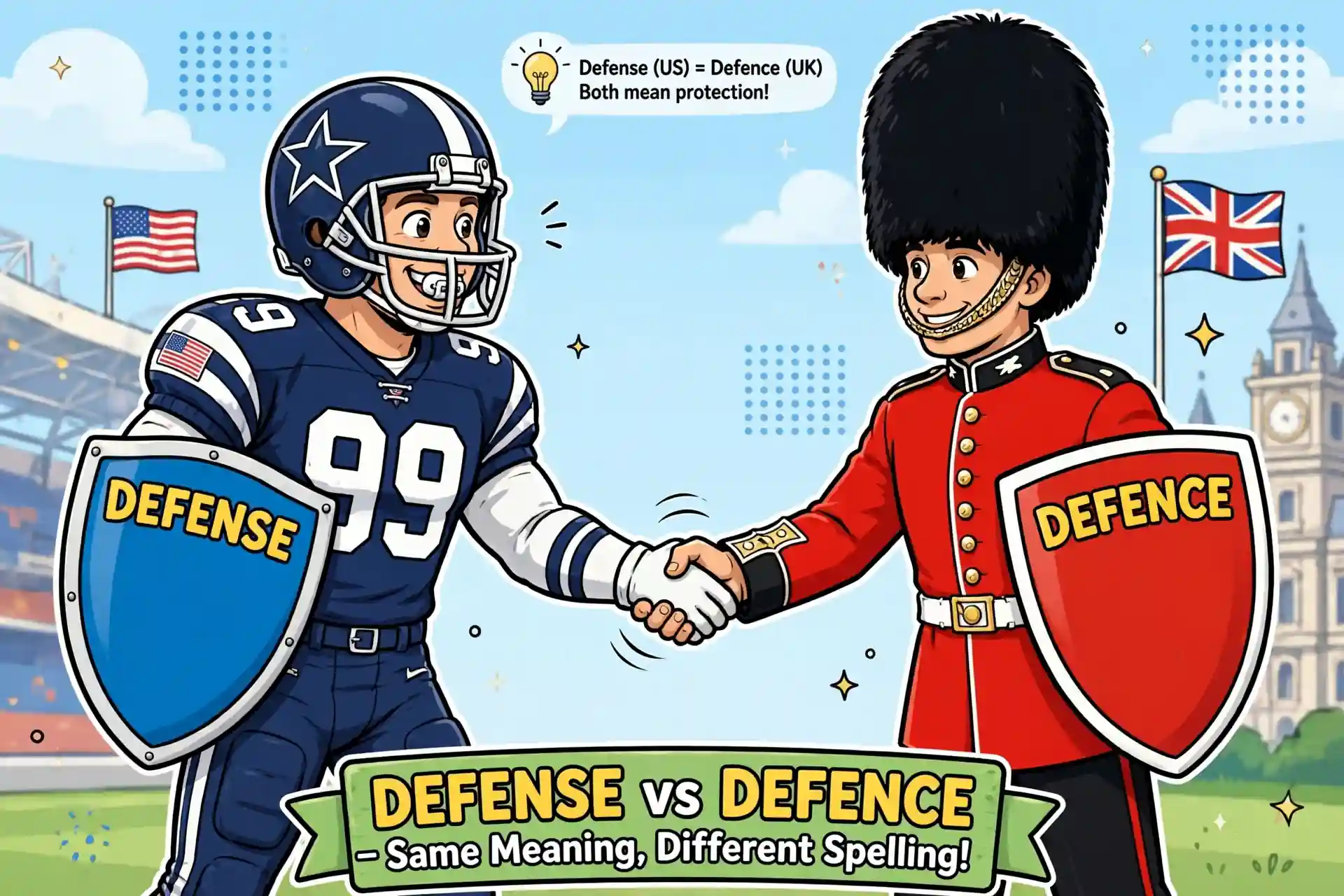
Defense vs. Defence: Key Differences
| Feature | Defense | Defence |
|---|---|---|
| Region | American English | British English |
| Meaning | Identical | Identical |
| Pronunciation | /dɪˈfɛns/ | /dɪˈfɛns/ |
| Verb form | Defend (both regions) | Defend (both regions) |
| Related words | Defenseless, defensive | Defenceless, defensive |
The -se vs. -ce pattern runs through several words: offense/offence, license/licence (noun), and practice/practise (noun/verb in the UK). Learning one pair helps with them all.
Why Are There Two Spellings?
Both spellings come from Old French defense. British English kept the -ce ending under French influence, while Noah Webster’s American spelling reforms in the early 1800s pushed the -se form in the United States.
The split is purely orthographic — the pronunciation /dɪˈfɛns/ is the same on both sides of the Atlantic, much like labelled vs. labeled.
Common Mistakes With Defense and Defence
Mistake 1: Mixing Spellings in One Document
❌ The defense ministry praised the team’s defence.
✅ The defense ministry praised the team’s defense. (US)
✅ The defence ministry praised the team’s defence. (UK)
Why: Pick one regional standard and stay consistent throughout a document.
Mistake 2: Using “Defence” as a Verb
❌ They will defence the title next season.
✅ They will defend the title next season.
Why: The verb is always defend — in American, British, and every other variety of English.
Mistake 3: Writing “Defens” or “Defenc”
❌ The castle had strong defens.
✅ The castle had strong defenses. (US) / defences. (UK)
Why: The plural keeps the full ending: defenses in the US, defences in the UK.
How to Remember the Difference
Memory trick: DefenCe keeps the C — think “C for the Crown” (British). DefenSe uses S — think “S for the States” (American).
- UK → Crown → C → defence
- US → States → S → defense
- The verb never changes: always defend, everywhere.

Frequently Asked Questions
Which is correct: defense or defence?
Both are correct. Defense is American English; defence is British English (also used in Canada and Australia).
Is it “defense” or “defence” in Canada?
Canada follows British spelling here: defence. You will see “Department of National Defence” on official Canadian documents.
What is the verb form?
Always defend, in every English variety. There is no “defence” or “defense” as a verb.
What about “offense” and “offence”?
The same pattern: offense is American, offence is British. Learning one pair teaches you both.
Is “defensive” spelled the same everywhere?
Yes — defensive (the adjective) is spelled identically in American and British English. Only the noun changes.
Conclusion
Defense is American and defence is British — same word, same meaning, same pronunciation. Choose the spelling your readers expect, keep it consistent, and remember the verb is always defend.