Cold or Flu: Symptoms, Differences, and When to Seek Care
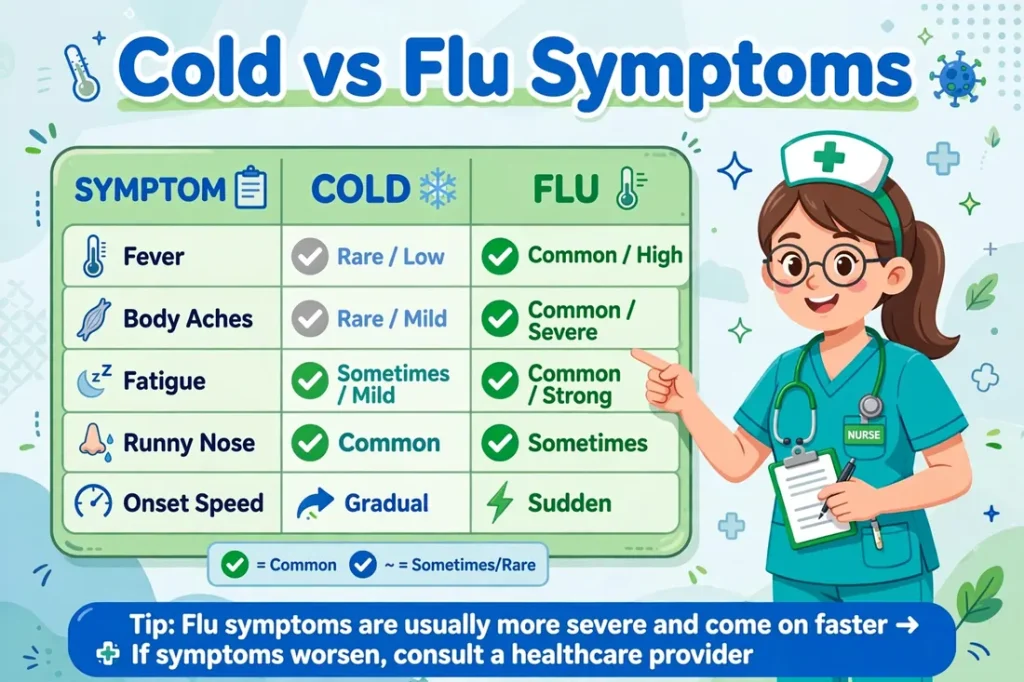
A cold and the flu are contagious respiratory illnesses caused by different viruses. They share symptoms, but the flu often starts suddenly and causes stronger body aches, fever, and fatigue. A cold usually develops gradually and mainly affects the nose and throat.
Symptoms alone cannot always confirm which illness you have. Testing may be needed, especially if you have a higher risk of complications.
Quick Answer
Quick Facts: Cold vs. Flu
|
Feature |
Common Cold |
Flu |
|
Cause |
Many different respiratory viruses |
Influenza viruses |
|
Onset |
Usually gradual |
Often sudden |
|
Main symptoms |
Runny nose, congestion, sneezing, sore throat |
Fever or chills, body aches, fatigue, cough |
|
Fever |
Uncommon or usually mild in adults |
Common, but not always present |
|
Body aches |
Usually mild |
Often more noticeable |
|
Tiredness |
Usually mild |
Can be significant |
|
Typical severity |
Usually mild |
Can range from mild to severe |
|
Possible complications |
Sinus or ear infections; rarely more serious problems |
Pneumonia and other serious complications |
|
Treatment |
Symptom relief and rest |
Symptom relief; antivirals may help some people |
What Is a Common Cold?
A common cold is a viral infection of the upper respiratory tract. It mainly affects the nose and throat. Many different viruses can cause it, with rhinoviruses among the most common.
Cold symptoms often appear gradually. They may become most noticeable during the first few days.
Common Cold Symptoms
Typical symptoms include:
A person with a cold may still feel well enough to continue some daily activities. However, symptoms can vary, and a cold can sometimes feel more uncomfortable than expected.
How Long Does a Cold Last?
Many colds improve within about a week. Some symptoms, especially a cough or blocked nose, can last longer.
The exact duration depends on the virus and the person’s health. Children may experience symptoms for longer than adults.
What Is the Flu?
The flu, also called influenza, is a contagious respiratory illness caused by influenza viruses. It can affect the nose, throat, and lungs.
Flu symptoms often begin suddenly. A person may feel well one day and become very unwell the next.
Common Flu Symptoms
Flu symptoms can include:
Not everyone with flu develops a fever. Some people also experience vomiting or diarrhea, especially children.
How Long Does the Flu Last?
Many people recover from flu within several days to less than two weeks. Fatigue or a cough may continue after other symptoms improve.
Some people develop complications, including pneumonia. The risk of severe illness is higher for certain groups, such as older adults, young children, pregnant people, and people with some chronic health conditions.
Key Differences Between Cold and Flu Symptoms
The way symptoms begin and how strongly they affect the body can offer useful clues. However, they cannot confirm a diagnosis.
1. How Quickly Symptoms Begin
A cold usually develops over time. You may first notice a scratchy throat or sneezing.
Flu often starts abruptly. Fever, chills, aches, and exhaustion may appear within a short period.
2. Fever and Chills
Fever is less common with a typical adult cold. If it occurs, it is often mild.
Flu more often causes fever and chills. However, some people with flu do not have a fever.
3. Body Aches and Fatigue
Mild aches can occur with a cold.
Flu commonly causes stronger muscle aches and more intense tiredness. Some people feel too unwell to carry out normal activities.
4. Runny Nose and Sneezing
A runny or stuffy nose and sneezing are common cold symptoms.
They can also occur with flu, but they may be less prominent than fever, aches, and fatigue.
5. Cough and Chest Discomfort
Both illnesses can cause a cough. A cold may cause a mild or moderate cough, while flu can cause a more intense cough.
A severe cough, breathing difficulty, or chest pain needs medical attention rather than a guess about which virus is responsible.
Cold vs. Flu: Side-by-Side Symptom Comparison
|
Symptom |
Cold |
Flu |
|
Runny or stuffy nose |
Common |
Sometimes |
|
Sneezing |
Common |
Sometimes |
|
Sore throat |
Common |
Sometimes |
|
Cough |
Common, often mild to moderate |
Common, can be severe |
|
Fever |
Uncommon in adults |
Common, but not universal |
|
Chills |
Uncommon |
Fairly common |
|
Body aches |
Usually mild |
Often more noticeable |
|
Headache |
Less common |
Common |
|
Fatigue |
Sometimes |
Often significant |
|
Symptom onset |
Usually gradual |
Often sudden |
These patterns describe typical cases. They are not a diagnostic test. Some people have unusual symptoms, and the illnesses can overlap.
Can You Tell If It Is a Cold or Flu?
You may be able to identify clues, but symptoms alone cannot always distinguish the two.
For example, a sudden fever with strong body aches may suggest flu. A gradual runny nose with sneezing may suggest a cold. Neither pattern proves which virus caused the illness.
COVID-19, respiratory syncytial virus (RSV), and other infections can also cause cold-like symptoms. A healthcare professional may recommend testing based on your symptoms, exposure, health risks, and local circulation of viruses.
When Is Testing Useful?
Testing can be especially important when:
A healthcare professional can advise which test is appropriate. Some tests detect influenza, COVID-19, or both.
How Are Colds and Flu Treated?
There is no medicine that cures the common cold or flu immediately. Treatment usually focuses on easing symptoms and supporting recovery.
The right approach depends on the person’s age, health, symptoms, and risk of complications.
Managing a Common Cold
Most people with a cold can manage symptoms at home.
Helpful steps may include:
Cold medicines may ease symptoms, but they do not remove the virus or guarantee a faster recovery.
Managing the Flu
People with mild flu may also recover with rest, fluids, and symptom relief.
Some people may benefit from prescription antiviral medicines. These medicines work against influenza viruses and are most useful when started early, often within the first 48 hours after symptoms begin.
Antiviral treatment may still be appropriate later for people who are very ill or at higher risk of complications. Contact a healthcare professional promptly if you may qualify.
Do Antibiotics Treat a Cold or Flu?
No. Antibiotics treat bacterial infections, not viruses such as those that cause colds and flu.
Taking antibiotics when they are not needed can cause side effects and contribute to antibiotic resistance. A clinician may prescribe them if a bacterial complication develops, but they do not treat the original viral infection.
Who Is at Higher Risk of Flu Complications?
Flu can affect anyone, but certain people face a greater risk of serious illness.
These groups include:
If someone in a higher-risk group develops flu symptoms, they should contact a healthcare professional promptly. Early advice matters because antiviral treatment works best when started soon.
When Should You Seek Medical Care?
Most colds and many flu cases improve without urgent treatment. However, some symptoms require medical assessment.
Get Emergency Help for Warning Signs
Seek emergency medical care for symptoms such as:
For children, urgent warning signs can include fast or difficult breathing, bluish lips or face, ribs pulling in with each breath, or unusual lack of alertness.
Contact a Healthcare Professional
Seek medical advice if:
This guidance does not replace an individual medical assessment. Seek care sooner if symptoms are severe or worrying.
How to Prevent Colds and Flu
Colds and flu spread through respiratory viruses. Practical steps can reduce the chance of infection and transmission.
Wash Your Hands
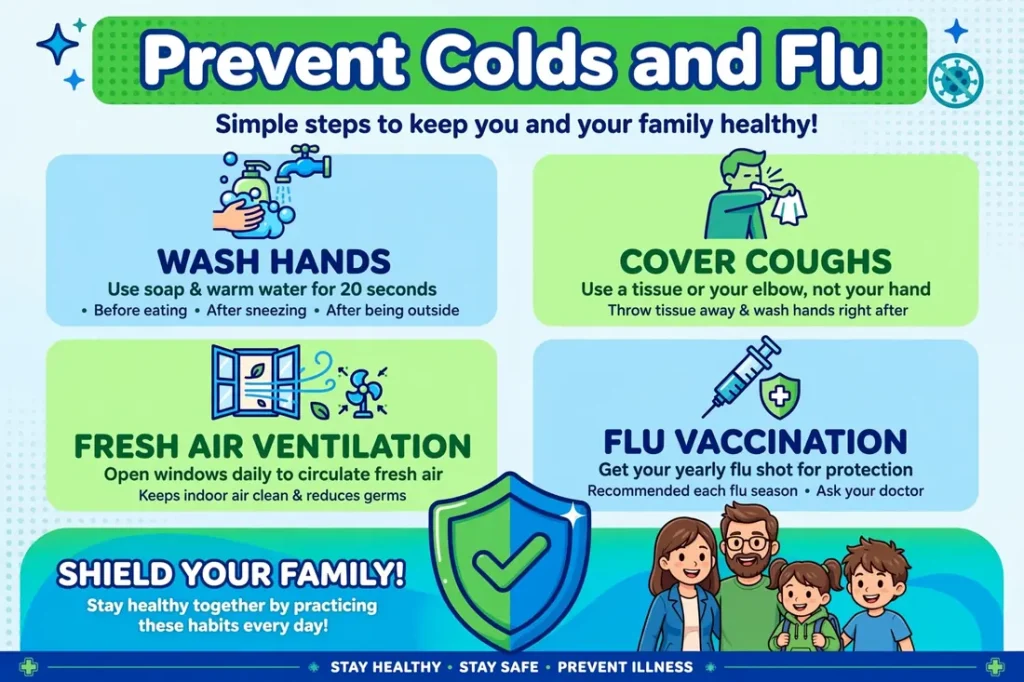
Wash your hands with soap and water, especially after coughing, sneezing, or blowing your nose. If soap and water are unavailable, use an appropriate alcohol-based hand sanitizer.
Cover Coughs and Sneezes
Use a tissue or your elbow when coughing or sneezing. Throw used tissues away and clean your hands afterward.
Improve Indoor Air
When possible, open windows or improve ventilation. Cleaner indoor air can reduce the spread of respiratory viruses.
Avoid Close Contact When Sick
Stay home when you are unwell, if possible. Avoid close contact with people at higher risk of severe illness.
Consider Flu Vaccination
Seasonal flu vaccination helps reduce the risk of influenza and its complications. Recommendations can vary by age, health status, and country. Ask a healthcare professional about the vaccine advised for you.
There is no vaccine that prevents every virus responsible for the common cold.
Cold or Flu in Children
Children can develop both illnesses, and symptoms may look different from those in adults.
A child with a cold may have a runny nose, sneezing, cough, and sore throat. Flu can cause sudden fever, body aches, tiredness, and cough. Children with flu may also experience vomiting or diarrhea.
Watch for changes in breathing, fluid intake, alertness, and behavior. Young children can become dehydrated more quickly than adults.
Do not give children adult cold medicines. Check age limits and dosing instructions with a healthcare professional or pharmacist.
Frequently Asked Questions
Is a Cold or Flu More Serious?
Flu can cause more severe illness and complications than a typical cold. However, either illness can require medical care, especially in people at higher risk. Symptoms and individual health factors matter.
Can You Have the Flu Without a Fever?
Yes. Not everyone with flu develops a fever. A person may still have flu with symptoms such as cough, body aches, headache, chills, or fatigue.
How Can You Tell the Difference Between a Cold and Flu Quickly?
Flu often begins suddenly and causes stronger body aches, fever, chills, and fatigue. A cold usually develops gradually and causes more nasal symptoms. These are clues, not a reliable diagnosis.
Can a Cold Turn Into the Flu?
No. A cold does not change into influenza because different viruses cause the illnesses. However, someone can catch flu after having a cold, or develop a complication during either illness.
Are Cold and Flu Both Contagious?
Yes. Both spread from person to person. The ways they spread can include respiratory particles and close contact. Staying home when sick, improving ventilation, and practicing hand hygiene can help reduce transmission.
When Should You Take Flu Antiviral Medicine?
Antiviral medicines require a prescription in many places. They work best when started early, often within 48 hours after symptoms begin. People at higher risk or with severe illness should contact a healthcare professional promptly rather than waiting.
Conclusion
A cold and the flu share symptoms, but they are caused by different viruses. Colds usually develop gradually and mainly affect the nose and throat. Flu often begins suddenly and can cause stronger body aches, fever, and fatigue.
Symptoms can overlap with COVID-19 and other respiratory infections, so they cannot confirm the cause. Consider testing or medical advice when you are at higher risk, feel seriously unwell, or notice warning signs.