Cancelling or Canceling: Which Spelling Is Correct?
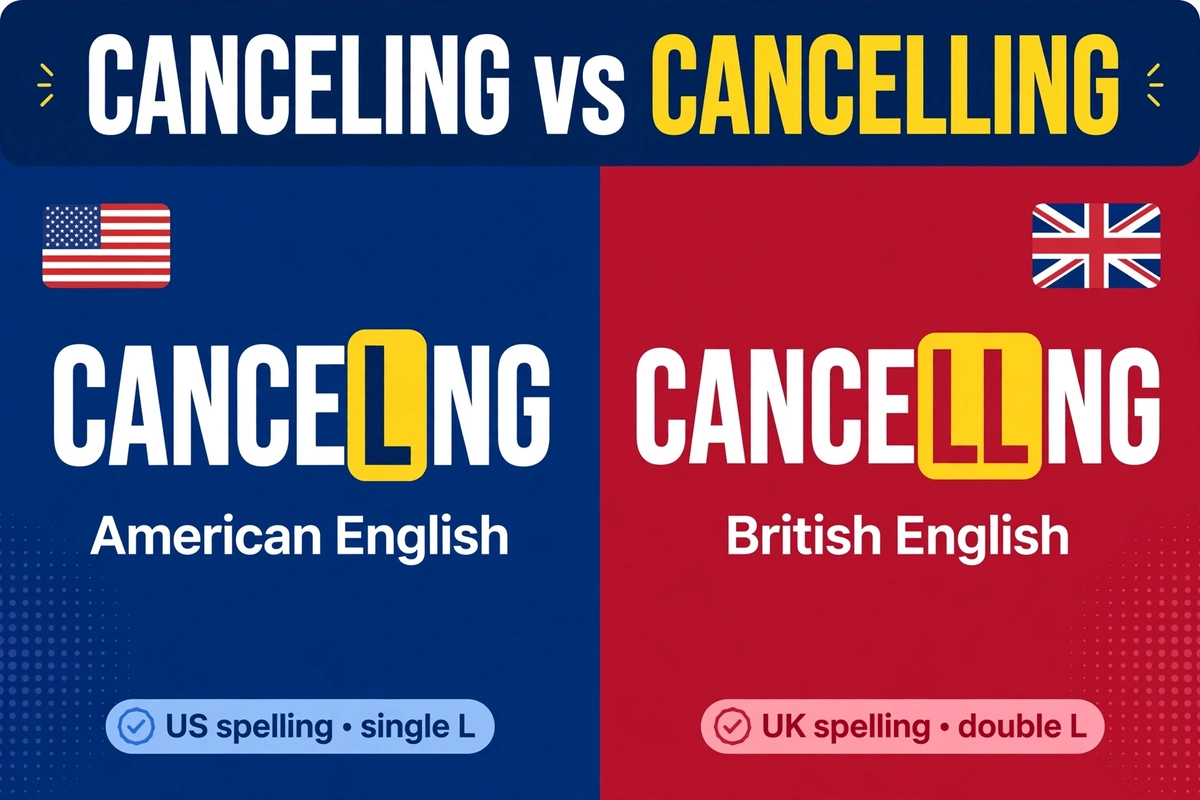
Both cancelling and canceling are correct spellings of the same word. The difference comes from regional English conventions. American English generally prefers “canceling” with one L, while British English uses “cancelling” with two Ls.
Both forms mean stopping or calling off something previously planned. They have the same pronunciation, meaning, and grammatical function. Your choice depends on your target audience and preferred English style.
Quick Answer: Cancelling or Canceling?
Use canceling in American English and cancelling in British English.
Neither spelling is incorrect. Both are present participles and gerunds of the verb “cancel.”
Examples:
Both sentences communicate exactly the same meaning.
Quick Facts About Cancelling and Canceling
|
Feature |
Canceling |
Cancelling |
|
Spelling |
One L |
Two Ls |
|
English variety |
American English |
British English |
|
Meaning |
Stopping something planned |
Stopping something planned |
|
Pronunciation |
Same |
Same |
|
Part of speech |
Gerund or present participle |
Gerund or present participle |
|
Correctness |
Correct |
|
|
Common usage |
United States |
United Kingdom |
|
Past tense |
Canceled |
Cancelled |
What Does Canceling Mean?
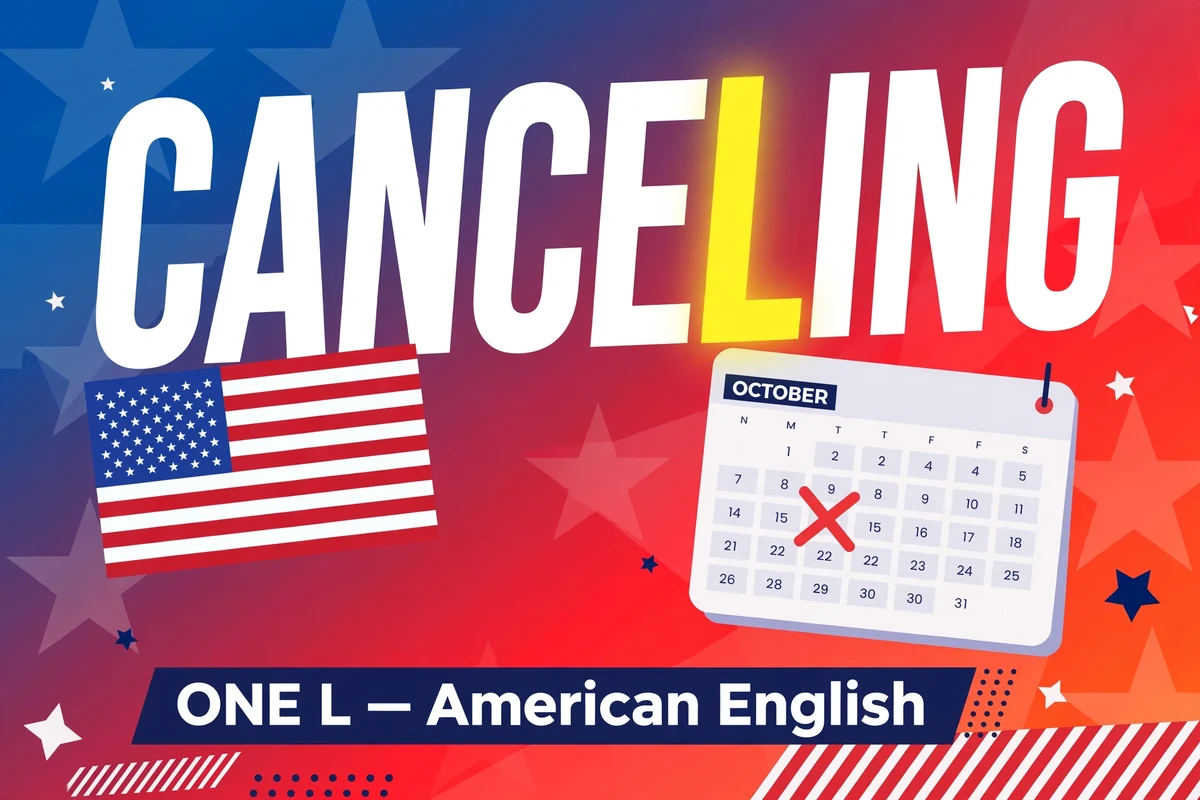
Canceling is the American English spelling of the present participle or gerund of “cancel.”
It means stopping an arrangement, activity, service, or event before it happens.
People commonly use it when discussing appointments, subscriptions, reservations, orders, and scheduled activities.
Examples:
In each sentence, the word describes the action of stopping something.
When to Use Canceling
Use canceling when writing for American readers or following American English spelling conventions.
It is suitable for:
For example:
"The customer is canceling the order because of a delivery delay."
This sentence follows standard American spelling.
What Does Cancelling Mean?
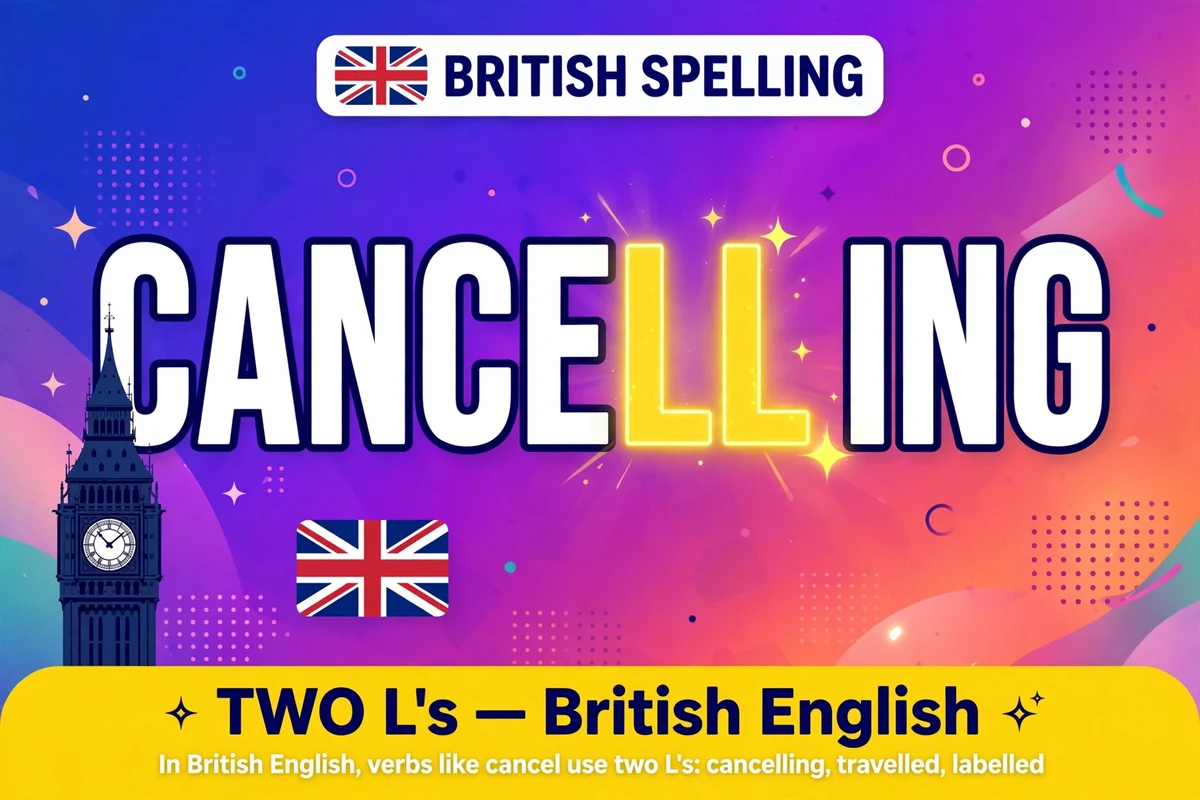
Cancelling is the British English spelling of the same word.
It carries the same meaning as canceling. The only difference is the additional L.
British English generally doubles the final L in certain words before adding suffixes such as "-ing."
Examples:
These examples are grammatically identical to their American counterparts.
When to Use Cancelling
Use cancelling when writing for British English audiences.
This spelling is also commonly used in Australian English and other English varieties influenced by British spelling conventions.
It is appropriate for:
For example:
"The customer is cancelling the order because of a delivery delay."
The sentence uses standard British spelling.
Key Differences Between Cancelling and Canceling
The main difference is regional spelling preference.
American English generally removes the second L when adding "-ing" to cancel. British English usually retains it.
|
Comparison |
Canceling |
Cancelling |
|
Number of Ls |
One |
Two |
|
Region |
American English |
British English |
|
Meaning |
Same |
Same |
|
Grammar |
Same |
Same |
|
Pronunciation |
Same |
Same |
|
Example |
Canceling a subscription |
Cancelling a subscription |
Neither form changes the meaning of a sentence.
For example:
Both sentences are correct.
American vs British English Spelling Rules
The difference between these spellings follows a broader pattern in American and British English.
British English often doubles the final L when adding certain suffixes. American English frequently uses a single L in similar words.
American English Examples
|
American Spelling |
British Spelling |
|
Canceling |
Cancelling |
|
Canceled |
Cancelled |
|
Traveling |
Travelling |
|
Traveled |
Travelled |
|
Labeling |
Labelling |
|
Labeled |
Labelled |
|
Modeling |
Modelling |
|
Modeled |
Modelled |
|
Signaling |
Signalling |
|
Signaled |
Signalled |
These differences appear in many commonly used English words.
However, spelling conventions have exceptions. Do not assume every word follows the same pattern.
British English Examples
British English generally uses double L in these forms:
American English generally removes the additional L in these corresponding forms.
The correct choice depends on the regional standard you follow.
Is It Cancelling or Canceling in Canadian English?
Canadian English uses elements of both American and British spelling.
For this particular word, cancelling is commonly used in Canadian English.
However, spelling preferences can vary between publishers, organizations, and editorial guides.
If you write for a Canadian audience, follow the preferred dictionary or style guide of your publication.
Consistency matters more than mixing regional conventions.
Cancelling or Canceling in Different Grammar Structures
Both spellings work in the same grammatical structures.
The difference does not affect sentence formation.
1. Present Participle
A present participle describes an ongoing action. It often appears with helping verbs.
American English:
British English:
Both forms follow correct grammar.
2. Gerund
A gerund is a verb ending in "-ing" that functions as a noun.
Both spellings can act as subjects or objects.
Examples:
In these sentences, the "-ing" word represents an action.
3. After Prepositions
English grammar often uses gerunds after prepositions.
The same rule applies to both regional spellings.
Examples:
You can use either form, depending on your English variety.
4. In Questions
Both spellings work naturally in questions.
Examples:
The spelling does not change the question’s structure.
Cancelling, Canceling, Cancelled, and Canceled: What’s the Difference?
These words come from the same verb, but they serve different grammatical purposes.
The regional spelling convention affects both the present participle and past tense.
|
Word |
American English |
British English |
|
Base verb |
Cancel |
Cancel |
|
Present participle |
Canceling |
Cancelling |
|
Past tense |
Canceled |
Cancelled |
|
Past participle |
Canceled |
Cancelled |
|
Third-person singular |
Cancels |
Cancels |
|
Noun |
Cancellation |
Cancellation |
Canceling vs. Canceled
Canceling describes an ongoing action or functions as a gerund.
Canceled describes an action completed in the past.
Examples:
In British English:
Cancelling vs. Cancelled
Both British spellings contain two Ls.
However, they have different grammatical functions.
Examples:
The first sentence describes an ongoing action. The second describes a completed action.
Why Is Cancellation Spelled With Two Ls?
Cancellation is generally spelled with two Ls in both American and British English.
This is an important spelling difference.
American English uses canceling and canceled. However, it normally retains both Ls in cancellation.
Examples:
Cancelation is also recognized as a less common spelling variant.
For general and professional writing, cancellation is the conventional choice.
Examples of Cancelling and Canceling in Sentences
The following examples demonstrate how both spellings work in everyday situations.
Examples Using Canceling
Examples Using Cancelling
Both lists communicate the same information.
The spelling difference simply reflects the English variety.
Common Mistakes When Using Cancelling or Canceling
Writers sometimes misunderstand these spellings because English follows different regional conventions.
Here are some common mistakes to avoid.
Mistake 1: Treating Cancelling as Incorrect
Cancelling is not a spelling mistake.
It is the standard British English form.
American English generally prefers canceling, but both forms are recognized.
Mistake 2: Treating Canceling as Incorrect
Canceling is not incorrect in British English writing.
It is the standard American spelling.
However, British publications usually prefer cancelling.
Mistake 3: Mixing American and British Spellings
Using both spellings in the same article can create inconsistency.
For example:
"The company is cancelling the service. Later, it started canceling customer orders."
Both spellings are valid, but the sentence mixes regional conventions.
Choose one spelling system and follow it throughout your content.
Mistake 4: Spelling Cancellation Incorrectly
Cancellation usually contains two Ls in both American and British English.
Remember this distinction:
Mistake 5: Adding an Extra L to the Base Verb
The correct base verb is cancel, not cancell.
Examples:
The regional spelling difference appears in certain derived forms.
How to Remember the Correct Spelling
A simple method can help you remember the difference.
Think about your audience before choosing the spelling.
American English
Cancel + ing = Canceling
One L in the present participle.
British English
Cancel + ling pattern = Cancelling
Two Ls in the present participle.
Both varieties
Cancellation
The standard noun spelling contains two Ls.
You can also remember the past tense forms:
These forms follow the same regional spelling preference.
Frequently Asked Questions
Is cancelling or canceling correct?
Both spellings are correct. Canceling is preferred in American English, while cancelling is standard in British English. Both have the same meaning.
Is cancelling British or American English?
Cancelling is primarily associated with British English. It is also commonly used in Australian English and other varieties following British spelling conventions.
Is canceling with one L correct?
Yes. Canceling with one L is the standard American English spelling. It describes the action of stopping or calling off something.
Why do Americans spell canceling with one L?
American English generally does not double the final L in certain words when adding suffixes. Therefore, it uses canceling and canceled instead of cancelling and cancelled.
Is cancellation spelled with one L or two?
Cancellation is normally spelled with two Ls in both American and British English. Cancelation is also accepted as a less common variant.
What is the past tense of canceling?
The American English past tense is canceled. British English uses cancelled. Both forms describe an action that has already happened.
Conclusion
Both cancelling and canceling are correct spellings. The difference depends on regional English conventions, not grammar or meaning.
American English generally prefers canceling, while British English uses cancelling.
Remember that cancellation normally contains two Ls in both varieties. Choose the spelling that matches your audience and maintain consistency throughout your writing.