Yogurt or Yoghurt: US vs UK Spelling Explained
Yogurt is the American spelling and yoghurt is the British spelling of the same cultured dairy food — the thick, tangy product made by fermenting milk with live bacteria. One-line distinction: write yogurt for a US audience, yoghurt for a UK audience. “She had yogurt for breakfast” is American; “She had yoghurt for breakfast” is British.
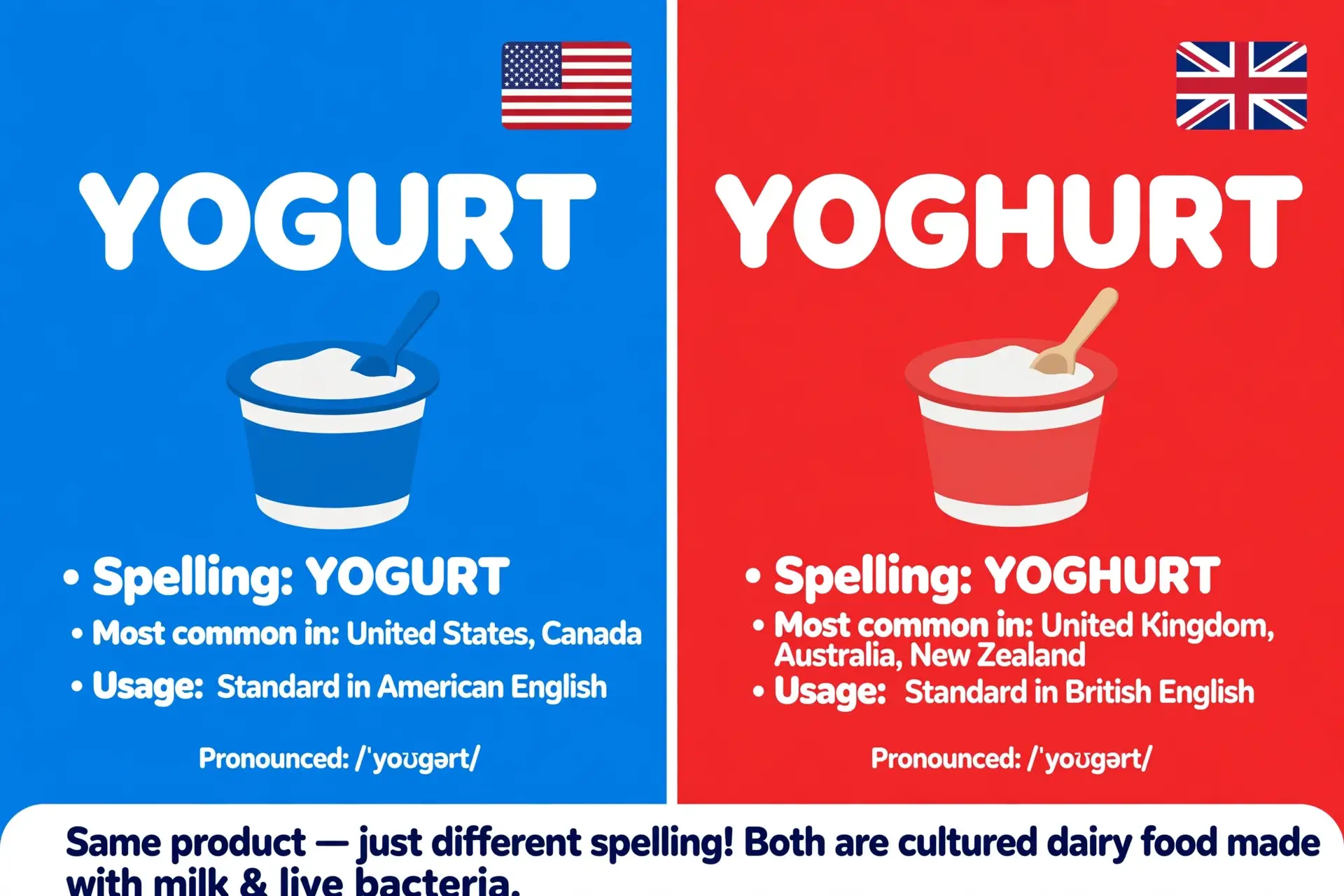
Table of Contents
- Quick Answer
- What Does Yogurt Mean?
- What Does Yoghurt Mean?
- Why Two Spellings?
- Yogurt vs. Yoghurt: Key Differences
- Related US vs UK Word Pairs
- Yogurt in American and British Brands
- Usage Examples in Real Sentences
- Common Mistakes
- Pronunciation
- How to Remember the Difference
- Frequently Asked Questions
- Conclusion
Quick Answer
| Word | Region | Main Meaning | Example |
|---|---|---|---|
| Yogurt | United States | Fermented dairy food, thick and tangy | I eat yogurt every morning. |
| Yoghurt | UK, Canada, Australia | Fermented dairy food, thick and tangy | I eat yoghurt every morning. |
Simple rule: same food, same meaning — use yogurt for American readers and yoghurt for British readers.
What Does Yogurt Mean?
Yogurt is the standard American spelling for the fermented milk product made by adding live bacterial cultures (typically Lactobacillus and Streptococcus) to milk. It covers every variety Americans buy: Greek yogurt, frozen yogurt, drinkable yogurt, and plant-based versions made from almonds or soy. Merriam-Webster lists yogurt as the headword spelling in its dictionary.
Examples:
- He topped his granola with Greek yogurt.
- The kids love frozen yogurt after school.
- This recipe needs a cup of plain yogurt.
- She switched to almond-milk yogurt last year.
- The store brand yogurt tastes just as good.
What Does Yoghurt Mean?
Yoghurt is the standard British spelling — identical in meaning, pronunciation, and grammar to the American form. In the UK, Ireland, Australia, and most of the Commonwealth, this is the spelling on packaging, menus, and recipes. British style guides treat yogurt as the American variant.
Examples:
- He topped his muesli with Greek yoghurt.
- The children love frozen yoghurt after school.
- This recipe needs a pot of natural yoghurt.
- She buys goat’s milk yoghurt from the market.
Why Two Spellings?
The word entered English from Turkish yoğurt, and early English writers rendered it several ways — yogurt, yoghurt, and even yoghourt. British English settled on the form with the extra H, which mirrors older transliterations of the Turkish word, and the Oxford dictionaries still headword it as yoghurt. American English, following Noah Webster’s push toward simpler spellings, trimmed it to yogurt — one letter lighter, no H. The pattern echoes other US/UK splits: British English keeps the fuller historical form while American English drops a letter, the same US/UK spelling split as jewelry and jewellery. Neither spelling is wrong — each is the standard in its own region.
Yogurt vs. Yoghurt: Key Differences
| Feature | Yogurt | Yoghurt |
|---|---|---|
| Region | United States | UK, Ireland, Australia, Canada |
| Spelling | Y-o-g-u-r-t (no H) | Y-o-g-h-u-r-t (with H) |
| Meaning | Fermented dairy food | Exactly the same |
| Pronunciation | “YOH-gurt” | “YOH-gurt” (same) |
| Countable? | Usually uncountable (“some yogurt”) | Usually uncountable (“some yoghurt”) |
| Dictionary headword | Merriam-Webster | Oxford English Dictionary |
The difference is purely regional: meaning, grammar, and pronunciation are identical — only one letter separates them.
Related US vs UK Word Pairs
| American (US) | British (UK) |
|---|---|
| yogurt | yoghurt |
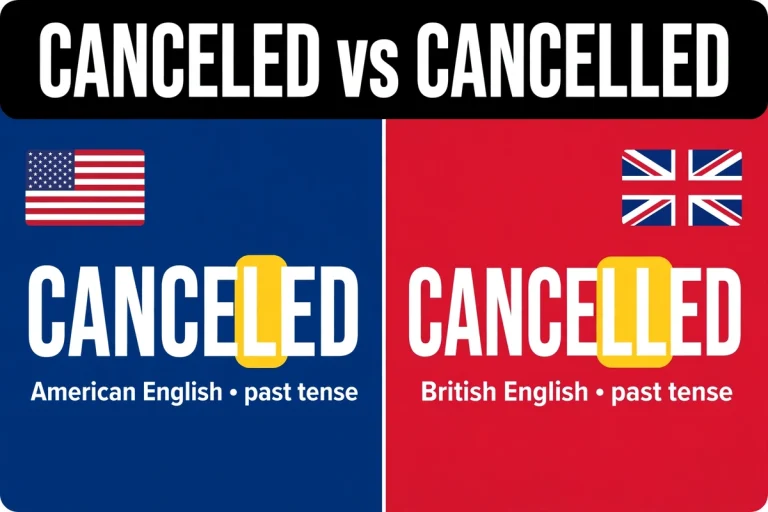
| canceled | cancelled |
| color | colour |
| flavor | flavour |
| theater | theatre |
| gray | grey |
| fiber | fibre |
| check (payment) | cheque |
See the pattern? British English usually keeps the extra letters that American English trimmed away.
Yogurt in American and British Brands
Packaging follows the regional split exactly. In the US, brands like Chobani and Fage advertise “Greek yogurt” — no H anywhere on the label. In the UK, supermarket own-brand tubs from Tesco and Sainsbury’s are labelled “Greek-style yoghurt” or “natural yoghurt.” This matters for search too: an American shopper types “best greek yogurt” into Google, while a British shopper types “best greek yoghurt.” If you write product copy or a food blog, match the spelling to the market you want to reach.
Usage Examples in Real Sentences
At Breakfast
US: “I had yogurt and berries for breakfast.” — UK: “I had yoghurt and berries for breakfast.” Same meal, different spelling.
At the Store
An American mom writes “yogurt” on her grocery list; a British mum writes “yoghurt” on hers. Both end up with the same tub in the fridge.
In Conversation
“This yogurt is really thick” and “This yoghurt is really thick” are the same compliment — only the H moves the sentence across the Atlantic.

Common Mistakes
With regional spellings the mistake is rarely the meaning — it’s mixing forms or adding phantom letters, much like regional spellings such as saviour and savior trip writers up in the same way.
Mistake 1: Mixing both spellings in one document
❌ “Our yogurt range includes Greek yoghurt and fruit yogurt.”
✅ “Our yogurt range includes Greek yogurt and fruit yogurt.”
Why: pick one regional spelling and stick with it throughout the document.
Mistake 2: Writing “yogert” or “yogurt” with a missing letter
❌ “She bought strawberry yogert.”
✅ “She bought strawberry yogurt.” (US) / “She bought strawberry yoghurt.” (UK)
Why: yogert is a misspelling in every variety of English.
Mistake 3: Using “yogourt” in English text
❌ “The menu offered frozen yogourt.”
✅ “The menu offered frozen yogurt.”
Why: yogourt is the French spelling — in English writing, use yogurt or yoghurt.
Mistake 4: Adding a random umlaut (“yogürt”)
❌ “Try our new yogürt bowls!”
✅ “Try our new yogurt bowls!”
Why: the umlaut belongs in the original Turkish yoğurt; English dropped it centuries ago.
Pronunciation
Both are pronounced “YOH-gurt” — two syllables, stress on the first, rhyming roughly with go-kart. The H in yoghurt is completely silent, so the spelling difference is invisible in speech and only matters in writing.
How to Remember the Difference
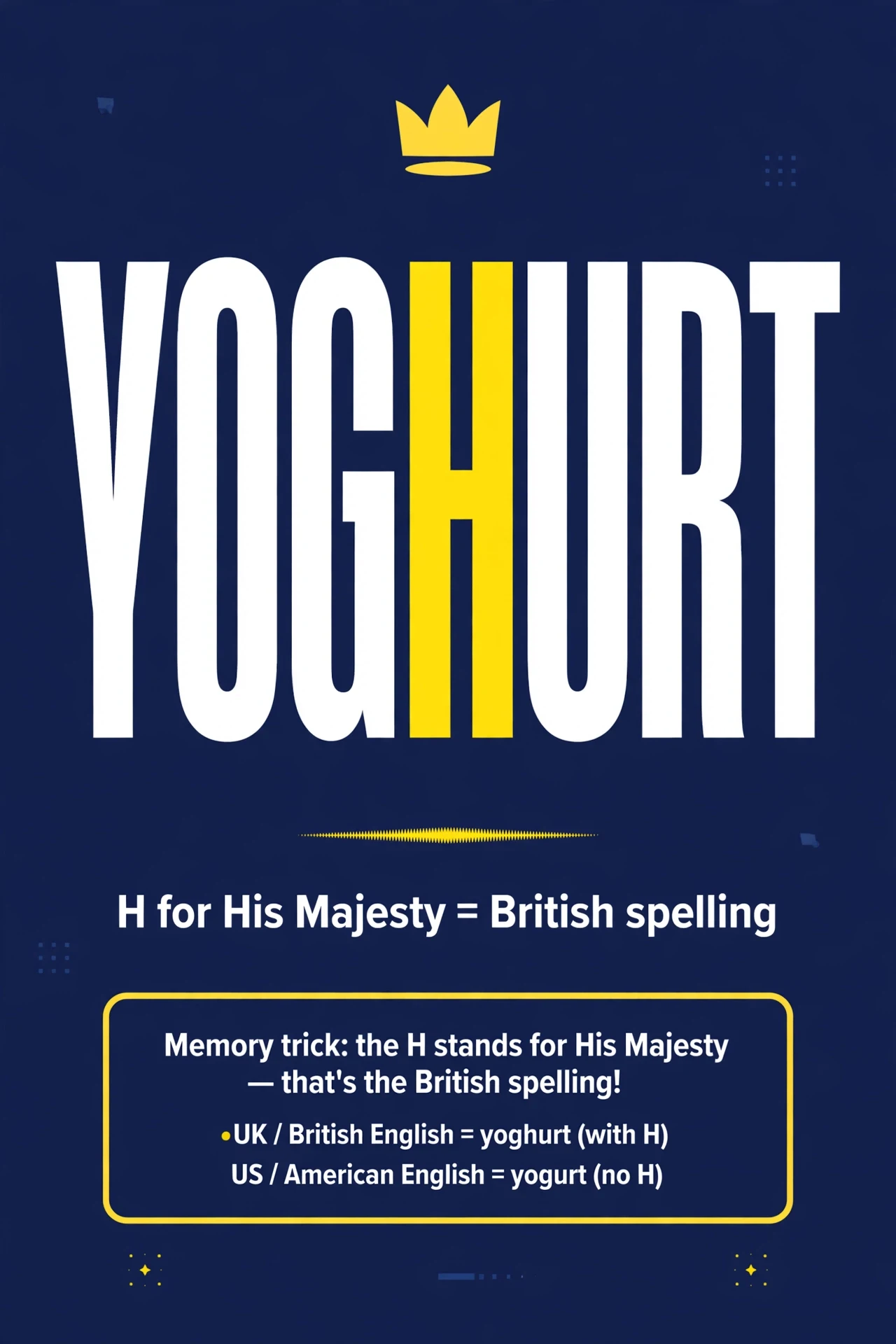
The British form keeps the extra H — think “H for His Majesty” to tie it to the UK. American yogurt is the leaner, H-free version. Quick recap:
- Yogurt = American spelling (no H, like the streamlined US forms)
- Yoghurt = British spelling (extra H, “H for His Majesty”)
- Same food, same pronunciation — match the spelling to your audience and stay consistent
Frequently Asked Questions
Is it yogurt or yoghurt?
Both are correct. Yogurt is the American spelling; yoghurt is the British spelling of the same food.
Which spelling is used in Canada and Australia?
Both countries generally follow British convention, so yoghurt is standard, though yogurt appears on imported American brands.
Is “yogourt” a correct spelling?
It’s the French spelling, not an English one. In English writing use yogurt (US) or yoghurt (UK).
Which spelling came first?
The earliest English forms (1600s) varied wildly — yogurt, yoghurt, and yoghourt all appear in old texts. The regional split hardened in the 20th century.
Is the H in yoghurt silent?
Yes. Yoghurt is pronounced “YOH-gurt,” exactly like yogurt — the H is never sounded.
Does the spelling affect Google searches?
Yes, for exact-match queries. Americans search “greek yogurt recipes” while Brits search “greek yoghurt recipes,” so food bloggers should use the spelling their audience types.
Conclusion
Yogurt and yoghurt are the same food in different regional dress — American and British respectively. Choose the spelling your audience expects, use it consistently, and remember: the H is silent, and it belongs to Britain.