Ride or Die: Meaning, Origin, and How to Use the Phrase
“Ride or die” describes someone who remains loyal and supportive through difficult situations. It often refers to a close friend, romantic partner, or trusted person who never abandons you. The phrase can also describe someone’s willingness to face serious risks alongside another person.
The expression is informal and widely used in everyday conversations, relationships, music, and social media. Its meaning can change slightly depending on the context.

Quick Answer: What Does Ride or Die Mean?
“Ride or die” means showing strong loyalty, commitment, and support toward someone, regardless of the challenges involved.
A ride-or-die person stands beside you during difficult times. They support you when life becomes complicated and do not leave when things go wrong.
Example:
“My sister is my ride or die because she has supported me through every difficult moment.”
Here, the phrase describes someone dependable who remains loyal during good and bad times.
Quick Facts About Ride or Die
|
No rows |
What Does Ride or Die Mean in Different Contexts?
The expression has several related meanings. Its interpretation depends on the relationship and situation.

1. Ride or Die Meaning in Friendship
In friendship, a ride-or-die friend is someone who stays with you through difficult experiences.
This person offers emotional support, keeps your secrets, and celebrates your achievements. They do not disappear when you need help.
For example:
The phrase emphasizes trust and loyalty rather than simply spending time together.
A ride-or-die friend does not have to agree with everything you do. A genuine friend can disagree while continuing to care about you.
2. Ride or Die Meaning in Relationships
In romantic relationships, ride or die describes a partner who demonstrates deep commitment.
Such a partner remains supportive during financial difficulties, personal struggles, and unexpected life changes.
For example:
In this context, the expression communicates devotion and emotional connection.
However, loyalty does not mean accepting disrespect, dishonesty, or harmful behavior. Healthy relationships require mutual respect and boundaries.
3. Ride or Die Meaning in Slang
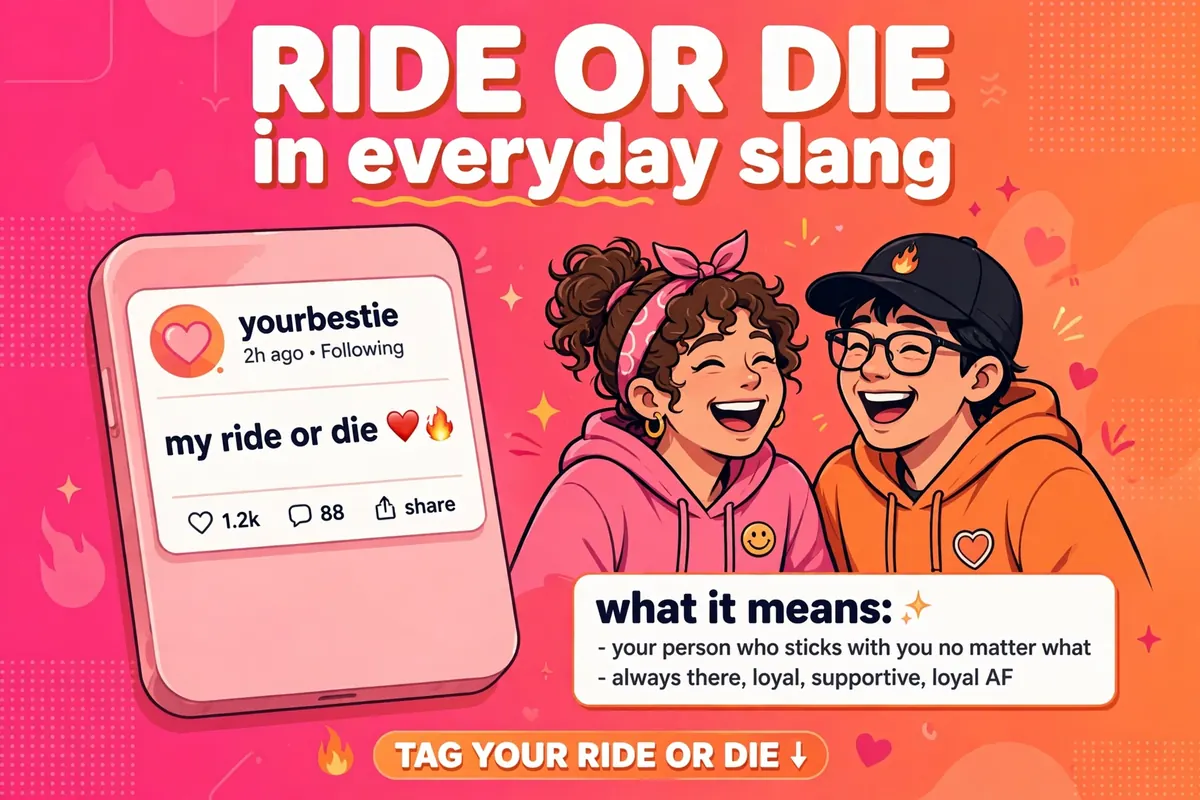
As slang, "ride or die" describes someone who is extremely loyal to another person.
People often use it casually to express appreciation or affection.
For example:
It can also describe loyalty toward a team, family member, or group.
The phrase sounds more personal and emotional than simply calling someone a good friend.
4. Ride or Die Meaning on Social Media
On social media, people commonly use the expression in captions, comments, and relationship posts.
It can describe a close friendship, romantic partnership, or long-lasting connection.
Examples include:
Sometimes people use it humorously rather than seriously.
For example, someone might call their favorite coffee shop their ride or die because they visit it every morning.
What Is the Difference Between Ride or Die and Ride-or-Die?
Both forms express the same idea. The difference comes from how the phrase functions in a sentence.
|
Expression |
Usage |
Example |
|
Ride or die |
Used independently in a sentence |
"She’s my ride or die." |
|
Ride-or-die |
Used as a compound adjective |
"He’s my ride-or-die friend." |
When to Use Ride or Die
Use the open form when the phrase acts as a noun or appears independently.
Examples:
When to Use Ride-or-Die
Use the hyphenated form when the expression directly describes another noun.
Examples:
In everyday digital communication, people often write both forms without strict punctuation rules. The hyphenated version helps clarify compound modifiers in formal writing.
Where Did the Phrase Ride or Die Come From?
The expression "ride or die" is associated with American slang and expressions of loyalty.
Its wording suggests two possible choices: continue riding alongside someone or face death rather than abandon them.
The word "ride" can refer to traveling together, while "die" represents the extreme consequences of refusing to leave.
Over time, the expression became associated with strong personal loyalty.
Its popularity grew through music, entertainment, and popular culture. Hip-hop culture helped bring the expression into wider everyday use.
Today, people generally use it figuratively rather than literally.
When someone calls a friend their ride or die, they usually mean that person is dependable and committed.
Is Ride or Die a Positive or Negative Expression?
"Ride or die" is generally positive when it describes loyalty, trust, and emotional support.
However, its meaning can become negative when someone uses loyalty to justify harmful behavior.
Positive Meaning
The expression can represent:
Example: "My best friend is my ride or die because she never judges me during difficult moments."
Negative Meaning
In certain situations, the phrase can suggest blind loyalty or unhealthy dependence.
For example, someone might expect their partner to support every decision, even when those decisions cause harm.
That expectation does not represent healthy commitment.
Real loyalty allows people to maintain personal boundaries and make responsible choices.
Ride or Die Examples in Everyday Sentences
Understanding the expression becomes easier through practical examples.
Examples About Friendship
Examples About Romantic Relationships
Examples in Casual Conversations
Examples for Social Media Captions
Common Mistakes When Using Ride or Die
Although the expression is simple, people sometimes misunderstand its meaning or grammatical usage.
Mistake 1: Thinking It Only Describes Romantic Partners
The phrase does not exclusively refer to romantic relationships.
It can describe friends, siblings, relatives, and other trusted people.
Incorrect understanding: Ride or die only means husband, wife, boyfriend, or girlfriend.
Correct understanding: It describes someone who demonstrates exceptional loyalty.
Mistake 2: Confusing Loyalty With Blind Agreement
Being someone’s ride or die does not mean agreeing with every decision.
A loyal person can offer honest advice and discourage harmful choices.
For example:
"My best friend is my ride or die, but she always tells me when I’m wrong."
This sentence demonstrates supportive and honest friendship.
Mistake 3: Using the Phrase in Formal Writing
"Ride or die" is informal slang.
It may sound unsuitable in academic papers, official reports, or professional documents.
Consider alternatives such as:
Choose an alternative that matches the intended meaning.
Mistake 4: Assuming It Always Has a Literal Meaning
Most modern uses are figurative.
Someone describing their friend as a ride or die usually does not mean they expect actual danger.
The expression communicates emotional loyalty rather than literal death.
Ride or Die vs. Similar Expressions
Several English expressions communicate loyalty and commitment. However, each has a slightly different meaning.
|
Expression |
Meaning |
Example |
|
Ride or die |
Unwavering loyalty |
"She’s my ride or die." |
|
Through thick and thin |
Staying together during good and bad times |
"We stayed together through thick and thin." |
|
Have someone’s back |
Supporting or defending someone |
"I’ve always got your back." |
|
Partners in crime |
Close companions who share activities |
"We’re partners in crime." |
|
Loyal friend |
Someone who remains dependable |
"He’s a loyal friend." |
|
Soulmate |
Someone with a deep emotional connection |
"She’s my soulmate." |
|
Day one |
Someone who has supported you from the beginning |
"He’s been my day one." |
Ride or Die vs. Through Thick and Thin
Both expressions describe commitment during difficult circumstances.
However, "ride or die" often sounds more personal and intense.
"Through thick and thin" focuses on staying together during both positive and negative experiences.
Ride or Die vs. Day One
"Day one" refers to someone who has been present since the beginning of a relationship or journey.
"Ride or die" emphasizes continued loyalty and support.
A person can be both your day one and your ride or die.
Ride or Die vs. Have Your Back
"Have your back" means supporting or defending someone.
"Ride or die" suggests a deeper level of loyalty and commitment.
For example, a colleague might have your back during a difficult project. A ride-or-die friend usually represents a more personal connection.
Is Ride or Die the Same as a Soulmate?
No. These expressions are related but do not have identical meanings.
A soulmate describes someone with whom you share a deep emotional or personal connection.
A ride-or-die person describes someone who remains loyal and supportive through challenges.
A romantic partner can be both.
However, your ride or die could also be your best friend, sibling, or another trusted person.
Can You Call Your Best Friend Your Ride or Die?
Yes. Calling your best friend your ride or die is a natural and common use of the expression.
It shows that you trust them and appreciate their continued support.
For example:
"She’s more than my best friend. She’s my ride or die."
This sentence communicates a close friendship built on loyalty, trust, and shared experiences.
Frequently Asked Questions
What does ride or die mean in simple words?
Ride or die means someone who stays loyal to you through good and bad times. They support you when life becomes difficult and do not easily abandon you.
Is ride or die one word or two words?
"Ride or die" is written as three separate words. However, "ride-or-die" uses hyphens when it functions as a compound adjective before another noun.
What does ride or die mean in a relationship?
In a relationship, ride or die describes a committed partner who offers consistent support, loyalty, and understanding. It represents dedication during both easy and challenging periods.
Can a girl be your ride or die?
Yes. A girl, woman, man, or anyone else can be your ride or die. The expression describes loyalty rather than gender.
What is another word for ride or die?
Similar expressions include loyal friend, trusted companion, devoted partner, dependable supporter, and lifelong friend. The best alternative depends on the context.
Is ride or die slang?
Yes. "Ride or die" is an informal slang expression commonly used in conversations, relationships, music, and social media. It communicates strong loyalty and commitment.
Conclusion
"Ride or die" means a person who remains loyal, supportive, and committed through life’s challenges. It commonly describes close friends, romantic partners, and trusted family members.
The expression can communicate deep affection and lasting friendship. Its meaning is generally positive when loyalty includes honesty, respect, and healthy boundaries.
Whether you use it for your best friend or romantic partner, calling someone your ride or die expresses a special level of trust and commitment.