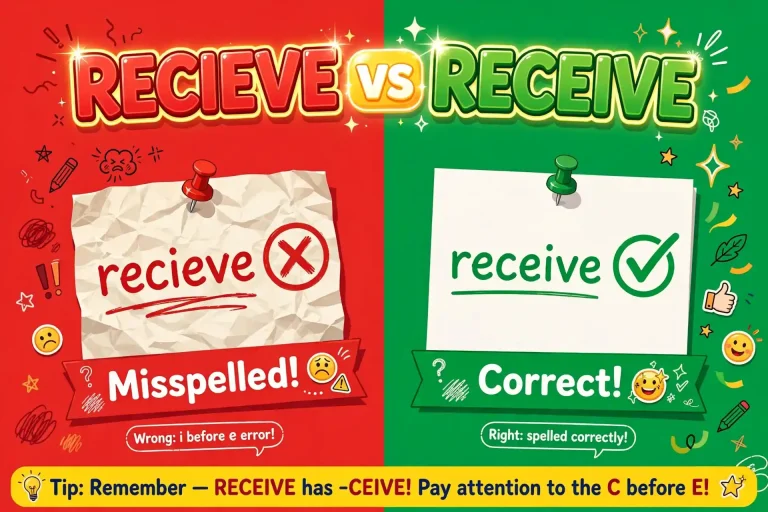
Nip It in the Bud or Nip It in the Butt: What’s the Difference?
Nip it in the bud is the real English idiom — it means to stop a problem while it is still small, like a gardener pinching off a plant bud before it grows into trouble. Nip it in the butt is not a real phrase at all; it is a mishearing of the original, and it paints a far sillier picture. You nip a rumor in the bud at the office; you never nip anything in the butt.
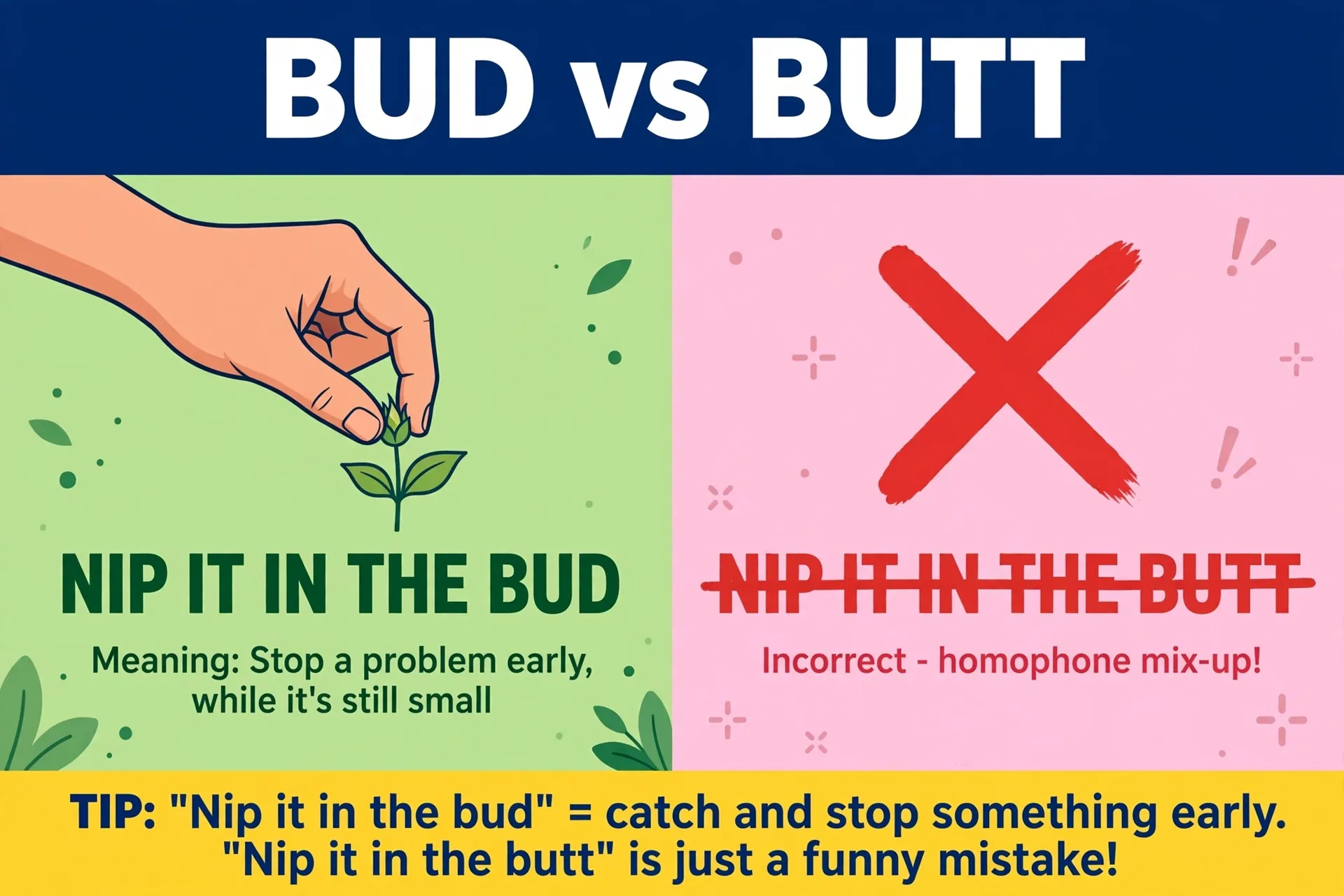
Table of Contents
- Quick Answer
- What Does “Nip It in the Bud” Mean?
- What Does “Nip It in the Butt” Mean?
- Nip It in the Bud vs. Nip It in the Butt: Key Differences
- “Nip It in the Bud” and “Nip It in the Butt” in Real Sentences
- Common Mistakes
- Pronunciation
- How to Remember the Difference
- Frequently Asked Questions
- Conclusion
Quick Answer
| Phrase | Status | Meaning | Example |
|---|---|---|---|
| “Nip it in the bud” | Correct, standard idiom | Stop something early, while it is still small | ✅ “We nipped the leak in the bud before it flooded the kitchen.” |
| “Nip it in the butt” | Common mishearing (eggcorn) | No accepted meaning | ❌ “We nipped the leak in the butt…” (wrong) |
Simple rule: If you mean “stop it early,” the word is always bud — the little green knob on a plant stem, never a butt.
What Does “Nip It in the Bud” Mean?
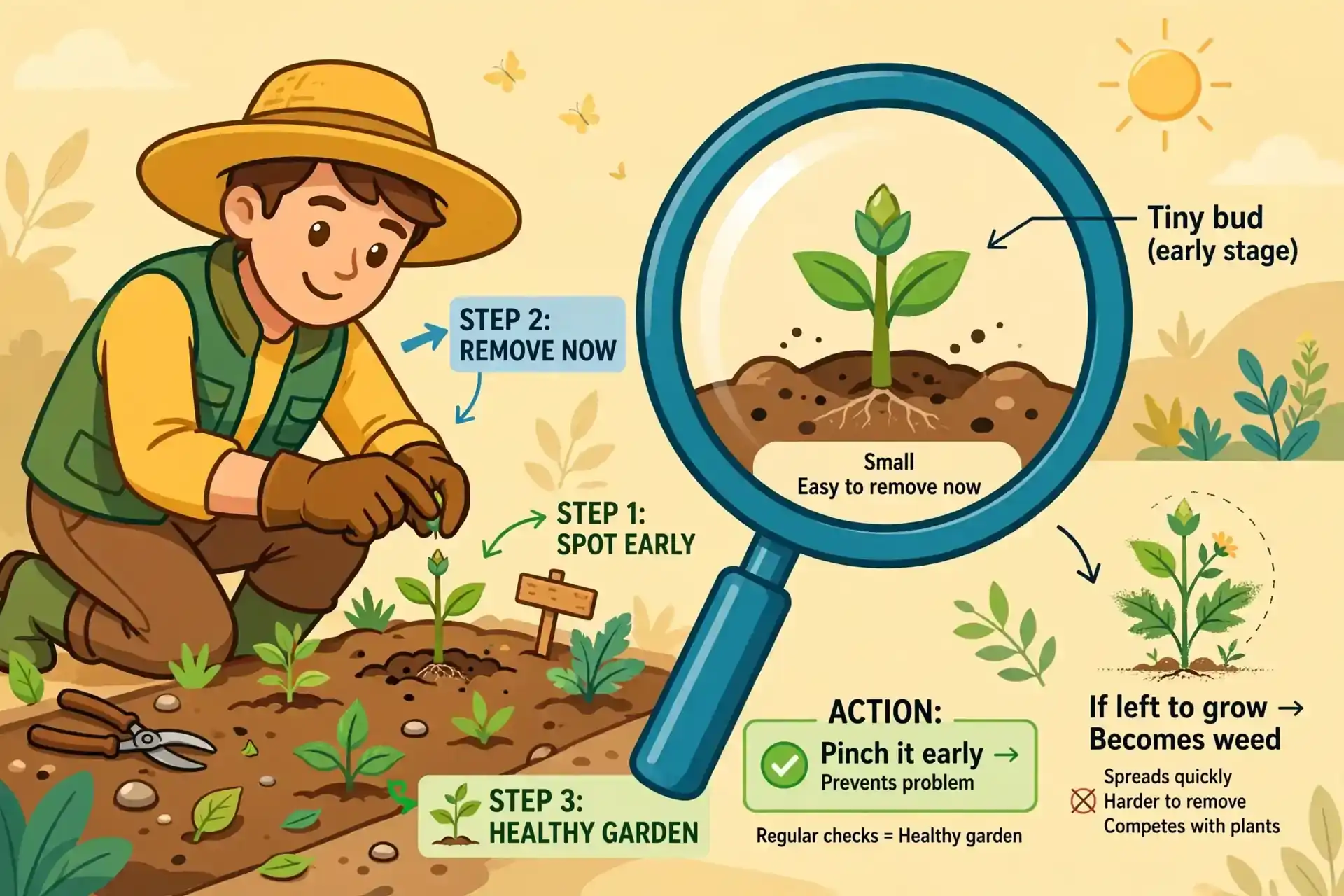
Nip it in the bud means to stop a problem, habit, or argument at its earliest stage, before it grows into something harder to handle. The image comes straight from gardening: a gardener “nips” (pinches) flower buds off a plant to control how it grows, so figuratively you pinch off trouble while it is still tiny. Merriam-Webster defines a “bud” as the small growth on a plant stem that develops into a flower or leaf — exactly the thing a gardener would nip. The phrase got a huge boost from Barney Fife on The Andy Griffith Show, who barked “Nip it in the bud!” at the first sign of trouble in Mayberry.
Examples:
- “The teacher nipped the cheating in the bud by rearranging the seating chart.”
- “A quick apology nipped the argument in the bud.”
- “The city nipped the pothole problem in the bud with early road repairs.”
- “He started skipping practice, so the coach nipped it in the bud with a stern talk.”
- “Vaccination programs aim to nip outbreaks in the bud.”
The idiom works for anything that starts small and gets worse: rumors, leaks, bad habits, weeds, misunderstandings. The earlier you act, the easier the fix — that is the whole philosophy packed into four words.
What Does “Nip It in the Butt” Mean?
Nip it in the butt has no standard meaning — it is an eggcorn, a mishearing that sounds close enough to the real phrase to survive. Butt is a perfectly real word (the rear end of a person, the thick end of a tool, a cigarette butt), but it never belonged in this idiom. People land on it because “bud” and “butt” blur together in fast speech, and once someone hears the wrong version, they repeat it with full confidence. It shows up in casual writing, text messages, memes, and occasionally as a deliberate joke.
Examples of the slip in the wild:
- ❌ “The manager tried to nip the gossip in the butt.” (meant: bud)
- ❌ “Nip it in the butt before the weeds take over!” (meant: bud)
- “His email said ‘nip it in the butt’ — autocorrect didn’t flag it, because every word was spelled right.”
- “She said she’d nip the problem in the butt, and the whole meeting tried not to laugh.”
- As a deliberate joke: “Nip it in the butt — whatever that means, it sounds painful.”
Notice the trap: spellcheck can never catch this one. “Butt” is spelled correctly; it is simply the wrong word. Only your knowledge of the idiom stands between you and the joke.
Nip It in the Bud vs. Nip It in the Butt: Key Differences
| Feature | “Nip it in the bud” | “Nip it in the butt” |
|---|---|---|
| Status | Standard idiom, listed in every dictionary | Mishearing (eggcorn), not standard English |
| Origin | Gardening: pinching buds off plants | Modern mishearing of “bud” |
| Meaning | Stop a problem while it is small | No accepted meaning |
| The image | A gardener pinching a tiny green bud | Something unprintable |
| Who uses it | Writers, speakers, style guides, Barney Fife | People who misheard it — or comedians |
| In formal writing | Safe everywhere | Embarrassing anywhere formal |
One phrase ends problems; the other ends conversations — and not in a good way.
“Nip It in the Bud” and “Nip It in the Butt” in Real Sentences
At Home
✅ “Mom nipped the kids’ bickering in the bud with a pizza break.”
❌ “Mom nipped the kids’ bickering in the butt…”
One sentence ends the quarrel; the other starts a round of giggling at the dinner table.
At Work
✅ “The supervisor nipped the scheduling conflict in the bud.”
❌ “The supervisor nipped the scheduling conflict in the butt.”
In a work email, “butt” turns a sensible sentence into a joke nobody intended — and HR might want a word.
With Friends
✅ “We nipped the road-trip drama in the bud by agreeing on the playlist first.”
❌ “We nipped the road-trip drama in the butt.”
Among friends the wrong version might earn a laugh, but nobody will believe you meant it.
In Formal Writing
✅ “The policy aims to nip fraud in the bud.”
❌ “The policy aims to nip fraud in the butt.”
Formal writing has zero tolerance for this slip — and no spellchecker on earth will save you, because “butt” is a real word.
Common Mistakes
Misheard phrases travel fast — the “chosing” vs “choosing” mix-up shows how one dropped letter changes a word, and “masters” vs “master’s” shows how sound-alikes sneak into writing. The bud/butt traps work the same way:
Mistake 1: Writing “butt” in a work email
❌ “Let’s nip this issue in the butt before Friday.”
✅ “Let’s nip this issue in the bud before Friday.”
Why: Spellcheck will never flag “butt” — it is spelled correctly. Your knowledge of the idiom is the only safety net.
Mistake 2: Trusting your ears
❌ Hearing “nip it in the butt” in a meeting and repeating it.
✅ “Nip it in the bud.”
Why: In fast speech the final “d” in “bud” softens toward a “t” sound, so your ears genuinely cannot tell the difference. Your eyes have to know which word the idiom uses.
Mistake 3: “Correcting” bud into butt
❌ Someone writes “nip it in the bud” and a well-meaning editor changes it to “butt.”
✅ Leave “bud” alone — it was right.
Why: The plant image is the whole point: gardeners pinch buds. A butt has nothing to do with stopping problems early.
Mistake 4: Using the wrong version in a job interview
❌ “I like to nip problems in the butt.”
✅ “I like to nip problems in the bud.”
Why: One misplaced letter can make an interviewer question your attention to detail. The idiom signals sharpness only when the spelling is right.
Pronunciation
Bud is pronounced /bʌd/ — “bud” — and butt is /bʌt/ — “but.” The only difference is the final consonant: a soft “d” versus a crisp “t.” In rapid, casual speech that difference nearly vanishes, which is exactly why the mishearing spreads so easily. “Bud” rhymes with mud, cud, and thud; “butt” rhymes with cut, nut, and shut.
How to Remember the Difference
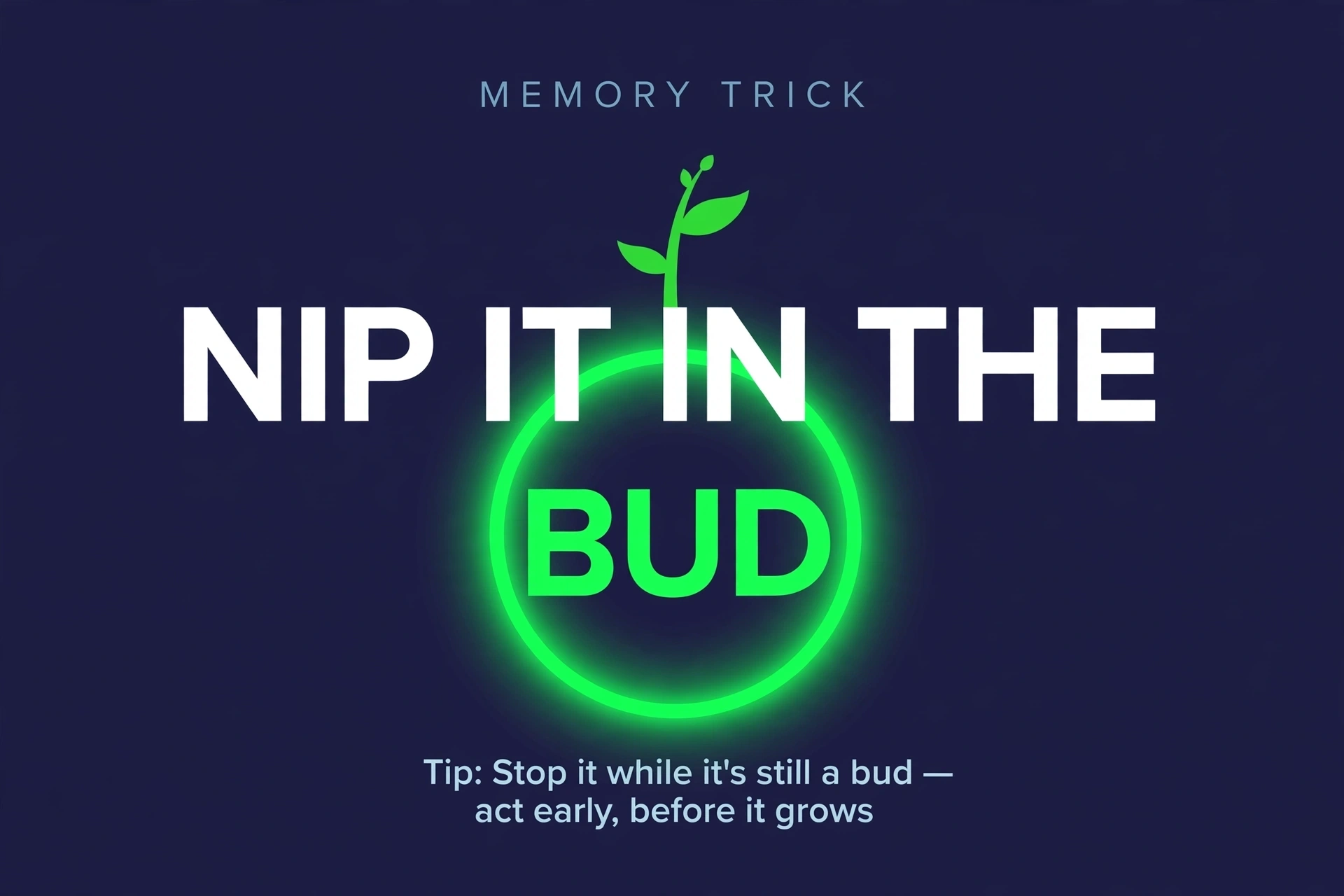
Picture a gardener’s thumb and forefinger closing on a tiny green bud — you pinch the problem while it is still a seedling. The word butt offers nothing to pinch and no garden to stand in. Two fingers, one little plant: that is the whole idiom.
- Bud = before: you stop it before it grows — bud, before, both start with B.
- Feel the D: say “bu-D” slowly and feel the soft D on your tongue — “butt” ends with a hard T instead.
- Bud is small and green; a butt is neither. If the image in your head isn’t a plant, the word in your sentence is wrong.
Frequently Asked Questions
Is it “nip it in the bud” or “nip it in the butt”?
“Nip it in the bud” is the correct idiom. “Nip it in the butt” is a common mishearing — only “bud” appears in dictionaries as part of this phrase.
Where does “nip it in the bud” come from?
Gardening. For centuries, gardeners have pinched (“nipped”) buds off plants to control their growth, and the figurative use — stopping trouble while it is small — is centuries old too.
Why do so many people say “butt”?
Because “bud” and “butt” sound nearly identical in fast speech, and the wrong version gets reinforced every time someone repeats what they thought they heard. Jokes and memes keep it alive.
Is “nip it in the butt” ever acceptable?
Only as a deliberate joke among people who know the real phrase. Never in formal writing, work emails, or anything you want taken seriously.
What is an eggcorn?
An eggcorn is a mishearing that creates a new, plausible-sounding phrase — like “old-timers’ disease” for Alzheimer’s. The term comes from someone who genuinely wrote “eggcorn” instead of “acorn.”
Can “nip” mean anything else here?
“Nip” means to pinch or bite sharply — the gardener’s pinch is the sense the idiom uses. (Unrelated: “a nip in the air” means a chilly bite of cold.)
Conclusion
Nip it in the bud stops problems while they are still seedlings; nip it in the butt stops nothing and starts giggles instead. Picture the gardener, trust the soft D, and this idiom will never trip you up again.