Aunty or Auntie: What’s the Difference?
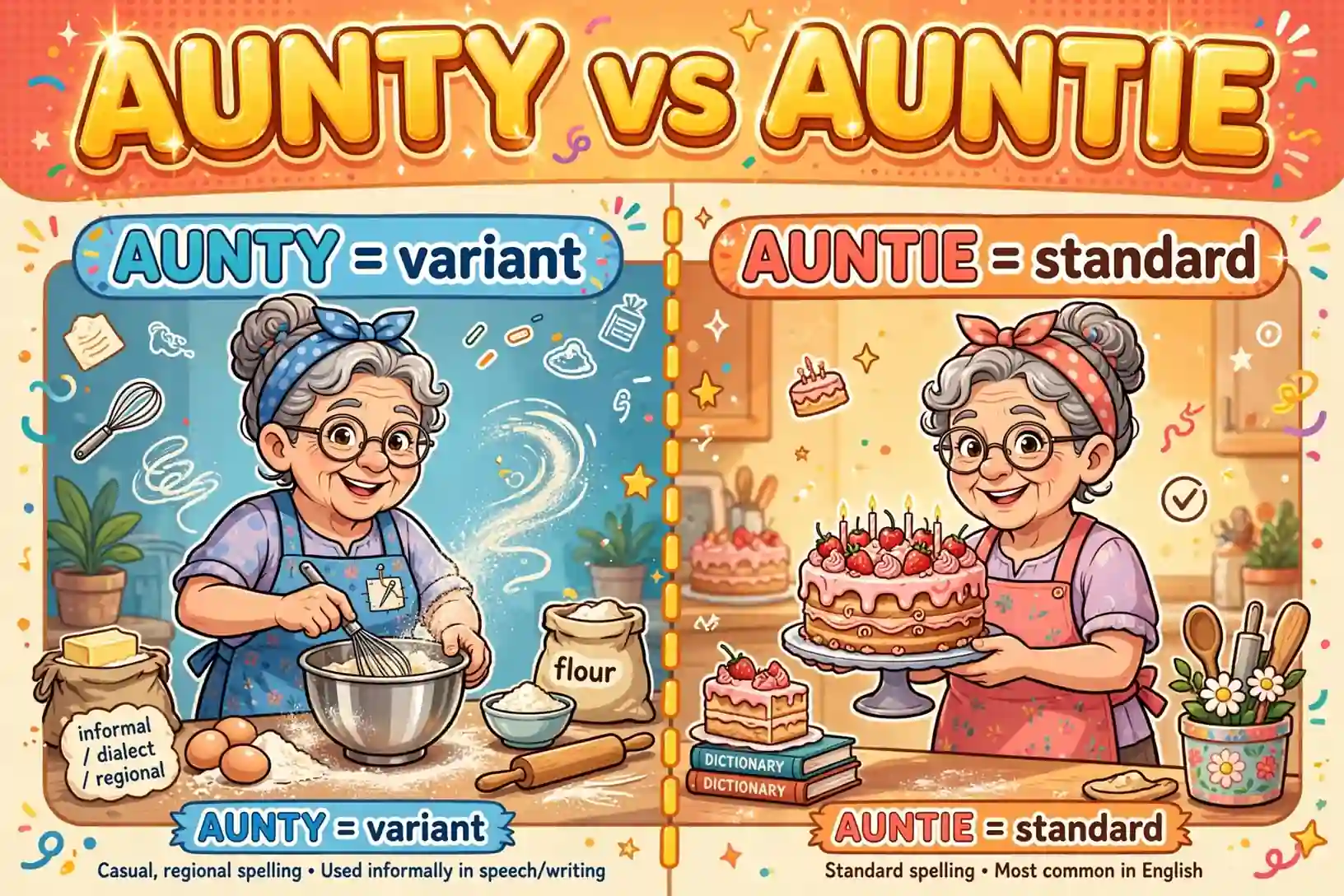
Auntie and aunty mean exactly the same thing: a parent’s sister, or an affectionate name for an older woman. Auntie is the more standard and widely used spelling, while aunty is a common variant, especially in British and Australian English.
For example, “My auntie makes the best cake” and “My aunty makes the best cake” are both correct. Neither spelling will be marked wrong.
Quick Answer
| Word | Part of Speech | Main Meaning | Example |
|---|---|---|---|
| Auntie | Noun | A parent’s sister; affectionate term for an older woman | Auntie Anne is visiting. |
| Aunty | Noun | Same as auntie (variant spelling) | Aunty Anne is visiting. |
Simple rule: Both are correct. Auntie is the safer, more standard choice; aunty is a fine informal variant.
What Does Auntie Mean?
Auntie is the standard informal spelling for a parent’s sister, or a warm title for an older woman who is like family. It is the spelling dictionaries list first and the one most style guides prefer.
Examples:
- My auntie taught me how to bake bread.
- Little Sam calls our neighbor “Auntie Rosa.”
- Auntie, will you tell us a story?
- She became an auntie for the third time this year.
See auntie on Cambridge Dictionary for pronunciation and usage notes.
What Does Aunty Mean?
Aunty means exactly the same as auntie. It is a widely used variant spelling, particularly common in the UK, Australia, New Zealand, and South Asia. Some families simply prefer how it looks.
Examples:
- My aunty taught me how to bake bread.
- Little Sam calls our neighbor “Aunty Rosa.”
- Aunty, will you tell us a story?
- She became an aunty for the third time this year.
Unlike true US vs UK spelling splits, this is not a regional rule — both spellings appear on both sides of the Atlantic, though auntie leads everywhere.
Aunty vs. Auntie: Key Differences
| Feature | Auntie | Auntie |
|---|---|---|
| Meaning | Parent’s sister / affectionate title | Identical |
| Status | Standard spelling | Variant spelling |
| Common in | Everywhere (most common) | UK, Australia, South Asia |
| Formality | Standard informal | Casual informal |
| Example | Dear Auntie Joan… | Dear Aunty Joan… |
There is no meaning difference at all — this is purely a spelling preference, similar to how whiskey and whisky overlap without changing the drink.
Examples in Real Sentences
In a Letter
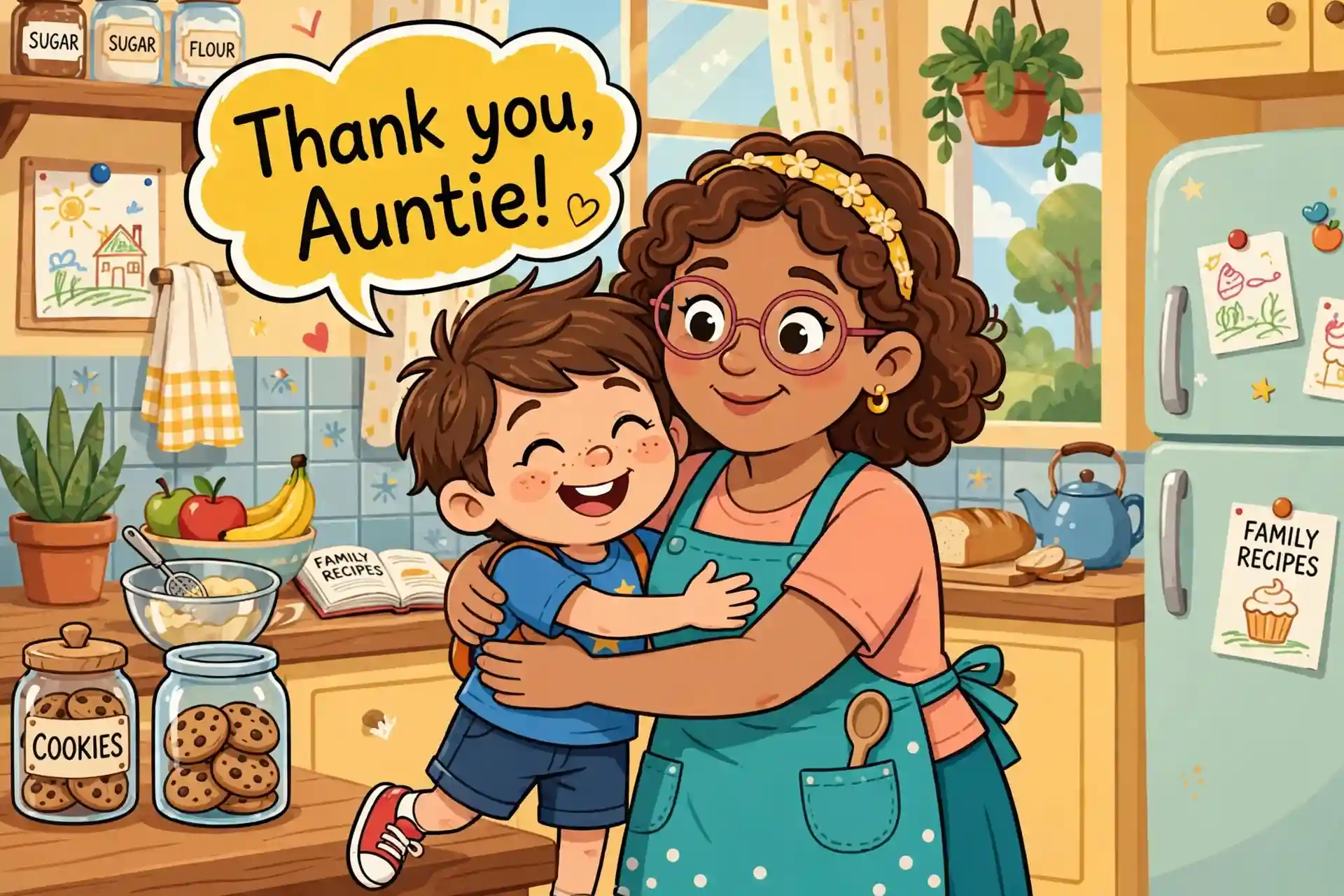
Auntie: “Dear Auntie Joan, thank you for the birthday gift.”
Aunty: “Dear Aunty Joan, thank you for the birthday gift.”
Either greeting is warm and correct.
At a Family Gathering
Auntie: “Go ask your auntie if she wants tea.”
Aunty: “Go ask your aunty if she wants tea.”
Children use whichever spelling their family prefers.
As a Title
Auntie: “Everyone in the village calls her Auntie May.”
Used as an affectionate title, auntie is the more common written form.
Common Mistakes With Aunty and Auntie
Mistake 1: Thinking “Aunty” Is a Misspelling
❌ “Aunty” is spelled wrong; it must be “auntie.”
✅ Both “aunty” and “auntie” are accepted spellings.
Why: Aunty is a legitimate variant, not an error.
Mistake 2: Mixing Them in Formal Writing
❌ The article used “auntie” in one paragraph and “aunty” in the next.
✅ Pick one spelling and use it consistently throughout.
Why: Consistency matters more than which variant you choose.
Mistake 3: Writing “Anti”
❌ My anti is coming over.
✅ My auntie is coming over.
Why: “Anti” means opposed to something — a completely different word.
Pronunciation: Aunty vs. Auntie
Both are pronounced /ˈænti/ (AN-tee) in most accents, though some speakers say /ˈɑːnti/ (AHN-tee).
The spelling difference is invisible in speech — only writing reveals which you chose.
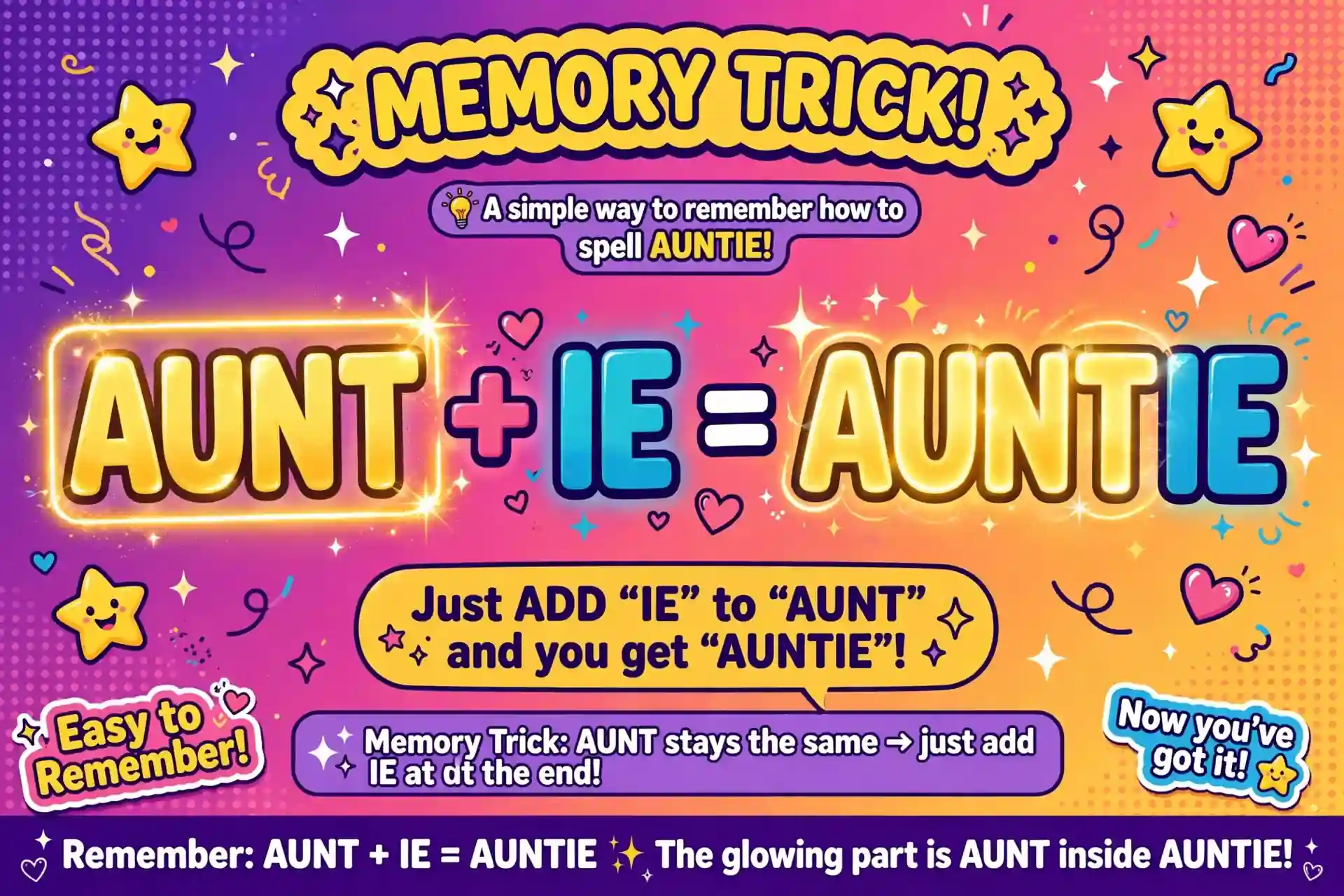
How to Remember the Difference
Memory trick: Auntie contains the formal word aunt right at the start (aunt + ie). If you can spell aunt, just add ie.
- Aunt + ie = auntie (the standard spelling).
- Aunty swaps the ie for a y — a casual variant.
When in doubt, write auntie: it is never wrong.
Frequently Asked Questions
Is it aunty or auntie?
Both are correct. Auntie is the standard spelling; aunty is a common variant.
Which is more common, aunty or auntie?
Auntie is more common worldwide and is the spelling dictionaries list first.
Is “aunty” only British?
No. While popular in the UK and Australia, aunty appears in American writing too. It is not a strict regional rule.
Can I call a non-relative “auntie”?
Yes. In many cultures, “auntie” is an affectionate, respectful title for an older woman, whether related or not.
Is “aunty” slang?
Not exactly — it is an accepted variant spelling rather than slang, though it feels more casual than auntie.
Conclusion
Auntie and aunty are two spellings of the same warm word. Use auntie as your default, keep aunty for casual contexts if you prefer it, and stay consistent within a single piece of writing.