Toe the Line or Tow the Line: What’s the Difference?
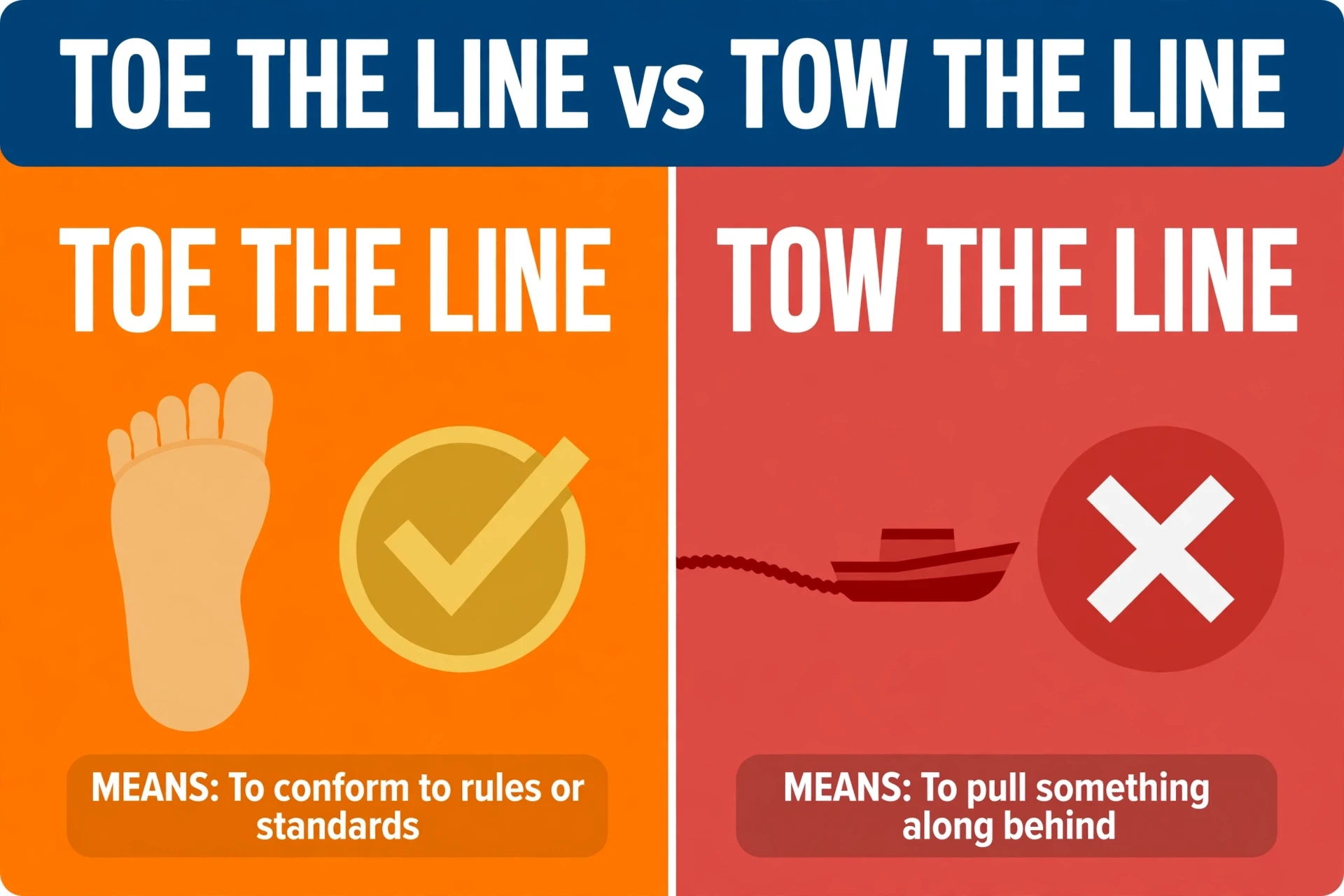
Toe the line is correct — tow the line is always wrong. The idiom means to conform to rules or standards, and it comes from runners placing their toes exactly on the starting line. “Tow” means to pull something behind you, which makes no sense here. “Employees are expected to toe the line” is right; “tow the line” conjures a rope nobody tied.
Quick Answer
| Word | Part of Speech | Main Meaning | Example |
|---|---|---|---|
| toe the line | Idiom (verb phrase) | To conform to rules or standards | ✅ “New hires must toe the line.” |
| tow the line | — (error) | Not a standard idiom | ❌ “New hires must tow the line.” |
Simple rule: Toe the line — your foot’s toe on the starting line. Tow means pulling, which fits no line here.
What Does Toe the Line Mean?
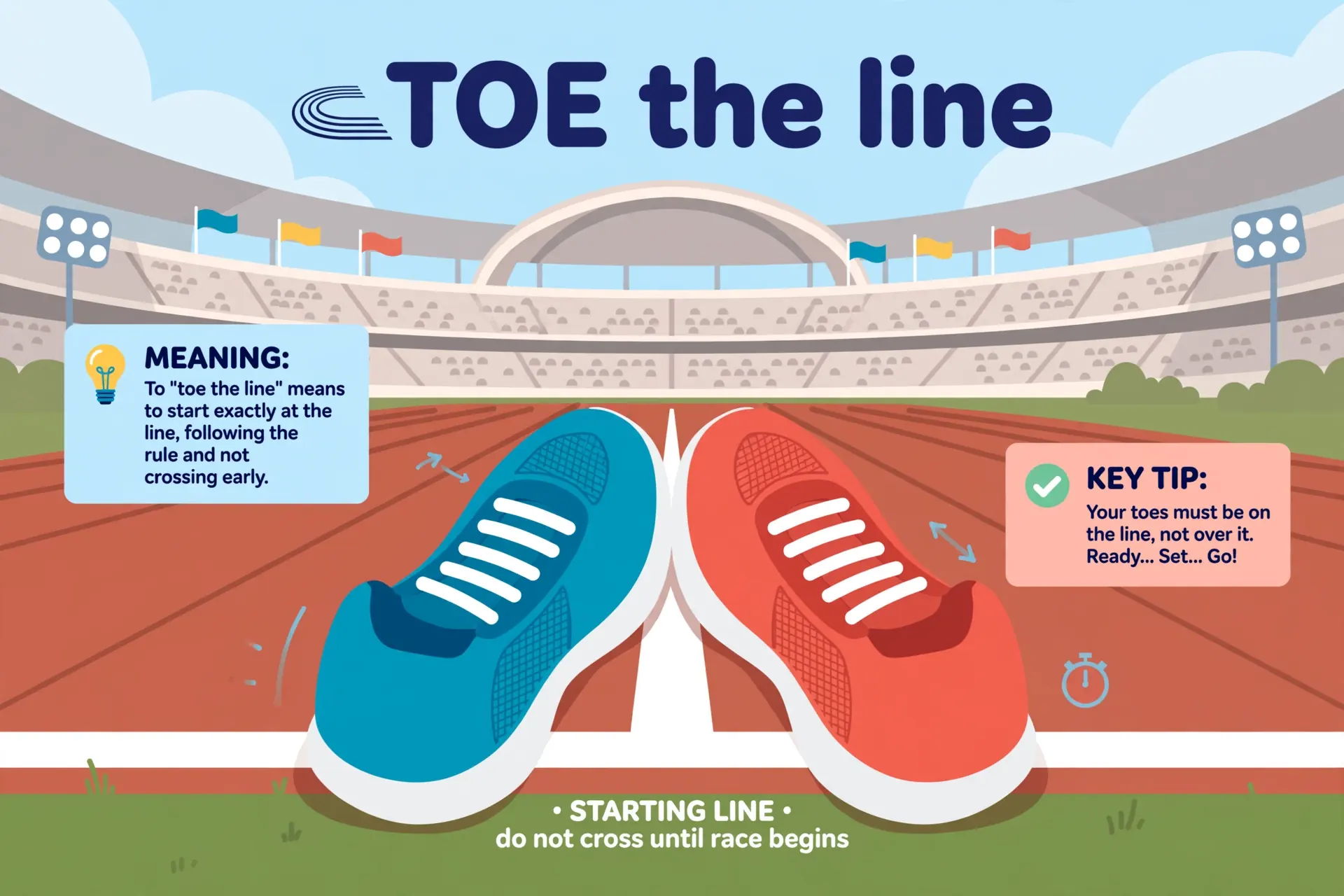
Toe the line means to adhere to rules, policies, or expectations — to conform. The image is athletic: 19th-century runners lined up with their toes touching the starting line, ready and obedient to the starter’s command. From the track it spread to politics, workplaces, and families: anyone expected to behave a certain way must “toe the line.” Merriam-Webster’s entry for “toe” records the idiom under the noun’s definitions — “to conform to a rule or standard.”
Examples:
- “After the warning, he toed the line.”
- “Party members are expected to toe the line.”
- “She refused to toe the corporate line.”
- “The new policy forces everyone to toe the line.”
- “He toed the line until graduation.”
Note the attitude it carries: toeing the line is obedience, sometimes reluctant — the phrase often implies pressure from above.
What Does Tow the Line Mean?
Nothing idiomatic — tow the line is an error born from mishearing. “Tow” means to pull or drag something behind a vehicle (“tow the car,” “a tow truck”), and pairing it with “the line” produces a nonsense image: dragging a line behind you. Writers who have heard the idiom but never seen it written reach for “tow” because it sounds identical to “toe” and feels vaguely disciplinary.
Examples of the error (all incorrect):
- ❌ “Employees who don’t tow the line will be fired.”
- ❌ “She always tows the party line.”
- ❌ “Tow the line or face the consequences.”
- ❌ “He refused to tow the line.”
The mistake is so widespread that some dictionaries now list “tow the line” as a common variant — but every style guide still marks it wrong, and careful writers avoid it.
Toe the Line vs. Tow the Line: Key Differences
| Feature | Toe the line | Tow the line |
|---|---|---|
| Status | Correct, standard idiom | Common error (eggorn) |
| Key word | Toe — a foot’s digit | Tow — to pull behind |
| Origin image | Runner’s toes on the start line | No coherent image |
| Meaning | Conform to rules | None (nonsense) |
| Example | ✅ “Toe the line.” | ❌ “Tow the line.” |
The origin settles it: runners put their toes on the line — nobody ever towed one.
Toe the Line and Tow the Line in Real Sentences
At Home
✅ “The kids toe the line when Grandma visits.”
❌ “The kids tow the line when Grandma visits.”
Family discipline runs on the idiom — toes, not tow trucks.
At Work
✅ “Managers expect the team to toe the line on safety.”
❌ “Managers expect the team to tow the line on safety.”
In a policy document, “tow the line” reads as a writer who never pictured the starting line.
In Conversation
✅ “He toed the party line for years, then quit.”
❌ “He towed the party line for years, then quit.”
Politics loves the phrase — and political writers should love the correct spelling.
Common Mistakes
Sound-alike idioms are a minefield — the “peek” vs “peak” homophone confusion shows how one vowel changes everything, and the “tear” vs “tare” word confusion shows lookalikes drifting apart. The line family:
Mistake 1: Writing “tow the line”
❌ “Everyone must tow the line.”
✅ “Everyone must toe the line.”
Why: The idiom is about feet on a starting line, not vehicles pulling. Picture the runner and the spelling follows.
Mistake 2: Writing “toe the mark”
❌ “He toed the mark.”
✅ “He toed the line.” (standard)
Why: “Toe the mark” exists as a rare variant, but “toe the line” is the established idiom — use the standard form.
Mistake 3: Confusing with “cross the line”
❌ “He toed the line too far.” (meant: went too far)
✅ “He crossed the line.”
Why: “Toe the line” means conforming; “cross the line” means going too far. They are opposites wearing similar words.
Mistake 4: Using it as praise
❌ “She’s so creative — she really toes the line!”
✅ “She’s so creative — she colors outside the lines!”
Why: Toeing the line means obedience, not originality. For creativity, pick an idiom that celebrates breaking rules.
Pronunciation
Toe the line is pronounced toh thuh line — “toe” rhyming with “go” and “flow.” “Tow the line” sounds exactly the same, which is why the error is universal in speech and only visible in writing.
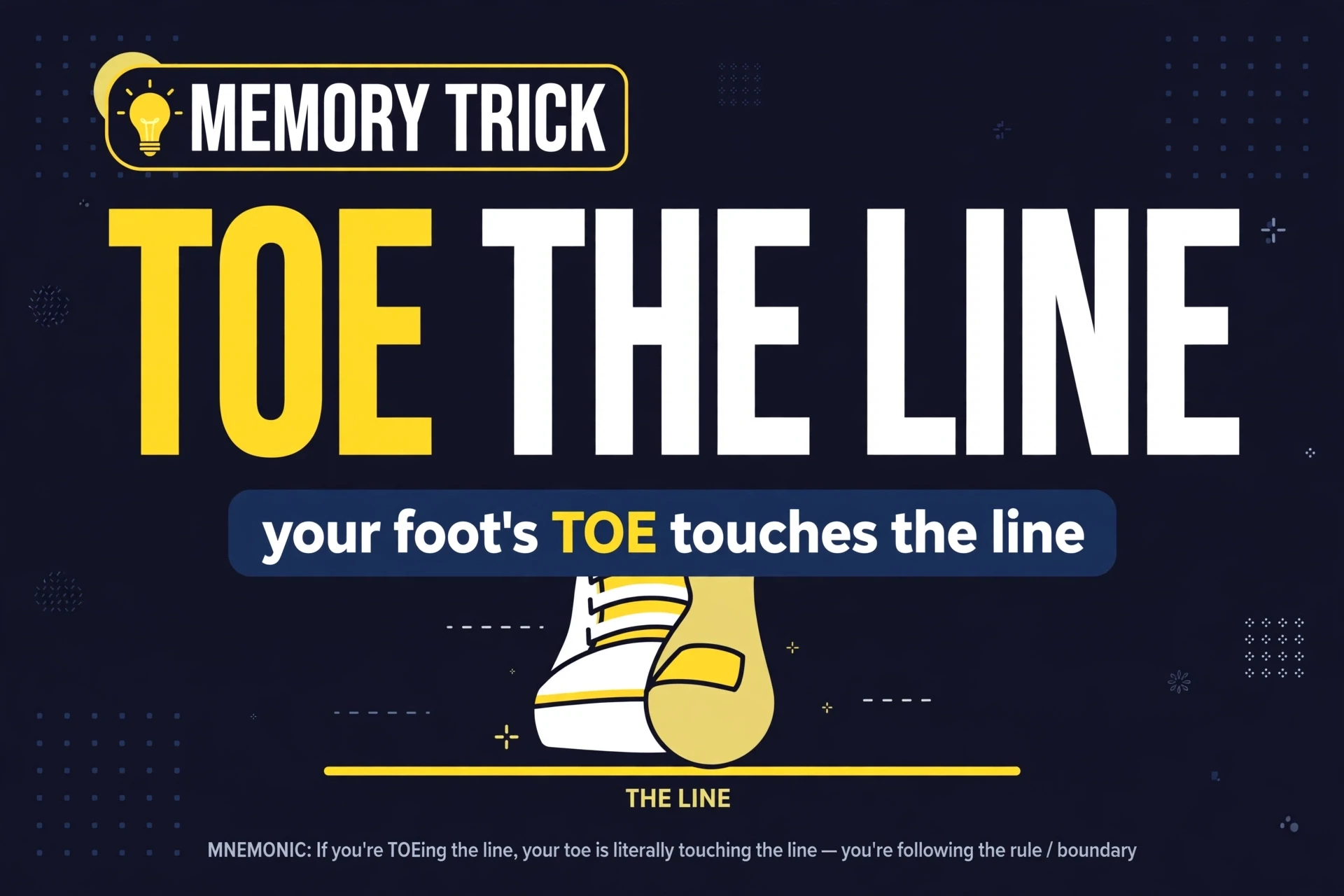
How to Remember the Difference
Look down at your feet: the toe is the part that touches the starting line. Now imagine towing that line behind a truck — absurd. The picture test never fails.
- Foot test: which word names a body part? Toe. Body parts stand on lines; trucks tow them.
- Origin anchor: 19th-century footraces — runners’ toes on the line, waiting for the gun.
- Tow check: “tow” needs something pulled (a car, a trailer). A “line” gets stood on, not dragged.
Frequently Asked Questions
Is it “toe the line” or “tow the line”?
“Toe the line.” “Tow the line” is a widespread error — an eggcorn born from mishearing.
Where does “toe the line” come from?
From footraces: runners placed their toes exactly on the starting line. It later generalized to mean conforming to any rule.
What is an eggcorn?
A misheard phrase that still almost makes sense — like “tow the line.” The term itself comes from someone mishearing “acorn” as “eggcorn.”
Is “tow the line” ever acceptable?
Some dictionaries note it as a common variant, but style guides mark it wrong. Careful writers always use “toe.”
What’s the difference between “toe the line” and “cross the line”?
“Toe the line” means obeying the rules; “cross the line” means violating them. Opposite meanings, similar words.
Can I use “toe the line” positively?
Usually it implies reluctant obedience. For genuine praise of discipline, “uphold the standard” is warmer.
Conclusion
Toe the line puts your foot’s toe where the runners put theirs — on the starting line, ready to obey the rules. Tow the line drags a rope nobody tied. Picture the race, keep the toe, and the idiom is yours.