Could Of or Could Have: What’s the Difference?
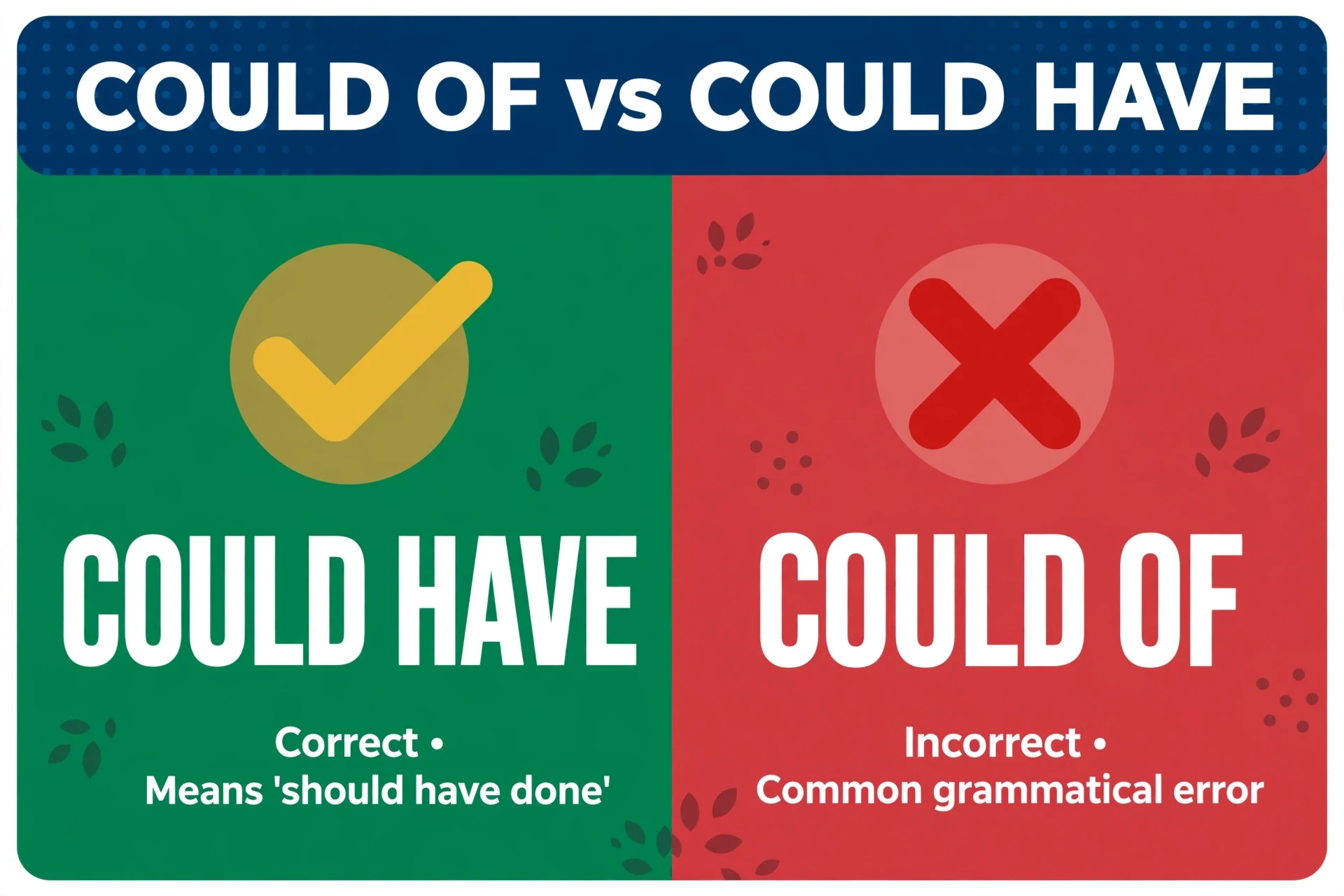
Could have is correct — could of is always wrong, and it is one of the most common grammar errors in English. The mistake comes from the contraction “could’ve,” which sounds exactly like “could of” when spoken quickly. “I could have helped” is right; “I could of helped” will get corrected by every teacher, editor, and grammar checker alive.
Quick Answer
| Word | Part of Speech | Main Meaning | Example |
|---|---|---|---|
| could have | Verb phrase | Past possibility — was able to | ✅ “I could have gone.” |
| could of | — (error) | Never correct in standard English | ❌ “I could of gone.” |
Simple rule: Expand the contraction — could’ve always unfolds to could have, never “could of.”
What Does Could Have Mean?
Could have talks about past possibility — things that were possible but may not have happened. “I could have won” means winning was within reach; whether it happened is another sentence. It pairs the modal “could” with the perfect “have” to reach backward in time. Merriam-Webster’s entry for “could” covers this past-tense modal use and its perfect constructions.
Examples:
- “We could have left earlier.”
- “She could have been a doctor.”
- “It could have rained all day.”
- “I could have sworn I locked the door.”
- “They could have warned us.”
The same pattern runs through the whole modal family: should have, would have, might have, must have — “of” appears in none of them.
What Does Could Of Mean?
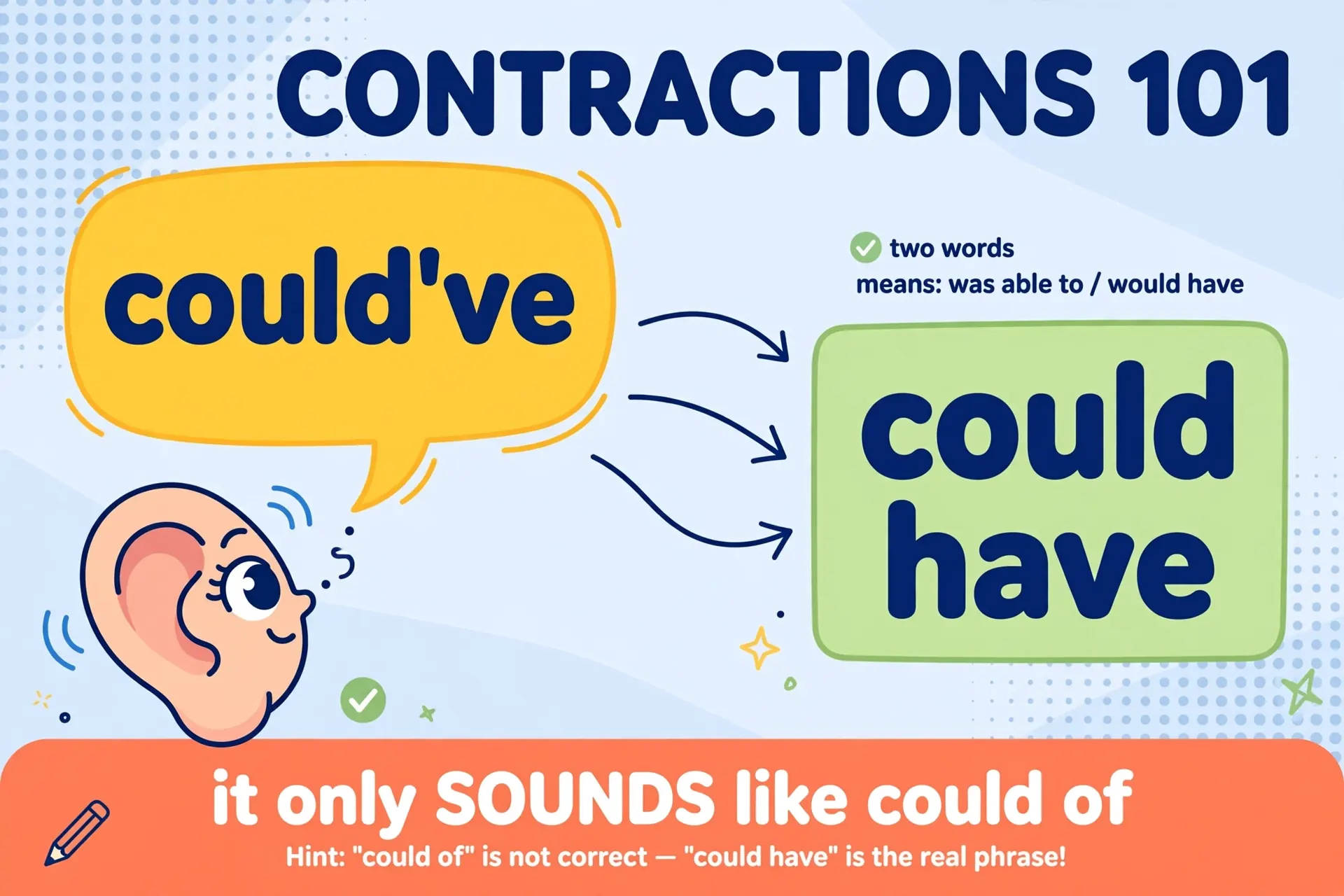
Nothing — it is not grammatical English. Could of is a mishearing written down: in rapid speech, “could’ve” (could + have contracted) sounds exactly like “could of,” and writers transcribe the sound instead of the grammar. “Of” is a preposition — it shows relationships between nouns (“a cup of tea”) — and it can never serve as a helping verb. The phrase collapses the moment you examine it.
Examples of the error (all incorrect):
- ❌ “I could of told you.”
- ❌ “She could of won the race.”
- ❌ “We could of stayed longer.”
- ❌ “He could of been hurt.”
Every style guide, teacher, and editor flags it — it is one of the fastest ways to make writing look uneducated, which is why killing the habit matters.
Could Have vs. Could Of: Key Differences
| Feature | Could have | Could of |
|---|---|---|
| Grammatical status | Correct verb phrase | Never correct |
| Structure | Modal + helping verb + participle | Modal + preposition (broken) |
| Contraction | Could’ve ✓ | There is no “could’of” |
| Test | Expands from “could’ve” | Cannot be expanded |
| Example | ✅ “Could have been” | ❌ “Could of been” |
The contraction test settles it: could’ve contains an apostrophe standing in for “ha” — could have. There is no version of English where it unfolds to “of.”
Could Have and Could Of in Real Sentences
At Home
✅ “You could have called, you know.”
❌ “You could of called, you know.”
Family reproaches run on past possibility — and every one of them takes “have.”
At Work
✅ “We could have saved the client.”
❌ “We could of saved the client.”
In a post-mortem email, “could of” distracts from the analysis — readers notice the error before the insight.
In Conversation
✅ “I could’ve sworn it was Tuesday.”
❌ “I could of sworn it was Tuesday.”
Spoken, the contraction hides everything — which is why the error is born in speech and dies only in writing.
Common Mistakes
Verb-phrase errors love company — the “was” vs “were” verb confusion shows another past-tense trap, and the “where” vs “were” spelling shows how sound-alikes multiply. The “of” family:
Mistake 1: Writing “could of” for “could’ve”
❌ “I could of helped.”
✅ “I could have helped.” (or “I could’ve helped.”)
Why: The ear hears “could of”; the grammar says “could have.” When in doubt, write the contraction — “could’ve” is always safe.
Mistake 2: “Should of” / “would of” / “must of”
❌ “You should of seen it.”
✅ “You should have seen it.”
Why: The same mishearing infects every modal. Should’ve, would’ve, might’ve, must’ve — all unfold to “have,” none to “of.”
Mistake 3: “Could of” in formal writing
❌ “The applicant could of excelled.” (cover letter)
✅ “The applicant could have excelled.”
Why: In résumés, applications, and reports, “could of” reads as a literacy signal — and not a good one. This is the highest-stakes version of the error.
Mistake 4: Defending it as “informal”
❌ “It’s fine in texts — everyone writes ‘could of.'”
✅ “Even in texts, ‘could’ve’ is correct.”
Why: Common doesn’t mean correct. “Could’ve” is just as short, equally casual, and actually grammatical.
Pronunciation
Could have in full is pronounced kood hav, but almost nobody says it that way — the contraction could’ve (KOOD-uv) dominates speech, and it is that “-uv” tail that the ear mishears as “of.” The entire error is an artifact of pronunciation; the grammar never changed.
How to Remember the Difference
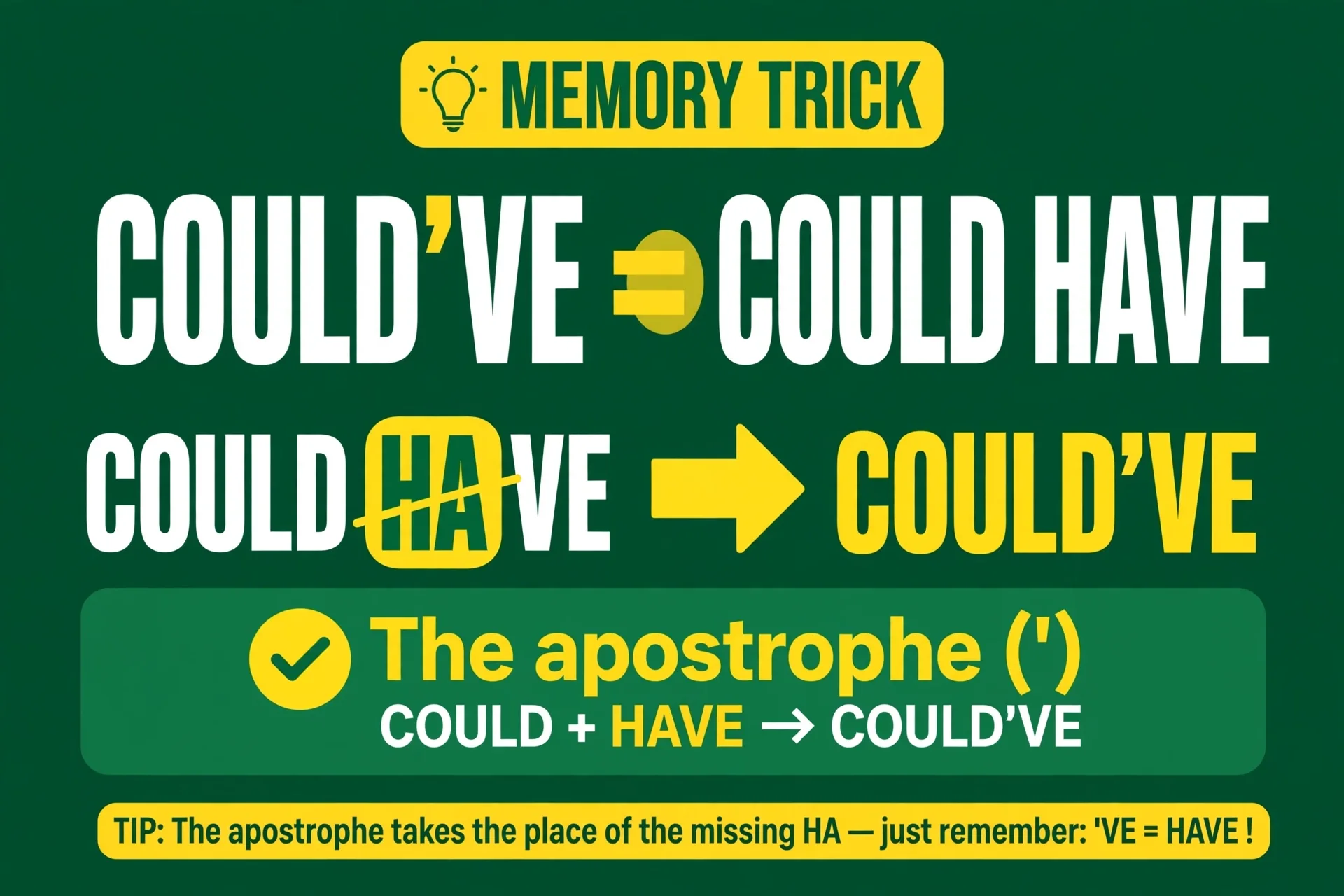
Look at the apostrophe in could’ve — it is a tombstone marking deleted letters, and the letters it buried are HA: could + ha + ve. There is no funeral for “of” because “of” was never there.
- Contraction test: would you write “could’ve”? Then write “could have.” The apostrophe only ever hides “ha.”
- Substitution test: replace with “should have” — if the sentence still works, “have” was right.
- Family rule: should’ve, would’ve, might’ve, must’ve — every modal’s contraction unfolds to “have.”
Frequently Asked Questions
Is it “could of” or “could have”?
“Could have.” “Could of” is never correct in standard English — it is a mishearing of the contraction “could’ve.”
Why do so many people write “could of”?
Because “could’ve” sounds exactly like “could of” in fast speech. The ear is honest; the transcription is wrong.
Is “could’ve” acceptable in writing?
Yes — in informal and conversational writing. In formal writing, expand it to “could have.”
What about “should of” and “would of”?
Same error, same fix: “should have,” “would have.” The whole modal family works identically.
Can “of” ever follow “could”?
Only in unrelated constructions like “he could think of nothing” — where “of” belongs to “think of,” not to “could.” That’s a different sentence structure entirely.
How do I stop making this mistake?
Default to the contraction: write “could’ve” whenever you hear “could of” in your head. You literally cannot misspell it that way.
Conclusion
Could have is the grammar; could’ve is the sound; could of is the mistake your ears talked you into. Trust the apostrophe — it buried “ha,” not “of” — and this error disappears from your writing for good.