Tying or Tieing: What’s the Difference? (With Examples)
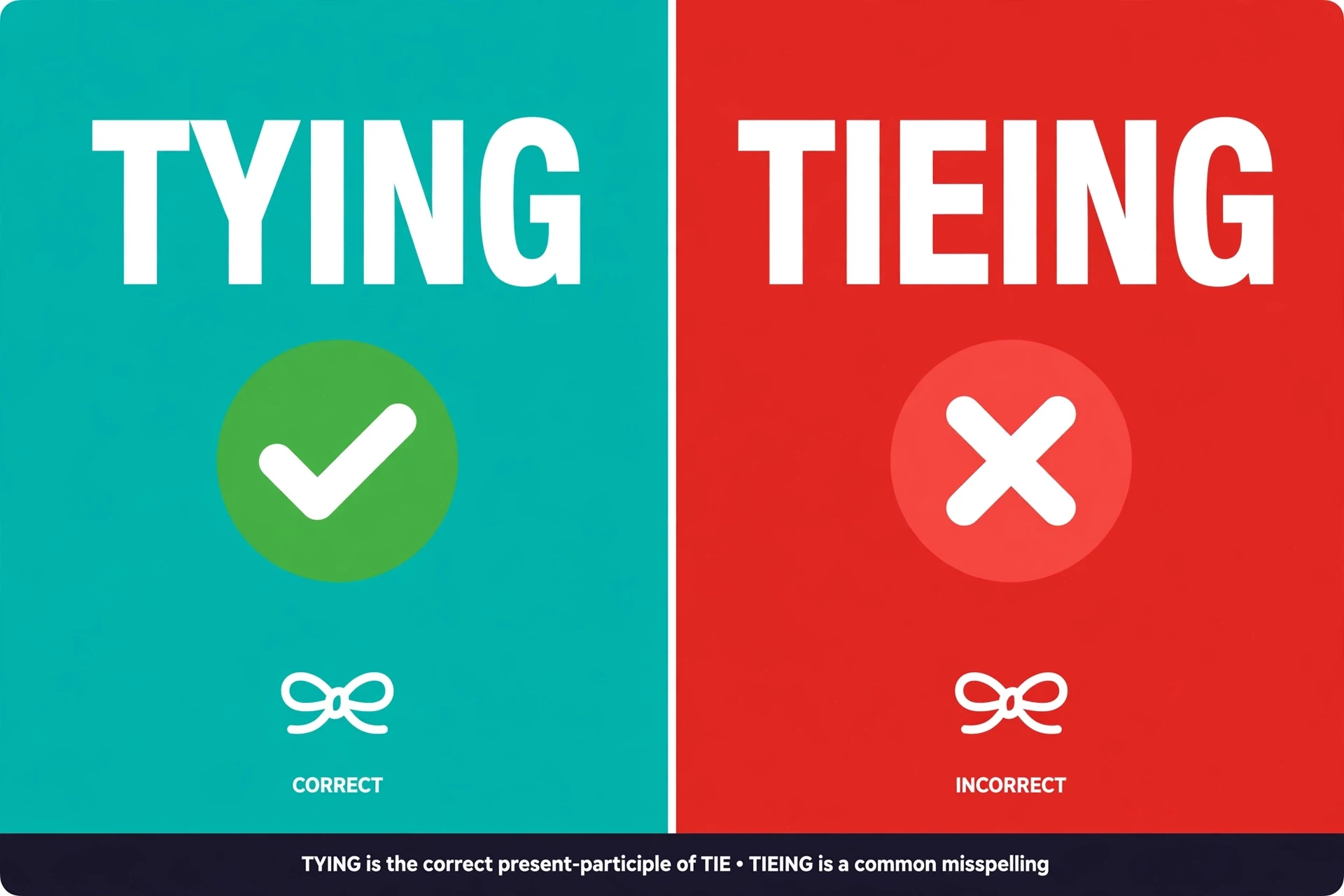
Tying is the correct spelling — the present participle of tie, as in ‘tying your shoes.’ Tieing is a common misspelling that creeps in when people keep the silent e before -ing.
Table of Contents
Quick Answer
| Word | Part of Speech | Main Meaning | Example |
|---|---|---|---|
| Tying | verb (present participle of tie) | fastening with a knot; connecting | “He is tying his tie in the mirror.” |
| Tieing | misspelling | not a standard English spelling | ❌ “They are tieing the knot.” |
Simple rule: drop the silent e before adding -ing — tie → tying, just like die → dying.
What Does Tying Mean?
Tying is the -ing form of the verb tie. Merriam-Webster defines tie as fastening with a cord or knot, attaching one thing to another, or connecting things together. It can also describe an equal score — two teams “tying” a game.
Examples:
- He’s tying his shoes before we leave.
- We’re tying the balloons to the chairs for the party.
- The two teams are tying at twenty points each.
- She spent the afternoon tying ribbons around the gift boxes.
- Tying the knot is an old expression for getting married.
- She’s tying a scarf around her neck.
- They ended the season tying for first place.
What Does Tieing Mean?
Tieing isn’t a standard English spelling — it’s a misspelling of tying. The mistake happens because English learners (and plenty of native speakers) see the e in tie and carry it into the -ing form, the same way it appears in “being” or “seeing.” But the rule for tie is to drop the e first.
Examples:
- ❌ “He is tieing his shoes.” → ✅ “He is tying his shoes.”
- ❌ “They’re tieing the boat to the dock.” → ✅ “They’re tying the boat to the dock.”
- ❌ “Stop tieing those together!” → ✅ “Stop tying those together!”
- ❌ “The score is tieing up.” → ✅ “The score is tying up.”
Tie also works as a noun — a necktie you wear, or a drawn contest (“the game ended in a tie”). The spelling question only comes up with the verb’s -ing form, which is always tying.
Tying vs. Tieing: Key Differences
| Feature | Tying | Tieing |
|---|---|---|
| Correctness | Correct spelling | Misspelling |
| Base word | tie (drop the e, add -ing) | — |
| Meaning | Fastening, attaching, connecting | — |
| Related forms | ties, tied, tying | — |
| Example | “Tying knots takes practice.” | ❌ “Tieing knots takes practice.” |
Every use you can think of — shoelaces, knots, scores — belongs to tying; tieing has no place in correct writing.
Usage in Real Sentences
At Home
Tying: “She’s tying her hair back before cooking.”
❌ Tieing: “She’s tieing her hair back before cooking.”
Only tying works — the silent e from tie disappears before -ing.
In the Garden
Tying: “We’re tying the tomato plants to their stakes.”
❌ Tieing: “We’re tieing the tomato plants to their stakes.”
The action is tie, so its -ing form is tying, with no e in the middle.
In Conversation
Tying: “They’re tying the knot next spring!” (getting married)
❌ Tieing: “They’re tieing the knot next spring!”
Even in idioms like “tying the knot,” the spelling rule doesn’t change.
In Sports
Tying: “The two runners are tying for the lead.”
❌ Tieing: “The two runners are tieing for the lead.”
When a game or race is even, the verb is tying — the silent e still drops out.
Common Mistakes
The dropped-e rule trips people up everywhere — our guides to dieing or dying and cancelled or canceled cover two more classics.
Mistake 1: Writing “tieing” instead of “tying”
❌ Wrong: “I’m tieing my apron now.”
✅ Right: “I’m tying my apron now.”
Why: Verbs ending in a silent e drop it before -ing: tie → tying.
Mistake 2: Writing “dieing” instead of “dying”
❌ Wrong: “The old tradition is dieing out.”
✅ Right: “The old tradition is dying out.”
Why: Same rule — die drops its e before -ing, exactly like tie.
Mistake 3: Writing “lieing” instead of “lying”
❌ Wrong: “The cat is lieing in the sun.”
✅ Right: “The cat is lying in the sun.”
Why: Lie follows the same pattern: drop the e, add -ing → lying.
Mistake 4: Thinking “seeing” means “tieing” is fine
❌ Wrong: “Seeing keeps its e, so tieing should too.”
✅ Right: “Seeing keeps its e, but tying drops it.”
Why: Verbs ending in -ee (see, flee, agree) keep the e — seeing, fleeing. But tie ends in -ie, so the e goes: tying.
Pronunciation
Tying is pronounced /ˈtaɪ.ɪŋ/ (“TY-ing”) — it rhymes with dying, lying, crying, flying, and trying. Since “tieing” isn’t a standard word, there’s no separate pronunciation for it.
How to Remember the Difference
Picture it literally: the silent e gets tied off and dropped before -ing can join the word. TIE minus E plus ING = TYING.
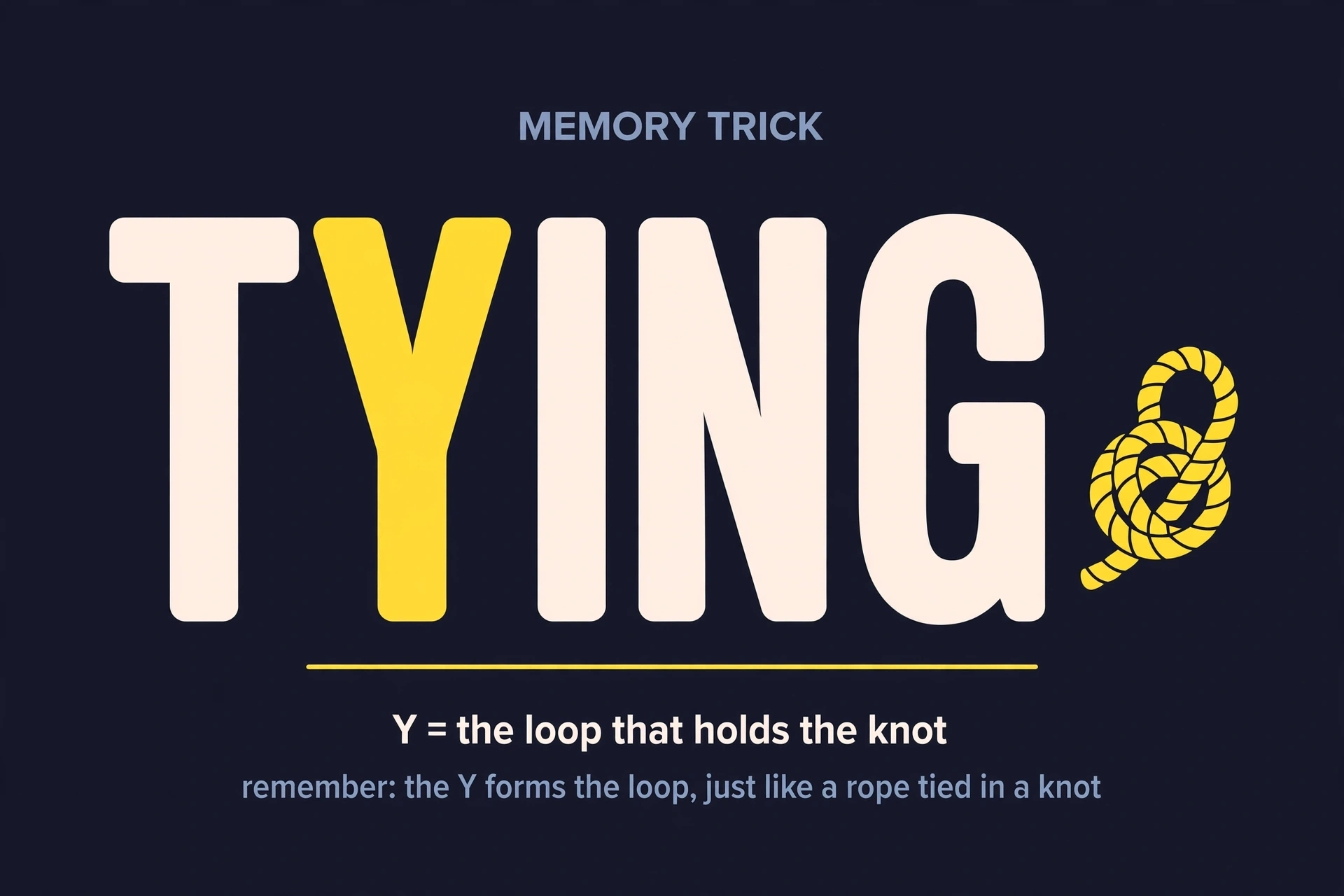
- Tying = the correct -ing form of tie (knots, fastening, scores).
- Tieing = a misspelling — the e must go.
- Same family: dying, lying, crying — all drop the e.
FAQ
Is it tying or tieing?
It’s tying. “Tieing” is a common misspelling of the present participle of tie.
Why is it tying and not tieing?
Because verbs ending in a silent e drop it before -ing: tie → tying, die → dying, lie → lying.
Is tieing ever correct?
No. “Tieing” isn’t an accepted spelling in standard English — always write tying.
What’s the past tense of tie?
The past tense is tied, and the third-person singular is ties: “she ties,” “they tied.” Note that tied keeps the e before d — it’s only before -ing that the e drops.
Is it dying or dieing?
It’s dying — same rule as tying. “Dieing” is the same kind of misspelling.
Which other verbs follow the tie → tying pattern?
All verbs ending in a silent e do this: die → dying, lie → lying, vie → vying. The one famous exception is singe → singeing, which keeps its e on purpose — without it, “singing” would mean making music instead of scorching. That exception proves the rule: the e only stays when dropping it would create a different word.
Why does English drop the silent e before -ing?
The silent e‘s main job is to signal a long vowel — it is what makes tie rhyme with “my” instead of “tin.” But once -ing is added, its own vowel takes over that job, so the e becomes dead weight and English drops it. That is why the rule is so consistent: the e is never doing any work before -ing.
Conclusion
Tying is the only correct spelling — the silent e in tie gets dropped before -ing, just like dying and lying. Remember that tieing is never right, and you’ll knot this one down for good.