Synonyms for Similar: 15 Words With Examples
“Similar” is the comparison word everyone reaches for — and the first one readers skim past. This guide groups 15 real synonyms for similar by how alike things really are: nearly the same, similar in role, or matching in appearance. Each word comes with a plain definition and a natural example sentence, so you can swap with confidence instead of repeating yourself.
Table of Contents
Quick Answer
| Word | Nuance / When to use it |
|---|---|
| alike | Resembling each other; the closest everyday swap |
| like | Resembling (as a preposition); casual comparisons |
| akin | Similar in nature or character; slightly formal |
| kindred | Sharing qualities or feelings; warm tone |
| cognate | Related by origin; used for words and languages |
| analogous | Comparable in function though different in form |
| comparable | Able to be compared; of similar quality |
| parallel | Similar in pattern or development |
| corresponding | Matching in position, order, or relation |
| matching | Identical or harmonizing in appearance |
| identical | Exactly the same — use only when literally true |
| duplicate | An exact copy of an original |
Simple rule: use alike or like for general resemblance, analogous or comparable when things play the same role, and matching or identical when the likeness is exact.
Merriam-Webster’s thesaurus entry for similar groups these words under resemblance, correspondence, and likeness — the sections below follow that same natural split.
Nearly the Same: Alike, Like, Akin
These words handle everyday resemblance — things that look, feel, or act close to each other.
Alike — resembling each other in appearance or nature. “The twins look so alike that even their teachers mix them up.”
Like — similar to; resembling, used as a preposition. “This fabric feels like silk but costs a tenth of the price.”
Akin — similar in nature or character; slightly formal. “His grief was akin to losing a parent, and it showed for months.”
Kindred — related through shared qualities or feelings; warm and literary. “They discovered a kindred love of old maps on their first trip together.”
Cognate — related by origin, most often used for words in different languages. “English ‘mother’ and German ‘Mutter’ are cognate words with one ancient root.”
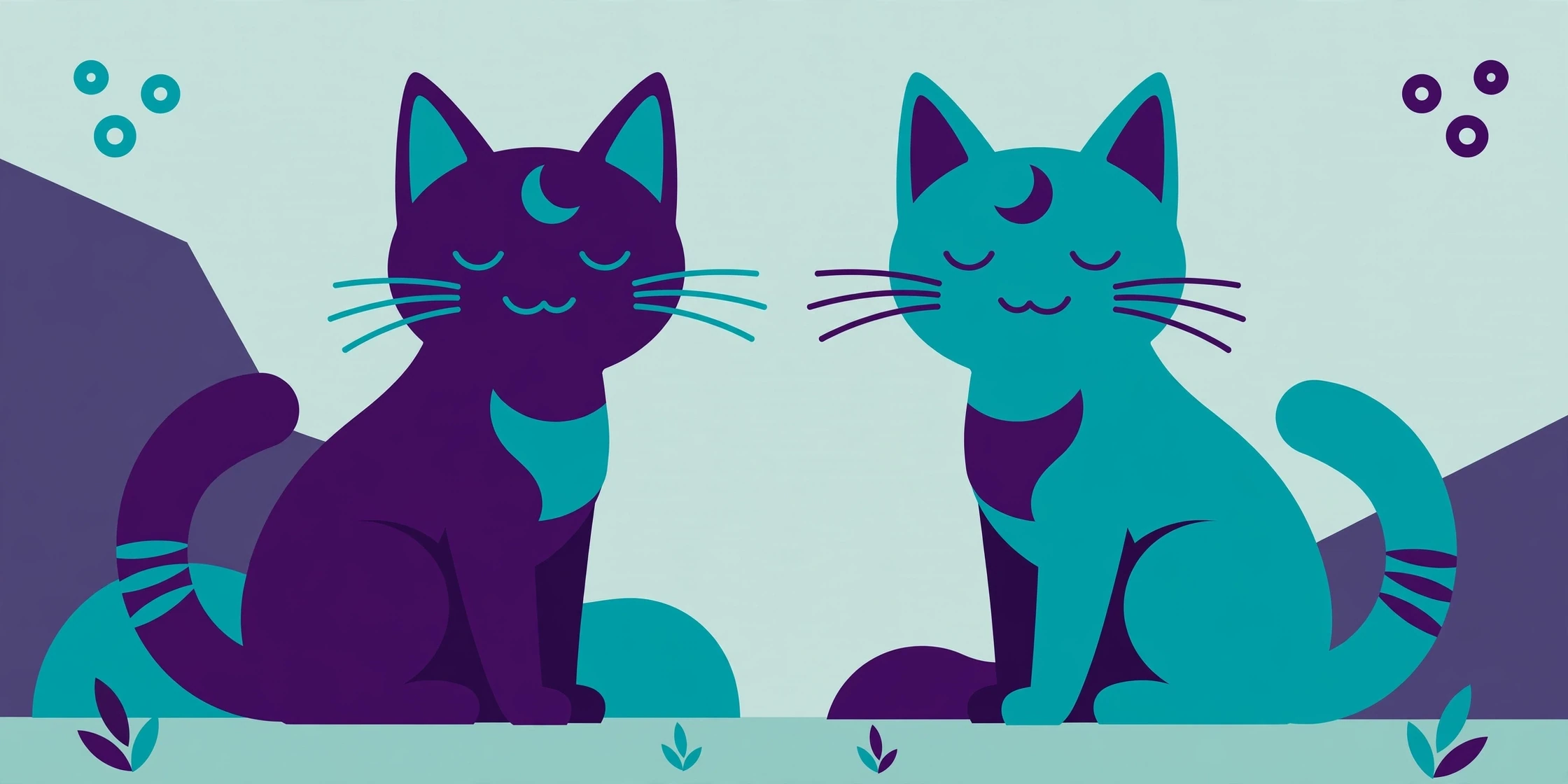
Similar in Role: Analogous, Comparable, Parallel
This group compares function and pattern — things that work the same way even when they look different.
Analogous — comparable in function or purpose, though different in form. “The heart is analogous to a pump, driving blood through the body’s pipes.”
Comparable — able to be fairly compared; of similar quality or size. “Our starting salaries are comparable to the industry average.”
Parallel — similar in pattern, course, or development. “The two careers followed parallel paths from internship to director.”
Corresponding — matching in position, order, or relation. “Each diagram in the manual has a corresponding label on the opposite page.”
Correlative — mutually related, each implying the other. “Rising prices and falling demand are correlative trends in every market cycle.”
Matching in Appearance: Identical, Duplicate, Twin
When the likeness is visual and exact, these words say so without hedging.
Matching — identical or harmonizing in appearance; made to go together. “She wore matching earrings and a necklace in brushed gold.”
Identical — exactly the same in every detail. “The two keys are identical — either one opens the front door.”
Duplicate — an exact copy made from an original. “Keep a duplicate copy of your passport separate from the original.”
Twin — one of two things that closely resemble each other. “The twin towers of the bridge rose over the river at dawn.”
Uniform — the same throughout; consistent in appearance. “The paint dried to a smooth, uniform color with no streaks.”
Common Mistakes
Similar-sounding pairs trip writers up everywhere — aunty vs. auntie and momma vs. mama show how one small change shifts meaning, just like a wrong synonym does.
Mistake 1: Using “identical” for rough likeness
❌ “Their logos are identical.”
✅ “Their logos are similar.”
Why: identical means exactly the same in every detail. Overstating likeness invites fact-checking you will lose.
Mistake 2: Putting “alike” before a noun
❌ “It was an alike situation.”
✅ “The situations were alike.”
Why: alike is a predicate adjective — it follows the verb and never sits before a noun. Use similar or like in front of nouns.
Mistake 3: Swapping “equal” for “similar”
❌ “Apples are equal to oranges in taste.”
✅ “Apples are similar to oranges in taste.”
Why: equal claims sameness in value or amount; similar claims resemblance. They make different promises.
Mistake 4: Reaching for “analogous” in casual writing
❌ “Our pizzas were analogous.”
✅ “Our pizzas were similar.”
Why: analogous belongs in technical or formal comparisons. In everyday writing it sounds strained — save it for essays and reports.
How to Choose the Right Synonym
- Measure the likeness. Rough resemblance takes alike or like; exact sameness takes identical or duplicate. Don’t upgrade the claim beyond what is true.
- Match the grammar. Alike follows the verb (“they are alike”); like and similar come before nouns (“like silk,” “a similar car”).
- Pick the right register. Akin, analogous, and correlative suit formal writing; like and matching suit everyday prose.
- Compare the right thing. Use comparable and analogous for function and quality; use matching and uniform for appearance.
- Reserve the strong words. Identical and duplicate promise exactness — use them only when you can defend the claim.
Frequently Asked Questions
What is a synonym for similar?
Alike is the closest everyday synonym for general resemblance. For formal writing, comparable works well; for exact likeness, use identical.
What is the difference between similar and identical?
Similar means resembling but not the same — there are differences. Identical means exactly the same in every detail. Twins are similar; photocopies are identical.
Is “like” a synonym for “similar”?
Yes, as a preposition: “a car like mine” means “a car similar to mine.” But like can’t replace similar everywhere — you can’t say “a like car” the way you say “a similar car.”
What is a formal synonym for similar?
Analogous and comparable are the standard formal choices, especially in academic and business writing. Corresponding works when the likeness is about position or relation.
What is the difference between similar and same?
Same claims identity — one thing, not two. Similar admits difference — two things with shared traits. “We have the same jacket” means one design bought twice; “we have similar jackets” means two different jackets that look close.
Conclusion
Similar is a sliding scale, and the synonyms above let you say exactly where on it you stand — alike for rough resemblance, analogous for shared function, and identical only when nothing differs. Measure the likeness honestly, match the word to your register, and your comparisons will land with precision instead of vagueness.