Eggplant or Aubergine: US vs UK Spelling Explained
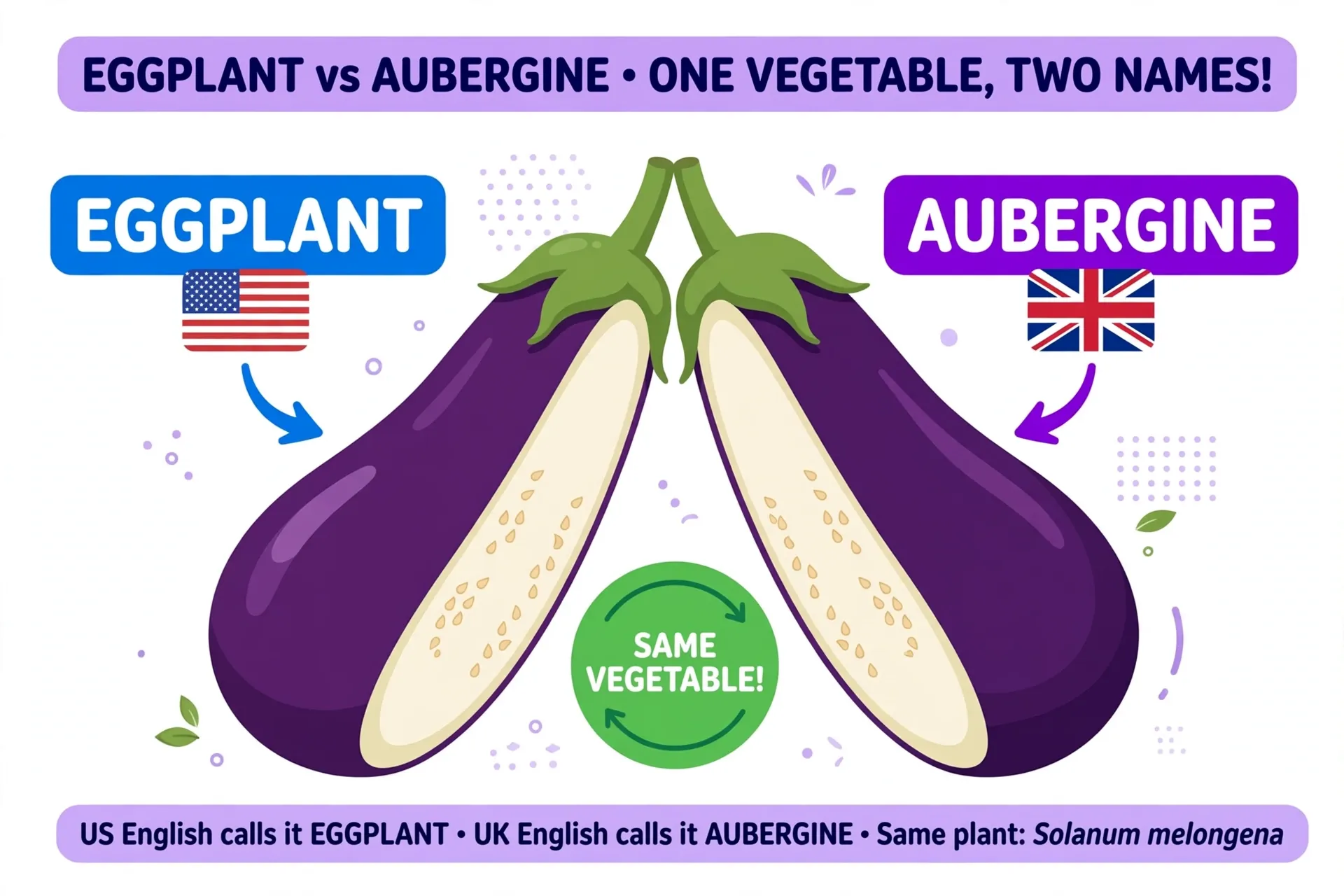
Eggplant and aubergine are two names for the same glossy purple vegetable — Americans say eggplant, while Brits say aubergine. This isn’t a spelling difference within one word; it’s regional vocabulary, and each name carries its own history. An American recipe calls for “two eggplants, diced,” while a British recipe asks for “two aubergines, diced.”
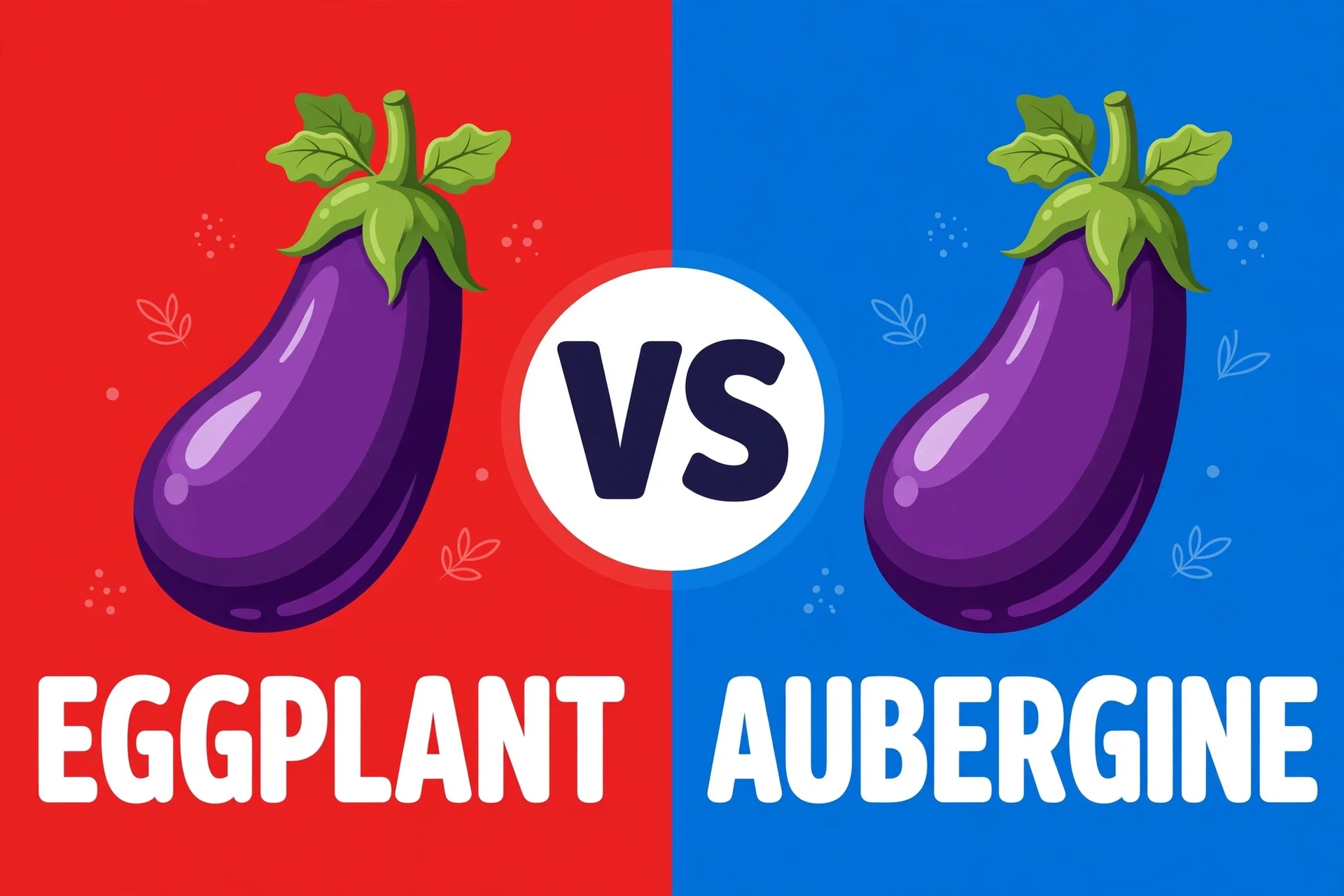
Table of Contents
Quick Answer
| Word | Spelling | Main Meaning | Example |
|---|---|---|---|
| Eggplant | American name | The glossy purple vegetable (Solanum melongena) | “Slice the eggplant into rounds for the grill.” |
| Aubergine | British name | The exact same vegetable | “She roasted aubergine with garlic and olive oil.” |
Simple rule: write eggplant for American readers and aubergine for British readers — pick one and stay consistent through the whole text.
What Does Eggplant Mean?
Eggplant is the American English name for the dark purple, pear-shaped fruit that is cooked and eaten as a vegetable. Botanically it’s a berry, and it arrived in the Americas from South Asia via Europe. The name is literal: early varieties grown in the West were small, white, and egg-shaped, hanging from the plant like eggs. Merriam-Webster defines eggplant as a widely cultivated plant bearing this edible fruit. In Canada, Australia, and New Zealand, eggplant is also the everyday word.
Examples:
- The farmer’s market had glossy eggplants in three different sizes.
- My grandmother’s eggplant parmesan is the dish I request every birthday.
- Baby eggplants roast faster and turn creamy in the middle.
- He swapped the meat for grilled eggplant in his sandwich.
- Pick an eggplant that feels heavy for its size and has tight, shiny skin.
What Does Aubergine Mean?
Aubergine is the British English name for the identical vegetable. It came into English from French aubergine, which came from Catalan albergínia, from Arabic al-bādhinjān, from Persian bādingān — the plant’s name traveled westward along trade routes from its South Asian homeland. In Britain and Ireland, you will never hear eggplant in a supermarket; the shelf label, the recipe, and the menu all say aubergine.
Examples:
- The recipe calls for one large aubergine, halved lengthwise.
- Aubergine and mozzarella bake is her go-to weeknight dinner.
- He ordered the aubergine curry because it sounded richer than the lentil one.
- Charred aubergine gives baba ghanoush its smoky depth.
- She bought two aubergines and a bag of tomatoes for the ratatouille.
Why Two Spellings?
Britain’s kitchen vocabulary was shaped by French prestige. For centuries, French was the language of fine dining across Europe, and British cookery writers imported French food names wholesale — courgette, croissant, and aubergine among them. Using the French term signaled sophistication, so aubergine stuck in British English. American English moved the other way. The early United States distrusted fancy imported terms and preferred plain, descriptive names; colonists called the plant eggplant because of those white, egg-shaped fruits, and the straightforward name won. Thomas Jefferson grew it at Monticello and wrote of the “egg-plant” in 1809, and American seed catalogs carried eggplant through the 1800s. Ironically, Americans used aubergine in the 1700s before abandoning it. Today the split survives in one curious habit: upscale American restaurant menus sometimes list “aubergine” to sound European, even though every diner would say eggplant out loud.
Eggplant vs. Aubergine: Key Differences
| Feature | Eggplant | Aubergine |
|---|---|---|
| Region | US, Canada, Australia, New Zealand | UK, Ireland, South Africa (formal) |
| Origin of the word | English “egg” + “plant,” from the white egg-shaped varieties | French, via Catalan, Arabic, and Persian, from South Asia |
| Extra meaning | The famous “eggplant emoji” 🍆 | Also a shade of deep purple in fashion and design |
| Restaurant use | The everyday word on American menus | Appears on upscale US menus as a fancier-sounding alternative |
| Plural form | Eggplants | Aubergines |
| South Asian English | Understood, but “brinjal” is the local word | Understood, but “brinjal” is the local word |
Despite the different names and histories, the vegetable in the shopping basket is identical — swap the labels and nothing about the cooking changes.
Related US vs UK Word Pairs
| Pair | US | UK |
|---|---|---|
| Donut or Doughnut | donut | doughnut |
| Theater or Theatre | theater | theatre |
| Color or Colour | color | colour |
| Defense or Defence | defense | defence |
| Labeled or Labelled | labeled | labelled |
Eggplant and Aubergine in Real Sentences
At Home
US: “I’m stuffing the eggplant with rice and pine nuts tonight.” UK: “I’m stuffing the aubergine with rice and pine nuts tonight.” Same dinner, same method — the cook’s accent decides the word.
At the Market
US: “These eggplants are on sale, two for five dollars.” UK: “These aubergines are on offer, two for four pounds.” The price tag follows the country’s currency and its vocabulary.
In Conversation
US: “Have you ever tried eggplant lasagna? It’s lighter than the meat one.” UK: “Have you ever tried aubergine lasagne? It’s lighter than the meat one.” Even the dish’s spelling shifts with the region, but the vegetable stays the same.
Common Mistakes
Food words cause the same mix-ups as donut vs doughnut and caramel vs carmel — small regional differences that readers notice instantly. Here are the ones to watch for with this pair.
Mistake 1: Treating them as two different vegetables
❌ “The recipe needs both eggplant and aubergine.”
✅ “The recipe needs eggplant.” (or aubergine, depending on your audience)
Why: they are the same plant; listing both doubles the ingredient by accident.
Mistake 2: Using eggplant for a British audience
❌ A London food blog writes: “Dice the eggplant finely.”
✅ “Dice the aubergine finely.”
Why: British readers understand eggplant but expect aubergine; matching their vocabulary builds trust.
Mistake 3: Pronouncing aubergine like “aw-ber-GINE”
❌ “aw-ber-GINE with a hard G”
✅ “OH-ber-zheen, soft like the French”
Why: the g sounds like the s in “measure” — get it right and the word instantly sounds natural.
Mistake 4: Mixing the pair in one piece of writing
❌ “Slice the eggplant, then layer the aubergine with cheese.”
✅ “Slice the aubergine, then layer it with cheese.”
Why: switching mid-recipe confuses readers into thinking two ingredients are involved.
Pronunciation
Eggplant is exactly what it looks like: EG-plant, stress on the first syllable, rhyming with “beg plant.” Aubergine keeps its French sound: OH-ber-zheen, stress on the first syllable, with the g pronounced like the s in “measure” or “vision.” It rhymes loosely with “oh, cuisine.” Americans who attempt it sometimes say “aw-ber-JEEN” — close, but the soft French zh sound is the mark of getting it right.
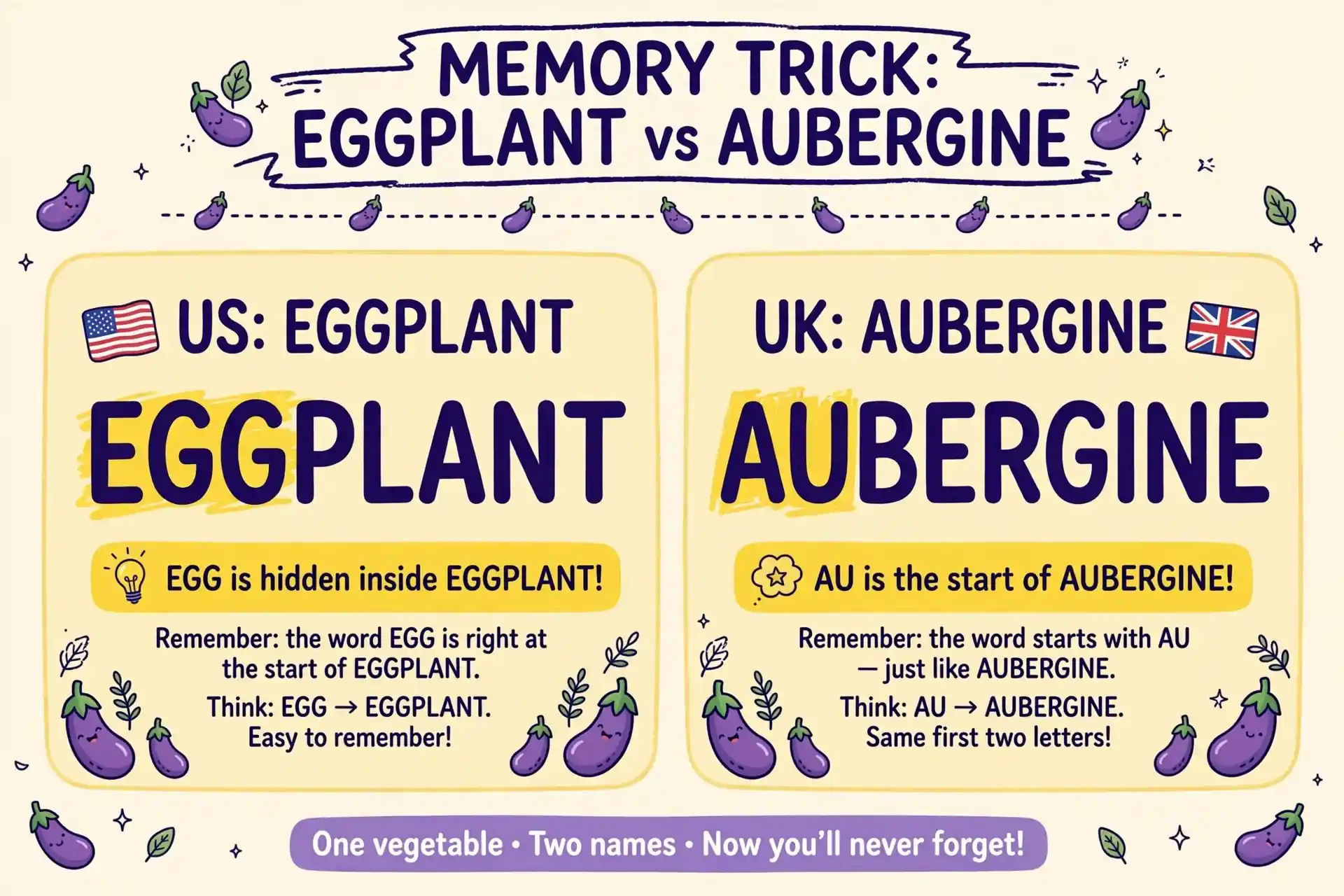
How to Remember the Difference
EGGplant is named for white fruits shaped like eggs — plain, practical American naming. AUbergine starts with AU, the French-sounding opening (think au revoir) that reached Britain through French kitchens. Egg = American simplicity; Au = French flair for Britain.
- Eggplant — US (and Canada, Australia); think of eggs hanging on the plant.
- Aubergine — UK (and Ireland); think of French restaurant menus.
- Same vegetable, different passport — choose the word your reader uses.
Frequently Asked Questions
Is it eggplant or aubergine?
Both are correct — it’s a regional choice. Use eggplant in American, Canadian, and Australian English; use aubergine in British and Irish English.
Why do Americans say eggplant instead of aubergine?
Early American growers named it for the small white egg-shaped varieties they knew, and the descriptive English name stuck. The US used aubergine briefly in the 1700s, then shifted to eggplant in the 1800s.
Do British people understand the word eggplant?
Yes, most Brits recognize it from American recipes and TV, but they’d never use it themselves — aubergine is the only natural word in British speech.
Is aubergine also a color?
In French and in English fashion writing, yes — aubergine describes a deep, dark purple, exactly the shade of the vegetable’s skin.
What do Indians call eggplant?
In South Asian English it’s brinjal, from the Portuguese beringela — you’ll see it on Indian restaurant menus worldwide.
Conclusion
Eggplant and aubergine are regional names for one vegetable: America named it for its egg-shaped fruit, Britain borrowed the French word. Match your word to your audience, keep it consistent, and pronounce aubergine the French way — and you’ll never serve up confusion with dinner.