Burry or Bury: Which Is Correct?
Burry or bury? Nine times out of ten, the word you want is bury — the verb that means to put something in the ground or cover it up, like The dog buried its bone in the garden. Burry with two r’s is almost always a misspelling, though it does exist as a rare adjective meaning “full of burs,” as in The burry seeds stuck to my socks.
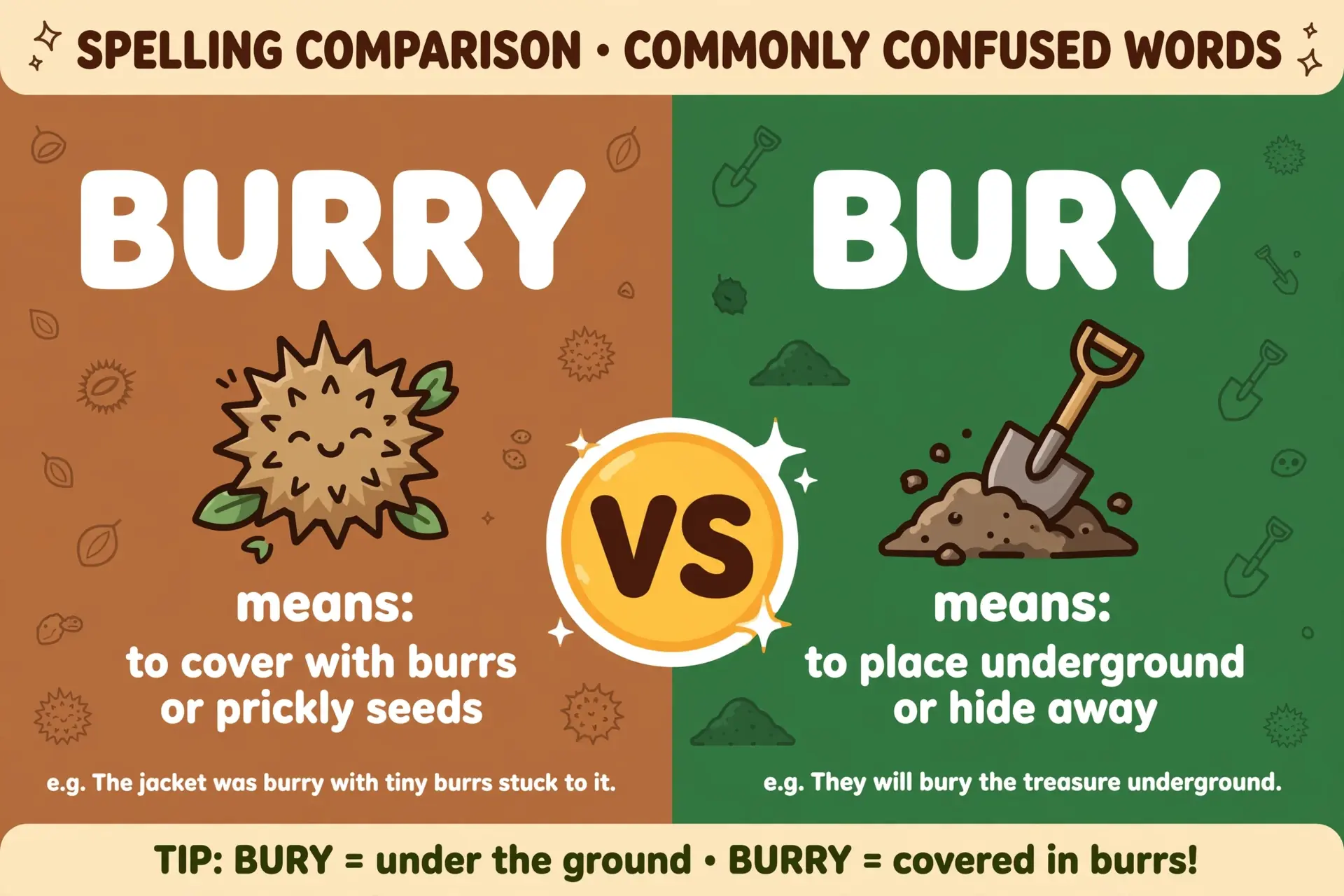
Table of Contents
Quick Answer
| Word | Part of Speech | Main Meaning | Example |
|---|---|---|---|
| Bury | Verb | To inter in the ground or cover up | “They buried the treasure on the island.” |
| Burry | Adjective | Covered in burs (prickly seed cases); usually a misspelling of bury | “The burry seeds stuck to my socks.” |
Simple rule: if you are talking about the action of putting something in the ground or hiding it, always use bury — with one r.
What Does Burry Mean?
Burry is a real but rare English adjective that means covered in, or full of, burs — the small prickly seed cases that cling to clothes and animal fur. It comes from “bur,” an alternative spelling of “burr,” the prickly seed head of plants like burdock.
Examples:
- After the hike, our socks were full of burry seeds from the meadow.
- The burry coat of the dog took half an hour to comb through.
- She pulled a burry burr from the horse’s mane with a groan.
- The path through the burry field ruined my new trainers.
- “Burry” is also a surname, as in the English town of Great Burry.
What Does Bury Mean?
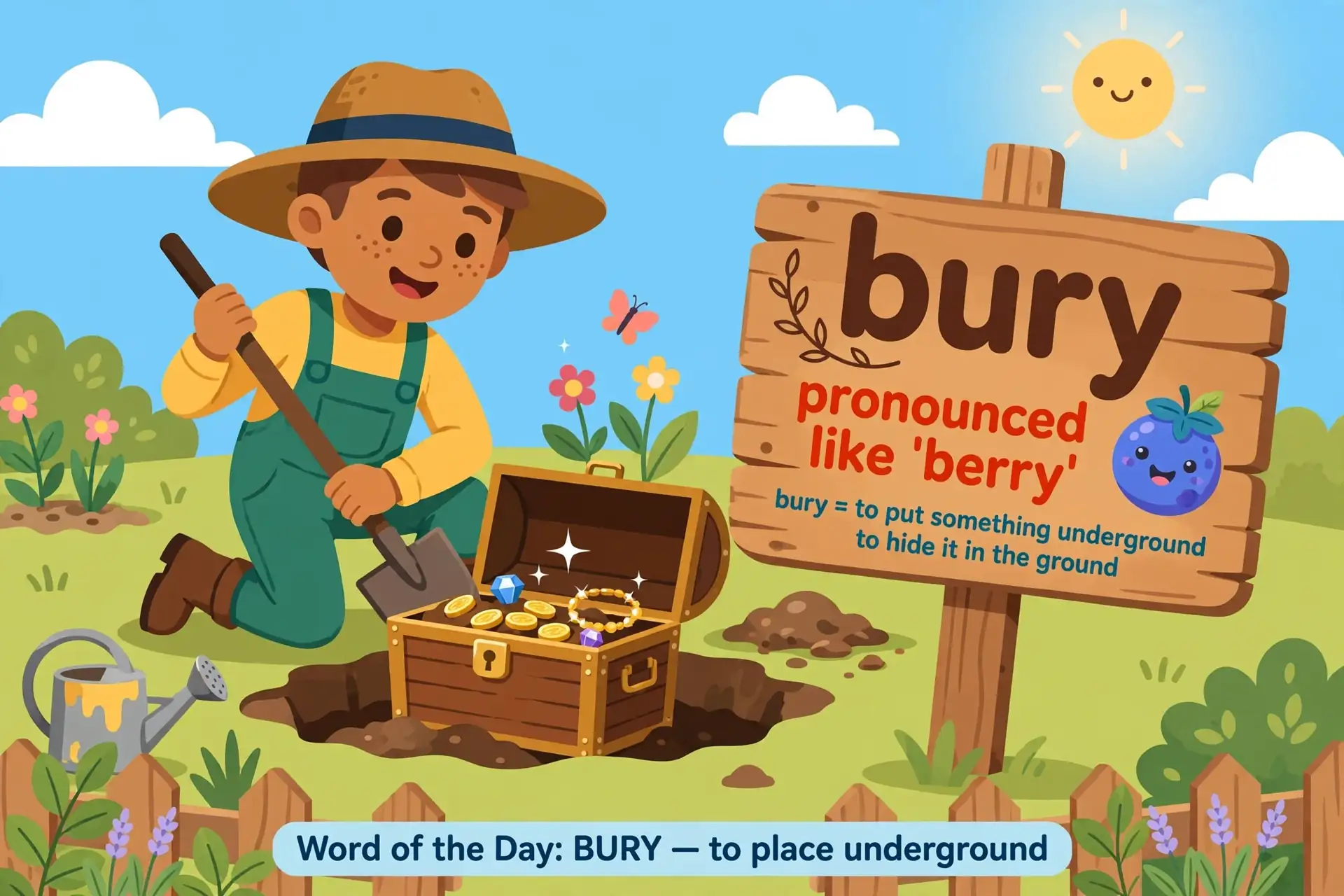
Bury is a verb with two everyday senses. It means to put a body or object into the ground or a tomb, and more generally to cover something completely so it is hidden or out of sight.
Burying in the ground
- The pirates buried the chest at the foot of the cliff.
- They chose to bury their grandmother in the village churchyard.
- The gardener buried the bulbs six inches deep.
- The dog keeps trying to bury its treats behind the sofa.
Covering or hiding
- He buried his face in his hands when he heard the news.
- The avalanche buried the entire road in seconds.
- She was buried in paperwork all weekend.
- The company tried to bury the story before it spread.
Burry vs. Bury: Key Differences
| Feature | Burry | Bury |
|---|---|---|
| Part of speech | Adjective (rare) | Verb (common) |
| Core meaning | Covered in prickly burs | To inter, put underground, or cover up |
| How often used | Extremely rare | Everyday word |
| Pronunciation | Sounds like “furry” (buh-ree) | Sounds like “berry” (beh-ree) |
| Common status | Usually a misspelling of bury | The correct spelling for the verb |
| Example | “A burry seed head” | “Bury the time capsule” |
The spelling difference is one letter, but the pronunciation difference is the real trap: bury does not sound like “burr-ee” — it sounds like “berry.”
Usage in Real Sentences
At Home
❌ The cat tried to burry its toy under the rug.
✅ The cat tried to bury its toy under the rug.
Burry with two r’s never means “put under” — the correct verb is always bury with one r.
At Work
✅ She buried herself in the report to meet the deadline.
✅ A burry seed head is the last thing you want on a dry-clean-only suit.
Use bury for being overwhelmed by work, and reserve burry for things literally covered in prickles.
In Conversation
✅ “Let’s bury the hatchet and move on.”
✅ “These socks are full of burry bits from the walk.”
The idiom always uses bury — nobody “burries” the hatchet.
Common Mistakes
Most people never mean to write burry at all — it slips in the same way as other verb-form confusions like dieing vs dying, and like other easily confused everyday words it survives because spellcheckers often wave it through.
Mistake 1: Writing “burry” for the verb
❌ “They will burry the treasure at dawn.”
✅ “They will bury the treasure at dawn.”
Why: the verb is spelled with one r, no matter how it sounds.
Mistake 2: Pronouncing bury like “burr-ee”
❌ Saying “The pirates bur-ried the gold.”
✅ Saying “The pirates berr-ied the gold.”
Why: bury rhymes with “berry” and “merry,” not with “hurry” or “furry.”
Mistake 3: Writing “burried” as the past tense
❌ “She burried the keys in her bag.”
✅ “She buried the keys in her bag.”
Why: drop the y, add ied — buried, like “carried” and “married.”
Mistake 4: “Burying” spelled as “burrying”
❌ “He was busy burrying the evidence.”
✅ “He was busy burying the evidence.”
Why: one r in the base word means one r in the -ing form too.
Pronunciation
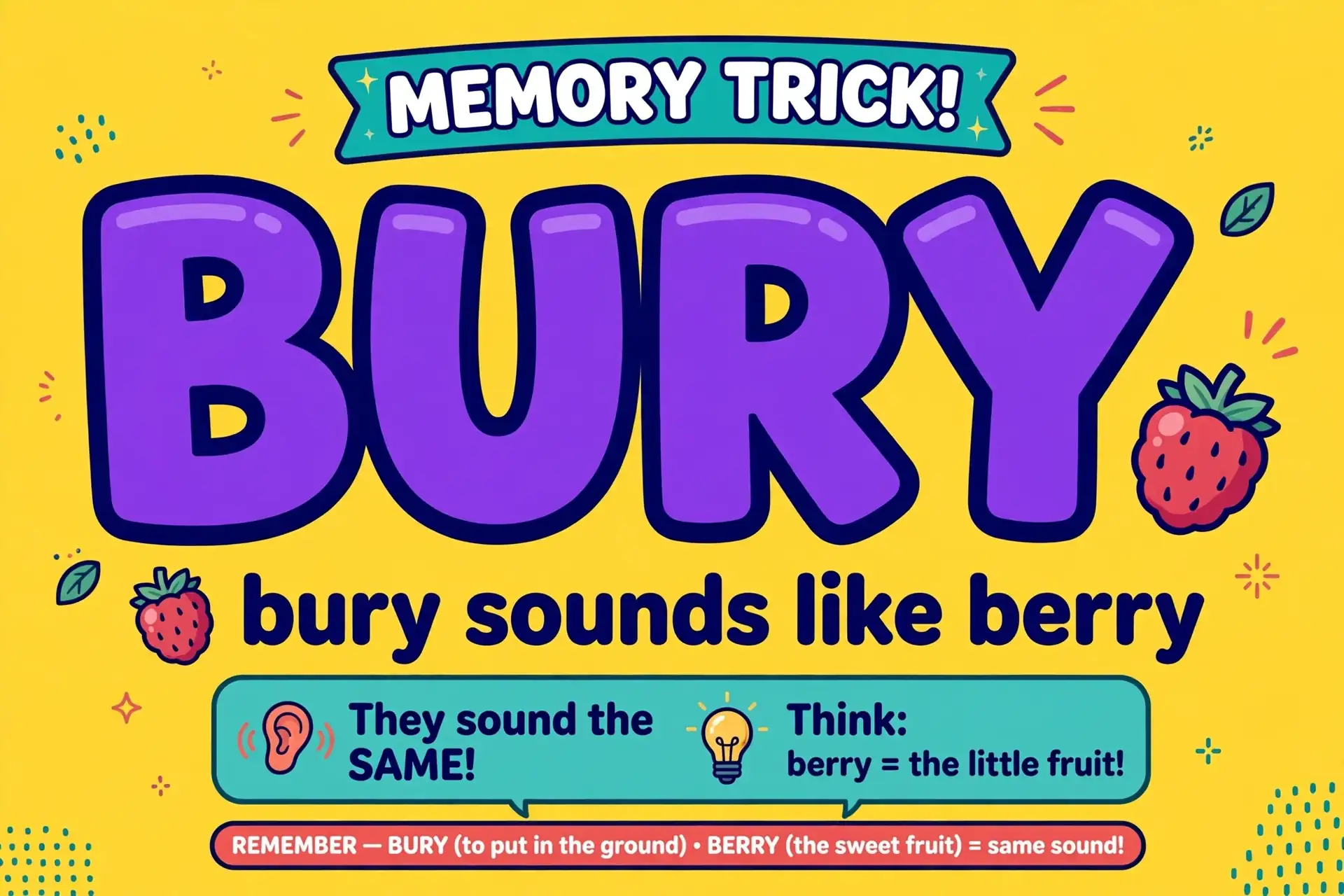
Bury is pronounced “berry” — like the fruit. It rhymes with “berry,” “merry,” and “ferry.” This odd pronunciation is why the misspelling burry happens so often: if bury looked like it sounds, nobody would double the r. Burry, meanwhile, is pronounced the way it looks, like “furry” with a b.
How to Remember the Difference
Think of the phrase: “Don’t burRy the lead — just buRY it.”
- Bury has one R, like the word “bury” has one simple action: put it in the ground.
- Burry has two R’s — think of two prickly burrs side by side, sticking to your socks.
- If it rhymes with “berry,” it is bury — the verb you will use 99% of the time.
Frequently Asked Questions
Is it burry or bury?
It is bury in nearly every case. Use bury when you mean putting something in the ground or covering it up; burry is a rare adjective meaning “covered in burs.”
Is “burry” a word at all?
Yes, burry is a genuine adjective meaning full of burs, and it is also a surname. But if you were reaching for the verb, “burry” is a misspelling — check bury on Merriam-Webster at https://www.merriam-webster.com/dictionary/bury to see the correct verb entry.
How do you spell the past tense of bury?
It is buried — change the y to ied, following the same pattern as “carry → carried.”
Why is bury pronounced “berry”?
English history. The Old English root “byrgan” shifted over centuries while the spelling froze, leaving bury looking like “burr-y” but sounding like “berry.”
What does “bury the hatchet” mean?
It is an idiom meaning to make peace after a disagreement, always spelled with one r: bury the hatchet.
Conclusion
When you mean the action — putting something in the ground, covering it up, or hiding it — the spelling is always bury with one r, pronounced “berry.” Burry with two r’s belongs only to prickly seeds and surnames, and everywhere else it is a mistake worth burying for good.