Smokey or Smoky: Which Is Correct?
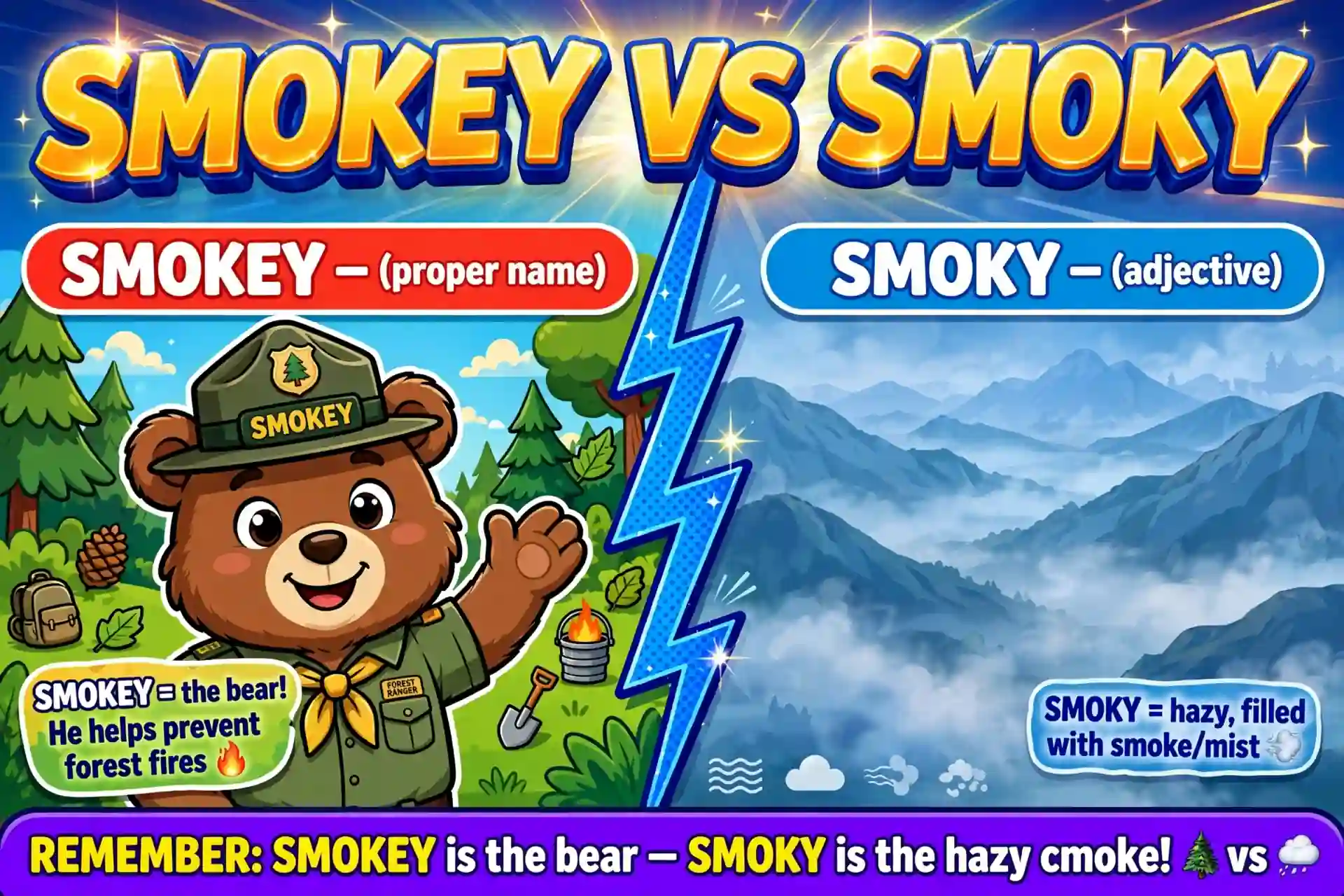
Smoky is the standard adjective meaning filled with or resembling smoke: “smoky mountains,” “smoky flavor.” Smokey with an e is a proper name — most famously Smokey Bear, the wildfire-prevention mascot. As an ordinary adjective, smokey is a misspelling.
For example, “a smoky bar” describes haze in the air. “Smokey Bear” names the cartoon ranger. One describes; the other names.
Quick Answer
| Word | Part of Speech | Status | Example |
|---|---|---|---|
| Smoky | Adjective | Standard spelling | A smoky campfire. |
| Smokey | Proper noun | Name only (Smokey Bear) | Smokey Bear says: prevent wildfires. |
Simple rule: Describing something hazy or smoke-flavored? Write smoky with no e. Naming the Bear? Smokey.
What Does Smoky Mean?
Smoky is the standard adjective for anything filled with smoke, hazy like smoke, or tasting of smoke. It follows the normal pattern of dropping the e before -y (smoke → smoky, like taste → tasty).
Examples:
- The Great Smoky Mountains were hazy at dawn.
- She loves the smoky flavor of grilled peppers.
- The smoky eye makeup suited her perfectly.
- After the bonfire, our clothes smelled smoky.
- A smoky haze hung over the valley.
- The barbecue gave the ribs a deep smoky taste.
- Smoky quartz is prized by mineral collectors.
For the full dictionary entry, see smoky on Merriam-Webster.
What Does Smokey Mean?
Smokey is not the standard adjective — it is a proper name. Smokey Bear, the U.S. Forest Service mascot created in 1944, keeps the e, and his fame is why the spelling feels familiar. Some writers also use Smokey as a nickname for people.
Examples:
- Smokey Bear reminds campers to prevent wildfires.
- “Only you can prevent wildfires,” says Smokey.
- They nicknamed their old truck Smokey.
Outside names, smokey is simply the e that standard spelling drops — compare the kept-e logic in the kept-E pattern in dyeing vs dying, where the e serves a purpose. Here it does not.
Smokey vs. Smoky: Key Differences
| Feature | Smoky | Smokey |
|---|---|---|
| Type | Adjective | Proper name |
| Meaning | Full of smoke; smoke-like | Names the Bear (or a nickname) |
| Standard? | Yes | Only as a name |
| Example | Smoky mountains | Smokey Bear |
Think of it this way: the adjective lost its e like any well-behaved -y word; the Bear kept his because names play by their own rules.
Examples in Real Sentences
In the Mountains
✅ “We hiked the Smoky Mountains at sunrise.”
❌ “We hiked the Smokey Mountains at sunrise.”
The national park’s official name uses Smoky — no e.
In the Kitchen
✅ “The chef added a smoky chipotle sauce.”
Flavors are described with smoky, never smokey.
At the Campground
✅ “A sign showed Smokey Bear pointing at the fire rules.”
The mascot’s name keeps the e — that spelling belongs to him.
Common Mistakes With Smokey and Smoky
The e is the whole battle here. Watch for it in these classic mix-ups, the same kind of letter-level traps as common misspellings like loose vs lose.
Mistake 1: “Smokey” for the Adjective
❌ The room was smokey after the candles burned down.
✅ The room was smoky after the candles burned down.
Why: As an adjective, the standard spelling is smoky — the e drops out.
Mistake 2: “Smoky Bear” for the Mascot
❌ Smoky Bear’s slogan is famous.
✅ Smokey Bear’s slogan is famous.
Why: The mascot’s official name is spelled Smokey with an e.
Mistake 3: “Smokey Eye” Makeup
❌ She wore a dramatic smokey eye.
✅ She wore a dramatic smoky eye.
Why: The makeup look is the adjective — smoky eye, no e.
How to Remember the Difference
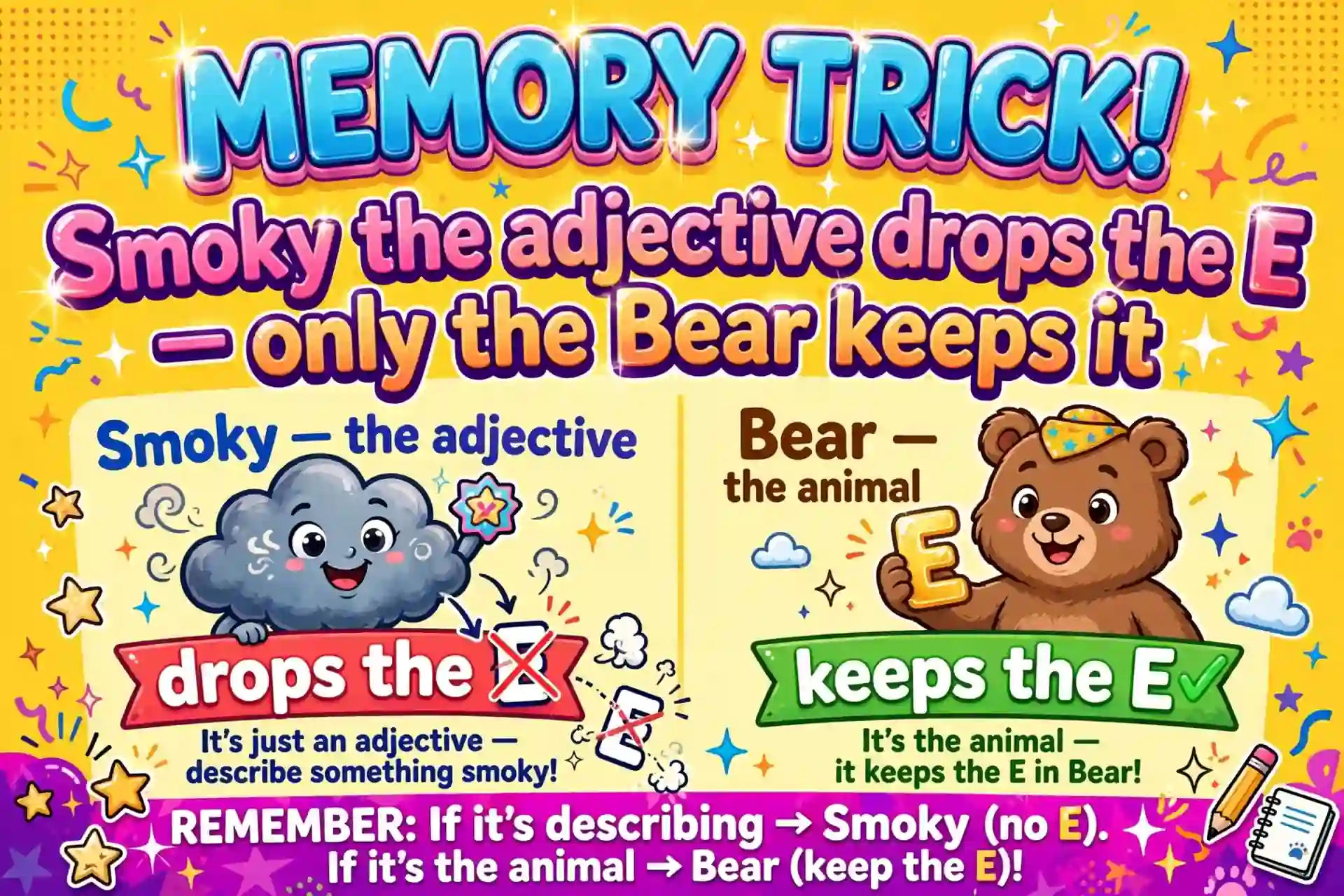
Memory trick: The adjective smoky dropped its E like smoke drifting away. Only the Bear kept his E — SmokEy Bear.
- Describing haze, flavor, or air → smoky.
- The mascot or a nickname → Smokey.
If you can put “very” in front of it (“very smoky”), you need the adjective spelling.
Frequently Asked Questions
Is it smokey or smoky?
Smoky is the standard adjective. Smokey is correct only as the proper name Smokey Bear (or a nickname).
Why is it “Smokey Bear” but “Smoky Mountains”?
Smokey Bear is a proper name, and names keep their own spellings. The Great Smoky Mountains use the standard adjective form.
Is “smokey” ever acceptable as an adjective?
Some dictionaries list smokey as a rare variant, but smoky is overwhelmingly preferred. In edited writing, use smoky.
Do “smokey” and “smoky” sound the same?
Yes — both are pronounced /ˈsmoʊki/. Only the spelling (and the meaning) differs.
What about “smokier” and “smokiest”?
The comparative forms build on smoky: smokier, smokiest — the y changes to i, as usual.
Is “Smokey Bear” one word or two?
Two: Smokey is his first name, Bear his species. The full name keeps the e in Smokey.
Why do so many people spell it “smokey”?
Almost entirely because of Smokey Bear. The mascot’s name has appeared on posters, ads, and merchandise since 1944, so the e-spelling feels familiar and “correct” to millions of people. When they reach for the adjective, the Bear’s spelling comes out instead. Remember: the Bear owns the e; the adjective let it drift away like smoke.
Conclusion
Smoky without an e is the adjective for anything smoke-filled or smoke-flavored. Smokey with an e belongs to the Bear. Let the e drift away like smoke — unless you’re naming the mascot.