Tear or Tare: Meaning, Difference, and Examples
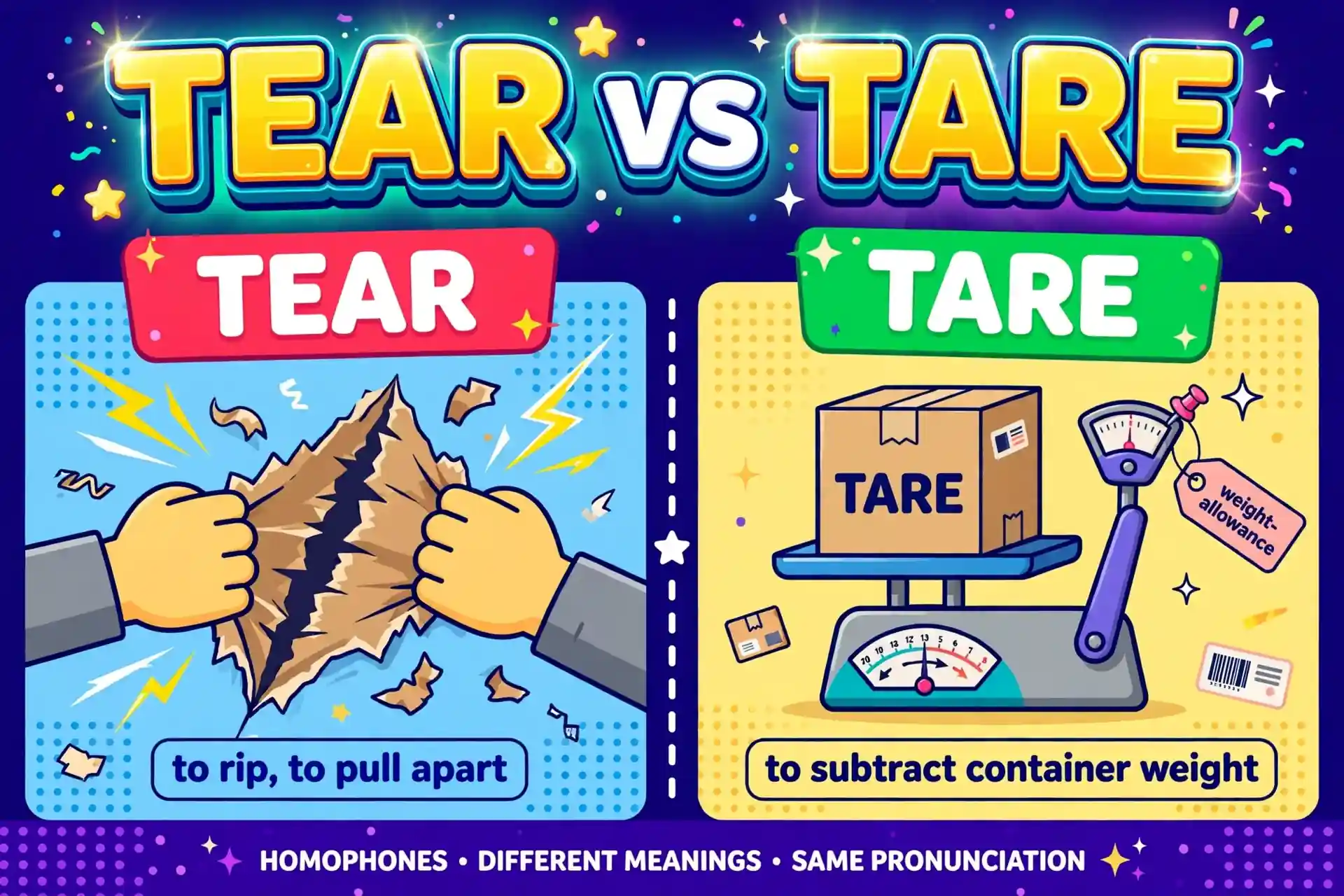
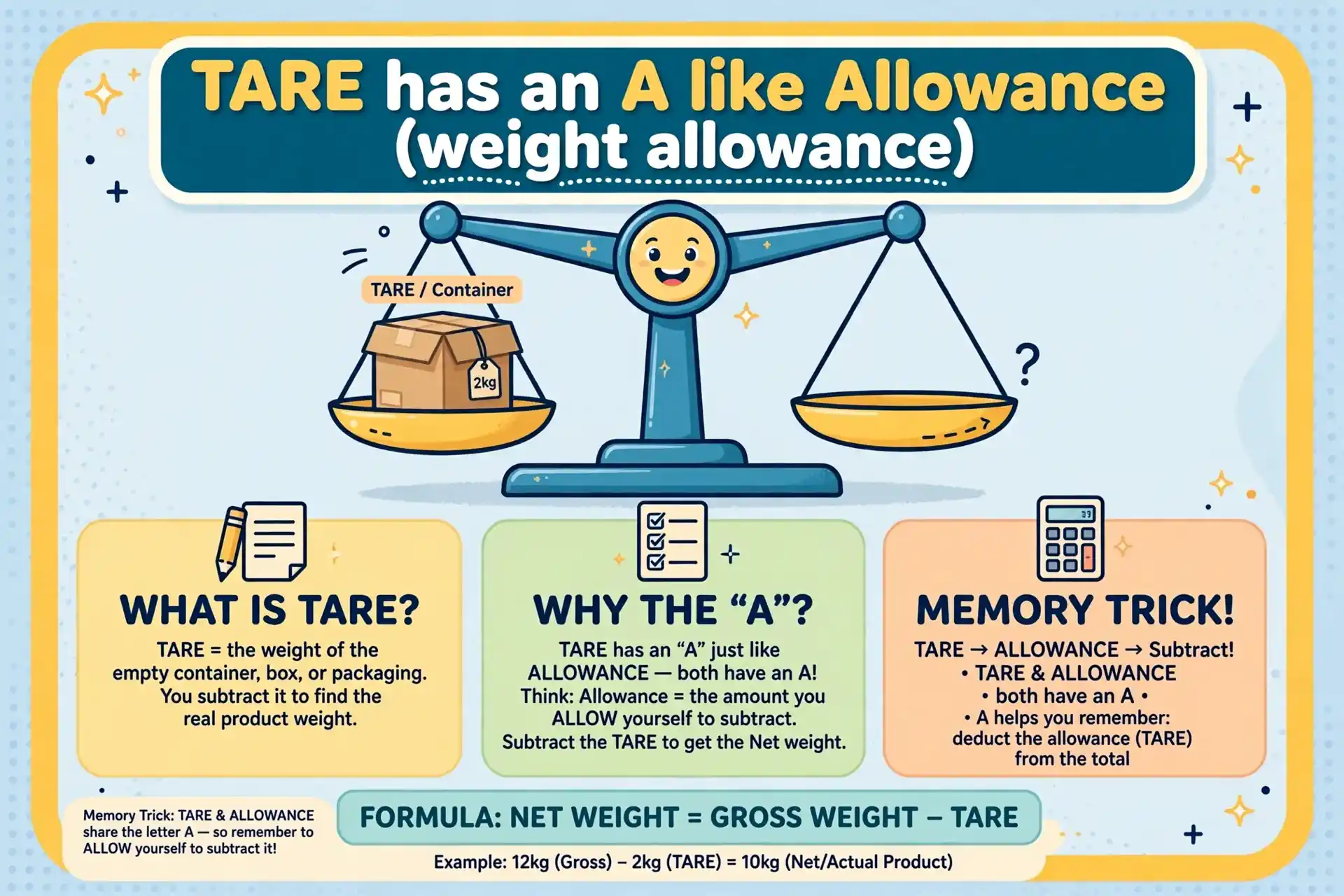
Tear and tare sound exactly the same (when tear means “rip”), but they have nothing to do with each other. Tear (pronounced “tair”) means to rip something, and tare is a weight allowance for packaging — the weight of the container subtracted so you pay only for the goods inside.
For example, “Don’t tear the wrapping paper” is about ripping. “The tare weight of the truck is 5,000 pounds” is about weighing. One letter changes the entire meaning.
Quick Answer
| Word | Part of Speech | Main Meaning | Example |
|---|---|---|---|
| Tear (tair) | Verb / noun | To rip; a rip | Be careful not to tear the page. |
| Tear (teer) | Noun | A drop from the eye | A tear rolled down her cheek. |
| Tare | Noun | Weight allowance for packaging | Subtract the tare to get the net weight. |
Simple rule: If something rips or someone cries, write tear. If it is about weighing goods, write tare.
What Does Tear Mean?
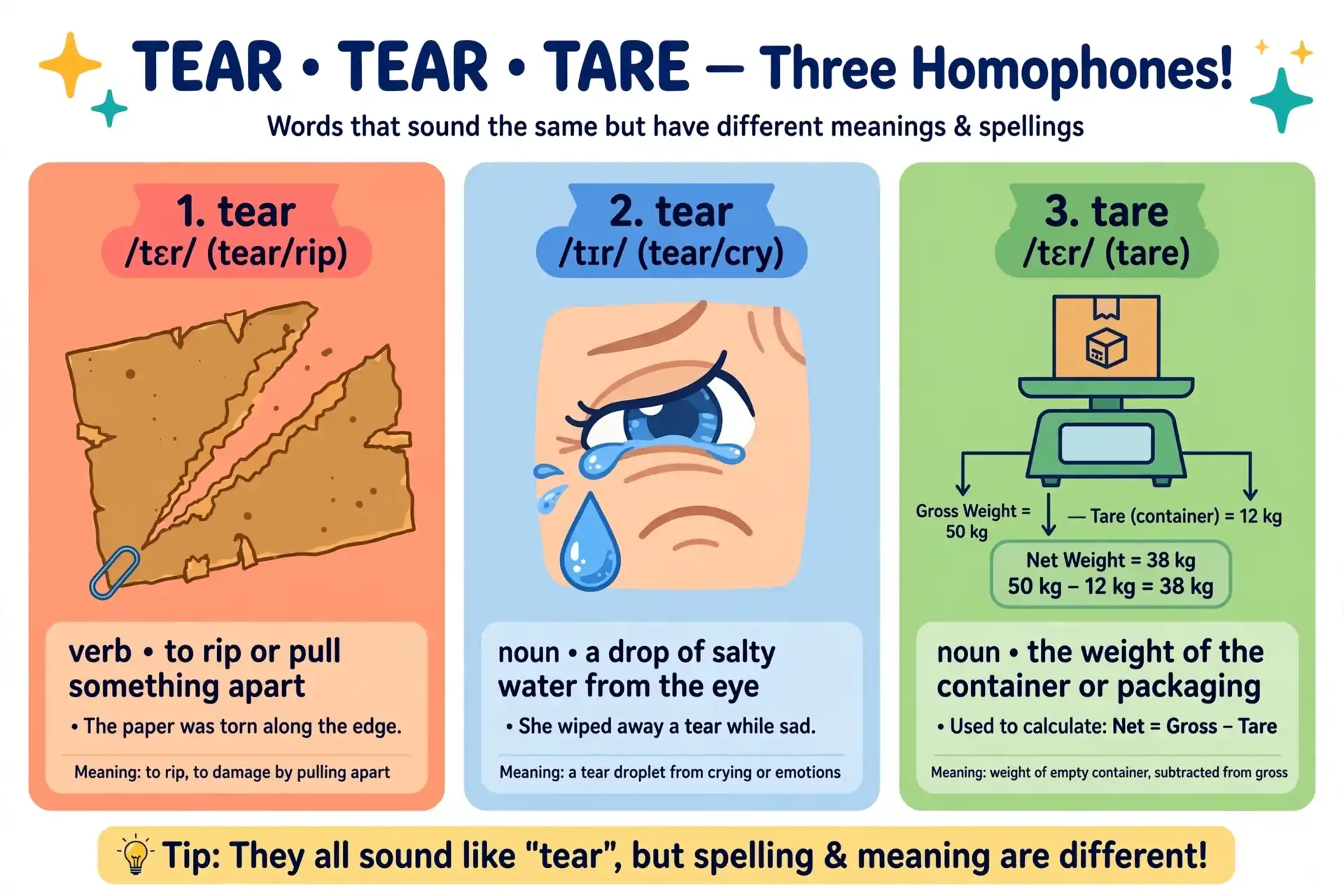
Tear has two pronunciations and two families of meaning. Pronounced “tair” (/tɛər/), it means to rip or pull apart, and the rip itself is also called a tear. Pronounced “teer” (/tɪər/), it means a drop of liquid from the eye.
Tear: To Rip (pronounced “tair”)
- Don’t tear the envelope; open it carefully.
- He tore his jeans on the fence.
- There is a tear in the sleeve of your jacket.
- She tore the letter into small pieces.
Tear: A Drop From the Eye (pronounced “teer”)
- A tear rolled down her cheek.
- The movie brought tears to his eyes.
- She wiped away a tear and smiled.
- Crocodile tears are not real sadness.
What Does Tare Mean?
Tare (pronounced “tair,” /tɛər/) is a noun from trade and shipping. It is the weight of packaging or a container that is subtracted from the total (gross) weight to find the net weight of the goods. A truck’s tare weight is how much the empty truck weighs.
Examples:
- Subtract the tare to find the net weight of the flour.
- The tare weight is printed on the side of every shipping container.
- The scale was set to account for the tare of the empty crate.
- Drivers must report their vehicle’s tare before loading.
Tare is also the name of a weed (the biblical “tares” growing among wheat), but the weighing sense is the one you will meet most often.
See tare on Merriam-Webster for the full dictionary entry.
Tear vs. Tare: Key Differences
| Feature | Tear | Tare |
|---|---|---|
| Pronunciation | “Tair” (rip) or “teer” (cry) | “Tair” (/tɛər/) |
| Core meaning | Rip; drop from the eye | Packaging weight allowance |
| Common setting | Everyday life | Shipping, trade, trucking |
| Verb forms | Tear, tore, torn | Not used as a verb |
| Example | She tore the paper. | Check the tare first. |
Only the “rip” sense of tear is a true homophone of tare. The “crying” sense sounds different (“teer”), which is one more reason these tricky homophones deserve a careful look.
Examples of Tear and Tare in Real Sentences
At Home
Tear: “The kids managed to tear the gift wrap in seconds.”
Tare: “The kitchen scale lets you zero out the tare of the bowl.”
The first is about ripping; the second is the tare button on a kitchen scale — the weight of the empty bowl.
At Work
Tear: “A tear in the uniform needs stitching before Monday.”
Tare: “Log the tare weight of each pallet before loading.”
A warehouse deals with both: torn packaging and tare weights.
In Conversation
Tear: “It was so moving, I had a tear in my eye.”
Tare: “The tare on that drum is about 20 kilos.”
Same sound (“tair”), completely different conversations.
Common Mistakes With Tear and Tare
Because the “rip” sense of tear and tare are pronounced identically, writers mix them up — much like other sound-alike spelling traps.
Mistake 1: Writing “Tare” for Ripping
❌ He tare the ticket in half.
✅ He tore the ticket in half.
Why: The verb meaning “rip” is tear (past: tore). Tare is only a noun about weight.
Mistake 2: Writing “Tear” for Weight Allowance
❌ Deduct the tear weight of the container.
✅ Deduct the tare weight of the container.
Why: In shipping and weighing, the allowance is spelled tare.
Mistake 3: Pronouncing “Tare” as “Tar”
❌ “The tar weight is 500 pounds.”
✅ “The tare weight is 500 pounds” (pronounced “tair”).
Why: Tare rhymes with tear (rip) and care, not with tar.
Pronunciation: Tear vs. Tare
Tare is pronounced “tair” (/tɛər/), rhyming with care and share. Tear the verb is pronounced exactly the same: “tair.” But tear the noun meaning an eye-drop is pronounced “teer” (/tɪər/), rhyming with fear and near.
So tare and the “rip” tear are homophones; the “crying” tear stands apart.
How to Remember the Difference
Memory trick: Tare has an A like Allowance — it is the weight allowance for packaging. Tear (rip) keeps the E from rEp… no — simpler: think of the E in tEar as the Edge that gets ripped.
- Tare = Allowance (weighing).
- Tear = rip or cry (everyday word).
- If money or scales are involved, it is almost certainly tare.
Frequently Asked Questions
Is it tear or tare weight?
Tare weight. It is the weight of the empty container or vehicle, subtracted to find the net weight of the goods.
Do tear and tare sound the same?
Tare and the “rip” sense of tear are both pronounced “tair.” The “crying” sense of tear is pronounced “teer” and sounds different.
What is an example of tare in shipping?
An empty shipping container might have a tare weight of 2,200 kg. If the loaded container weighs 20,000 kg, the cargo’s net weight is 17,800 kg.
Is “tare” also a plant?
Yes. Tare (usually “tares”) is an old word for a weed that grows among grain, famous from the biblical parable of the wheat and the tares.
What is the past tense of tear (rip)?
Tore (“He tore the page”), and the past participle is torn (“The page was torn”).
Conclusion
Tear means to rip (or a drop from the eye); tare is the weight allowance subtracted in shipping. Remember “tare = allowance,” and you will never mix up these homophones again.